Kirjojen hintavertailu. Mukana 12 390 323 kirjaa ja 12 kauppaa.

Kirjailija

Eileen R Tabios

Kirjat ja teokset yhdessä paikassa: 10 kirjaa, julkaisuja vuosilta 2010-2024, suosituimpien joukossa Manhattan. Vertaile teosten hintoja ja tarkista saatavuus suomalaisista kirjakaupoista.

Mukana myös kirjoitusasut: Eileen R. Tabios

10 kirjaa

Kirjojen julkaisuhaarukka 2010-2024.

Manhattan

Manhattan

Eileen R Tabios

Lulu.com
2017
pokkari
MANHATTAN: An Archaeology presents Eileen R. Tabios' latest innovative approach to poetry-making. In this book, she uses a diverse set of "artifacts" to excavate a version of New York City's historical birthplace. Artifacts include the unexpected and the ineffable to create a city only she can imagine-while they include a pearl necklace, piece of pineapple skin, yoga mat, black sateen, and bullet, the "objects" for perusal also range over moonlight, "withheld forgiveness," and duende. The result, too, is unexpected and ineffable: Poetry that delights and intrigues. Some receptive readers will wake from the book missing something they hadn't realized they missed, longing for something they hadn't realized they desired.
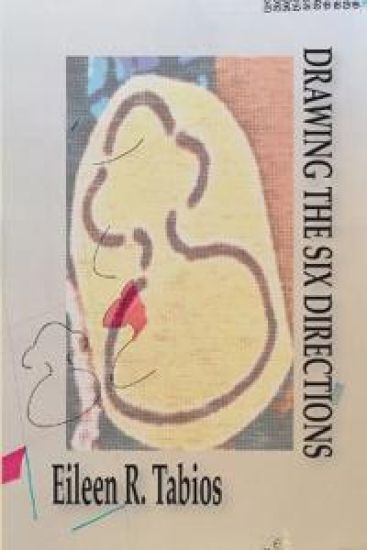
Drawing The Six Directions

Drawing The Six Directions

Eileen R Tabios

Harrykstammer
2024
pokkari
Eileen R. Tabios began her "Poems Form/From the Six Directions" partly because she was trying to create a poem in a new way. Creating mixed-media sculptures whose processes engendered verse-poems fit that impetus. But, unexpectedly, the sculpting process made her focus for the first time on working with physical material. As a writer working with imagination and words, she was surprised by the pleasurable frisson of dealing with the tangible as found materials made their way into her mixed-media sculptures. Such materials included old coasters, used magazines, ribbons, recycled cardboard, department store shopping bags, and so on. The sculpting process created a "simmer" in her belly, like the physical effect she often feels when chasing down a poem into written form. She, therefore, decided to try her hand at working more consciously as a visual artist. She hadn't intended to go this route but allowed herself to follow the impulse because such an "opening" manifested what she considers wonderful about all Art and Poetry: how they lead its maker and viewer/reader into new experiences. She would end up creating about a dozen sculptures before sculpting led her to drawing. Her drawings and sculptures were just part of Six Directions, a multidisciplinary andinteractive project that encompassed several performances, exhibitions, and readings in California's Bay Area (San Francisco, Berkeley, and Sonoma). Because of her initial focus on the project's interactive aspects with audience, the Six Directions drawings are the project's least known element. This book offers the entire series of drawings, most of which have never been seen in public.
Evocare: A Collection of Tanka

Evocare: A Collection of Tanka

Eileen R. Tabios; Brian Cain Aene; Ayo Gutierrez

Independently Published
2019
nidottu
Evocare (i-wu-ka-re), from its Latin meaning '"to summon", brings together the art of three poets through an anthology of tanka. Ayo, Brian, and Eileen inspire our minds to ponder upon what our five senses encounter in our journey of reading their evocative words, an experience that translates words into timeless poems about living.
The Great American Novel

The Great American Novel

Eileen R Tabios

Paloma Press
2019
pokkari
With The Great American Novel: Selected Visual Poetry (2001-2019), Eileen Tabios not only presents 19 years of her forays into visual poetry, but takes the reader on an extremely personal journey of exploration of cultural identity, the ramifications of colonialism, the functions of language and the possibilities of connectivity in love and pain where each poem acts as a poignant marker along the way. Each sequence in this collection vastly differs--from asemic chance operations composed of Tabios's plucked white hairs let fall into place (recalling how Duchamp composed 3 Standard Stoppages) to a description of each poem-object in a destroyed mail art correspondence of sculptural visual poems. Tabios's openness to possibility has created poems radiating with life which are as heavy as they are celebratory. If you're looking for bubblegum, move on--here is something entirely different for your eyes to chew on. --Sacha Archer, author of Detour Eileen Tabios takes part by taking apart then seaming beyond seeming. Commas as visuals take form, flight, shape. Real lines of once alive things plucked from hair inventing poetry without genuflection. Achromotricia re(de)fines asemia, emerging a new version of whiteness against cloth backdrops. Finding poetry as poetry is. Eileen asserts in natural form the joining of worlds by being knowing learning doing becoming fascinated by what creates itself around her as she fascinates us by what she makes herself. --Sheila E. Murphy, author of Reporting Live From You Know Where I immediately got attracted to the first images, documenting an installation titled "Pilipinz Cloudygenous." Then I read the notes, and went back to the images. The effect got stronger and stronger. While the mobiles of say, Fischli & Weiss, are about the funny chain of causality, Tabios' work is about a funnily represented, rather absurd, but still functioning chain--leading back to the sources. "Hanging (from a ceiling)," roots in the sky. --M rton Kopp ny, author of Endgames
Hiraeth

Hiraeth

Eileen R Tabios

Knives Forks and Spoons
2018
pokkari
In these twenty-six complex, finely-crafted poems, we see Eileen Tabios at the height of her poetic powers, fighting, changing, and embracing two languages to wrest new meanings not only from the words themselves, but from hyphens, slashes, and empty spaces. Sometimes intensely personal, sometimes fiercely political, Tabios plunges the reader into a universe of ecstatic images as she repeatedly attempts to freeze each 'inevitable stutter of love.' --Mary Mackey Layering memory soaked through with heart / home sickness where 'paper is too / soft a field for your hand leaving my waist, ' Eileen Tabios's HIRAETH: TERCETS FROM THE LAST ARCHIPELAGO mesmerizes. With its title borrowing the Welsh word for the feeling of homesickness tinged with grief expressed for dear ones departed, the collection is partly inspired by British painter Andrew Bick's series of multi-layered wax paintings wherein each layer presents new imagery as well as ghostly images of older layers. Just as an Archipelago Sea is studded with so many isles, each of these poems arrives so 'studded' with some lines intentionally faded out as though possessed by the 'Unreasonable ghost of a ghost / who'd persuaded the world its name is Unicorn'. There are recollections, imagined or not, of 'poetry readings where I ripped pages / from my books. Sometimes I autographed them; sometimes / I crumpled them into balls I'd toss towards the audience as / if they were money or my underwear' seeking 'to alchemize the reader into / the author ' Maybe the poet, too, needs to be reminded out of amnesia: 'I forgot my poetry is going to change the world ... I forgot my words are holy. / I forgot my words will lift you--all of you --towards Joy'. But readers should never forget the fruit of such devotion to poetry. How terrific to have it here at hand. --Patrick James Dunagan
One, Two, Three

One, Two, Three

Eileen R Tabios

Lulu.com
2018
pokkari
The "hay(na)ku" is a tercet-based poetic form invented by Eileen R. Tabios and named by Filipino-American poet Vince Gotera. The basic tercet presents the first line as one word, the second line as two words, and the third line as three words. The words can be as long or short as desired by the poet. The "1, 2, 3" aspect of the form relates to a Filipino nursery rhyme: isa, dalawa, tatlo, ang tatay mo'y kalbo. The rhyme translates into English as "one two three, your dad is bald." Advance words: I find the word-based formal constraint of hay(na)ku (as opposed to a syllable or metrical foot based constraint) leads to poems that are in many ways more natural, and that, in particular, the 1-2-3 structure is a pattern that comes up continually in the course of the daily. Poetry lives and breathes in the daily, and hay(na)ku has the ability to capture profound and delightful pieces that might otherwise be missed. -Dan Waber