Kirjojen hintavertailu. Mukana 12 116 985 kirjaa ja 12 kauppaa.
Kirjailija
Eitan Shamir
Kirjat ja teokset yhdessä paikassa: 6 kirjaa, julkaisuja vuosilta 2011-2026, suosituimpien joukossa The Art of Military Innovation. Vertaile teosten hintoja ja tarkista saatavuus suomalaisista kirjakaupoista.
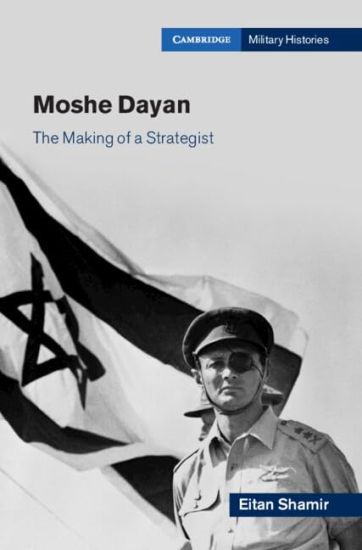
In this major re-evaluation of Moshe Dayan's life and career, Eitan Shamir examines one of the most influential individuals in the history of modern Israel. As IDF Chief of Staff, theatre commander during the Sinai campaign and defence minister during the Six Days and Yom Kippur Wars, Dayan shaped Israeli history as well as the principles of Israel's security and foreign affairs. Eitan Shamir explores the basis and justification for Dayan's reputation as a strategist and what made his command and leadership unique. He reveals the ways in which Moshe Dayan led and planned his campaigns, how he made his decisions and his style as a general and a strategist. His findings shed important new light on broader issues of military command and culture, political-military relations, insurgency and counterinsurgency and the relations between small states and large powers, drawing lasting lessons for strategy today.
In this major re-evaluation of Moshe Dayan's life and career, Eitan Shamir examines one of the most influential individuals in the history of modern Israel. As IDF Chief of Staff, theatre commander during the Sinai campaign and defence minister during the Six Days and Yom Kippur Wars, Dayan shaped Israeli history as well as the principles of Israel's security and foreign affairs. Eitan Shamir explores the basis and justification for Dayan's reputation as a strategist and what made his command and leadership unique. He reveals the ways in which Moshe Dayan led and planned his campaigns, how he made his decisions and his style as a general and a strategist. His findings shed important new light on broader issues of military command and culture, political-military relations, insurgency and counterinsurgency and the relations between small states and large powers, drawing lasting lessons for strategy today.
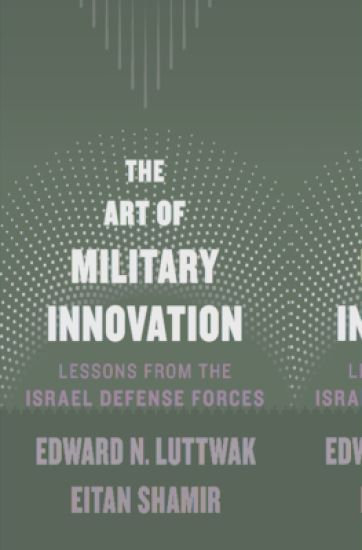
A world-leading military strategist and an IDF insider explain the improbable success of the Israeli armed forces.When the Israel Defense Forces was established in May 1948, it was small, poorly equipped, and already at war. Lacking sufficient weaponry or the domestic industrial base to produce it, the newborn military was forced to make do with whatever it could get its hands on. That spirit of improvisation carried the IDF to a decisive victory in the First Arab-Israeli War.Today the same spirit has made the IDF the most powerful military in the Middle East and among the most capable in the world. In The Art of Military Innovation, Edward N. Luttwak and Eitan Shamir trace the roots of this astounding success. What sets the IDF apart, they argue, is its singular organizational structure. From its inception, it has been the world’s only one-service military, encompassing air, naval, and land forces in a single institutional body. This unique structure, coupled with a young officer corps, allows for initiative from below. The result is a nimble organization inclined toward change rather than beholden to tradition.The IDF has fostered some of the most significant advances in military technology of the past seventy years, from the first wartime use of drones to the famed Iron Dome missile defense system, and now the first laser weapon, Iron Beam. Less-heralded innovations in training, logistics, and human resources have been equally important. Sharing rich insights and compelling stories, Luttwak and Shamir reveal just what makes the IDF so agile and effective.
On today's complex, fragmented, fast-moving battlefield, where combatants adapt constantly to exploit one-another's weaknesses, there is a demonstrable requirement for military commanders to devolve a high level of autonomy of decision-making and action to leaders on the ground. An effective model for doing this has existed for some time in the form of mission command and has been utilized by the U.S., Israeli, and British Armies—but with mixed success. This book examines in depth the experiences of the armed forces of each of these countries in implementing mission command, and reveals the key factors that have determined the success or failure of the implementation—factors such as the Revolution in Military Affairs (RMA), the spread of low-intensity conflicts and operations other than war, and differences in how military cultures interpret, articulate, and exercise the command function. It has significant implications for both the development of military doctrine and the training and education of tomorrow's military leaders.
On today's complex, fragmented, fast-moving battlefield, where combatants adapt constantly to exploit one-another's weaknesses, there is a demonstrable requirement for military commanders to devolve a high level of autonomy of decision-making and action to leaders on the ground. An effective model for doing this has existed for some time in the form of mission command and has been utilized by the U.S., Israeli, and British Armies—but with mixed success. This book examines in depth the experiences of the armed forces of each of these countries in implementing mission command, and reveals the key factors that have determined the success or failure of the implementation—factors such as the Revolution in Military Affairs (RMA), the spread of low-intensity conflicts and operations other than war, and differences in how military cultures interpret, articulate, and exercise the command function. It has significant implications for both the development of military doctrine and the training and education of tomorrow's military leaders.