Kirjojen hintavertailu. Mukana 12 595 353 kirjaa ja 12 kauppaa.

Kirjailija

Elana Levine

Kirjat ja teokset yhdessä paikassa: 6 kirjaa, julkaisuja vuosilta 2007-2020, suosituimpien joukossa Her Stories. Vertaile teosten hintoja ja tarkista saatavuus suomalaisista kirjakaupoista.

6 kirjaa

Kirjojen julkaisuhaarukka 2007-2020.

Her Stories

Her Stories

Elana Levine

Duke University Press
2020
pokkari
Since the debut of These Are My Children in 1949, the daytime television soap opera has been foundational to the history of the medium as an economic, creative, technological, social, and cultural institution. In Her Stories, Elana Levine draws on archival research and her experience as a longtime soap fan to provide an in-depth history of the daytime television soap opera as a uniquely gendered cultural form and a central force in the economic and social influence of network television. Closely observing the production, promotion, reception, and narrative strategies of the soaps, Levine examines two intersecting developments: the role soap operas have played in shaping cultural understandings of gender and the rise and fall of broadcast network television as a culture industry. In so doing, she foregrounds how soap operas have revealed changing conceptions of gender and femininity as imagined by and reflected on the television screen.
Her Stories

Her Stories

Elana Levine

Duke University Press
2020
sidottu
Since the debut of These Are My Children in 1949, the daytime television soap opera has been foundational to the history of the medium as an economic, creative, technological, social, and cultural institution. In Her Stories, Elana Levine draws on archival research and her experience as a longtime soap fan to provide an in-depth history of the daytime television soap opera as a uniquely gendered cultural form and a central force in the economic and social influence of network television. Closely observing the production, promotion, reception, and narrative strategies of the soaps, Levine examines two intersecting developments: the role soap operas have played in shaping cultural understandings of gender and the rise and fall of broadcast network television as a culture industry. In so doing, she foregrounds how soap operas have revealed changing conceptions of gender and femininity as imagined by and reflected on the television screen.

Legitimating Television

Legitimating Television

Michael Z Newman; Elana Levine

Routledge
2011
nidottu
Legitimating Television: Media Convergence and Cultural Status explores how and why television is gaining a new level of cultural respectability in the 21st century. Once looked down upon as a "plug-in drug" offering little redeeming social or artistic value, television is now said to be in a creative renaissance, with critics hailing the rise of Quality series such as Mad Men and 30 Rock. Likewise, DVDs and DVRs, web video, HDTV, and mobile devices have shifted the longstanding conception of television as a household appliance toward a new understanding of TV as a sophisticated, high-tech gadget. Newman and Levine argue that television’s growing prestige emerges alongside the convergence of media at technological, industrial, and experiential levels. Television is permitted to rise in respectability once it is connected to more highly valued media and audiences. Legitimation works by denigrating "ordinary" television associated with the past, distancing the television of the present from the feminized and mass audiences assumed to be inherent to the "old" TV. It is no coincidence that the most validated programming and technologies of the convergence era are associated with a more privileged viewership. The legitimation of television articulates the medium with the masculine over the feminine, the elite over the mass, reinforcing cultural hierarchies that have long perpetuated inequalities of gender and class. Legitimating Television urges readers to move beyond the question of taste—whether TV is "good" or "bad"—and to focus instead on the cultural, political, and economic issues at stake in television’s transformation in the digital age.
Legitimating Television

Legitimating Television

Michael Z Newman; Elana Levine

Routledge
2011
sidottu
Legitimating Television: Media Convergence and Cultural Status explores how and why television is gaining a new level of cultural respectability in the 21st century. Once looked down upon as a "plug-in drug" offering little redeeming social or artistic value, television is now said to be in a creative renaissance, with critics hailing the rise of Quality series such as Mad Men and 30 Rock. Likewise, DVDs and DVRs, web video, HDTV, and mobile devices have shifted the longstanding conception of television as a household appliance toward a new understanding of TV as a sophisticated, high-tech gadget. Newman and Levine argue that television’s growing prestige emerges alongside the convergence of media at technological, industrial, and experiential levels. Television is permitted to rise in respectability once it is connected to more highly valued media and audiences. Legitimation works by denigrating "ordinary" television associated with the past, distancing the television of the present from the feminized and mass audiences assumed to be inherent to the "old" TV. It is no coincidence that the most validated programming and technologies of the convergence era are associated with a more privileged viewership. The legitimation of television articulates the medium with the masculine over the feminine, the elite over the mass, reinforcing cultural hierarchies that have long perpetuated inequalities of gender and class. Legitimating Television urges readers to move beyond the question of taste—whether TV is "good" or "bad"—and to focus instead on the cultural, political, and economic issues at stake in television’s transformation in the digital age.
Wallowing in Sex

Wallowing in Sex

Elana Levine

Duke University Press
2007
sidottu
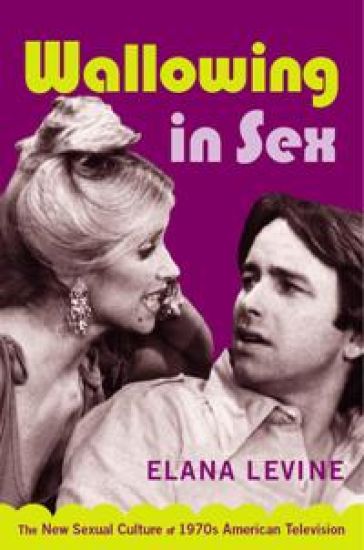
Passengers disco dancing in The Love Boat’s Acapulco Lounge. A young girl walking by a marquee advertising Deep Throat in the made-for-TV movie Dawn: Portrait of a Teenage Runaway. A frustrated housewife borrowing Orgasm and You from her local library in Mary Hartman, Mary Hartman. Commercial television of the 1970s was awash with references to sex. In the wake of the sexual revolution and the women’s liberation and gay rights movements, significant changes were rippling through American culture. In representing-or not representing-those changes, broadcast television provided a crucial forum through which Americans alternately accepted and contested momentous shifts in sexual mores, identities, and practices.Wallowing in Sex is a lively analysis of the key role of commercial television in the new sexual culture of the 1970s. Elana Levine explores sex-themed made-for-TV movies; female sex symbols such as the stars of Charlie’s Angels and Wonder Woman; the innuendo-driven humor of variety shows (The Sonny and Cher Comedy Hour, Laugh-In), sitcoms (M*A*S*H, Three’s Company), and game shows (Match Game); and the proliferation of rape plots in daytime soap operas. She also uncovers those sexual topics that were barred from the airwaves. Along with program content, Levine examines the economic motivations of the television industry, the television production process, regulation by the government and the tv industry, and audience responses. She demonstrates that the new sexual culture of 1970s television was a product of negotiation between producers, executives, advertisers, censors, audiences, performers, activists, and many others. Ultimately, 1970s television legitimized some of the sexual revolution’s most significant gains while minimizing its more radical impulses.
Wallowing in Sex

Wallowing in Sex

Elana Levine

Duke University Press
2007
pokkari
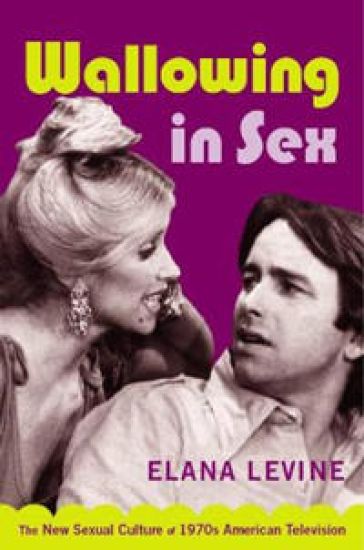
Passengers disco dancing in The Love Boat’s Acapulco Lounge. A young girl walking by a marquee advertising Deep Throat in the made-for-TV movie Dawn: Portrait of a Teenage Runaway. A frustrated housewife borrowing Orgasm and You from her local library in Mary Hartman, Mary Hartman. Commercial television of the 1970s was awash with references to sex. In the wake of the sexual revolution and the women’s liberation and gay rights movements, significant changes were rippling through American culture. In representing-or not representing-those changes, broadcast television provided a crucial forum through which Americans alternately accepted and contested momentous shifts in sexual mores, identities, and practices.Wallowing in Sex is a lively analysis of the key role of commercial television in the new sexual culture of the 1970s. Elana Levine explores sex-themed made-for-TV movies; female sex symbols such as the stars of Charlie’s Angels and Wonder Woman; the innuendo-driven humor of variety shows (The Sonny and Cher Comedy Hour, Laugh-In), sitcoms (M*A*S*H, Three’s Company), and game shows (Match Game); and the proliferation of rape plots in daytime soap operas. She also uncovers those sexual topics that were barred from the airwaves. Along with program content, Levine examines the economic motivations of the television industry, the television production process, regulation by the government and the tv industry, and audience responses. She demonstrates that the new sexual culture of 1970s television was a product of negotiation between producers, executives, advertisers, censors, audiences, performers, activists, and many others. Ultimately, 1970s television legitimized some of the sexual revolution’s most significant gains while minimizing its more radical impulses.