Kirjojen hintavertailu. Mukana 12 379 616 kirjaa ja 12 kauppaa.

Kirjailija

Eleanor Armour-Thomas

Kirjat ja teokset yhdessä paikassa: 8 kirjaa, julkaisuja vuosilta 1998-2025, suosituimpien joukossa Becoming a Reflective Mathematics Teacher. Vertaile teosten hintoja ja tarkista saatavuus suomalaisista kirjakaupoista.

8 kirjaa

Kirjojen julkaisuhaarukka 1998-2025.

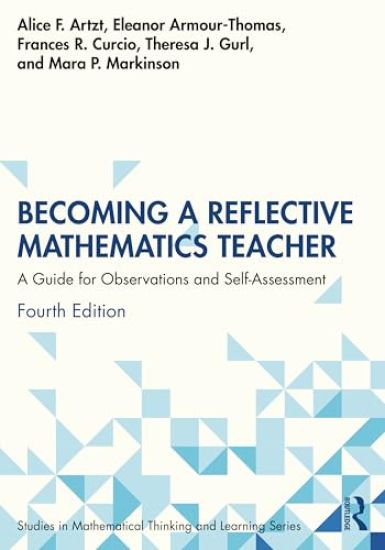
Becoming a Reflective Mathematics Teacher

Becoming a Reflective Mathematics Teacher

Alice F. Artzt; Eleanor Armour-Thomas; Frances R. Curcio; Theresa J. Gurl; Mara P. Markinson

TAYLOR FRANCIS LTD
2025
nidottu
This research-based, activity-oriented guide offers a highly effective framework for teacher reflection and self-assessment. Highlighting inquiry-based, learner-centered teaching and grounded in a cognitive perspective, this fourth edition features:Updated observation instruments for preservice or beginning teachers to use when observing other teachers.Additional guidelines, instruments, and rubrics for supervisors to use when observing, conferencing with, and assessing beginning or student teachers.Added focus on teaching for understanding via engagement and critical thinking.Chapter-specific updates include updated research literature, refinements to tables 2.1 and 3.1 for depth and clarity, and updated examples of student work. Thoroughly revised throughout, the fourth edition continues to provide preservice mathematics teachers with practical ideas for developing and honing reflective and self-analytical skills needed to advance and improve their instructional practice.
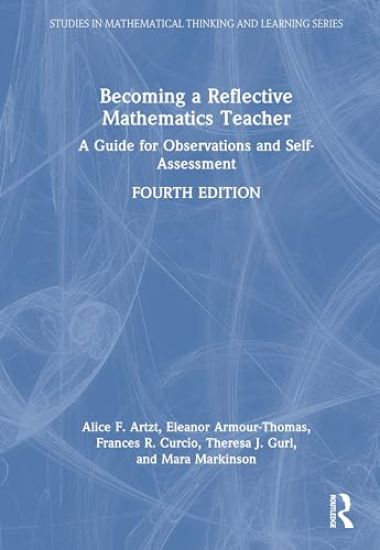
Becoming a Reflective Mathematics Teacher

Becoming a Reflective Mathematics Teacher

Alice F. Artzt; Eleanor Armour-Thomas; Frances R. Curcio; Theresa J. Gurl; Mara P. Markinson

TAYLOR FRANCIS LTD
2025
sidottu
This research-based, activity-oriented guide offers a highly effective framework for teacher reflection and self-assessment. Highlighting inquiry-based, learner-centered teaching and grounded in a cognitive perspective, this fourth edition features:Updated observation instruments for preservice or beginning teachers to use when observing other teachers.Additional guidelines, instruments, and rubrics for supervisors to use when observing, conferencing with, and assessing beginning or student teachers.Added focus on teaching for understanding via engagement and critical thinking.Chapter-specific updates include updated research literature, refinements to tables 2.1 and 3.1 for depth and clarity, and updated examples of student work. Thoroughly revised throughout, the fourth edition continues to provide preservice mathematics teachers with practical ideas for developing and honing reflective and self-analytical skills needed to advance and improve their instructional practice.
Becoming a Reflective Mathematics Teacher

Becoming a Reflective Mathematics Teacher

Alice F. Artzt; Eleanor Armour-Thomas; Frances R. Curcio; Theresa J. Gurl; Mara P. Markinson

Routledge
2015
sidottu
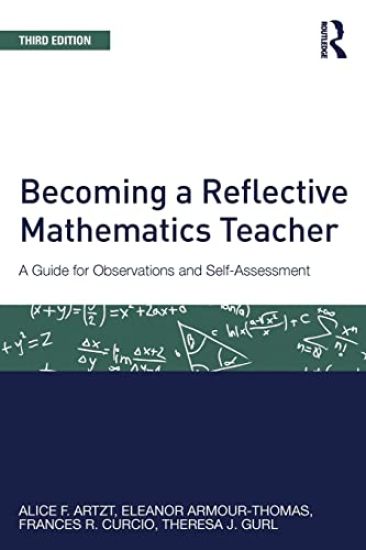
Ideal for preservice mathematics teachers who are taking methods courses or are student teaching, this research-based, activity-oriented guide offers a highly effective framework for teacher reflection and self-assessment. Highlighting inquiry-based, learner-centered teaching and grounded in a cognitive perspective, Becoming a Reflective Teacher of Mathematics, Third Edition features: Detailed observation instruments for observing other teachers Reflective activities that provide a structure for beginning teachers to think about their teaching Guidelines and instruments for supervisors to use when observing, conferencing with, and assessing beginning or student teachersThe Third Edition of Becoming a Reflective Teacher of Mathematics is aligned with the latest standards for teaching mathematics including the Common Core State Standards-Mathematics, and the latest assessments for mathematics teacher certification which place a high priority on reflective practice. Thoroughly revised and updated throughout, the Third Edition continues to provide preservice and in-service mathematics teachers with practical ideas for developing and honing reflective and self-analytical skills needed to advance and improve instruction.
Becoming a Reflective Mathematics Teacher

Becoming a Reflective Mathematics Teacher

Alice F. Artzt; Eleanor Armour-Thomas; Frances R. Curcio; Theresa J. Gurl; Mara P. Markinson

Routledge
2015
nidottu
Ideal for preservice mathematics teachers who are taking methods courses or are student teaching, this research-based, activity-oriented guide offers a highly effective framework for teacher reflection and self-assessment. Highlighting inquiry-based, learner-centered teaching and grounded in a cognitive perspective, Becoming a Reflective Teacher of Mathematics, Third Edition features: Detailed observation instruments for observing other teachers Reflective activities that provide a structure for beginning teachers to think about their teaching Guidelines and instruments for supervisors to use when observing, conferencing with, and assessing beginning or student teachersThe Third Edition of Becoming a Reflective Teacher of Mathematics is aligned with the latest standards for teaching mathematics including the Common Core State Standards-Mathematics, and the latest assessments for mathematics teacher certification which place a high priority on reflective practice. Thoroughly revised and updated throughout, the Third Edition continues to provide preservice and in-service mathematics teachers with practical ideas for developing and honing reflective and self-analytical skills needed to advance and improve instruction.
Principles of Dynamic Pedagogy

Principles of Dynamic Pedagogy

Eleanor Armour-Thomas; Edmund W. Gordon

TAYLOR FRANCIS LTD
2025
sidottu
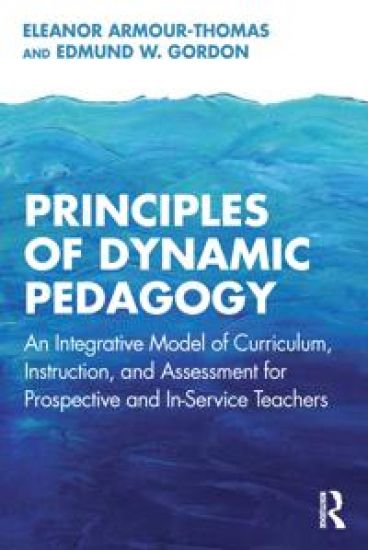
Principles of Dynamic Pedagogy reinvigorates teachers’ potential to cultivate meaningful growth in their students by leveraging a more reciprocal, interdependent relationship between curriculum, instruction, assessment, and learning. The latest findings from cognitive science, educational psychology and measurement, clinical practice, and socio-cultural studies offer today’s educators a unique opportunity to accommodate the strengths and challenges of diverse learners. How does this research synthesize into an iterative pedagogical process that fosters engaged, responsive students and facilitates their achievement of learning goals and objectives?Principles of Dynamic Pedagogy introduces students, faculty, and scholars of teacher education to the metacognitive competencies needed to ensure that students acquire, revisit, and explicitly comprehend their emerging knowledge and skills throughout the lessons of a curriculum unit. Driven by the conceptual and empirical foundations of the Dynamic Pedagogy model, this book will support current and future educators in consistently guiding their students to recognize, apply, and improve feedback on using metacognitive and cognitive processes for learning. Regardless of domain, teachers will be better prepared to manage their classrooms with a coherent approach to decision-making, adjustments to practice, monitoring and feedback, assessment design, and reflection.
Principles of Dynamic Pedagogy

Principles of Dynamic Pedagogy

Eleanor Armour-Thomas; Edmund W. Gordon

TAYLOR FRANCIS LTD
2025
nidottu
Principles of Dynamic Pedagogy reinvigorates teachers’ potential to cultivate meaningful growth in their students by leveraging a more reciprocal, interdependent relationship between curriculum, instruction, assessment, and learning. The latest findings from cognitive science, educational psychology and measurement, clinical practice, and socio-cultural studies offer today’s educators a unique opportunity to accommodate the strengths and challenges of diverse learners. How does this research synthesize into an iterative pedagogical process that fosters engaged, responsive students and facilitates their achievement of learning goals and objectives?Principles of Dynamic Pedagogy introduces students, faculty, and scholars of teacher education to the metacognitive competencies needed to ensure that students acquire, revisit, and explicitly comprehend their emerging knowledge and skills throughout the lessons of a curriculum unit. Driven by the conceptual and empirical foundations of the Dynamic Pedagogy model, this book will support current and future educators in consistently guiding their students to recognize, apply, and improve feedback on using metacognitive and cognitive processes for learning. Regardless of domain, teachers will be better prepared to manage their classrooms with a coherent approach to decision-making, adjustments to practice, monitoring and feedback, assessment design, and reflection.
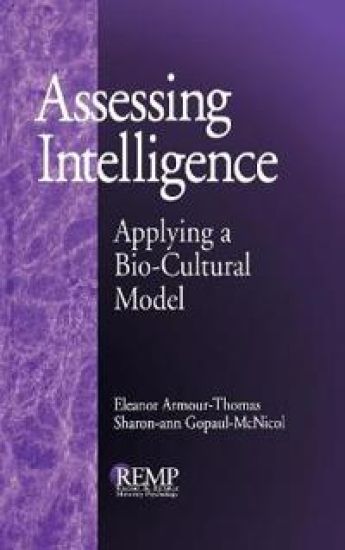
Assessing Intelligence

Assessing Intelligence

Eleanor Armour-Thomas; Sharon-Ann Gopaul-McNicol

SAGE Publications Inc
1998
nidottu
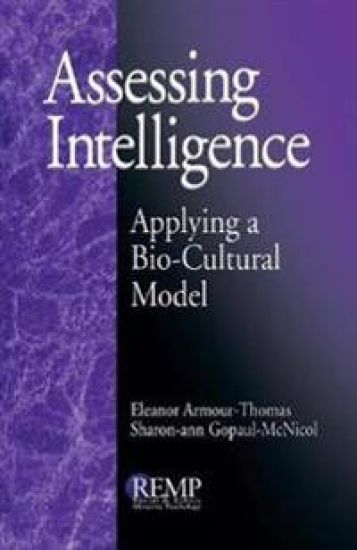
Offering an alternative approach to the current models of assessing intelligence, this volume presents a comprehensive and informed understanding of the biological and cultural influences on intellectual behavior. In Assessing Intelligence, authors Eleanor Armour-Thomas and Sharon-Ann Gopaul-McNicol propose a "bio-cultural" model for intelligence assessment. This volume begins by examining the issues pertaining to intellectual assessment, the nature of intelligence, and the biological influences on cognition. It then explores a new model for assessing all childrenùThe Four-Tier Bio-Cultural Assessment System--and it presents an evaluation of that system. Finally, it offers training suggestions for teachers, parents, counselors, and psychologists for enhancing the intellectual potential of all children, and it presents implications for future research and clinical work as well as a vision for policymakers to ensure culturally sensitive assessment. Assessing Intelligence offers a diverse perspective from the fields of clinical psychology, school psychology, education, and education psychology. It will be a valuable resource for practitioners, researchers, and policymakers in the fields of general psychology, clinical psychology, education, social psychology, cross-cultural psychology, multicultural psychology, political science, and cultural studies.
Assessing Intelligence

Assessing Intelligence

Eleanor Armour-Thomas; Sharon-Ann Gopaul-McNicol

SAGE Publications Inc
1998
sidottu
Offering an alternative approach to the current models of assessing intelligence, this volume presents a comprehensive and informed understanding of the biological and cultural influences on intellectual behavior. In Assessing Intelligence, authors Eleanor Armour-Thomas and Sharon-Ann Gopaul-McNicol propose a "bio-cultural" model for intelligence assessment. This volume begins by examining the issues pertaining to intellectual assessment, the nature of intelligence, and the biological influences on cognition. It then explores a new model for assessing all childrenùThe Four-Tier Bio-Cultural Assessment System--and it presents an evaluation of that system. Finally, it offers training suggestions for teachers, parents, counselors, and psychologists for enhancing the intellectual potential of all children, and it presents implications for future research and clinical work as well as a vision for policymakers to ensure culturally sensitive assessment. Assessing Intelligence offers a diverse perspective from the fields of clinical psychology, school psychology, education, and education psychology. It will be a valuable resource for practitioners, researchers, and policymakers in the fields of general psychology, clinical psychology, education, social psychology, cross-cultural psychology, multicultural psychology, political science, and cultural studies.