Kirjojen hintavertailu. Mukana 12 390 323 kirjaa ja 12 kauppaa.

Kirjailija

Eleanor Gordon

Kirjat ja teokset yhdessä paikassa: 5 kirjaa, julkaisuja vuosilta 1991-2025, suosituimpien joukossa Working-Class Courtship, Marriage, and Divorce in Scotland, 1855–1939. Vertaile teosten hintoja ja tarkista saatavuus suomalaisista kirjakaupoista.

5 kirjaa

Kirjojen julkaisuhaarukka 1991-2025.

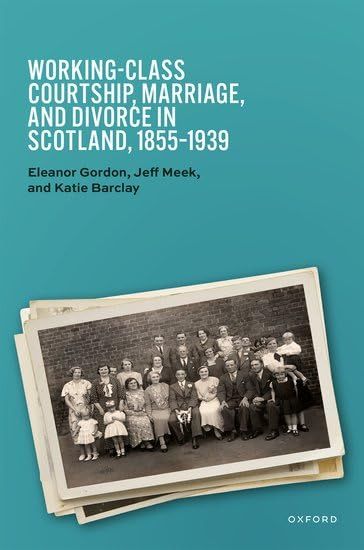
Working-Class Courtship, Marriage, and Divorce in Scotland, 1855–1939

Working-Class Courtship, Marriage, and Divorce in Scotland, 1855–1939

Eleanor Gordon; Jeff Meek; Katie Barclay

Oxford University Press
2025
sidottu
This is the first book-length study of the history of working-class courtship and marriage in Scotland, from the establishment of civil registration to the introduction in 1939 of legislation which abolished irregular marriage and introduced civil marriage. Adopting a 'life course' approach, the book explores the social, economic, and cultural contexts of romantic partnerships, from courtship through to marital or family dissolution. Drawing from a wide range of sources that capture official accounts and discourses on the one hand, and the testimony and experience of working-class people on the other, the book offers a uniquely broad and textured view of courtship and marriage in this period. In so doing, it advances recent historiographical debates surrounding marriage in the Anglophone world, particularly the mutability of 'love', and whether the late nineteenth and early twentieth centuries constituted a social and cultural 'turning point' for the working classes in terms of choice of marriage partner, the nature of the marital relationship, and the parent-child relationship. The book also engages with debates about extra-marital sexual activity in the nineteenth and early twentieth centuries, whether the family was more or less 'stable' than the contemporary family, and the different ways that marriages broke down before the advent of divorce reform. This has important implications for wider European and North American historiography, and raises timely questions about the primacy of the 'traditional family' in policy and public discourse.
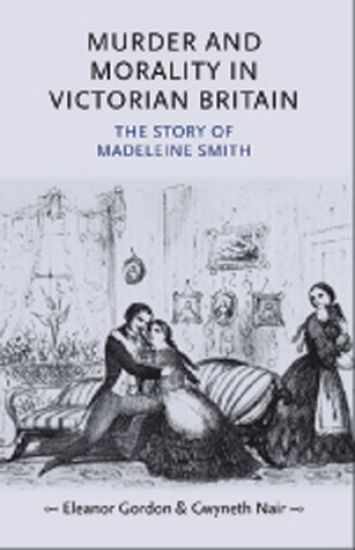
Murder and Morality in Victorian Britain

Murder and Morality in Victorian Britain

Eleanor Gordon; Gwyneth Nair

Manchester University Press
2009
nidottu
This book explores the life of Madeleine Smith, who in 1857 was tried for poisoning her secret lover. As well as charting the course of this illicit relationship and Madeleine’s subsequent trial, the authors draw on a wide range of sources to pursue themes such as the nature of gender relations and the extent of women’s social and commercial activities, and to bring vividly to life the world of the mid-Victorian middle class.The book contains new discoveries about Madeleine’s long and colourful life after the trial which confirm the view that it is only in fiction that the bad end unhappily.The book will be of interest to academic social historians, but the fascination of its subject matter and the way in which much rich material is used to evoke a vivid sense of time and place, will also promote a wider interest among a more general readership.
Conflict, Security and Justice

Conflict, Security and Justice

Eleanor Gordon

Red Globe Press
2019
nidottu
This path-breaking new textbook provides a broad overview of the core concepts, actors and activities involved in building security and justice after conflict, as well as challenges and lessons learned in this field. Drawing attention to the principles which guide – or should guide – this kind of work, as well as using practical examples throughout, the book covers a uniquely wide range of issues in peacebuilding – from transitional justice and disarmament to security sector reform and human rights. It concludes by considering both the regional and more far-reaching impacts of conflict, including such global phenomena as terrorism, piracy and organised crime. With a decade of experience working in post-conflict zones for the UN and other organisations, and a further 10 years in academia and as a consultant for various international organisations, the author’s unparalleled expertise on the topic and her accessible writing style make this book the essential guide to postgraduate and upper-level undergraduate courses on peace and conflict studies. The text is also important supplemental reading for those studying war, peace, development, security or IR in a wider context and for practitioners and policy-makers in the field of peacebuilding.
Murder and Morality in Victorian Britain

Murder and Morality in Victorian Britain

Eleanor Gordon; Gwyneth Nair

Manchester University Press
2009
sidottu
This book explores the life of Madeleine Smith, who in 1857 was tried for poisoning her secret lover. As well as charting the course of this illicit relationship and Madeleine’s subsequent trial, the authors draw on a wide range of sources to pursue themes such as the nature of gender relations and the extent of women’s social and commercial activities, and to bring vividly to life the world of the mid-Victorian middle class.The book contains new discoveries about Madeleine’s long and colourful life after the trial which confirm the view that it is only in fiction that the bad end unhappily.The book will be of interest to academic social historians, but the fascination of its subject matter and the way in which much rich material is used to evoke a vivid sense of time and place, will also promote a wider interest among a more general readership.
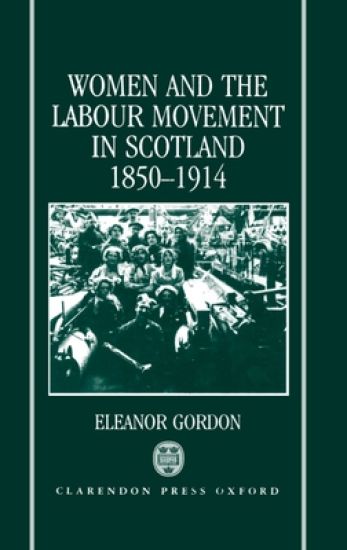
Women and the Labour Movement in Scotland 1850-1914
This is a study of working women in Scotland in the period 1850-1914. In a detailed scholarly analysis, based on a wide range of contemporary sources, Eleanor Gordon uncovers the patterns of their employment, their involvement in and relationship to trades unionism, and the forms of their workplace resistance and struggles. Focusing particularly on women working in Dundee's jute industry, Dr Gordon's study integrates labour history and the history of gender. It is a stimulating and thorough account, which challenges many assumptions about the organizational apathy of women workers and about the inevitable division between workplace and domestic ideologies. It makes an important contribution to current historiographical debates over the sexual division of labour, working-class consciousness, and domestic ideologies, and to the history of women in Scotland.