Kirjojen hintavertailu. Mukana 12 657 676 kirjaa ja 12 kauppaa.

Kirjailija

Elinor Fuchs

Kirjat ja teokset yhdessä paikassa: 3 kirjaa, julkaisuja vuosilta 1996-2016, suosituimpien joukossa The Death of Character. Vertaile teosten hintoja ja tarkista saatavuus suomalaisista kirjakaupoista.

3 kirjaa

Kirjojen julkaisuhaarukka 1996-2016.

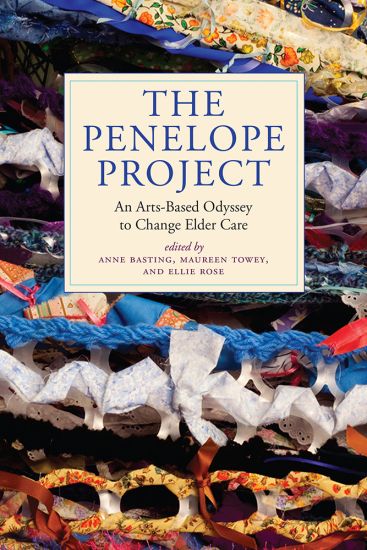
The Penelope Project

The Penelope Project

Elinor Fuchs

University of Iowa Press
2016
nidottu
Of the 15,000 nursing homes in the United States, how many are places you’d want to visit, much less live in? Now that people are living longer and more of the population are elderly, this question is more important than ever, particularly for people with disabilities. We must transform long-term care into an experience we and our loved ones can face without dread. It can be done. The Penelope Project shows how by taking readers on an ambitious journey to create a long-term care community that engages its residents in challenging, meaningful art-making.At Milwaukee’s Luther Manor, a team of artists from the University of Wisconsin’s theatre department and Sojourn Theatre Company, university students, staff, residents, and volunteers traded their bingo cards for copies of The Odyssey. They embarked on atwo-year project to examine this ancient story from the perspective of the hero who never left home: Penelope, wife of Odysseus. Together, the team staged a play that engaged everyone and transcended the limits not just of old age and disability but also youth, institutional regulations, and disciplinary boundaries.Inviting readers to see through the eyes of residents, students, artists, staff, family members, and experts in the fields of education, long-term care, and civically engaged arts practice, thisbook underscores the essential role of the arts and humanities in living richly. Waiting, as Penelope waited, need not be a time of loss and neglect. The Penelope Project boldly dreams of how to make late life a time of growth and learning. If you dream of improving people’s lives through creative endeavors, this book providespractical advice.

The Apocalyptic Century

The Apocalyptic Century

Elinor Fuchs

Duke University Press
1999
pokkari
Apocalypse, with its promise of millenarian transformation, has been one of the twentieth century’s powerful driving forces, in aesthetics as well as in politics. This special Millennium Issue of Theater offers a radical rethinking of theatrical modernism and the avant-garde in the light of apocalypse-the violent destruction of the old to “Make It New,” as Ezra Pound urged. This major collection of essays and play texts explores how modernist theater both reflected and contributed to the century’s unparalleled social and political upheavals.Featuring previously unpublished texts and translations by Karl Kraus, Tennessee Williams, Heiner MÜller, and David Cole, this collection shows that twentieth-century theater transformed many of the traditional elements of classical apocalyptic literature for modern ends. The volume’s contributors consider playwrights, theories, and movement spanning the past one hundred years, providing a startling new perspective on modern drama from Ibsen and Jarry to Adrienne Kennedy and Tony Kushner.Contributors. Gabrielle Cody, Linda Dorff, Michael Evenden, Elinor Fuchs, Daniel Gerould, SylvÉre Lotringer, Matthew Wilson Smith, Kirk Williams
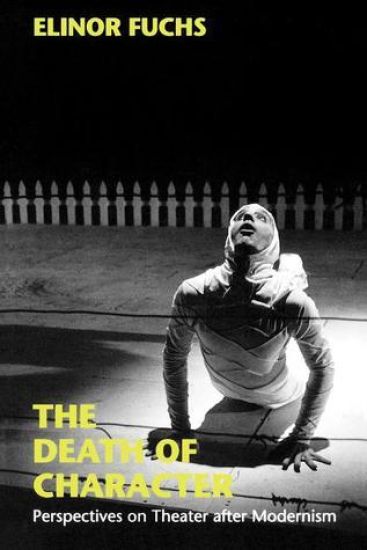
The Death of Character

The Death of Character

Elinor Fuchs

Indiana University Press
1996
pokkari
"Extremely well written, and exceedingly well informed, this is a work that opens a variety of important questions in sophisticated and theoretically nuanced ways. It is hard to imagine a better tour guide than Fuchs for a trip through the last thirty years of, as she puts it, what we used to call the 'avant-garde.'" —Essays in Theatre ". . . an insightful set of theoretical 'takes' on how to think about theatre before and theatre after modernism." —Theatre Journal "In short, for those who never experienced a 'postmodern swoon,' Elinor Fuchs is an excellent informant." —Performing Arts Journal ". . . a thoughtful, highly readable contribution to the evolving literature on theatre and postmodernism." —Modern Drama "A work of bold theoretical ambition and exceptional critical intelligence. . . . Fuchs combines mastery of contemporary cultural theory with a long and full participation in American theater culture: the result is a long-needed, long-awaited elaboration of a new theatrical paradigm." —Una Chaudhuri, New York University "What makes this book exceptional is Fuchs' acute rehearsal of the stranger unnerving events of the last generation that have—in the cross-reflections of theory—determined our thinking about theater. She seems to have seen and absorbed them all." —Herbert Blau, Center for Twentieth Century Studies, University of Wisconsin, Milwaukee "Surveying the extraordinary scene of the postmodern American theater, Fuchs boldly frames key issues of subjectivity and performance with the keenest of critical eyes for the compelling image and the telling gesture." —Joseph Roach, Tulane University " . . . Fuchs makes an exceptionally lucid and eloquent case for the value and contradictions in postmodern theater." —Alice Rayner, Stanford University "Arguably the most accessible yet learned road map to what remains for many impenetrable territoryan obligatory addition to all academic libraries serving upper-division undertgraduates and above." —Choice "A systematic, comprehensive and historically-minded assessment of what, precisely, 'post-modern theatre' is, anyway." —American Theatre In this engrossing study, Elinor Fuchs explores the multiple worlds of theater after modernism. While The Death of Character engages contemporary cultural and aesthetic theory, Elinor Fuchs always speaks as an active theater critic. Nine of her Village Voice and American Theatre essays conclude the volume. They give an immediate, vivid account of contemporary theater and theatrical culture written from the front of rapid cultural change.