Kirjojen hintavertailu. Mukana 12 595 353 kirjaa ja 12 kauppaa.

Kirjailija

Eliot Borenstein

Kirjat ja teokset yhdessä paikassa: 23 kirjaa, julkaisuja vuosilta 1999-2025, suosituimpien joukossa Soviet Self-Hatred. Vertaile teosten hintoja ja tarkista saatavuus suomalaisista kirjakaupoista.

23 kirjaa

Kirjojen julkaisuhaarukka 1999-2025.

The Politics of Fantasy

The Politics of Fantasy

Eliot Borenstein

UNIVERSITY OF WISCONSIN PRESS
2025
sidottu
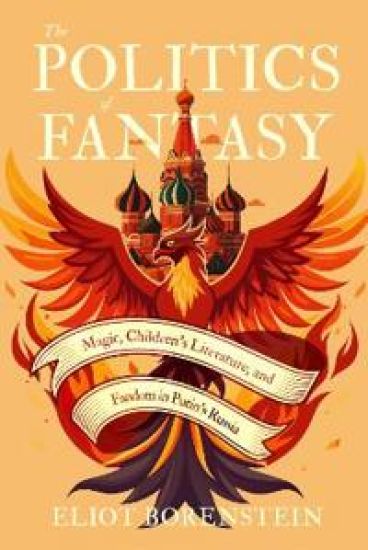
In this book, cultural historian Eliot Borenstein asks what happened when J. K. Rowling's mega-blockbuster, born in the United Kingdom and launched to global heights by Hollywood and the full force of Western marketing, came knocking on President Putin's door. The arrival of boy wizard and international star Harry Potter in a recently neoliberal Russia was enormously influential but neither smooth nor uncontested. The franchise quickly became a lens that focused Russians' national ambitions and fears during an era characterized by both the hegemony of popular culture and a conservative backlash. With crisp, engaging prose, Borenstein leaps from Harry Potter into an exploration of the culture wars and moral panics sparked by the development of Western-inspired children's culture, extending back into the Soviet period and through the invasion of Ukraine, guiding us along a path as treacherous and intriguing, with as many surprising characters, dark corners, and historical side streets, as the wizarding world's Diagon Alley. As cultural products pitched ostensibly to children, the Harry Potter books and films became the perfect objects for criticism, translation, adaptation, parody, attack, mimicry, and meme-making, allowing Russians to carve out their own space in the worldwide market of magical multiverses.
Russian Culture under Putin

Russian Culture under Putin

Eliot Borenstein

BLOOMSBURY PUBLISHING PLC
2024
nidottu
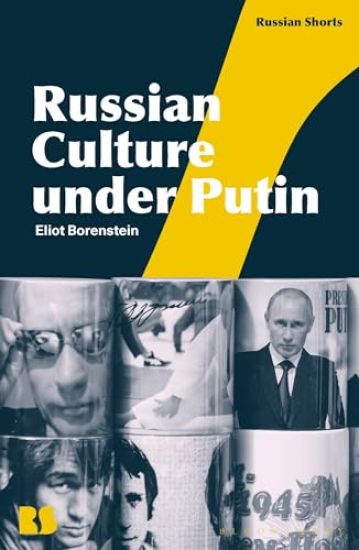
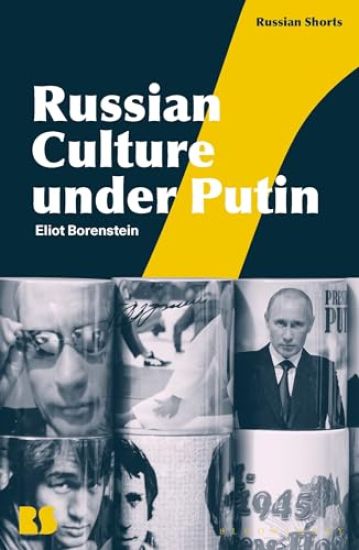
This timely text charts the metamorphosis of Russian media and culture in the 21st century. It considers how, when Vladimir Putin came to power in 2000, Russia's media and culture industry had enjoyed nearly a decade of almost unrestricted freedom and yet, by the time he launched his illegal invasion of Ukraine in 2022, Russia's independent media was crushed, while the few viable opposition figures were either imprisoned, exiled, or dead under mysterious circumstances.Eliot Borenstein looks at the manufactured cult of Putin, the competing models of Russianness put forth in the media, the obsession with nostalgia and the limits on imagining the future, the rise of aggressive patriotism and the myth of ancient Russian 'traditional' values, the significance of the fight against ‘gay propaganda’, and the absurdist strategies used by the opposition in the face of increasing restrictions on free speech. Though the book's title invokes Putin, Russian Culture under Putin does not cast the Russian leader as an all-knowing genius pursuing a master plan. The culture of the past twenty years, both official and independent, has been largely improvisational. 21st-century Russia, as Borenstein demonstrates so masterfully, has not been frog-marched into unfreedom, but has in fact lurched back and forth on a dimly-lit path.
Russian Culture under Putin

Russian Culture under Putin

Eliot Borenstein

BLOOMSBURY PUBLISHING PLC
2024
sidottu
This timely text charts the metamorphosis of Russian media and culture in the 21st century. It considers how, when Vladimir Putin came to power in 2000, Russia's media and culture industry had enjoyed nearly a decade of almost unrestricted freedom and yet, by the time he launched his illegal invasion of Ukraine in 2022, Russia's independent media was crushed, while the few viable opposition figures were either imprisoned, exiled, or dead under mysterious circumstances.Eliot Borenstein looks at the manufactured cult of Putin, the competing models of Russianness put forth in the media, the obsession with nostalgia and the limits on imagining the future, the rise of aggressive patriotism and the myth of ancient Russian 'traditional' values, the significance of the fight against ‘gay propaganda’, and the absurdist strategies used by the opposition in the face of increasing restrictions on free speech. Though the book's title invokes Putin, Russian Culture under Putin does not cast the Russian leader as an all-knowing genius pursuing a master plan. The culture of the past twenty years, both official and independent, has been largely improvisational. 21st-century Russia, as Borenstein demonstrates so masterfully, has not been frog-marched into unfreedom, but has in fact lurched back and forth on a dimly-lit path.
Unstuck in Time

Unstuck in Time

Eliot Borenstein

CORNELL UNIVERSITY PRESS
2024
pokkari
Today's Russia, Unstuck in Time suggests, is a nation of time travelers, living either in memories of the Great Patriotic War and a society that provided for all its citizens or in an alternative future in which the USSR never collapsed. Eliot Borenstein examines the ways in which films, fiction, television, social media, political parties, and even theme parks use the conventions of time travel and alternate history to fantasize about narratives that are more appealing than the post-Soviet present. Unstuck in Time explores the centrality of an uncannily persistent USSR in the post-Soviet cultural imagination through deeply engaged and entertaining readings of an impressive array of texts: fantasies in which characters time-crash into the Soviet past, fictions of triumphant far-future Soviet societies, and real-life enterprises feeding the belief that the Soviet Union never ended. Whether channeled into benign nostalgia or dangerous mythmaking, the cases that Borenstein analyzes reveal the extent to which the psychic shock of the end of the Soviet Union left Russians adrift, caught between a past many still long for and a future few can imagine.
Unstuck in Time

Unstuck in Time

Eliot Borenstein

CORNELL UNIVERSITY PRESS
2024
sidottu
Today's Russia, Unstuck in Time suggests, is a nation of time travelers, living either in memories of the Great Patriotic War and a society that provided for all its citizens or in an alternative future in which the USSR never collapsed. Eliot Borenstein examines the ways in which films, fiction, television, social media, political parties, and even theme parks use the conventions of time travel and alternate history to fantasize about narratives that are more appealing than the post-Soviet present. Unstuck in Time explores the centrality of an uncannily persistent USSR in the post-Soviet cultural imagination through deeply engaged and entertaining readings of an impressive array of texts: fantasies in which characters time-crash into the Soviet past, fictions of triumphant far-future Soviet societies, and real-life enterprises feeding the belief that the Soviet Union never ended. Whether channeled into benign nostalgia or dangerous mythmaking, the cases that Borenstein analyzes reveal the extent to which the psychic shock of the end of the Soviet Union left Russians adrift, caught between a past many still long for and a future few can imagine.
Harry Potter in Russia

Harry Potter in Russia

Eliot Borenstein

BLOOMSBURY PUBLISHING PLC
2024
nidottu
Little did newly-elected Russian President Vladimir Putin know that, as soon as he came to power, he would be sharing the spotlight with an 11-year-old British wizard. In Harry Potter in Russia, Eliot Borenstein examines the Russian Pottermania explosion in 2000 and how Harry Potter has become politicized in ways both familiar and unfamiliar to J.K. Rowling’s Western fans. Borenstein reflects on how the franchise led to soul-searching about the fate of children’s literature, the legitimacy and even dangers of fantasy genres, and debates about intellectual property and Internet piracy. The book explores the ways in which Potter sparked moral panics about the occult, anxiety over the power of the Russian Orthodox Church, and even fears that the titular icon and his ilk were a Trojan Horse in a Western plot to corrupt Russian morals and destroy the country. Harry Potter in Russia also delves into the significance of fan fiction, parodies, cheap-knock offs, and repeated comparisons between the Boy Who Lived and the Man Who Ruled.
Harry Potter in Russia

Harry Potter in Russia

Eliot Borenstein

BLOOMSBURY PUBLISHING PLC
2024
sidottu
Little did newly-elected Russian President Vladimir Putin know that, as soon as he came to power, he would be sharing the spotlight with an 11-year-old British wizard. In Harry Potter in Russia, Eliot Borenstein examines the Russian Pottermania explosion in 2000 and how Harry Potter has become politicized in ways both familiar and unfamiliar to J.K. Rowling’s Western fans. Borenstein reflects on how the franchise led to soul-searching about the fate of children’s literature, the legitimacy and even dangers of fantasy genres, and debates about intellectual property and internet piracy. The book explores the ways in which Potter sparked moral panics about the occult, anxiety over the power of the Russian Orthodox Church, and even fears that the titular icon and his ilk were a Trojan Horse in a Western plot to corrupt Russian morals and destroy the country. Harry Potter in Russia also delves into the significance of fan fiction, parodies, cheap-knock offs, and repeated comparisons between the Boy Who Lived and the Man Who Ruled.
HBO's The Leftovers

HBO's The Leftovers

Eliot Borenstein

BLOOMSBURY PUBLISHING PLC
2023
sidottu
This book unpacks and analyzes the central themes of sacrifice, melancholy, apocalypticism, and the nature of family and home in HBO’s The Leftovers to demonstrate the key role it played in the development of early twenty-first-century television. Eliot Borenstein argues that the story of The Leftovers is the most sustained exploration of loss ever to appear on American television and subverts the expectations of viewers who look to prestige dramas as puzzles to solve by providing no clear answers the mysteries most central to the show’s plot. Instead, Borenstein posits, the series endeavors to provide more nuanced and realistic portrayals of the melancholy that occurs when people’s lives are unmoored, leavening an inherently depressing experience with absurdity and moments of grace.
Soviet Self-Hatred

Soviet Self-Hatred

Eliot Borenstein

CORNELL UNIVERSITY PRESS
2023
pokkari
Soviet Self-Hatred examines the imaginary Russian identities that emerged following the collapse of the Soviet Union. Eliot Borenstein shows how these identities are best understood as balanced on a simple axis between pride and shame, shifting in response to Russia's standing in the global community, its anxieties about internal dissension and foreign threats, and its stark socioeconomic inequalities. Through close readings of Russian fiction, films, jokes, songs, fan culture, and Internet memes, Borenstein identifies and analyzes four distinct types with which Russians identify or project onto others. They are the sovok (the Soviet yokel); the New Russian (the despised, ridiculous nouveau riche), the vatnik (the belligerent, jingoistic patriot), and the Orc (the ultraviolent savage derived from a deliberate misreading of Tolkien's epic). Through these contested identities, Soviet Self-Hatred shows how stories people tell about themselves can, tragically, become the stories that others are forced to live.
Soviet Self-Hatred

Soviet Self-Hatred

Eliot Borenstein

CORNELL UNIVERSITY PRESS
2023
sidottu
Soviet Self-Hatred examines the imaginary Russian identities that emerged following the collapse of the Soviet Union. Eliot Borenstein shows how these identities are best understood as balanced on a simple axis between pride and shame, shifting in response to Russia's standing in the global community, its anxieties about internal dissension and foreign threats, and its stark socioeconomic inequalities. Through close readings of Russian fiction, films, jokes, songs, fan culture, and Internet memes, Borenstein identifies and analyzes four distinct types with which Russians identify or project onto others. They are the sovok (the Soviet yokel); the New Russian (the despised, ridiculous nouveau riche), the vatnik (the belligerent, jingoistic patriot), and the Orc (the ultraviolent savage derived from a deliberate misreading of Tolkien's epic). Through these contested identities, Soviet Self-Hatred shows how stories people tell about themselves can, tragically, become the stories that others are forced to live.
Marvel Comics in the 1970s

Marvel Comics in the 1970s

Eliot Borenstein

CORNELL UNIVERSITY PRESS
2023
pokkari
Marvel Comics in the 1970s explores a forgotten chapter in the story of the rise of comics as an art form. Bridging Marvel's dizzying innovations and the birth of the underground comics scene in the 1960s and the rise of the prestige graphic novel and postmodern superheroics in the 1980s, Eliot Borenstein reveals a generation of comic book writers whose work at Marvel in the 1970s established their own authorial voice within the strictures of corporate comics. Through a diverse cast of heroes (and the occasional antihero)—Black Panther, Shang-Chi, Deathlok, Dracula, Killraven, Man-Thing, and Howard the Duck—writers such as Steve Gerber, Doug Moench, and Don McGregor made unprecedented strides in exploring their characters' inner lives. Visually, dynamic action was still essential, but the real excitement was taking place inside their heroes' heads. Marvel Comics in the 1970s highlights the brilliant and sometimes gloriously imperfect creations that laid the groundwork for the medium's later artistic achievements and the broader acceptance of comic books in the cultural landscape today.
Marvel Comics in the 1970s

Marvel Comics in the 1970s

Eliot Borenstein

CORNELL UNIVERSITY PRESS
2023
sidottu
Marvel Comics in the 1970s explores a forgotten chapter in the story of the rise of comics as an art form. Bridging Marvel's dizzying innovations and the birth of the underground comics scene in the 1960s and the rise of the prestige graphic novel and postmodern superheroics in the 1980s, Eliot Borenstein reveals a generation of comic book writers whose work at Marvel in the 1970s established their own authorial voice within the strictures of corporate comics. Through a diverse cast of heroes (and the occasional antihero)—Black Panther, Shang-Chi, Deathlok, Dracula, Killraven, Man-Thing, and Howard the Duck—writers such as Steve Gerber, Doug Moench, and Don McGregor made unprecedented strides in exploring their characters' inner lives. Visually, dynamic action was still essential, but the real excitement was taking place inside their heroes' heads. Marvel Comics in the 1970s highlights the brilliant and sometimes gloriously imperfect creations that laid the groundwork for the medium's later artistic achievements and the broader acceptance of comic books in the cultural landscape today.
Meanwhile, in Russia...

Meanwhile, in Russia...

Eliot Borenstein

Bloomsbury Academic
2022
nidottu
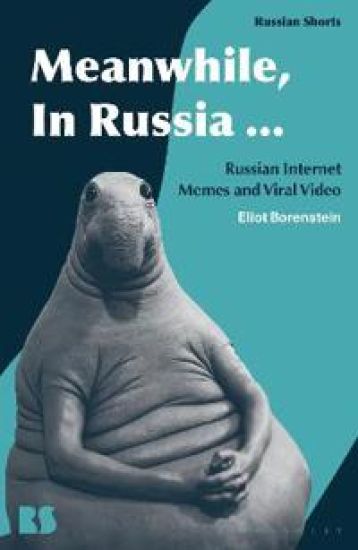
The Russian internet is a hotbed for memes and viral videos: the political, satirical and simply absurd compete for attention in Russia while the West turns to it for an endless reserve of humorous content. But how did this powerful cyber community grow out of the repressive media environment of the Soviet Union? What does this viral content reveal about the country, its politics and its culture? And why are the memes and videos of today’s Russia so popular, spreading so rapidly across the globe? Award-winning author Eliot Borenstein explores the explosive online movement and unpicks, for the first time, the role of mimetic content and digital activism in modern Russian history up to the present day.
Meanwhile, in Russia...

Meanwhile, in Russia...

Eliot Borenstein

Bloomsbury Academic
2022
sidottu
The Russian internet is a hotbed for memes and viral videos: the political, satirical and simply absurd compete for attention in Russia while the West turns to it for an endless reserve of humorous content. But how did this powerful cyber community grow out of the repressive media environment of the Soviet Union? What does this viral content reveal about the country, its politics and its culture? And why are the memes and videos of today’s Russia so popular, spreading so rapidly across the globe? Award-winning author Eliot Borenstein explores the explosive online movement and unpicks, for the first time, the role of mimetic content and digital activism in modern Russian history up to the present day.
Pussy Riot

Pussy Riot

Eliot Borenstein

Bloomsbury Academic
2020
nidottu
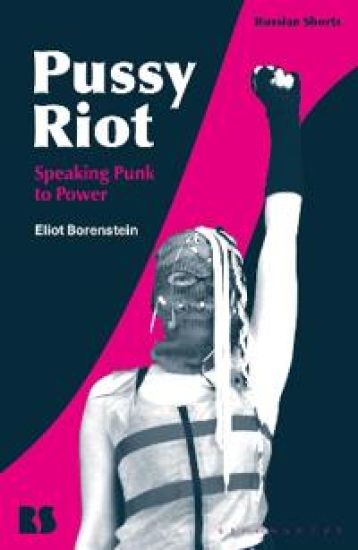
Both more and less than a band, Pussy Riot is continually misunderstood by the Western media. This book sets the record straight.After their scandalous performance of an anti-Putin protest song in Moscow’s Cathedral of Christ the Savior and the imprisonment of two of its members, the punk feminist art collective known as Pussy Riot became an international phenomenon. But, what, exactly, is Pussy Riot, and what are they trying to achieve? The award-winning author Eliot Borenstein explores the movement’s explosive history and takes you beyond the hype.
Pussy Riot

Pussy Riot

Eliot Borenstein

Bloomsbury Academic
2020
sidottu
Both more and less than a band, Pussy Riot is continually misunderstood by the Western media. This book sets the record straight.After their scandalous performance of an anti-Putin protest song in Moscow’s Cathedral of Christ the Savior and the imprisonment of two of its members, the punk feminist art collective known as Pussy Riot became an international phenomenon. But, what, exactly, is Pussy Riot, and what are they trying to achieve? The award-winning author Eliot Borenstein explores the movement’s explosive history and takes you beyond the hype.
Plots Against Russia

Plots Against Russia

Eliot Borenstein

Cornell University Press
2019
pokkari
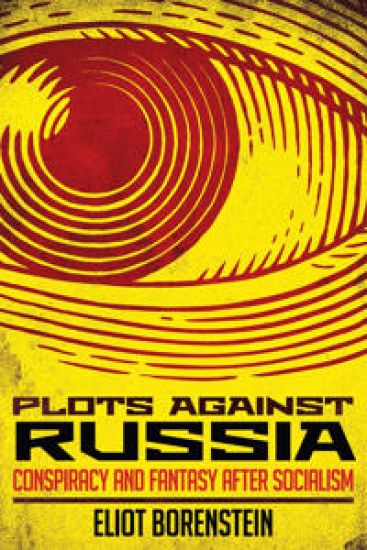
In this original and timely assessment of cultural expressions of paranoia in contemporary Russia, Eliot Borenstein samples popular fiction, movies, television shows, public political pronouncements, internet discussions, blogs, and religious tracts to build a sense of the deep historical and cultural roots of konspirologiia that run through Russian life. Plots against Russia reveals through dramatic and exciting storytelling that conspiracy and melodrama are entirely equal-opportunity in modern Russia, manifesting themselves among both pro-Putin elites and his political opposition. As Borenstein shows, this paranoid fantasy until recently characterized only the marginal and the irrelevant. Now, through its embodiment in pop culture, the expressions of a conspiratorial worldview are seen everywhere. Plots against Russia is an important contribution to the fields of Russian literary and cultural studies from one of its preeminent voices.
Plots Against Russia

Plots Against Russia

Eliot Borenstein

Cornell University Press
2019
sidottu
In this original and timely assessment of cultural expressions of paranoia in contemporary Russia, Eliot Borenstein samples popular fiction, movies, television shows, public political pronouncements, internet discussions, blogs, and religious tracts to build a sense of the deep historical and cultural roots of konspirologiia that run through Russian life. Plots against Russia reveals through dramatic and exciting storytelling that conspiracy and melodrama are entirely equal-opportunity in modern Russia, manifesting themselves among both pro-Putin elites and his political opposition. As Borenstein shows, this paranoid fantasy until recently characterized only the marginal and the irrelevant. Now, through its embodiment in pop culture, the expressions of a conspiratorial worldview are seen everywhere. Plots against Russia is an important contribution to the fields of Russian literary and cultural studies from one of its preeminent voices.
Overkill

Overkill

Eliot Borenstein

Cornell University Press
2007
pokkari
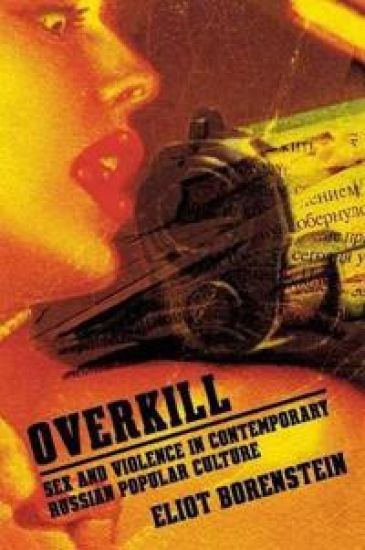
Perestroika and the end of the Soviet Union transformed every aspect of life in Russia, and as hope began to give way to pessimism, popular culture came to reflect the anxiety and despair felt by more and more Russians. Free from censorship for the first time in Russia's history, the popular culture industry (publishing, film, and television) began to disseminate works that featured increasingly explicit images and descriptions of sex and violence. In Overkill, Eliot Borenstein explores this lurid and often-disturbing cultural landscape in close, imaginative readings of such works as You're Just a Slut, My Dear! (Ty prosto shliukha, dorogaia!), a novel about sexual slavery and illegal organ harvesting; the Nympho trilogy of books featuring a Chechen-fighting sex addict; and the Mad Dog and Antikiller series of books and films recounting, respectively, the exploits of the Russian Rambo and an assassin killing in the cause of justice. Borenstein argues that the popular cultural products consumed in the post-perestroika era were more than just diversions; they allowed Russians to indulge their despair over economic woes and everyday threats. At the same time, they built a notion of nationalism or heroism that could be maintained even under the most miserable of social conditions, when consumers felt most powerless. For Borenstein, the myriad depictions of deviance in pornographic and also crime fiction, with their patently excessive and appalling details of social and moral decay, represented the popular culture industry's response to the otherwise unimaginable scale of Russia's national collapse. "The full sense of collapse," he writes, "required a panoptic view that only the media and culture industry were eager to provide, amalgamating national collapse into one master narrative that would then be readily available to most individuals as a framework for understanding their own suffering and their own fears."
Men Without Women

Men Without Women

Eliot Borenstein

Duke University Press
2001
sidottu
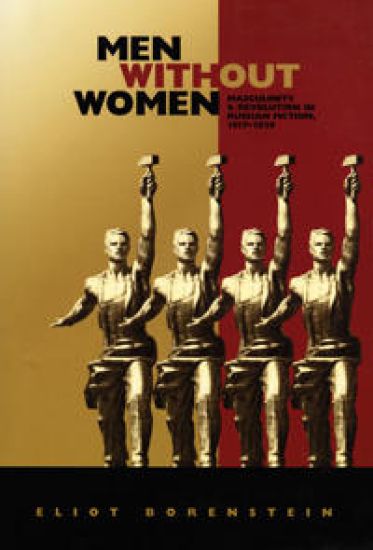
In Men without Women Eliot Borenstein examines the literature of the early Soviet period to shed new light on the iconic Russian concept of comradeship. By analyzing a variety of Russian writers who span the ideological spectrum, Borenstein provides an illuminating reading of the construction of masculinity in Soviet culture. In each example he identifies the replacement of blood ties with ideology and the creation of a social order in which the family has been supplanted by the collective. In such works as Red Cavalry by Isaac Babel, Envy by Yuri Olesha, and Chevengur by Andrei Platonov women are either absent or transformed into bodiless abstractions. Their absence, claims Borenstein, reflects the masculine values that are hallmarks of the post-revolutionary era: production rather than reproduction, participation in history rather than domestic ahistoricity, heavy industry, construction, and struggle. He identifies in this literature groups of “men without women” replacing the family, even while the metaphor of family is used as an organizing feature of their recurring revolutionary missions. With the passage of time, these characters’ relationships-just as those in the Soviet culture of the time-begin to resemble the family structure that was originally rejected and destroyed, with one important exception: the new “families” had no place for women. According to Borenstein, this masculinist myth found its most congenial audience during the early period of communism, but its hostility to women and family ties could not survive into the Stalinist era when women, home, and family were no longer seen as antithetical to socialism.Drawing on the theory and writings of Levi-Strauss, Girard, Sedgwick, and others, Men Without Women will be of interest to students and scholars of Slavic literature and history as well as specialists in literary theory and gender studies.