
Kirjailija
Elisa Amado
Kirjat ja teokset yhdessä paikassa: 8 kirjaa, julkaisuja vuosilta 2004-2021, suosituimpien joukossa What Are You Doing?. Vertaile teosten hintoja ja tarkista saatavuus suomalaisista kirjakaupoista.
8 kirjaa
Kirjojen julkaisuhaarukka 2004-2021.
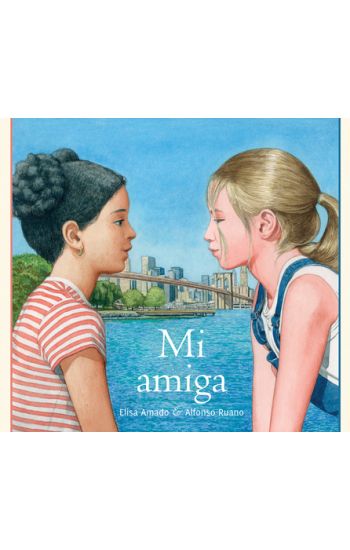
Una historia sobre la importancia de la amistad en la vida de una niña inmigrante. La niña de este relato se ha mudado hace poco, con su familia, de México a Brooklyn. El primer día en su nuevo colegio, conoce a una chica norteamericana con la que se entiende de maravilla. Se vuelven mejores amigas. Pero cuando invita a su nueva amiga a cenar en casa con su familia mexicana, le da la impresión de que la chica se siente incómoda. Tal vez no le gusta la comida. O peor aún, tal vez la canción preferida de la familia —una melodía llena de añoranza y nostalgia— le parece demasiado extraña. Algo parece haber cambiado y ella ya no se siente segura como antes. ¿Cómo será el día siguiente en la escuela? La renombrada autora Elisa Amado cuenta lo difícil que es venir de otro país y lo importante que es sentirse apreciado por lo que uno verdaderamente es. El galardonado ilustrador Alfonso Ruano representa de manera hermosa los profundos sentimientos de las amigas. Key Text Features song lyrics Correlates to the Common Core State Standards in English Language Arts: CCSS.ELA-LITERACY.RL.2.3 Describe how characters in a story respond to major events and challenges. CCSS.ELA-LITERACY.RL.3.3 Describe characters in a story (e.g., their traits, motivations, or feelings) and explain how their actions contribute to the sequence of events.
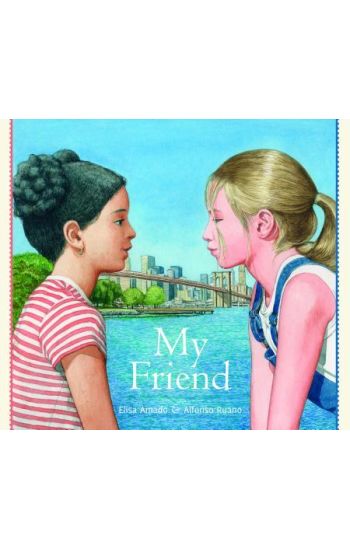
From acclaimed author and translator Elisa Amado and award-winning illustrator Alfonso Ruano, My Friend is the story of the meaning of friendship in the life of an immigrant child. Friendship — to be known, to be accepted as you are, to feel safe, especially when you are vulnerable. The girl in this story has recently arrived in Brooklyn with her family. On her very first day at school she meets a girl who almost instantly becomes her very best friend. She feels known, loved and accepted by her. But when she invites her friend to come for dinner with her family — a family that feels free to eat weird food and, even worse, burst into song with their version of a sentimental classic of longing and homesickness — something shifts and she no longer feels safe at all. What will it be like tomorrow at school? Award-winning illustrator Alfonso Ruano’s art beautifully depicts the depth of feeling that the friends experience in this story from acclaimed author and translator Elisa Amado, about how difficult it is to come from somewhere else and what a difference friendship can make. Key Text Features song lyrics Correlates to the Common Core State Standards in English Language Arts: CCSS.ELA-LITERACY.RL.2.3 Describe how characters in a story respond to major events and challenges. CCSS.ELA-LITERACY.RL.4.3 Describe in depth a character, setting, or event in a story or drama, drawing on specific details in the text (e.g., a character's thoughts, words, or actions). CCSS.ELA-LITERACY.RL.4.6 Compare and contrast the point of view from which different stories are narrated, including the difference between first- and third-person narrations.
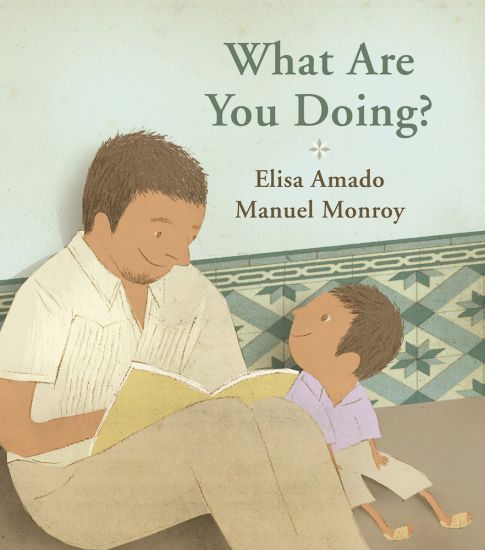
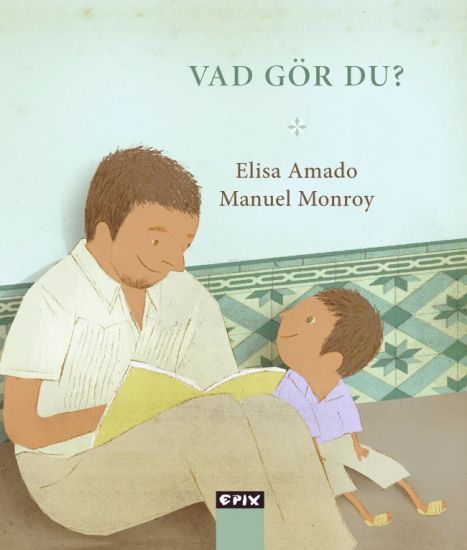
A picture book that captures a child’s discovery of the power of reading.Before he leaves for his first day of school, Chepito runs outside to play. He comes across all kinds of people in his neighborhood who are reading. “Why, why, why?” he sings, and they each have a different answer for him, whether it’s a man reading a newspaper, a young girl enjoying a comic, a couple of tourists consulting a guidebook or an archeologist studying hieroglyphics. Later that day, Chepito discovers the fun of reading for himself, and he even brings home a book to share with his little sister.Elisa Amado has written a perfect introduction to the pleasures and uses of the written word. Set in a delightfully retro world by illustrator Manuel Monroy, this book is a true celebration of reading.Correlates to the Common Core State Standards in English Language Arts:CCSS.ELA-LITERACY.RL.K.4Ask and answer questions about unknown words in a text.CCSS.ELA-LITERACY.RL.1.2Retell stories, including key details, and demonstrate understanding of their central message or lesson.CCSS.ELA-LITERACY.RL.2.4Describe how words and phrases (e.g., regular beats, alliteration, rhymes, repeated lines) supply rhythm and meaning in a story, poem, or song.
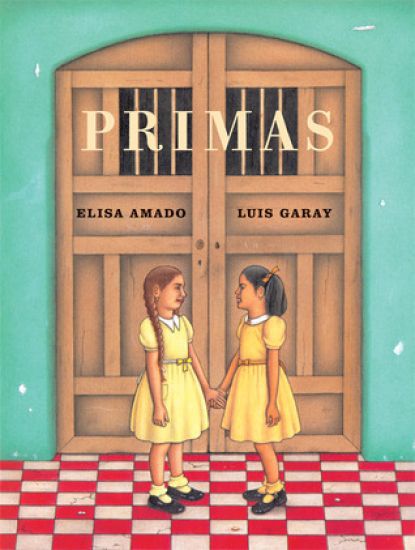
Presents a child's eye view of family life in two vastly different households--that of the little girl's father and grandmother, which is quiet and full of beautiful and expensive things, and that of her other grandmother's house where her cousin also lives, which is alive with many people dropping by.
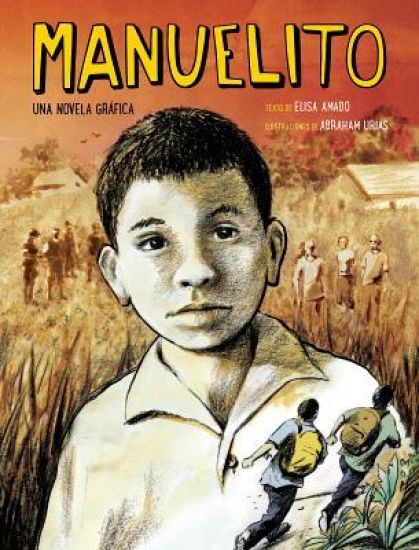
Thirteen-year-old Manuelito is a gentle boy who lives with his family in a tiny village in the Guatemalan countryside. But life is far from idyllic: PACs—armed civil patrol—are a constant presence in the streets, and terrifying memories of the country’s war linger in the villagers’ collective conscience. Things deteriorate further when government-backed drug gangs arrive and take control of the village. Fearing their son will be forced to join a gang, Manuelito’s parents make the desperate decision to send him to live with his aunt in America. With just a bus ticket and a small amount of cash in hand, Manuelito begins his hazardous journey to Mexico, then the U.S., in search of asylum. But in the end, dangers such as the crooked “coyote”—or human smuggler—his parents have entrusted their son’s life to may be nothing compared to the risks Manuelito faces when he finally reaches America. Manuelito’s titular character is just one of the staggering one hundred thousand children from the Northern Triangle of Central America—Guatemala, El Salvador, and Honduras—who have made this perilous journey to escape their war-torn countries. Many are now detained in Mexico, separated from their parents and without access to lawyers, facing the unthinkable prospect of being sent back to the homes and danger they risked so much to escape. Drawing on years of experience working with child refugees like Manuelito, Elisa Amado’s powerful story, illustrated with striking poignancy by Abraham Urias, brings to light the dire circumstances of so many children, so close to home.
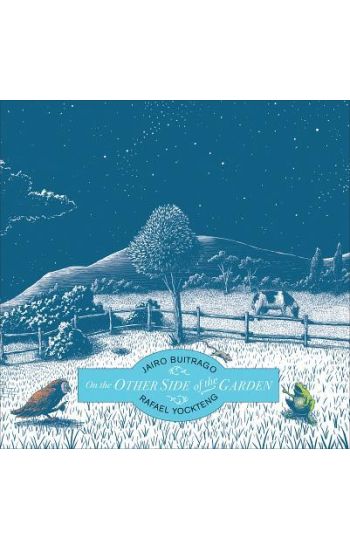
On the Other Side of the Garden
Jairo Buitrago; Elisa Amado
Groundwood Books Ltd ,Canada
2018
sidottu
“Those who feel physically or emotionally distant from beloved adults will take comfort in the idea that there are others who care. A subtle and affecting journey to resilience best shared one-on-one to pore over the spectacular artwork.”—School Library Journal, STARRED REVIEWFrom one of the great creative teams in picture books, On the Other Side of the Garden is about a city girl learning to accept the change brought about by her parents’ separation after she is left at her grandmother’s house in the country. The girl feels abandoned and lonely, but after venturing into the nighttime garden, she is befriended by an owl, a frog and a mouse. Her talkative new companions show her an extraordinary new world by the light of the moon. When the girl gets back in the morning, her grandmother seems neither alarmed or angry about the girl’s nighttime adventures. Instead she gently introduces her granddaughter to her new surroundings, making clear that the girl is welcome. And as the sun warms their backs, the two seem content to get to know each other better. Buitrago’s stories convey large truths through understatement and suggestion. This story, beautifully illustrated by Yockteng, shows how a child can use her own bravery and curiosity to confront confusing and potentially frightening realities, such as a parents’ separation and being left with an almost unknown relative. There is an endnote about the plants and animals that might be found in such a garden.Key Text Featuresgarden inventoryCorrelates to the Common Core State Standards in English Language Arts:CCSS.ELA-LITERACY.RL.1.7Use illustrations and details in a story to describe its characters, setting, or events.CCSS.ELA-LITERACY.RL.2.3Describe how characters in a story respond to major events and challenges.CCSS.ELA-LITERACY.RL.2.7Use information gained from the illustrations and words in a print or digital text to demonstrate understanding of its characters, setting, or plot.CCSS.ELA-LITERACY.RL.3.7Explain how specific aspects of a text's illustrations contribute to what is conveyed by the words in a story (e.g., create mood, emphasize aspects of a character or setting)CCSS.ELA-LITERACY.RL.4.1Refer to details and examples in a text when explaining what the text says explicitly and when drawing inferences from the text.
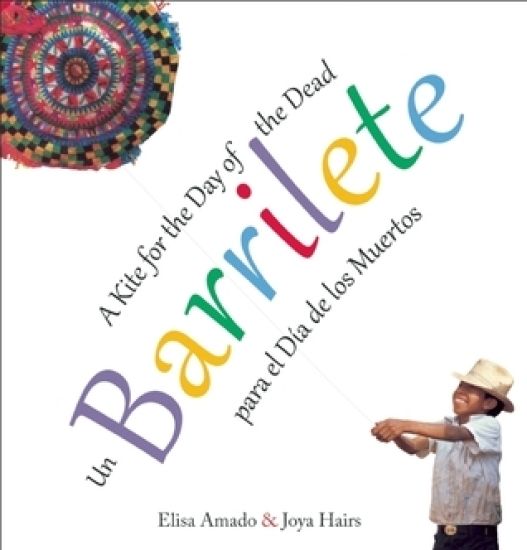
In Guatemala, there is a village called Santiago Sacatepéquez. It is a very small but famous place because once a year, on the Day of the Dead, the people of Santiago fly some of the biggest kites in the world. As large as seven meters (twenty-three feet) in diameter, they fill the sky over the cemetery with brilliant colors. Juan and his brothers always helped their grandfather build the kite for the Day of the Dead. But their grandfather has recently died, and the boys must carry on the tradition on their own. This beautifully photographed book shows us the village of Santiago and tells us Juan’s story as he gathers the materials, builds the kite and, finally, flies it with the help of his friends.