Kirjojen hintavertailu. Mukana 12 390 323 kirjaa ja 12 kauppaa.

Kirjailija

Elisabeth Braw

Kirjat ja teokset yhdessä paikassa: 14 kirjaa, julkaisuja vuosilta 2019-2026, suosituimpien joukossa Ledarskap och statskonst : studier i makt. Vertaile teosten hintoja ja tarkista saatavuus suomalaisista kirjakaupoista.

14 kirjaa

Kirjojen julkaisuhaarukka 2019-2026.

Ledarskap och statskonst : studier i makt

Ledarskap och statskonst : studier i makt

Philip Zelikow; Anna Wieslander; Lucy Ward; Edward Stringer; Nathan Shachar; Michael Scott; Kori Schake; Andreas Rödder; Iskander Rehman; Sergey Radchenko; Alina Polyakova; Gudrun Persson; Kenneth Payne; Charles Moore; Munira Mirza; Henrik Meinander; Rory Medcalf; James Marriott; Fredrik Logevall; Alexander Lee; Julian Jackson; Katja Hoyer; Oleksii Goncharenko; Francis J. Gavin; Kentaro Fujimoto; Daisy Dunn; Claire Coutinho; J.C.D. Clark; David Butterfield; Kristin Ven Bruusgaard; Elisabeth Braw; John Bew; Benedetta Berti

Bokförlaget Stolpe
2025
sidottu
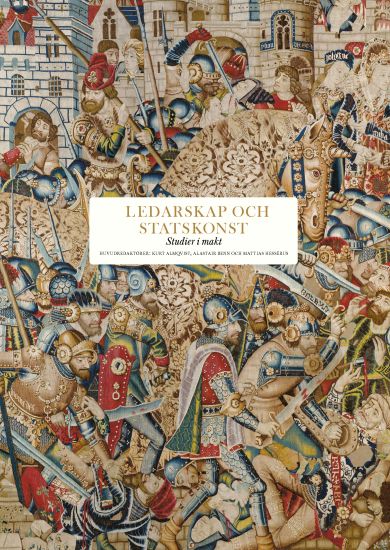
Machiavellis observation om ledarskapets svåra balansgång är lika relevant i vår tid, som den en gång var i 1500-talets Florens. Kinas framväxt, Rysslands attack mot Ukraina och den växande politiska och ekonomiska närvaron i den globala södern har aktualiserat frågan om vikten av kompetent ledarskap inom politiskt styre. Denna antologi utforskar utmaningarna för ledarskap och statskonst i en allt mer komplex värld och ställer frågan huruvida vi kan skapa politiska eliter som är kapabla att på ett säkert vis vägleda väst genom de många prövningar vi står inför. Genom att se till vårt förflutna såväl som till vår samtid undersöker världsledande forskare och skribenter hur ledarskapsidéer har utvecklats genom historien för att ge oss en större förståelse för statskonsten och för vilka färdigheter och organisationer som krävs för att driva små stater, stora imperier och allt däremellan. Boken finns även i engelsk utgåva.
Sverigebilden : perspektiv på ett nordiskt land

Sverigebilden : perspektiv på ett nordiskt land

Mikael Wiberg; Lars Trägårdh; Richard Swartz; Nathan Shachar; Svante Nordin; Fraser Nelson; Johan Hakelius; Nils Erik Forsgård; Per Enerud; Elisabeth Braw; Anna von Bayern; Sofia Bard

Bokförlaget Stolpe
2025
nidottu
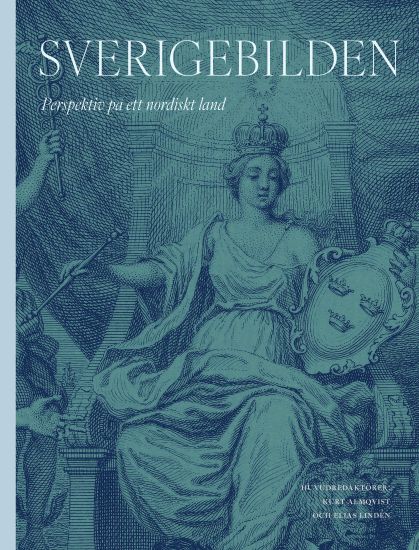
Sverige uppfattades länge som ett samhälle präglat av jämlikhet, social sammanhållning och en ambitiös välfärdspolitik. Med sin självständiga utrikespolitik stod man utanför stormaktskonflikterna. På senare år har gängkriminalitet och skjutningar fått stor uppmärksamhet i medierna, ett högerpopulistiskt parti har blivit en del av regeringsunderlaget och vi har avslutat 200 år av alliansfrihet genom att bli medlemmar av Nato. Hur har det förändrat bilden av vårt land och oss själva? I denna antologi diskuterar ett antal skribenter Sverigebilden förr och nu, både innanför och utanför landets gränser. Svante Nordin skriver om Sverige och Luther, Elisabeth Braw om utlandssvenskarnas betydelse, Mikael ­ Wiberg om teknikundret, Fraser Nelson om gängbrottsligheten och Sofia Bard om Sveriges mjuka makt. Per Enerud, Anna von Bayern och Nathan Shachar tar upp Sverigebilden i Ryssland, Tyskland och Spanien och Richard Swartz kritiserar det svenska språkets förfall.
The Undersea War

The Undersea War

Elisabeth Braw

John Murray Press
2026
sidottu
A gripping account of the hidden battles beneath the world's oceans, where cables and pipelines - the lifelines of the modern world - are under constant threat from states, corporations, and hackers.
Undersea War: The Battle to Control the Cables and Pipelines That Connect Our World
How sabotage and disorder threaten the fragile network of undersea cables and pipelines that makes modern life possible--and how it may already be drawing the world into an all-out underwater war The world depends on a tangle of underwater tubes on the ocean floor. Every day undersea cables transmit ninety-nine percent of the world's data, while intercontinental pipelines convey two-thirds of the world's oil and gas. These do their jobs so reliably that few would guess that "the cloud" is actually underwater, or that the stability of the global economy relies on pipelines on the seafloor. But as award-winning security expert Elisabeth Braw reveals, an invisible battle over those cables and pipelines is already ramping up. Undersea War tells the history of the underwater infrastructure that supports everyday life. After decades of apparent harmony, in 2022 two pipelines in the Baltic Sea mysteriously exploded. Within months, the cutting of Taiwan's Matsu Islands' data links to the world and the subsequent destruction of additional Baltic pipelines and cables signaled that peace in the ocean depths was over. Superpowers are now racing to protect themselves as the seabed itself becomes a battlefield. Blending engrossing historical narrative with acute strategic analysis, Undersea War shows that the next battle for global supremacy may unfold on the ocean floor.
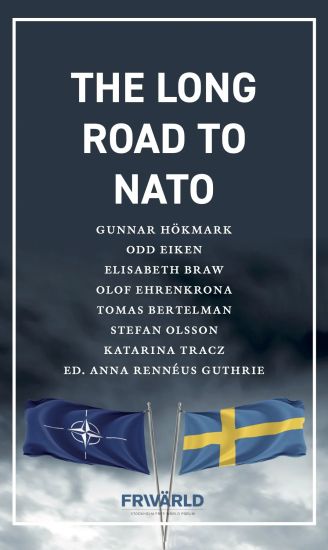
The long road to NATO

The long road to NATO

Stefan Olsson; Tomas Bertelman; Olof Ehrenkrona; Elisabeth Braw; Odd Eiken; Katarina Tracz; Gunnar Hökmark

Frivärld - Stockholm Free World Forum
2025
nidottu
March 7, 2024 — the day Sweden became a member of NATO. Seventy-five years after the founding of the alliance. The road to NATO was paved by those who believed the Alliance was Sweden’s natural home. While the journey was a long, uphill battle, proponents maintained the course, even when the destination seemed to grow ever farther away. But why did it take us so long to join? And is that even a worthwhile question to ask so soon after Sweden’s NATO accession? Shouldn’t those who worked for Swedish membership simply be satisfied with the result and leave it at that? After all, the most important objective has been achieved. First published in Swedish in Spring 2024, this book captured a moment in time when NATO accession was the culmination of many’s life work. The tone was triumphant. Our close ties with the alliance could no longer be subject to doubt. We were now openly and unequivocally part of the community we were always meant to belong to. This English translation comes as Sweden approaches two years of membership, with the transatlantic Alliance facing new and unprecedented challenges. Indeed, “we are entering a new era,” just not exactly the one we envisioned when Swedish Prime Minister Magdalena Andersson announced Sweden’s intent to join May 18, 2022.
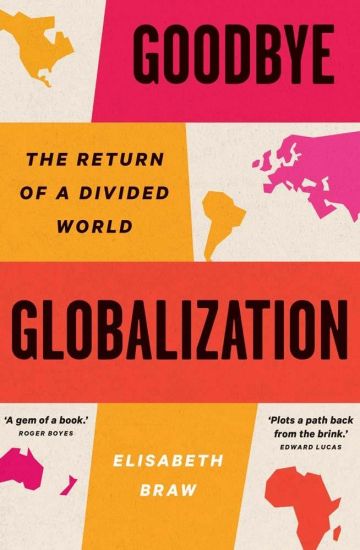
Goodbye Globalization

Goodbye Globalization

Elisabeth Braw

YALE UNIVERSITY PRESS
2025
pokkari
GOLD MEDALLIST IN THE 2024 AXIOM BUSINESS BOOK AWARDS A bold new account of the state of globalization today—and what its collapse might mean for the world economy After the Cold War, globalization accelerated at breakneck speed. Manufacturing, transport, and consumption defied national borders, companies made more money, and consumers had access to an ever-increasing range of goods. But in recent years, a profound shift has begun to take place. Business executives and politicians alike are realising that globalization is no longer working. Supply chains are imperilled, Russia has been expelled from the global economy after its invasion of Ukraine, and China is using these fissures to leverage a strategic advantage. Given these pressures, what will the future of our world economy look like? In this groundbreaking account, Elisabeth Braw explores the collapse of globalization and the profound challenges it will bring to the West. Drawing on interviews with prominent executives and policymakers from around the world, Braw poses the difficult questions all businesses and economies will face—and traces the intricate story of globalization from the exuberant ’90s to the embattled present.
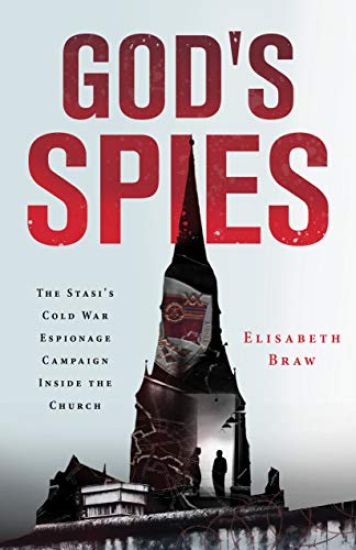
God's Spies

God's Spies

Elisabeth Braw

William B. Eerdmans Publishing Company
2025
pokkari
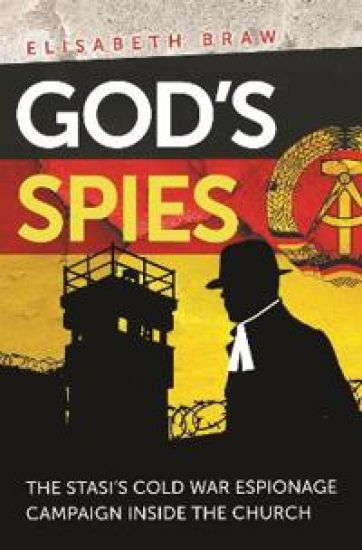
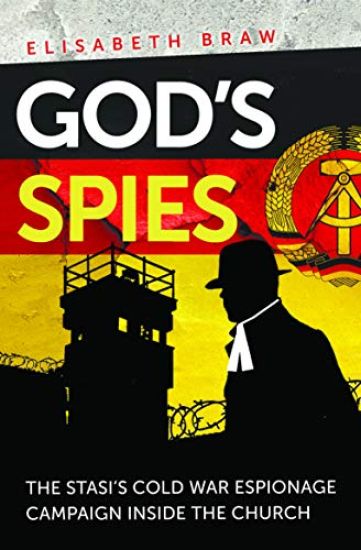
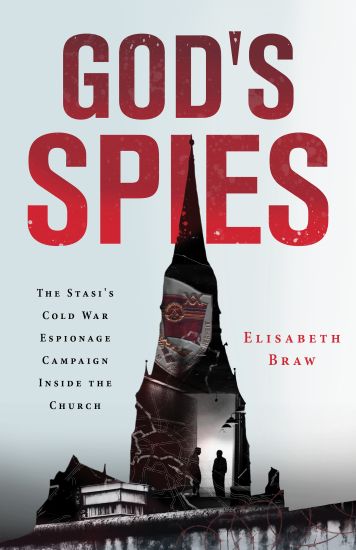
The real-life cloak-and-dagger story of how East Germany's notorious spy agency infiltrated churches here and abroadEast Germany only existed for a short forty years, but in that time, the country's secret police, the Stasi, developed a highly successful "church department" that--using persuasion rather than threats--managed to recruit an extraordinary stable of clergy spies. Pastors, professors, seminary students, and even bishops spied on colleagues, other Christians, and anyone else they could report about to their handlers in the Stasi. Thanks to its pastor spies, the Church Department (official name: Department XX/4) knew exactly what was happening and being planned in the country's predominantly Lutheran churches. Yet ultimately it failed in its mission: despite knowing virtually everything about East German Christians, the Stasi couldn't prevent the church-led protests that erupted in 1989 and brought down the Berlin Wall.
Den långa vägen till Nato

Den långa vägen till Nato

Stefan Olsson; Tomas Bertelman; Olof Ehrenkrona; Elisabeth Braw; Odd Eiken; Katarina Tracz; Gunnar Hökmark

Frivärld - Stockholm Free World Forum
2024
nidottu
Den 7 mars 2024 blev Sverige fullvärdig medlem av försvarsalliansen Nato. Vägen till Nato har varit allt annat än enkel. För att både kunna förstå varför det blev så komplicerat för just Sverige liksom för att kunna ta ut riktningen framåt i säkerhetspolitiken behöver vi blicka bakåt. Frivärld har i antologin Den långa vägen till Nato samlat sju profilerade skribenter som ger sina perspektiv på Natofrågan ur olika tidsperioder. Tankesmedjan Frivärld bedriver opinionsbildning inom utrikes- och säkerhetspolitiska frågor. Vårt mål är att stimulera och påverka diskussionen kring vilka idéer och perspektiv som ska styra svensk utrikes- och säkerhetspolitik. Frivärld har sedan tankesmedjan grundades 2011 verkat för ett svenskt Natomedlemskap.
Goodbye Globalization

Goodbye Globalization

Elisabeth Braw

YALE UNIVERSITY PRESS
2024
sidottu
GOLD MEDALLIST IN THE 2024 AXIOM BUSINESS BOOK AWARDS A bold new account of the state of globalization today—and what its collapse might mean for the world economy After the Cold War, globalization accelerated at breakneck speed. Manufacturing, transport, and consumption defied national borders, companies made more money, and consumers had access to an ever-increasing range of goods. But in recent years, a profound shift has begun to take place. Business executives and politicians alike are realising that globalization is no longer working. Supply chains are imperilled, Russia has been expelled from the global economy after its invasion of Ukraine, and China is using these fissures to leverage a strategic advantage. Given these pressures, what will the future of our world economy look like? In this groundbreaking account, Elisabeth Braw explores the collapse of globalization and the profound challenges it will bring to the West. Drawing on interviews with prominent executives and policymakers from around the world, Braw poses the difficult questions all businesses and economies will face—and traces the intricate story of globalization from the exuberant ’90s to the embattled present.
The Defender's Dilemma

The Defender's Dilemma

Elisabeth Braw

AEI PRESS
2022
nidottu
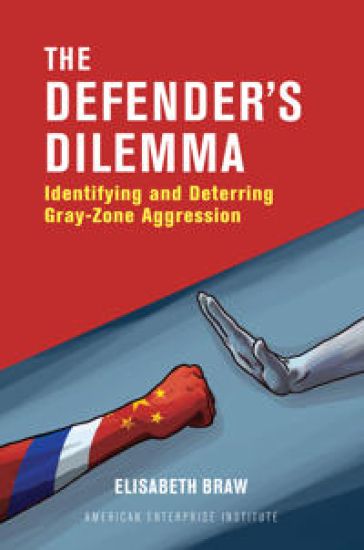
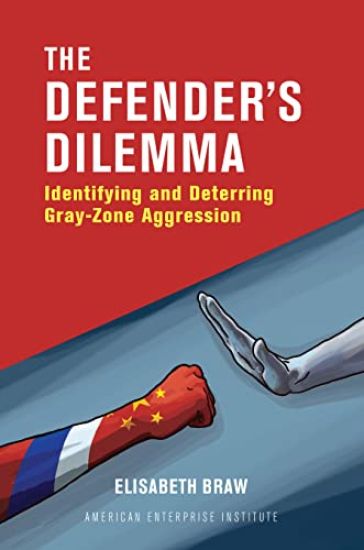
National security threats facing the West are fundamentally changing. Turning away from the military as an omnibus tool of aggression, hostile governments are instead frequently using tools—including subversive economics, coercion of foreign companies, gradual border violations, cyberattacks, disinformation, and arbitrary detention of foreign citizens—that are often difficult for targeted countries to immediately identify, let alone tackle. Nonmilitary aggression is easy, inexpensive, and alarmingly effective. Businesses — American and foreign — have already suffered significant financial losses because of gray-zone attacks.In The Defender’s Dilemma, international security expert Elisabeth Brawer offers the first sustained analysis of how these tactics in the gray zone between war and peace dangerously weaken liberal democracies, which are open societies by definition and intimately connected to the rest of the world through globalization. She discusses the breadth of gray-zone aggression and presents strategies for better defense against it. These strategies involve not just governments but also civil society, a largely untapped resource.
The Defender's Dilemma

The Defender's Dilemma

Elisabeth Braw

AEI PRESS
2022
sidottu
National security threats facing the West are fundamentally changing. Turning away from the military as an omnibus tool of aggression, hostile governments are instead frequently using tools—including subversive economics, coercion of foreign companies, gradual border violations, cyberattacks, disinformation, and arbitrary detention of foreign citizens—that are often difficult for targeted countries to immediately identify, let alone tackle. Nonmilitary aggression is easy, inexpensive, and alarmingly effective. Businesses — American and foreign — have already suffered significant financial losses because of gray-zone attacks.In The Defender’s Dilemma, international security expert Elisabeth Brawer offers the first sustained analysis of how these tactics in the gray zone between war and peace dangerously weaken liberal democracies, which are open societies by definition and intimately connected to the rest of the world through globalization. She discusses the breadth of gray-zone aggression and presents strategies for better defense against it. These strategies involve not just governments but also civil society, a largely untapped resource.
God's Spies

God's Spies

Elisabeth Braw

Lion Books
2019
sidottu
When the Berlin Wall came down, the files of the East German secret police, the much-dreaded Stasi, were opened and read. And among the shocking stories revealed was that of the Stasi's infiltration of the Church. Almost 10% of the Lutheran Church's workforce were, it appears, busy involved in spying on each other, and on the Church's congregations. The Lutheran Church was the only semi-free space in East Germany, where those who rebelled against the regime could find a way of living at least a little out of the government's iron grip. Even the organisations that smuggled Bibles were infiltrated.
God's Spies

God's Spies

Elisabeth Braw

Lion Books
2019
nidottu
When the Berlin Wall came down, the files of the East German secret police, the much-dreaded Stasi, were opened and read. And among the shocking stories revealed was that of the Stasi's infiltration of the Church. Almost 10% of the Lutheran Church's workforce were, it appears, busy involved in spying on each other, and on the Church's congregations. The Lutheran Church was the only semi-free space in East Germany, where those who rebelled against the regime could find a way of living at least a little out of the government's iron grip. Even the organisations that smuggled Bibles were infiltrated.
God's Spies

God's Spies

Elisabeth Braw

William B. Eerdmans Publishing Company
2019
sidottu
The real-life cloak-and-dagger story of how East Germany's notorious spy agency infiltrated churches here and abroadEast Germany only existed for a short forty years, but in that time, the country's secret police, the Stasi, developed a highly successful "church department" that--using persuasion rather than threats--managed to recruit an extraordinary stable of clergy spies. Pastors, professors, seminary students, and even bishops spied on colleagues, other Christians, and anyone else they could report about to their handlers in the Stasi. Thanks to its pastor spies, the Church Department (official name: Department XX/4) knew exactly what was happening and being planned in the country's predominantly Lutheran churches. Yet ultimately it failed in its mission: despite knowing virtually everything about East German Christians, the Stasi couldn't prevent the church-led protests that erupted in 1989 and brought down the Berlin Wall.