Kirjojen hintavertailu. Mukana 12 595 353 kirjaa ja 12 kauppaa.
Kirjailija
Elisabeth Israels Perry
Kirjat ja teokset yhdessä paikassa: 6 kirjaa, julkaisuja vuosilta 1974-2020, suosituimpien joukossa From Theology to History: French Religious Controversy and the Revocation of the Edict of Nantes. Vertaile teosten hintoja ja tarkista saatavuus suomalaisista kirjakaupoista.
It is commonly believed that women’s entry into the political realm is a recent phenomenon. Originally published in 1992, Belle Moskowitz shatters that myth, restoring to history the career of a remarkable woman who achieved unprecedented influence and power in American politics many decades before the contemporary era. As political advisor to Alfred E. Smith, four-term governor of New York and presidential candidate. Moskowitz played a crucial role in both state and national politics throughout the 1920s. Elisabeth Israels Perry, who is Moskowitz’s granddaughter, has thoroughly searched through private and public records to document Moskowitz’s career, drawing as well on the reminiscences of Moskowitz’s daughter Miriam Israels Gabo. This outstanding biography was co-winner of the New York State Historical Association Manuscript Prize in 1987.
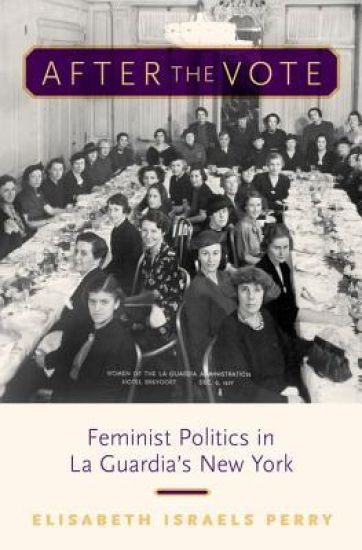
Soon after his inauguration in 1934, New York City mayor Fiorello La Guardia began appointing women into his administration. By the end of his three terms in office, he had installed almost a hundred as lawyers in his legal department, but also as board and commission members and as secretaries, deputy commissioners, and judges. No previous mayor had done anything comparable. Aware they were breaking new ground for women in American politics, the "Women of the La Guardia Administration," as they called themselves, met frequently for mutual support and political strategizing. This is the first book to tell their stories. Author Elisabeth Israels Perry begins with the city's suffrage movement, which prepared these women for political action as enfranchised citizens. After they won the vote in 1917, suffragists joined political party clubs and began to run for office, many of them hoping to use political platforms to enact feminist and progressive public policies. Circumstances unique to mid-twentieth century New York City advanced their progress. In 1930, Governor Franklin D. Roosevelt authorized an inquiry into alleged corruption in the city's government, long dominated by the Tammany Hall political machine. The inquiry turned first to the Vice Squad's entrapment of women for sex crimes and the reported misconduct of the Women's Court. Outraged by the inquiry's disclosures and impressed by La Guardia's pledge to end Tammany's grip on city offices, many New York City women activists supported him for mayor. It was in partial recognition of this support that he went on to appoint an unprecedented number of them into official positions, furthering his plans for a modernized city government. In these new roles, La Guardia's women appointees not only contributed to the success of his administration but left a rich legacy of experience and political wisdom to oncoming generations of women in American politics.
It is commonly believed that women’s entry into the political realm is a recent phenomenon. Originally published in 1992, Belle Moskowitz shatters that myth, restoring to history the career of a remarkable woman who achieved unprecedented influence and power in American politics many decades before the contemporary era. As political advisor to Alfred E. Smith, four-term governor of New York and presidential candidate. Moskowitz played a crucial role in both state and national politics throughout the 1920s. Elisabeth Israels Perry, who is Moskowitz’s granddaughter, has thoroughly searched through private and public records to document Moskowitz’s career, drawing as well on the reminiscences of Moskowitz’s daughter Miriam Israels Gabo. This outstanding biography was co-winner of the New York State Historical Association Manuscript Prize in 1987.
Toutes ces belles contro[yen]erses Sur les religions di[yen]erses N'ont jamais produit aucun bien: Chacun s' anime pour la sienne; Et que fait-on pour la chretienne? On dispute, et l'on ne fait rien. - Saint-E[yen]remond, 1614-1703. This book asserts, contrary to Saint-E[yen]remond, that religious controversy on the eve of the Enlightenment was far from sterile or antichristian. In reconstructing a French religious debate of the era of the revocation of the Edict of Nantes, it shows how the debate allowed both lay and clerical thinkers of the late seventeenth century to discuss the critical issues of their own day. The Revocation era was an era of crisis not only for French Protestantism, but for Protestantism in general: the final acts of the English Revolution were played out during these years, and the northern maritime alliance against the Catholic Louis XIV took shape. The Revocation era was also a period of exciting intellectual ferment in religion, morality, politics and science. Although the topic of the religious debate in France was historical - the history of the Reformation, the discussion of the topic reflected both the crisis and ferment of the times.
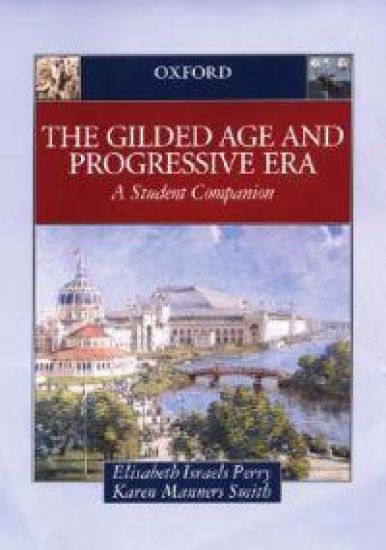
This Companion is an alphabetical encyclopedia of the Gilded Age & Progressive Era (GAPE) in the United States, beginning in 1877 with the end of Reconstruction and extending to 1919-20, the end of World War I and the beginning of the Harding administration. Combining materials from traditional political history with newer materials from social, ethnic, and cultural history, the book reflects historiographic trends that have influenced the writing of Gilded Age and Progressive Era histories in recent years. These include revisiting major events with gender and race at the center; asking new questions about the role of economic change and social movements; using literary and critical race theories to read traditional evidence, such as court records and military and diplomatic reports, in new ways; understanding the growing connections in this period of the United States with other parts of the world (globalism); and emphasizing the connection between labor and economic trends and social and political movements. The Gilded Age and Progressive Era: A Student Companion includes articles on overall trends (immigration, education, music, sports), social movements (anarchism, child labor movement, consumer movement, conservation movement), terms (armistice, chain store, chautauqua), organizations (American Expeditionary Force, Knights of Labor, Republican party), issues (gender relations, race relations), events (Haymarket Square massacre, Palmer raids, Pullman strike), legal cases (Lochner v. New York), laws (Chinese Exclusion Act, Meat Inspection Act, Selective Service Act), ethnic groups (Mexicans, Chinese), economic issues (trusts, scientific management), and biographies. The articles are cross-referenced and have sources for specific further reading. Backmatter consists of chronology, general further reading and websites, and index. Black-and-white illustrations--including photographs, maps, fine arts, and graphics--complement the text. Oxford's Student Companions to American History are state-of-the-art references for school and home, specifically designed and written for ages 12 through adult. Each book is a concise but comprehensive A-to-Z guide to a major historical period or theme in U.S. history, with articles on key issues and prominent individuals. The authors--distinguished scholars well-known in their areas of expertise--ensure that the entries are accurate, up-to-date, and accessible. Special features include an introductory section on how to use the book, further reading lists, cross-references, chronology, and full index.
Toutes ces belles contro[yen]erses Sur les religions di[yen]erses N'ont jamais produit aucun bien: Chacun s' anime pour la sienne; Et que fait-on pour la chretienne? On dispute, et l'on ne fait rien. - Saint-E[yen]remond, 1614-1703. This book asserts, contrary to Saint-E[yen]remond, that religious controversy on the eve of the Enlightenment was far from sterile or antichristian. In reconstructing a French religious debate of the era of the revocation of the Edict of Nantes, it shows how the debate allowed both lay and clerical thinkers of the late seventeenth century to discuss the critical issues of their own day. The Revocation era was an era of crisis not only for French Protestantism, but for Protestantism in general: the final acts of the English Revolution were played out during these years, and the northern maritime alliance against the Catholic Louis XIV took shape. The Revocation era was also a period of exciting intellectual ferment in religion, morality, politics and science. Although the topic of the religious debate in France was historical - the history of the Reformation, the discussion of the topic reflected both the crisis and ferment of the times.