Kirjojen hintavertailu. Mukana 12 595 353 kirjaa ja 12 kauppaa.

Kirjailija

Elisabeth Porter

Kirjat ja teokset yhdessä paikassa: 4 kirjaa, julkaisuja vuosilta 2007-2024, suosituimpien joukossa Peace and Security: Implications for Women. Vertaile teosten hintoja ja tarkista saatavuus suomalaisista kirjakaupoista.

4 kirjaa

Kirjojen julkaisuhaarukka 2007-2024.

Women-of-faith Peacebuilders

Women-of-faith Peacebuilders

Elisabeth Porter

Perspicuous Press
2024
pokkari
Who are women-of-faith in the context of politics and peacebuilding? What do they do and why do they do it? This book examines the challenges, achievements, and motivations of women peacebuilders who are driven by their faith to enhance gender equality, justice, and security. Women-of-faith peacebuilders make major contributions to attentive, relational, compassionate, and community-based peacebuilding, and promote the mandate of the UN Security resolution 1325 on Women, Peace, and Security.
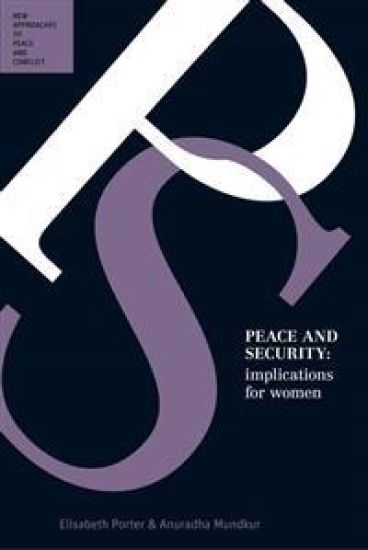
Peace and Security: Implications for Women

Peace and Security: Implications for Women

Elisabeth Porter; Anuradha Mundkur

University of Queensland Pr (Australia)
2012
nidottu
Offering a broad overview of what is being done in conflict-affected countries to advance women's participation in peace processes, peace building, and decision making, this record examines the implementation of UN Security Council Resolution 1325 on "Women, Peace, and Security" and presents evidence-based case studies from East Timor, Fiji, and Sri Lanka. As it explores ways to protect women and girls from violence, it suggests key actions that should be taken by development agencies, women's nongovernmental organizations, and policymakers. The book focuses on the following fundamental aspects: a specifically feminist methodology, a priority on gender equality and women's empowerment, and the broad notions of human security and peace building.
Peacebuilding

Peacebuilding

Elisabeth Porter

Routledge
2008
nidottu
This book clarifies some key ideas and practices underlying peacebuilding; understood broadly as formal and informal peace processes that occur during pre-conflict, conflict and post-conflict transformation.Applicable to all peacebuilders, Elisabeth Porter highlights positive examples of women’s peacebuilding in comparative international contexts. She critically interrogates accepted and entrenched dualisms that prevent meaningful reconciliation, while also examining the harm of othering and the importance of recognition, inclusion and tolerance. Drawing on feminist ethics, the book develops a politics of compassion that defends justice, equality and rights and the need to restore victims’ dignity. Complex issues of memory, truth, silence and redress are explored while new ideas on reconciliation and embracing difference emerge.Many ideas challenge orthodox understandings of peace. The arguments developed here demonstrate how peacebuilding can be understood more broadly than current United Nations and orthodox usages so that women’s activities in conflict and transitional societies can be valued as participating in building sustainable peace with justice. Theoretically integrating peace and conflict studies, international relations, political theory and feminist ethics, this book focuses on the lessons to be learned from best practices of peacebuilding situated around the UN Security Council Resolution 1325 on Women, Peace and Security.Peacebuilding will be of particular interest to peace practitioners and to students and researchers of peace and conflict studies, international relations and gender politics.
Peacebuilding

Peacebuilding

Elisabeth Porter

Routledge
2007
sidottu
This book clarifies some key ideas and practices underlying peacebuilding; understood broadly as formal and informal peace processes that occur during pre-conflict, conflict and post-conflict transformation.Applicable to all peacebuilders, Elisabeth Porter highlights positive examples of women’s peacebuilding in comparative international contexts. She critically interrogates accepted and entrenched dualisms that prevent meaningful reconciliation, while also examining the harm of othering and the importance of recognition, inclusion and tolerance. Drawing on feminist ethics, the book develops a politics of compassion that defends justice, equality and rights and the need to restore victims’ dignity. Complex issues of memory, truth, silence and redress are explored while new ideas on reconciliation and embracing difference emerge.Many ideas challenge orthodox understandings of peace. The arguments developed here demonstrate how peacebuilding can be understood more broadly than current United Nations and orthodox usages so that women’s activities in conflict and transitional societies can be valued as participating in building sustainable peace with justice. Theoretically integrating peace and conflict studies, international relations, political theory and feminist ethics, this book focuses on the lessons to be learned from best practices of peacebuilding situated around the UN Security Council Resolution 1325 on Women, Peace and Security.Peacebuilding will be of particular interest to peace practitioners and to students and researchers of peace and conflict studies, international relations and gender politics.