Kirjojen hintavertailu. Mukana 12 436 520 kirjaa ja 12 kauppaa.

Kirjailija

Elissa S. Guralnick

Kirjat ja teokset yhdessä paikassa: 4 kirjaa, julkaisuja vuosilta 1995-2015, suosituimpien joukossa Sight Unseen. Vertaile teosten hintoja ja tarkista saatavuus suomalaisista kirjakaupoista.

4 kirjaa

Kirjojen julkaisuhaarukka 1995-2015.

Raven Finds the Daylight and Other Native American Stories

Raven Finds the Daylight and Other Native American Stories

Paul M. Levitt; Elissa S. Guralnick

Taylor Trade Publishing
2015
pokkari
Wherever stories are told, in whatever language, life and death hold center stage, along with pain and glee, mystery and magic, fools and foes, deceit and decency. This book has them all. Here, in embellishments upon the folklore of Native American tribes from the Pacific Northwest, are tales that seek to explain the world, dispel its darkness, and celebrate its light. So, meet a sorcerer whose magic can turn a horse into a loon, a man who becomes a bush-tailed rat, a girl whose sons were born as puppies, and a Native American tribe that sought the power of shamans to escape white men bent on destroying them.
The Weighty Word Book

The Weighty Word Book

Paul M. Levitt; Douglas A. Burger; Elissa S. Guralnick

University of New Mexico Press
2009
sidottu
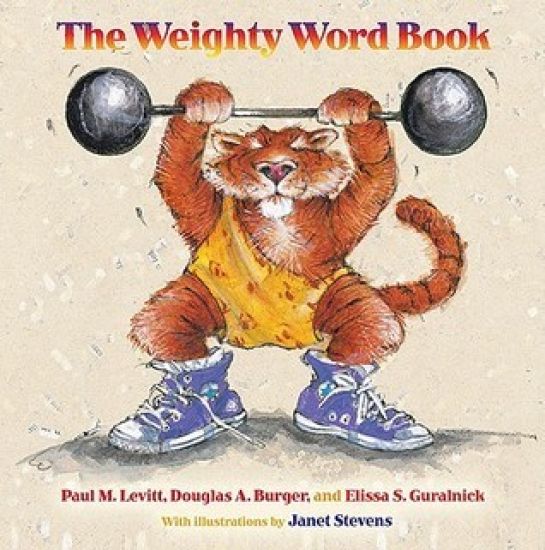
"[The Weighty Word Book] will appeal to kids who want to sound as smart as they are. It offers a clever, funny way to introduce new words into the vocabulary. . . . There's one word for every letter of the alphabet--wait until you see what they do with dogmatic, juxtapose and zealot."--The Gazette (Colorado Springs, Colorado) "Each of these twenty-six short stories takes an elaborate, circuitous path that leads to a 'weighty' one-word punch line. . . . It's a creative and humorous approach to vocabulary building, and a natural lead in to having students create their own tall tales with multisyllabic conclusions."--School Library Journal
Weighty Words, Too

Weighty Words, Too

Paul M. Levitt; Elissa S. Guralnick; Douglas A. Burger

University of New Mexico Press
2009
sidottu
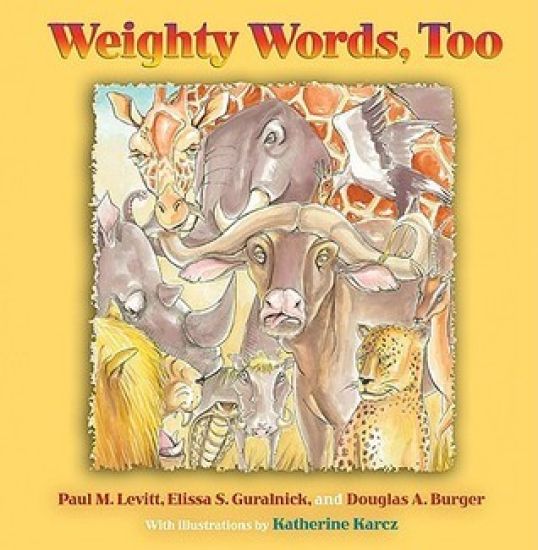
Burdensome, Katzenjammer, Mystify, Wondrous, and Zany - these are five of the twenty-six words, one for each letter of the alphabet, that appear in ""Weighty Words, Too"". As with the earlier ""Weighty Word Book"", the stories, often fanciful, help young readers build their vocabularies. 'Hibernate' tells the tale of Nathaniel, a very energetic Canadian bear, who plays in the snow with the other bears. Soon all the bears tire and want to sleep, with the exception of Nate. 'He's hyper,' one grizzly bear observes. 'If it's winter sleep you want,' advises Nathaniel, 'then I suggest you do the opposite from me, hyper Nate'. So, whenever animals sleep through the winter, think of 'hyper Nate', and you will remember the word Hibernate.
Sight Unseen

Sight Unseen

Elissa S. Guralnick

Ohio University Press
1995
sidottu
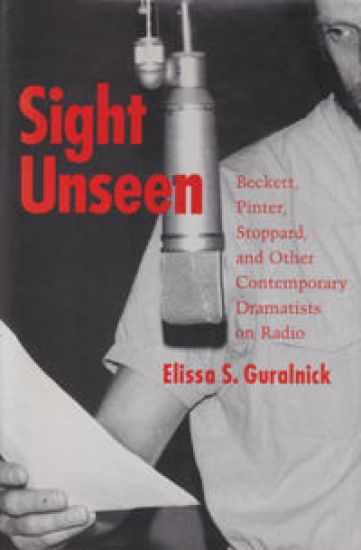
In Sight Unseen radio drama, a genre traditionally dismissed as popular culture, is celebrated as high art. The radio plays discussed here range from the conventional (John Arden's Pearl) to the docudramatic (David Rudkin's Cries from Casement), from the curtly conversational (Harold Pinter's A Slight Ache) to the virtually operatic (Robert Ferguson's Transfigured Night), testifying to radio drama's variety and literary stature. Two of the plays included in this study pose aesthetic questions—the role of art in politics (Howard Barker's Scenes from an Execution), and the nature of artistic excellence (Tom Stoppard's Artist Descending a Staircase). Guralnick contends that well-crafted radio plays tend to meld to their medium so naturally that they cannot be transferred to the theater or to film without being diminished. Each play is thus shown to exploit, to special effect, one of radio's fundamental features: its invisible stage (Barker and Stoppard), its affinity to music (Ferguson and Beckett), its ability to imitate the mind's subjectivity (Kopit and Pinter), its association with world events through features and the news (Rudkin). As for the question of radio's relation to the theater, the issue is engaged in the work of John Arden, who dares to portray a theatrical stage on the airwaves, while intimating that the radio offers contemporary playwrights an incomparable boon: creative conditions roughly equivalent to those enjoyed by Shakespeare.