Kirjojen hintavertailu. Mukana 12 595 353 kirjaa ja 12 kauppaa.

Kirjailija

Elizabeth A. Castelli

Kirjat ja teokset yhdessä paikassa: 3 kirjaa, julkaisuja vuosilta 1991-2026, suosituimpien joukossa Words Hurt. Vertaile teosten hintoja ja tarkista saatavuus suomalaisista kirjakaupoista.

3 kirjaa

Kirjojen julkaisuhaarukka 1991-2026.

Words Hurt

Words Hurt

Elizabeth A. Castelli

FORDHAM UNIVERSITY PRESS
2026
pokkari
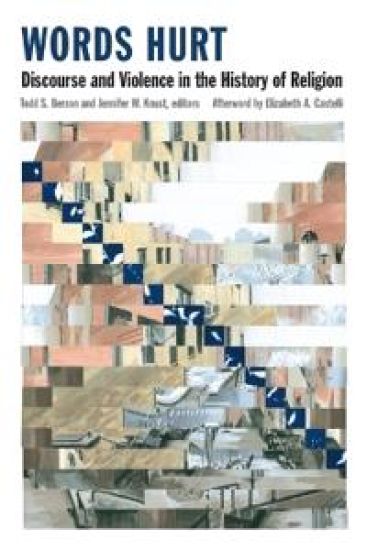
Investigates how discourse spills from language to action, generating, obfuscating, and perpetuating violence while also offering the words, principles, and practices that may interrupt it. We are continually catching up with and being caught by words, especially words that hurt. These collected essays probe the interaction of violence and words across time, place, and circumstance. Often cited as the core source of violence, religion’s capacity for coordinating ideas, symbols, and groups has made it a potent force in the production and deflection of violence. Yet the production of the category "religion" has also contributed to violence; employed to surveille and subjugate targeted populations, "religion" enabled and conveyed colonial domination on a global scale. The claim that religion causes violence has therefore missed a fundamental insight: as a word, "religion" also acts in and on the world. Contributors thus ask: How does persecution become weaponized in and through language? Whose stories are told and who is allowed to speak them? And how do language, symbols, art, activism, and performance find ways to speak back, push back, and offer critique? Theorizing, historicizing, and addressing the violence of words and words of violence, "religion" emerges as critical theory and embodies the very practice of critique.
Words Hurt

Words Hurt

Elizabeth A. Castelli

FORDHAM UNIVERSITY PRESS
2026
sidottu
Investigates how discourse spills from language to action, generating, obfuscating, and perpetuating violence while also offering the words, principles, and practices that may interrupt it. We are continually catching up with and being caught by words, especially words that hurt. These collected essays probe the interaction of violence and words across time, place, and circumstance. Often cited as the core source of violence, religion’s capacity for coordinating ideas, symbols, and groups has made it a potent force in the production and deflection of violence. Yet the production of the category "religion" has also contributed to violence; employed to surveille and subjugate targeted populations, "religion" enabled and conveyed colonial domination on a global scale. The claim that religion causes violence has therefore missed a fundamental insight: as a word, "religion" also acts in and on the world. Contributors thus ask: How does persecution become weaponized in and through language? Whose stories are told and who is allowed to speak them? And how do language, symbols, art, activism, and performance find ways to speak back, push back, and offer critique? Theorizing, historicizing, and addressing the violence of words and words of violence, "religion" emerges as critical theory and embodies the very practice of critique.
Imitating Paul

Imitating Paul

Elizabeth A. Castelli

Westminster/John Knox Press,U.S.
1991
nidottu
What does it mean to imitate another person? What relationships are possible and necessary, or unthinkable, because of exhortation advising people to imitate Paul? What are the effects of giving special status to likeness? Questions such as these are posed in this thought-provoking book that addresses the notion of mimesis (imitation) and how it functions in Paul's letters as a strategy of power.The Literary Currents in Biblical Interpretation series explores current trends within the discipline of biblical interpretation by dealing with the literary qualities of the Bible: the play of its language, the coherence of its final form, and the relationships between text and readers. Biblical interpreters are being challenged to take responsibility for the theological, social, and ethical implications of their readings. This series encourages original readings that breach the confines of traditional biblical criticism.