Kirjailija
Elizabeth Anderson
Kirjat ja teokset yhdessä paikassa: 29 kirjaa, julkaisuja vuosilta 1995-2026, suosituimpien joukossa H.D. and Modernist Religious Imagination. Vertaile teosten hintoja ja tarkista saatavuus suomalaisista kirjakaupoista.
29 kirjaa
Kirjojen julkaisuhaarukka 1995-2026.
Exploring the intersection of religious sensibility and creativity in the poetry and prose of the American modernist writer, H.D., this volume explores the nexus of the religious, the visionary, the creative and the material. Drawing on original archival research and analyses of newly published and currently unpublished writings by H.D., Elizabeth Anderson shows how the poet's work is informed by a range of religious traditions, from the complexities and contradictions of Moravian Christianity to a wide range of esoteric beliefs and practices. H.D and Modernist Religious Imagination brings H.D.'s texts into dialogue with the French theorist Hélène Cixous, whose attention to writing, imagination and the sacred has been a neglected, but rich, critical and theological resource. In analysing the connection both writers craft between the sacred, the material and the creative, this study makes a thoroughly original contribution to the emerging scholarly conversation on modernism and religion, and the debate on the inter-relation of the spiritual and the material within the interdisciplinary field of literature and religion.
What is the work ethic? Does it justify policies that promote the wealth and power of the One Percent at workers' expense? Or does it advance policies that promote workers' dignity and standing? Hijacked explores how the history of political economy has been a contest between these two ideas about whom the work ethic is supposed to serve. Today's neoliberal ideology deploys the work ethic on behalf of the One Percent. However, workers and their advocates have long used the work ethic on behalf of ordinary people. By exposing the ideological roots of contemporary neoliberalism as a perversion of the seventeenth-century Protestant work ethic, Elizabeth Anderson shows how we can reclaim the original goals of the work ethic, and uplift ourselves again. Hijacked persuasively and powerfully demonstrates how ideas inspired by the work ethic informed debates among leading political economists of the past, and how these ideas can help us today.
Experience the enchantment of the holiday season with Elizabeth Anderson's "The Goblins' Christmas," a delightful juvenile poetry collection. This classic work of fantasy brings the magic of Christmas to life through imaginative verse. Explore a world where goblins and holiday cheer intertwine, creating a captivating narrative for young readers. A timeless exploration of Christmas themes, this book offers a unique perspective within juvenile literature. Perfect for those seeking festive poetry, "The Goblins' Christmas" is a charming addition to any collection. Rediscover the joy and wonder of this beautifully crafted work, meticulously prepared for print republication.This work has been selected by scholars as being culturally important, and is part of the knowledge base of civilization as we know it.This work is in the public domain in the United States of America, and possibly other nations. Within the United States, you may freely copy and distribute this work, as no entity (individual or corporate) has a copyright on the body of the work.Scholars believe, and we concur, that this work is important enough to be preserved, reproduced, and made generally available to the public. We appreciate your support of the preservation process, and thank you for being an important part of keeping this knowledge alive and relevant.
What is the work ethic? Does it justify policies that promote the wealth and power of the One Percent at workers' expense? Or does it advance policies that promote workers' dignity and standing? Hijacked explores how the history of political economy has been a contest between these two ideas about whom the work ethic is supposed to serve. Today's neoliberal ideology deploys the work ethic on behalf of the One Percent. However, workers and their advocates have long used the work ethic on behalf of ordinary people. By exposing the ideological roots of contemporary neoliberalism as a perversion of the seventeenth-century Protestant work ethic, Elizabeth Anderson shows how we can reclaim the original goals of the work ethic, and uplift ourselves again. Hijacked persuasively and powerfully demonstrates how ideas inspired by the work ethic informed debates among leading political economists of the past, and how these ideas can help us today.
Material Spirituality in Modernist Women’s Writing
Elizabeth Anderson
Bloomsbury Academic
2021
nidottu
For Virginia Woolf, H.D., Mary Butts and Gwendolyn Brooks, things mobilise creativity, traverse domestic, public and rural spaces and stage the interaction between the sublime and the mundane. Ordinary things are rendered extraordinary by their spiritual or emotional significance, and yet their very ordinariness remains part of their value.This book addresses the intersection of spirituality, things and places – both natural and built environments – in the work of these four women modernists. From the living pebbles in Mary Butts’s memoir to the pencil sought in Woolf’s urban pilgrimage in ‘Street Haunting’, the Christmas decorations crafted by children in H.D.’s autobiographical novel The Gift and Maud Martha’s love of dandelions in Brooks’s only novel, things indicate spiritual concerns in these writers’ work.Elizabeth Anderson contributes to current debates around materiality, vitalism and post-secularism, attending to both mainstream and heterodox spiritual expressions and connections between the two in modernism. How we value our spaces and our world being one of the most pressing contemporary ethical and ecological concerns, this volume contributes to the debate by arguing that a change in our attitude towards the environment will not come from a theory of renunciation but through attachment to and regard for material things.
I denna moderna klassiker blottlägger Elizabeth Anderson metodiskt, pedagogiskt och inte sällan underhållande djupgående brister hos de samtida jämlikhetsteorier som har kommit att dominera diskussionen, men som hon menar helt har missat den egalitära poängen. En rimlig egalitär teori måste, till skillnad från dessa teorier, klargöra vad vi är skyldiga varandra som jämlika medborgare. Anderson uppmanar oss därför att hitta tillbaka till centrala egalitära frågor. Hur får vi stopp på förtryck? Och hur kan vi skapa en social ordning där personer står i jämlika relationer till varandra? Elizabeth S. Anderson (f. 1959) är professor i filosofi vid universitetet i Michigan. 2008 valdes hon in i American Academy of Arts and Sciences, 2013 fick hon ett Guggenheimstipendium för att bedriva sin forskning och 2019 fick hon vad som ibland kallas ett ”genistipendium” från MacArthur Fellows program.
Material Spirituality in Modernist Women’s Writing
Elizabeth Anderson
Bloomsbury Academic
2020
sidottu
For Virginia Woolf, H.D., Mary Butts and Gwendolyn Brooks, things mobilise creativity, traverse domestic, public and rural spaces and stage the interaction between the sublime and the mundane. Ordinary things are rendered extraordinary by their spiritual or emotional significance, and yet their very ordinariness remains part of their value.This book addresses the intersection of spirituality, things and places – both natural and built environments – in the work of these four women modernists. From the living pebbles in Mary Butts’s memoir to the pencil sought in Woolf’s urban pilgrimage in ‘Street Haunting’, the Christmas decorations crafted by children in H.D.’s autobiographical novel The Gift and Maud Martha’s love of dandelions in Brooks’s only novel, things indicate spiritual concerns in these writers’ work.Elizabeth Anderson contributes to current debates around materiality, vitalism and post-secularism, attending to both mainstream and heterodox spiritual expressions and connections between the two in modernism. How we value our spaces and our world being one of the most pressing contemporary ethical and ecological concerns, this volume contributes to the debate by arguing that a change in our attitude towards the environment will not come from a theory of renunciation but through attachment to and regard for material things.
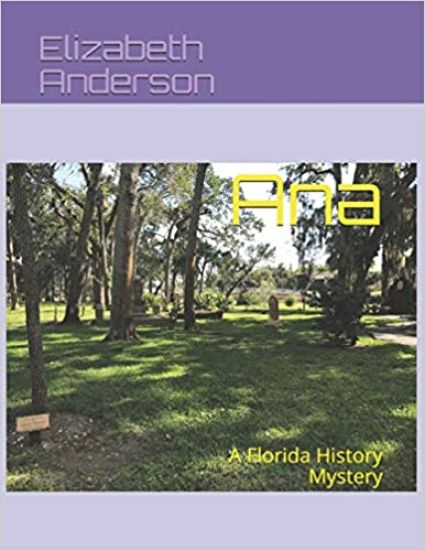
Ana, a college student and part-time tour guide is thrust into a world of past events, intrigue, and ghosts, after a fall and bump to the head. Why are ghosts appearing to her? Who is the young girl who beckons Ana to solve an ancient mystery? Join Ana and her friends Mike and the four legged Watson as they solve this Saint Augustine, Florida History Mystery.
Why our workplaces are authoritarian private governments—and why we can’t see itOne in four American workers says their workplace is a “dictatorship.” Yet that number almost certainly would be higher if we recognized employers for what they are—private governments with sweeping authoritarian power over our lives. Many employers minutely regulate workers’ speech, clothing, and manners on the job, and employers often extend their authority to the off-duty lives of workers, who can be fired for their political speech, recreational activities, diet, and almost anything else employers care to govern. In this compelling book, Elizabeth Anderson examines why, despite all this, we continue to talk as if free markets make workers free, and she proposes a better way to think about the workplace, opening up space for discovering how workers can enjoy real freedom.
Community As Partner
Elizabeth Anderson; Judith McFarlane
Lippincott Williams and Wilkins
2018
pokkari
Community As Partner: Theory and Practice in Nursing, 8th Edition offers a foundational overview of the concepts of epidemiology, environment, culture, ethics, empowerment, health policy, informatics, bioterrorism, and emerging infectious diseases as they relate to community health. Authors and theorists Dr. Anderson and Dr. McFarlane of the Community As Partner Model arm students with the “how to” knowledge they need to apply the nursing process to an entire community, and take readers through the entire nursing process with a real-life community as an example! Anderson offers a handbook with practical skills that ACHNE has outlined as essential for generalist nurses, including how to do a community assessment, how to analyze data, how to form a community nursing diagnosis, as well as how to plan, implement, and evaluate a community health program. Community As Partner analyzes the relationship between globalization and health, and inspires students to contribute to the reduction of global health challenges and promoting health for all, including marginalized populations and health promotion in school communities, rural communities, and faith communities.In this edition, instructors will receive PowerPoints enhanced with lecture notes and iclicker questions. These PowerPoints will be developed to serve a dual purpose. You can choose to share the decks with your students to use as self-paced Study Notes and knowledge check multiple choice questions. Our NCLEX style test bank has been revised and enhanced with more questions at the application level and higher. KEY FEATURES Anderson and McFarlane’s famous Community As Partner Model offers students guidance on their practice in the community. Learning Objectives at the beginning of each chapter focus readers’ attention on important chapter content. Take Note boxes highlight key concepts for readers as they go through the steps of the nursing process for a community. Critical Thinking Questions at the end of each chapter enable students to review and apply chapter content. Further Readings offer additional references on the chapter subject matter.
Community As Partner
Elizabeth Anderson; Judy Macfarlane; Elizabeth Anderson
Lippincott Williams and Wilkins
2018
pokkari
Community As Partner: Theory and Practice in Nursing, 8th Edition offers a foundational overview of the concepts of epidemiology, environment, culture, ethics, empowerment, health policy, informatics, bioterrorism, and emerging infectious diseases as they relate to community health. Authors and theorists Dr. Anderson and Dr. McFarlane of the Community As Partner Model arm students with the "how to" knowledge they need to apply the nursing process to an entire community, and take readers through the entire nursing process with a real-life community as an example! Anderson offers a handbook with practical skills that ACHNE has outlined as essential for generalist nurses, including how to do a community assessment, how to analyze data, how to form a community nursing diagnosis, as well as how to plan, implement, and evaluate a community health program. Community As Partner analyzes the relationship between globalization and health, and inspires students to contribute to the reduction of global health challenges and promoting health for all, including marginalized populations and health promotion in school communities, rural communities, and faith communities. In this edition, instructors will receive PowerPoints enhanced with lecture notes and iclicker questions. These PowerPoints will be developed to serve a dual purpose. You can choose to share the decks with your students to use as self-paced Study Notes and knowledge check multiple choice questions. Our NCLEX style test bank has been revised and enhanced with more questions at the application level and higher.
Florida: Stories about living the good life in the Sunshine State
Kit Adams; Elizabeth Anderson; Lloyd Behrendt
Anthology Alliance
2018
nidottu
Sunshine. Hurricanes. Disney. Alligators. Space. Pythons. Beaches. All are evocative of modern Florida: a mix of endless summer and destructive storms, amusement parks and deadly predators, invasive species and gateways to the final frontier. This is Florida today. This is a collection of stories about the Sunshine State. From Miami to Jacksonville, Melbourne to Tampa, Orlando to Tallahassee, Florida is more than citrus, swamps, and mosquitos. It's about living the good life
Elizabeth Anderson wanted to be a mother with all her heart. When she finally got her wish, it sent her down a path of immense grief and intense frustration. It also introduced her to the greatest joy she had ever known. She and her son, James, went through surprising diagnoses, a shocking death, and more in their shared journey.It began when Beth and her husband, Jim, brought tiny baby James home. It soon became obvious that raising James would present its own unique challenges. James was diagnosed early with bipolar disorder and struggled with self-destructive tendencies and violent behaviors.When Jim was killed in the line of duty as a police officer, Beth didn't know how she would pick up the pieces of her life. Nevertheless, she found new adventures and a new family just over the horizon.Beth and James' story will strike a chord with any parent of a child struggling with mental-health challenges. Beth hopes that her work will give you inspiration and encouragement. She knows that you may be frustrated with social systems that often fail special-needs children, but she assures you, with perseverance and faith, there are better days ahead.
Why our workplaces are authoritarian private governments--and why we can't see it One in four American workers says their workplace is a "dictatorship." Yet that number probably would be even higher if we recognized most employers for what they are--private governments with sweeping authoritarian power over our lives, on duty and off. We normally think of government as something only the state does, yet many of us are governed far more--and far more obtrusively--by the private government of the workplace. In this provocative and compelling book, Elizabeth Anderson argues that the failure to see this stems from long-standing confusions. These confusions explain why, despite all evidence to the contrary, we still talk as if free markets make workers free--and why so many employers advocate less government even while they act as dictators in their businesses. In many workplaces, employers minutely regulate workers' speech, clothing, and manners, leaving them with little privacy and few other rights. And employers often extend their authority to workers' off-duty lives. Workers can be fired for their political speech, recreational activities, diet, and almost anything else employers care to govern. Yet we continue to talk as if early advocates of market society--from John Locke and Adam Smith to Thomas Paine and Abraham Lincoln--were right when they argued that it would free workers from oppressive authorities. That dream was shattered by the Industrial Revolution, but the myth endures. Private Government offers a better way to talk about the workplace, opening up space for discovering how workers can enjoy real freedom. Based on the prestigious Tanner Lectures delivered at Princeton University's Center for Human Values, Private Government is edited and introduced by Stephen Macedo and includes commentary by cultural critic David Bromwich, economist Tyler Cowen, historian Ann Hughes, and philosopher Niko Kolodny.