Kirjojen hintavertailu. Mukana 12 390 323 kirjaa ja 12 kauppaa.

Kirjailija

Elizabeth C. Britt

Kirjat ja teokset yhdessä paikassa: 3 kirjaa, julkaisuja vuosilta 2018-2024, suosituimpien joukossa Classical Rhetoric and Contemporary Law. Vertaile teosten hintoja ja tarkista saatavuus suomalaisista kirjakaupoista.

3 kirjaa

Kirjojen julkaisuhaarukka 2018-2024.

Classical Rhetoric and Contemporary Law

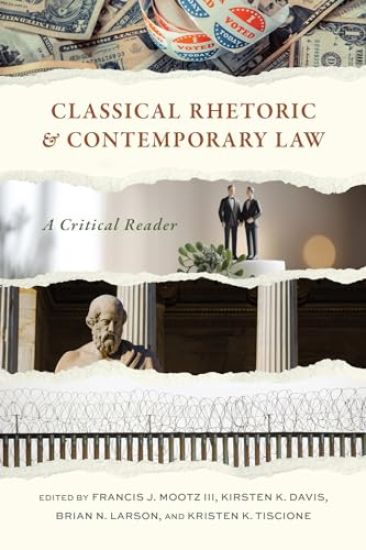
Classical Rhetoric and Contemporary Law

Vasileios Adamidis; Elizabeth C. Britt; David A. Frank; Michael Gagarin; Eugene Garver; Mark A. Hannah; Catherine L. Langford; Craig A. Meyer; Susan E. Provenzano; Nick J. Sciullo; Laura A. Webb

THE UNIVERSITY OF ALABAMA PRESS
2024
sidottu
Pairs passages from works of classical rhetoric with contemporary legal rulings to highlight and analyze their deep and abiding connections in matters of persuasionClassical Rhetoric and Contemporary Law: A Critical Reader is a rich work that analyzes the interplay between ancient rhetorical traditions and modern legal practice, reestablishing the lost connections between law and classical rhetoric. From Isocrates’s Panegyricus in 380 BCE to the landmark US Supreme Court case Trump v. Hawaii in 2018, and from Antiphon’s fifth century BCE First Tetralogy to 1995’s O. J. Simpson trial, the volume draws on an array of sources to illuminate how ancient rhetorical insights may even today challenge and enrich our grasp of contemporary legal principles. The collection opens with a brisk review of the historical development of rhetoric. The second part examines a pair of rhetorical theorists whose works frame the period across which classical rhetoric declined as a mode of thought. A contemporary appellate case contrasts with the work of Giambattista Vico, an eighteenth-century professor of rhetoric who warned of the separation of law from rhetoric. The analysis of the work of twentieth-century scholars ChaÏm Perelman and Lucie Olbrects-Tyteca shows that where Cartesian rationality fails, the humanistic tradition of rhetoric allows the law to respond to the needs of justice. In the third part, ten case studies bring together a classical rhetorical theorist with a contemporary court case, demonstrating the abiding relevance of the classical tradition to contemporary jurisprudence. With its cross-disciplinary appeal, Classical Rhetoric and Contemporary Law encompasses the work of legal, rhetorical, English, and communication scholars alike, catalyzing interactive exploration into the profound ways ancient rhetorical insights continue to shape our comprehension of today’s legal landscape.CONTRIBUTORS Vasileios Adamidis / Elizabeth C. Britt / Kirsten K. Davis / David A. Frank / Michael Gagarin / Eugene Garver / Mark A. Hannah / Catherine L. Langford / Brian N. Larson / Craig A. Meyer / Francis J. Mootz III / Susan E. Provenzano / Nick J. Sciullo / Kristen K. Tiscione / Laura A. Webb
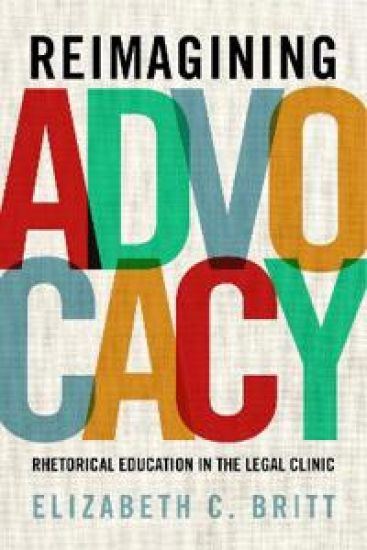
Reimagining Advocacy

Reimagining Advocacy

Elizabeth C. Britt

Pennsylvania State University Press
2018
sidottu
Domestic violence accounts for approximately one-fifth of all violent crime in the United States and is among the most difficult issues confronting professionals in the legal and criminal justice systems. In this volume, Elizabeth Britt argues that learning embodied advocacy—a practice that results from an expanded understanding of expertise based on lived experience—and adopting it in legal settings can directly and tangibly help victims of abuse.Focusing on clinical legal education at the Domestic Violence Institute at the Northeastern University School of Law, Britt takes a case-study approach to illuminate how challenging the context, aims, and forms of advocacy traditionally embraced in the U.S. legal system produces better support for victims of domestic violence. She analyzes a wide range of materials and practices, including the pedagogy of law school training programs, interviews with advocates, and narratives written by students in the emergency department, and looks closely at the forms of rhetorical education through which students assimilate advocacy practices. By examining how students learn to listen actively to clients and to recognize that clients have the right and ability to make decisions for themselves, Britt shows that rhetorical education can succeed in producing legal professionals with the inclination and capacity to engage others whose values and experiences diverge from their own.By investigating the deep relationship between legal education and rhetorical education, Reimagining Advocacy calls for conversations and action that will improve advocacy for others, especially for victims of domestic violence seeking assistance from legal professionals.
Reimagining Advocacy

Reimagining Advocacy

Elizabeth C. Britt

Pennsylvania State University Press
2018
pokkari
Domestic violence accounts for approximately one-fifth of all violent crime in the United States and is among the most difficult issues confronting professionals in the legal and criminal justice systems. In this volume, Elizabeth Britt argues that learning embodied advocacy—a practice that results from an expanded understanding of expertise based on lived experience—and adopting it in legal settings can directly and tangibly help victims of abuse.Focusing on clinical legal education at the Domestic Violence Institute at the Northeastern University School of Law, Britt takes a case-study approach to illuminate how challenging the context, aims, and forms of advocacy traditionally embraced in the U.S. legal system produces better support for victims of domestic violence. She analyzes a wide range of materials and practices, including the pedagogy of law school training programs, interviews with advocates, and narratives written by students in the emergency department, and looks closely at the forms of rhetorical education through which students assimilate advocacy practices. By examining how students learn to listen actively to clients and to recognize that clients have the right and ability to make decisions for themselves, Britt shows that rhetorical education can succeed in producing legal professionals with the inclination and capacity to engage others whose values and experiences diverge from their own.By investigating the deep relationship between legal education and rhetorical education, Reimagining Advocacy calls for conversations and action that will improve advocacy for others, especially for victims of domestic violence seeking assistance from legal professionals.