Kirjojen hintavertailu. Mukana 12 595 353 kirjaa ja 12 kauppaa.

Kirjailija

Elizabeth J. Chang

Kirjat ja teokset yhdessä paikassa: 8 kirjaa, julkaisuja vuosilta 2009-2019, suosituimpien joukossa Measuring and Analysing the Use of Ontologies. Vertaile teosten hintoja ja tarkista saatavuus suomalaisista kirjakaupoista.

8 kirjaa

Kirjojen julkaisuhaarukka 2009-2019.

Measuring and Analysing the Use of Ontologies

Measuring and Analysing the Use of Ontologies

Jamshaid Ashraf; Omar K. Hussain; Farookh Khadeer Hussain; Elizabeth J. Chang

Springer Nature Switzerland AG
2019
nidottu
This unique book succinctly summarizes the need to measure how ontologies (one of the building blocks of the Semantic Web) are currently being utilized, providing insights for various stakeholders. Where possible it improves and reuses terms in existing vocabularies/ontologies, as recommended by the Linked Data community. Recent advances in the Semantic Web have led to a proliferation of Resource Description Framework (RDF) data, which employ ontologies to semantically describe the information on the Web making it equally understandable for both humans and machines. However, to create a network effect, it is important that selective ontologies are used by more data publishers to improve the value of that ontology. For this to happen, it is vital to discover what is being used from an ontology to semantically annotate the information on the Web specific to a given domain. Answers to such basic but crucial questions can only be achieved by ascertaining how ontologies in the current semantic web are being utilized and adopted. The proposed frameworks to obtain such insights are explained with real-world examples to provide a clear and detailed description of ontology usage analysis. Both theoretical and practical, the book is of value to academics and professionals working in industry. Specifically, it is of primary interest to researchers, graduate students and practitioners in the area of the Semantic Web and its various real-world applications.
Measuring and Analysing the Use of Ontologies

Measuring and Analysing the Use of Ontologies

Jamshaid Ashraf; Omar K. Hussain; Farookh Khadeer Hussain; Elizabeth J. Chang

Springer International Publishing AG
2018
sidottu
This unique book succinctly summarizes the need to measure how ontologies (one of the building blocks of the Semantic Web) are currently being utilized, providing insights for various stakeholders. Where possible it improves and reuses terms in existing vocabularies/ontologies, as recommended by the Linked Data community. Recent advances in the Semantic Web have led to a proliferation of Resource Description Framework (RDF) data, which employ ontologies to semantically describe the information on the Web making it equally understandable for both humans and machines. However, to create a network effect, it is important that selective ontologies are used by more data publishers to improve the value of that ontology. For this to happen, it is vital to discover what is being used from an ontology to semantically annotate the information on the Web specific to a given domain. Answers to such basic but crucial questions can only be achieved by ascertaining how ontologies in the current semantic web are being utilized and adopted. The proposed frameworks to obtain such insights are explained with real-world examples to provide a clear and detailed description of ontology usage analysis. Both theoretical and practical, the book is of value to academics and professionals working in industry. Specifically, it is of primary interest to researchers, graduate students and practitioners in the area of the Semantic Web and its various real-world applications.
Semantically Based Clinical TCM Telemedicine Systems

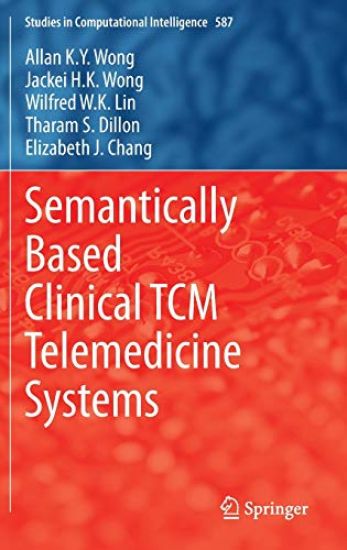
Semantically Based Clinical TCM Telemedicine Systems

Allan K. Y. Wong; Jackei H.K. Wong; Wilfred W. K. Lin; Tharam S. Dillon; Elizabeth J. Chang

Springer-Verlag Berlin and Heidelberg GmbH Co. K
2016
nidottu
Recent years have seen the development of two significant trends namely: the adoption of some Traditional Chinese Medicine Practices into mainstream Allopathic Western Medicine and the advent of the internet and broad band networks leading to an increased interest in the use of Telemedicine to deliver medical services.In this book, we see the convergence of these two trends leading to a semantically-based TCM Telemedicine system that utilizes an ontology to provide sharable knowledge in the TCM realm to achieve this.The underpinning research required the development of a three-layer architecture and an Ontology of the TCM knowledge.As TCM knowledge like all medical knowledge is not frozen in time it was important to develop an approach that would allow evolution of the Ontology when new evidence became available.In order for the system to be practically grounded it was important to work with an industry partner PuraPharm Group/HerbMiners Informatics Limited. This partnership was initiated through Professor Allan Wong and the Chairman of PuraPharm Group Mr. Abraham Chan. This led to the system being utilized in more than 20 Mobile Clinics in Hong Kong and 300 Hospitals in China.In order for these different deployments of the system to be coherent with the main core Ontology, it was necessary for us to develop an Ontology Driven Software System Generation approach.
Semantically Based Clinical TCM Telemedicine Systems

Semantically Based Clinical TCM Telemedicine Systems

Allan K. Y. Wong; Jackei H.K. Wong; Wilfred W. K. Lin; Tharam S. Dillon; Elizabeth J. Chang

Springer-Verlag Berlin and Heidelberg GmbH Co. K
2015
sidottu
Recent years have seen the development of two significant trends namely: the adoption of some Traditional Chinese Medicine Practices into mainstream Allopathic Western Medicine and the advent of the internet and broad band networks leading to an increased interest in the use of Telemedicine to deliver medical services.In this book, we see the convergence of these two trends leading to a semantically-based TCM Telemedicine system that utilizes an ontology to provide sharable knowledge in the TCM realm to achieve this.The underpinning research required the development of a three-layer architecture and an Ontology of the TCM knowledge.As TCM knowledge like all medical knowledge is not frozen in time it was important to develop an approach that would allow evolution of the Ontology when new evidence became available.In order for the system to be practically grounded it was important to work with an industry partner PuraPharm Group/HerbMiners Informatics Limited. This partnership was initiated through Professor Allan Wong and the Chairman of PuraPharm Group Mr. Abraham Chan. This led to the system being utilized in more than 20 Mobile Clinics in Hong Kong and 300 Hospitals in China.In order for these different deployments of the system to be coherent with the main core Ontology, it was necessary for us to develop an Ontology Driven Software System Generation approach.
Ontology-Based Multi-Agent Systems

Ontology-Based Multi-Agent Systems

Maja Hadzic; Elizabeth J. Chang; Pornpit Wongthongtham

Springer-Verlag Berlin and Heidelberg GmbH Co. K
2014
nidottu
During the last two decades, the idea of Semantic Web has received a great deal of attention. An extensive body of knowledge has emerged to describe technologies that seek to help us create and use aspects of the Semantic Web. Ontology and agent-based technologies are understood to be the two important technologies here. A large number of articles and a number of books exist to describe the use individually of the two technologies and the design of systems that use each of these technologies individually, but little focus has been given on how one can - sign systems that carryout integrated use of the two different technologies. In this book we describe ontology and agent-based systems individually, and highlight advantages of integration of the two different and complementary te- nologies. We also present a methodology that will guide us in the design of the - tegrated ontology-based multi-agent systems and illustrate this methodology on two use cases from the health and software engineering domain. This book is organized as follows: • Chapter I, Current issues and the need for ontologies and agents, describes existing problems associated with uncontrollable information overload and explains how ontologies and agent-based systems can help address these - sues. • Chapter II, Introduction to multi-agent systems, defines agents and their main characteristics and features including mobility, communications and collaboration between different agents. It also presents different types of agents on the basis of classifications done by different authors.
Risk Assessment and Management in the Networked Economy

Risk Assessment and Management in the Networked Economy

Omar K. Hussain; Tharam S. Dillon; Farookh K. Hussain; Elizabeth J. Chang

Springer-Verlag Berlin and Heidelberg GmbH Co. K
2014
nidottu
Risk and reward are always foremost in the determination of investment decisions and business transactions. Advances in the area of Information Communication Technologies (ICT) have enabled the development of new business paradigms. Such paradigms involve transactions taking place between loosely connected parties, often totally or partially unknown to one another. One important concept required to ensure such transactions are successful is transactional risk. The importance of doing this has been demonstrated in recent financial crisis. This book is unique in simultaneously taking into account the likelihood of an event occurring and its financial impact and provides an integrated discussion of the process of transactional risk identification, assessment, evaluation, management and recording in these emerging domains. It provides a detailed and clear exposition of the importance of transactional risk before detailing for its assessment and evaluation. The scope of the book is theoretical and practical and as such it will have a broad market both within academia and industry. Specifically this book should be of primary interest to researchers, graduate students and practitioners in the area of developing business intelligence techniques and their application in various real world applications.
Risk Assessment and Management in the Networked Economy

Risk Assessment and Management in the Networked Economy

Omar K. Hussain; Tharam S. Dillon; Farookh K. Hussain; Elizabeth J. Chang

Springer-Verlag Berlin and Heidelberg GmbH Co. K
2012
sidottu
Risk and reward are always foremost in the determination of investment decisions and business transactions. Advances in the area of Information Communication Technologies (ICT) have enabled the development of new business paradigms. Such paradigms involve transactions taking place between loosely connected parties, often totally or partially unknown to one another. One important concept required to ensure such transactions are successful is transactional risk. The importance of doing this has been demonstrated in recent financial crisis. This book is unique in simultaneously taking into account the likelihood of an event occurring and its financial impact and provides an integrated discussion of the process of transactional risk identification, assessment, evaluation, management and recording in these emerging domains. It provides a detailed and clear exposition of the importance of transactional risk before detailing for its assessment and evaluation. The scope of the book is theoretical and practical and as such it will have a broad market both within academia and industry. Specifically this book should be of primary interest to researchers, graduate students and practitioners in the area of developing business intelligence techniques and their application in various real world applications.
Ontology-Based Multi-Agent Systems

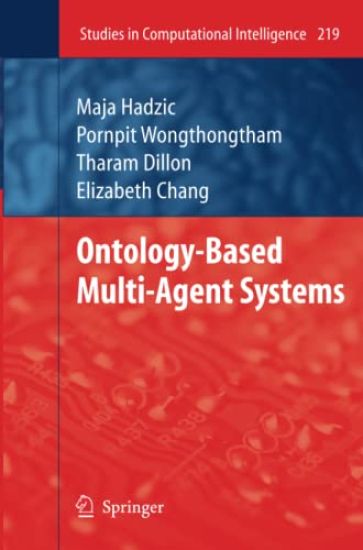
Ontology-Based Multi-Agent Systems

Maja Hadzic; Elizabeth J. Chang; Pornpit Wongthongtham

Springer-Verlag Berlin and Heidelberg GmbH Co. K
2009
sidottu
During the last two decades, the idea of Semantic Web has received a great deal of attention. An extensive body of knowledge has emerged to describe technologies that seek to help us create and use aspects of the Semantic Web. Ontology and agent-based technologies are understood to be the two important technologies here. A large number of articles and a number of books exist to describe the use individually of the two technologies and the design of systems that use each of these technologies individually, but little focus has been given on how one can - sign systems that carryout integrated use of the two different technologies. In this book we describe ontology and agent-based systems individually, and highlight advantages of integration of the two different and complementary te- nologies. We also present a methodology that will guide us in the design of the - tegrated ontology-based multi-agent systems and illustrate this methodology on two use cases from the health and software engineering domain. This book is organized as follows: • Chapter I, Current issues and the need for ontologies and agents, describes existing problems associated with uncontrollable information overload and explains how ontologies and agent-based systems can help address these - sues. • Chapter II, Introduction to multi-agent systems, defines agents and their main characteristics and features including mobility, communications and collaboration between different agents. It also presents different types of agents on the basis of classifications done by different authors.