Kirjojen hintavertailu. Mukana 12 260 544 kirjaa ja 12 kauppaa.

Kirjailija

Elizabeth Jameson

Kirjat ja teokset yhdessä paikassa: 6 kirjaa, julkaisuja vuosilta 1987-2025, suosituimpien joukossa Thresholds, Walls, and Bridges. Vertaile teosten hintoja ja tarkista saatavuus suomalaisista kirjakaupoista.

6 kirjaa

Kirjojen julkaisuhaarukka 1987-2025.

Thresholds, Walls, and Bridges

Thresholds, Walls, and Bridges

Elizabeth Jameson

UNIVERSITY OF CALGARY PRESS
2025
pokkari
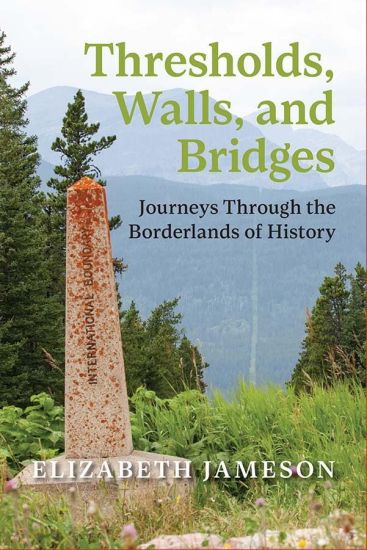
Thresholds, Walls, and Bridges is a collection of public lectures delivered by historian Dr. Elizabeth Jameson during her tenure as Imperial Oil-Lincoln McKay Chair in American Studies at the University of Calgary from 1999 to 2017. Together, these lectures represent the intellectual evolution of an important and influential scholar told through engaging original research. Thresholds, Walls, and Bridges presents insightful and challenging discussions of historical questions informed by contemporary debates. Ranging from the gold camps of California to northwest Alaska, from North Dakota homesteads of the late 9th century to New Jersey cities of the 1960s, they address the boundaries that divide people and the ways that private acts in everyday lives can make meaningful change. Dr. Jameson explores the histories of borderlands, labour, women, workers, people of colour, and the connected pasts of Canada and the United States. Rejecting approaches that write most people out of history, she makes humanity visible again and again. Thresholds, Walls, and Bridges is a record of a remarkable career.
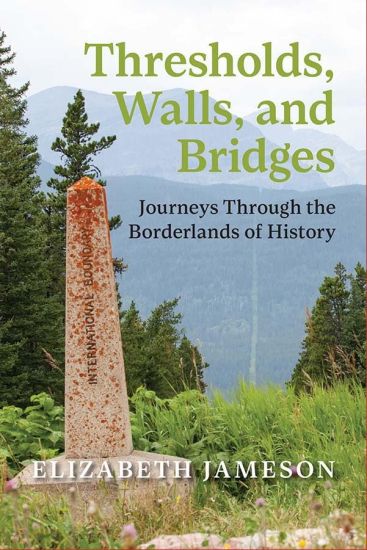
Thresholds, Walls, and Bridges

Thresholds, Walls, and Bridges

Elizabeth Jameson

UNIVERSITY OF CALGARY PRESS
2025
sidottu
Thresholds, Walls, and Bridges is a collection of public lectures delivered by historian Dr. Elizabeth Jameson during her tenure as Imperial Oil-Lincoln McKay Chair in American Studies at the University of Calgary from 1999 to 2017. Together, these lectures represent the intellectual evolution of an important and influential scholar told through engaging original research. Thresholds, Walls, and Bridges presents insightful and challenging discussions of historical questions informed by contemporary debates. Ranging from the gold camps of California to northwest Alaska, from North Dakota homesteads of the late 19th century to New Jersey cities of the 1960s, they address the boundaries that divide people and the ways that private acts in everyday lives can make meaningful change. Dr. Jameson explores the histories of borderlands, labour, women, workers, people of colour, and the connected pasts of Canada and the United States. Rejecting approaches that write most people out of history, she makes humanity visible again and again. Thresholds, Walls, and Bridges is a record of a remarkable career.
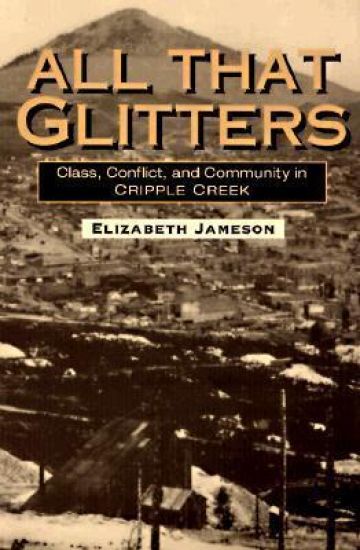
All That Glitters

All That Glitters

Elizabeth Jameson

University of Illinois Press
1998
nidottu
At the turn of the century, Colorado's Cripple Creek District captured the national imagination with the extraordinary wealth of its gold mines and the unquestionable strength of the militant Western Federation of Miners. Elizabeth Jameson tells the entertaining story of Cripple Creek, the scene in 1894 of one of radical labor's most stunning victories and, in 1903 and 1904, of one of its most crushing defeats. Jameson draws on working-class oral histories, the Victor and Cripple Creek Daily Press published by 34 of the local labor unions, and the 1900 manuscript census. She connects unions with lodges and fraternal associations, ethnic identity, families, households, and partisan politics. Through these ties, she probes the differences in age, skill, gender, marital status, and ethnicity that strained working-class unity and contributed to the fall of labor in Cripple Creek. Jameson's book will be required reading for western, ethnic, and working-class historians seeking an alternative interpretation of western mining struggles that emphasizes class, gender, and multiple sources of social identity.
Writing the Range

Writing the Range

Susan Armitage; Elizabeth Jameson

University of Oklahoma Press
1997
nidottu
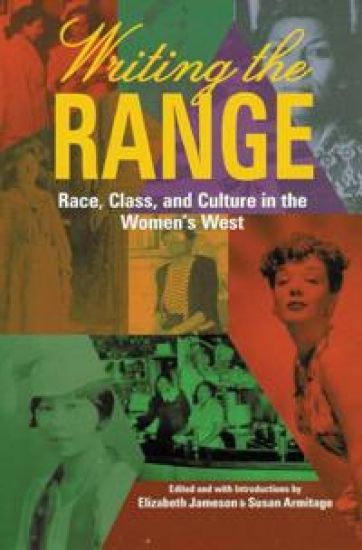
A major goal of the New Western History is to chronicle the vast diversity of western experience. In this pathbreaking anthology, coeditors Elizabeth Jameson and Susan Armitage-who brought us ""The Women's West in 1987""-meet that challenge by bringing together twenty-nine essays that present women of all races as actors in their own lives and in the history of the American West and locate them in a framework that connects gender, race, and class.In mythic sagas of the American West, the wide western range offered boundless opportunity to a limited cast of white men. Buffalo roamed, deer and antelope played, and women's voices were never heard. Writing the Range allows us to hear many long-silenced women: Spanish-Mexican settlers and American Indians on New Spain's northern frontiers; Chinese, Basque, Japanese, Korean, Vietnamese, Slavic, and Irish immigrants; film stars Dolores del Rio and Lupe Velez; Navajos and African Americans who moved to western cities during World War II; and the activist Mothers of East Los Angeles, who organized to resist environmental dangers to their community.A valuable introduction to the rapidly changing field of western history, Writing the Range explains clearly how race, class, and culture are constructed and connected. The first section examines issues raised by more than a decade of multicultural western women's histories; following are six chronological sections spanning four centures. Each section offers a short introduction connecting is essays and placing them in analytic and historical perspective. Clearly written and accessible, Writing the Range makes a major contribution in ethnic history, women's history, and interpretations of the American West.
Land in Her Own Name

Land in Her Own Name

H. Elaine Lindgren; Elizabeth Jameson

University of Oklahoma Press
1996
nidottu
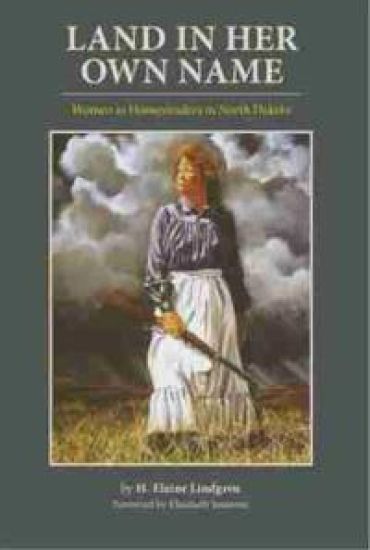
Land is often known by the names of past owners. ""Emma's Land,"" ""Gina's quarter,"" and ""the Ingeborg Land"" are reminders of the many women who homesteaded across North Dakota in the late nineteenth and early twentieth centuries. Land in Her Own Name records these homesteaders' experiences as revealed in interviews with surviving homesteaders and their families and friends, land records, letters, and diaries.These women's fascinating accounts tell of locating a claim, erecting a shelter, and living on the prairie. Their ethnic backgrounds include Yankee, Scandinavian, German, and German-Russian, as well as African American, Jewish, and Lebanese. Some were barely twenty-one, while others had reached their sixties. A few lived on their land for life and ""never borrowed a cent against it""; others sold or rented the land to start a small business or to provide money for education.For this paperback edition, Elizabeth Jameson's foreword situates the homesteading experience for women within the larger context of western history.
The Women's West

The Women's West

Susan Armitage; Elizabeth Jameson

University of Oklahoma Press
1987
nidottu
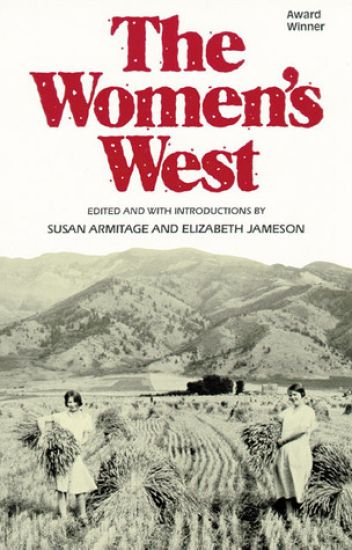
The American West looms large in popular imagination-a place where men were rugged and independent, violent and courageous. In this mythic West all the men were white, and the women were largely absent. The few female actors played supporting roles around the edges of the drama. Molded by the Victorian Cult of True Womanhood, they were passive, dependent, reluctant, and out of place. Men ""won"" the West. Women, against their better judgement, followed them to this ""newly discovered"" place and tried to re-create the amenities of the urban East.Or so the myth goes. The Women's West challenges this picture as racist, sexist, and romantic and rejects the customary emphasis of traditional western history on the nineteenth-century frontier, discovered and defined by Anglo men. In its place The Women's West begins the construction of a new western history as complex and varied as the people who lived it.This collection of twenty-one articles creates a multidimensional portrait of western women. The pioneer women presented here were actors in their own lives, not passive participants in their husbands' ventures. They were hardy seekers who came west, sometimes alone, in search of jobs, freedom, or land to homestead. They were political activists who worked tirelessly to win the right to vote and to hold political office. They adapted in practical ways to their own and their families' economic and personal needs in a new environment.