Kirjojen hintavertailu. Mukana 12 595 353 kirjaa ja 12 kauppaa.
Kirjailija
Elizabeth M. Sloss
Kirjat ja teokset yhdessä paikassa: 9 kirjaa, julkaisuja vuosilta 1991-2021, suosituimpien joukossa Foundation for Integrating Employee Health Activities for Active Duty Personnel in the Department of Defense. Vertaile teosten hintoja ja tarkista saatavuus suomalaisista kirjakaupoista.
The authors describe current Department of Defense safety and occupational health programs and health information systems, as well as employee health programs outside of DoD to provide a foundation for considering a more integrated Department of Defense employee health program.
This book analyzes the costs and compensation paid for asbestos personal-injury claims and discussess such issues as the current state of asbestos litigation in the United States, the costs of compensation, the effects if litigation in the businesses, and the evolving character of litigation.
This report is a comprehensive assessment of the quality of care delivered by the Military Health System (MHS) in 2013-2014 for active-component service members with posttraumatic stress disorder (PTSD) or depression. The assessment includes performance on 30 quality measures, which draw on multiple data sources to evaluate the receipt of recommended assessments and treatments. The assessment identified strengths and areas for improvement.
Understanding the current quality of care for posttraumatic stress disorder (PTSD) and depression delivered to service members is an important step toward improving care across the Military Health System (MHS). This report describes the characteristics of active-component service members who received care for PTSD or depression through the MHS and assesses the quality of care received using quality measures derived from administrative data.
Kimberly A. Hepner; Carol P. Roth; Coreen Farris; Elizabeth M. Sloss; Grant R. Martsolf; Harold Alan Pincus; Katherine E. Watkins; Caroline Epley; Daniel Mandel; Susan D. Hosek; Carrie M. Farmer
To inform improvements to the quality of care delivered by the military health system for posttraumatic stress disorder and major depressive disorder, researchers developed a framework and identified, developed, and described a candidate set of measures for monitoring, assessing, and improving the quality of care. This document describes their research approach and the measure sets that they identified.
This report reviews the court proceedings that led to the uncovering of abusive diagnostic practices in silica litigation, then identifies several areas in which changes in litigation practices and procedures could increase the likelihood that similar diagnosing practices would be uncovered in the future or prevented from occurring in the first place.
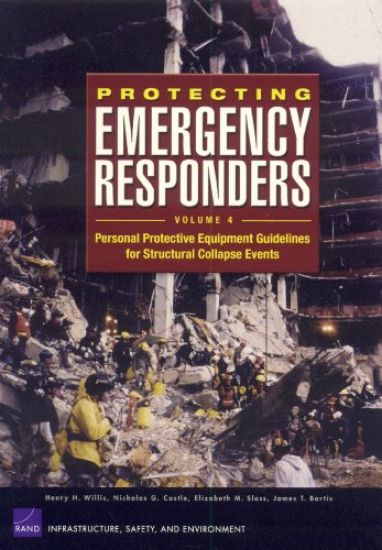
In an effort to help develop federal guidelines for personal protective equipment used by emergency responders, this report summarizes data on injuries among emergency responders available from incidents of structural collapse (including the World Trade Center in 2001 and Oklahoma City's Murrah Building in 1995), reviews the possible health effects of substances likely to be found in pulverized building materials, and describes the possible health effects of several combustion by-products.
Poor health habits (drinking, smoking, lack of exercise) obviously take their toll on individuals and their families. The costs to society are less obvious but certainly more far-reaching. This investigation is the first to quantify the financial burden these detrimental habits place on American taxpayers. Willard Manning and his colleagues measure the direct costs of poor health habits (fire damage, motor vehicle accidents, legal fees), as well as collectively financed costs (medical care, employee sick leave, group health and life insurance, nursing home care, retirement pensions, liability insurance). Consider two co-workers covered by their employer's health plan: both pay the same premium, yet if one drinks heavily, the other--through their mutual insurance program--involuntarily funds the resulting health problems. After laying out their conceptual framework, methods, and analytical approach, the authors describe precisely how and to what extent drinking, smoking, and lack of exercise are currently subsidized, and make recommendations for reducing or reallocating the expense. They present, for example, a persuasive case for raising excise taxes on alcohol. The authors correlate their data to make costs comparable, to avoid double counting, and to determine the exact costs of each of these poor health habits and some of their findings are quite surprising. This unique study will be indispensable to public health policy specialists and researchers, as well as to health economists.