Kirjailija
Elizabeth Norton
Kirjat ja teokset yhdessä paikassa: 29 kirjaa, julkaisuja vuosilta 2008-2026, suosituimpien joukossa England's Queens From Catherine of Aragon to Elizabeth II. Vertaile teosten hintoja ja tarkista saatavuus suomalaisista kirjakaupoista.
29 kirjaa
Kirjojen julkaisuhaarukka 2008-2026.
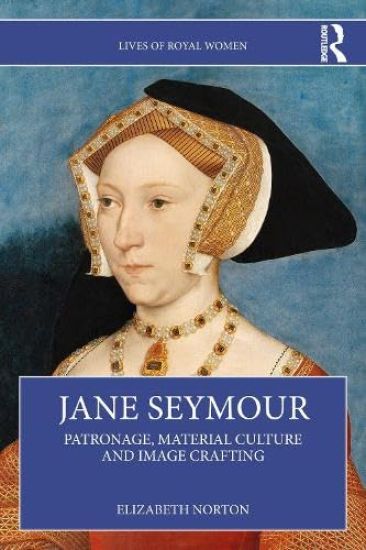
Jane Seymour, the third wife of Henry VIII, was queen of England for only seventeen months, something which has accounted for the little interest shown in her by historians. In her lifetime, however, she was a significant political figure, while her legacy and memorialization extended beyond her early death following childbirth in October 1537. Jane Seymour: Patronage, Material Culture and Image Crafting is the first full length academic study of Jane’s life and queenship. Using extensive archival research, it pulls together all of the surviving information to provide both a biographical and a thematic account. Chapters include a consideration of Jane’s queenship and political role, her material cultural environment, her household, her financial position and her religion, before also considering her afterlife and attempts to commemorate her both officially and unofficially. In doing so, the book banishes many myths that have grown up around the queen, most notably ideas of her passivity and powerlessness and also often repeated (but unsubstantiated) claims of her conservative religious outlook. This book presents a picture of Jane as an active and highly political queen consort. The book is a valuable resource for students and established scholars since it adds considerably to knowledge of the queen and re-inserts her into the heart of the dynasty, while also drawing pertinent conclusions on sixteenth-century queenship.
What If...Book of Alternative History: Revisit Major Milestones That Shaped World History and Discover the Outcome If They Had Happened Differently
Jeff Greenfield; Catherine Curzon; Elizabeth Norton
FOX CHAPEL PUBLISHING
2023
nidottu
The course of history has taken many turns. What would the world be like if events had happened differently? What if JFK had never visited Dallas on November 22, 1963? What if Germany had won the First World War? How would life be different in America if the Southern states had beaten the North? What would a world without The Beatles sound like? Find out the potential answers to all these questions and many more in What If...: Book of Alternative History.With great full-color photos and compelling narratives, historical experts take a look at these and many more intriguing questions in this fascinating look at what might have been. Perfect for browsing, this title will have readers speculating on the events and people that shaped history and make our lives what they are today.
Hinterland
Jarred McGinnis; Ali Seegar; Joe Moran; Adrian Tissier; Dave Wakely; Edvige Giunta; Richard Skelton; Elizabeth Norton
UEA Publishing Project
2023
pokkari
Hinterland is a quarterly magazine showcasing the best in creative non-fiction writing. Each issue features a stellar line-up of writing talent from around the globe: stories by established, best-selling authors as well as a host of exciting new writers making their publishing debut. Much of the writing in our latest issue relates to the body. Whether it’s addiction, illness or a coming-of-age awareness of desire, the authors featured explore how bodies can be afflicted and affected in many different ways. And in light of the recent Covid pandemic, reflections around life and mortality are inevitable, from parental time-travel through a child’s life by Jarred McGinnis (The Coward), to grief as experienced via our online lives by Joe Moran (If You Should Fail, First You Write a Sentence).Also featuring writing by Munizha Ahmad-Cooke, Laura Dobson, Edvige Giunta, Candice Kelsey, Elizabeth Norton, Ali Seegar, Richard Skelton, Michelle Spinei, Adrian Tissier, Dave Wakely and Sam Gordon Webb.
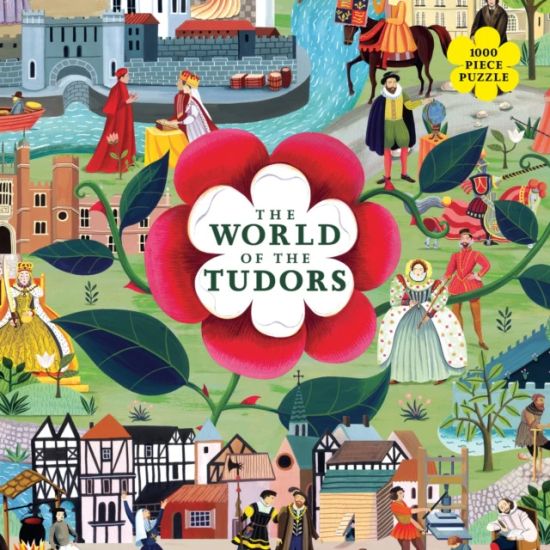
1000-PIECE PUZZLE featuring the world of the Tudors in incredible detail. Finished puzzle measures 680 x 485mmSPOT FAMOUS FIGURES, castles and pastimes as you build the puzzle and travel through time from the Battle of Bosworth to Queen Elizabeth I's funeral paradeINCLUDES A FOLD-OUT POSTER featuring fun facts about the Tudor periodSTURDY & ATTRACTIVE BOX perfect for gifting and storageFrom the Wars of the Roses through plagues, cunning plots, executions and more, the Tudor period is the most dramatic and turbulent in English history. Journey through time to find Henry VIII's six wives, Shakespeare, Sir Francis Drake and other famous figures as you build this detailed 1000-piece puzzle.
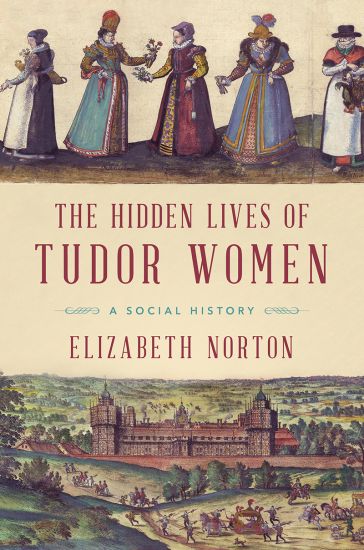
The turbulent Tudor Age never fails to capture the imagination. But what was it truly like to be a woman during this era? The Tudor period conjures up images of queens and noblewomen in elaborate court dress; of palace intrigue and dramatic politics. But if you were a woman, it was also a time when death during childbirth was rife; when marriage was usually a legal contract, not a matter for love, and the education you could hope to receive was minimal at best. Yet the Tudor century was also dominated by powerful and dynamic women in a way that no era had been before. Historian Elizabeth Norton explores the life cycle of the Tudor woman, from childhood to old age, through the diverging examples of women such as Elizabeth Tudor, Henry VIII's sister; Cecily Burbage, Elizabeth's wet nurse; Mary Howard, widowed but influential at court; Elizabeth Boleyn, mother of a controversial queen; and Elizabeth Barton, a peasant girl who would be lauded as a prophetess. Their stories are interwoven with studies of topics ranging from Tudor toys to contraception to witchcraft, painting a portrait of the lives of queens and serving maids, nuns and harlots, widows and chaperones. Norton brings this vibrant period to colorful life in an evocative and insightful social history.
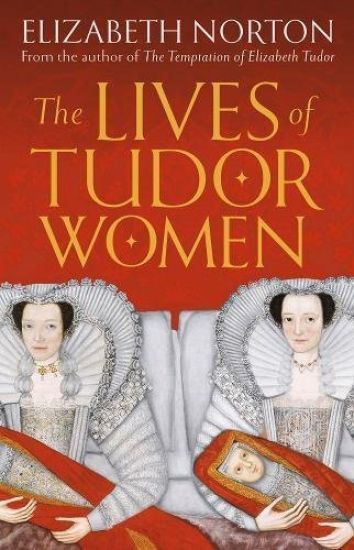
The turbulent Tudor age never fails to capture the imagination. But what was it actually like to be a woman during this period? This was a time when death in infancy or during childbirth was rife; when marriage was usually a legal contract, not a matter for love, and the education of women was minimal at best. Yet the Tudor century was also dominated by powerful and characterful women in a way that no era had been before. Elizabeth Norton explores the seven ages of the Tudor woman, from childhood to old age, through the diverging examples of women such as Elizabeth Tudor, Henry VIII's sister who died in infancy; Cecily Burbage, Elizabeth's wet nurse; Mary Howard, widowed but influential at court; Elizabeth Boleyn, mother of a controversial queen; and Elizabeth Barton, a peasant girl who would be lauded as a prophetess. Their stories are interwoven with studies of topics ranging from Tudor toys to contraception to witchcraft, painting a portrait of the lives of queens and serving maids, nuns and harlots, widows and chaperones.
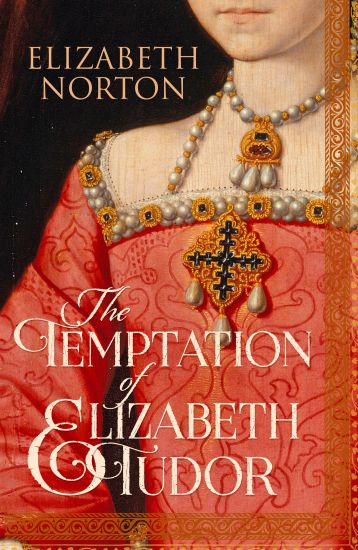
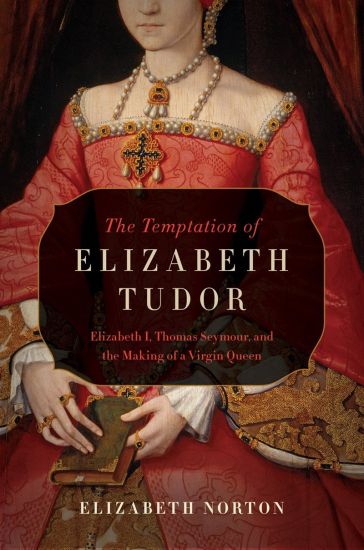
The riveting story of the sex scandal that threatened the life of the young Elizabeth Tudor, and whose outcome was pivotal to the creation of the public persona of Elizabeth I.
The Temptation of Elizabeth Tudor: Elizabeth I, Thomas Seymour, and the Making of a Virgin Queen
Elizabeth Norton
Pegasus Books
2016
sidottu
A power-hungry courtier and an impressionable young princess: The Tudor court had never been more perilous for the young Elizabeth, where rumors had the power to determine her fate. England, late 1547. Henry VIII is dead. His 14-year-old daughter Elizabeth is living with the old king's widow Catherine Parr and her new husband Thomas Seymour, the brother of Henry VIII's third wife, the late Jane Seymour, mother to the now-ailing boy King. Ambitious, charming and dangerous, Seymour begins an overt flirtation with Elizabeth that ends in Catherine sending her away. When Catherine dies in autumn 1548 and Seymour is arrested for treason soon after, the scandal explodes into the open. Alone and in dreadful danger, Elizabeth is threatened supporters of her half-sister Mary, who wish to see England return to Catholicism. She is also closely questioned by the king's regency council: Was she still a virgin? Was there a child? Had she promised to marry Seymour? In her replies, Elizabeth shows the shrewdness and spirit she would later be famous for. She survives the scandal. Thomas Seymour is not so lucky. The Seymour Scandal led to the creation of the Virgin Queen. On hearing of Seymour's beheading, Elizabeth observed This day died a man of much wit, and very little judgement. His fate remained with her. She would never allow her heart to rule her head again.
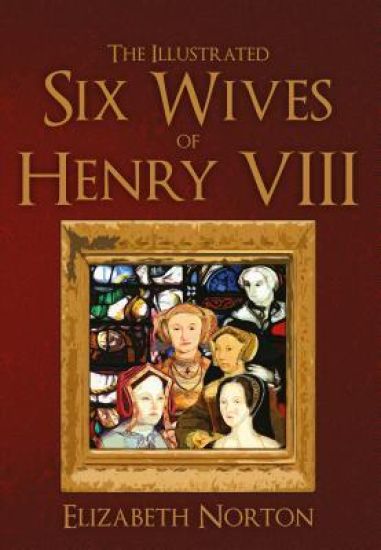
Henry VIII had the most controversial love life of the Tudor period, and he remains Britain’s most famous king because of it. His pursuit of a male heir for his throne led him to cast aside five consecutive wives and bring about the reformation of the Catholic Church, changing the face of British history as he broke from the pope and tradition. But who were the women who were instrumental in causing this change? Why was Catherine of Aragon divorced and Anne Boleyn beheaded, and what happened to the last wife, Catherine Parr? Elizabeth Norton provides a lavishly illustrated guide to the six wives of Henry VIII, exploring their private lives as well as the reasons behind the fundamental changes they caused in Tudor history. With a chapter on each wife, and an extra section on his mistresses, this is the ultimate companion to the six wives of Henry VIII.
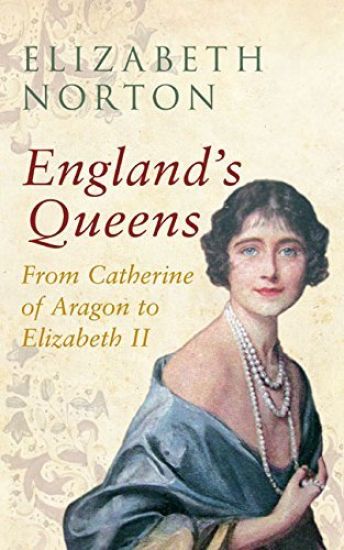
England's Queens From Catherine of Aragon to Elizabeth II
Elizabeth Norton
Amberley Publishing
2015
pokkari
The six wives of Henry VIII brought queenship into the early modern era and his daughters, Mary I and Elizabeth I, found themselves in an almost unprecedented position as reigning queens. From these Tudor women to the present, each queen has a unique story to tell. The unhappy Sophia Dorothea of Celle was imprisoned for over thirty years by her husband George I when her affair was discovered and her lover was murdered. Queen Victoria spent her childhood secluded with her overprotective mother, even sharing the same bedroom until the day when she was proclaimed queen and finally freed herself from her mother’s control. Nearly eighty women have sat on the throne of England, either as queen regnant or queen consort and the voices of all of them survive through their writings and those of their contemporaries. For the first time, the voices of each individual queen can be heard. This volume charts the course of English queenship from Henry’s wives through the Tudors, Stuarts, Hanoverians, right up to the House of Windsor and our current queen, Elizabeth II.
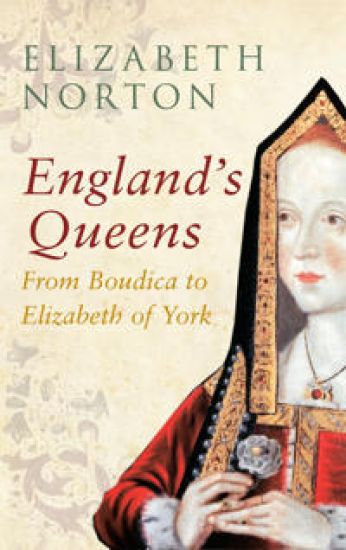
England's Queens From Boudica to Elizabeth of York
Elizabeth Norton
Amberley Publishing
2015
pokkari
England has always been a place of queens. The earliest known lived nearly 2,000 years ago. Early queens, such as Boudica and Cartimandua, are historical figures, while others, such as Cordelia and Guinevere, are mythical. In both historical documents and romantic legends, the early queens of Britain played a prominent role, and this has never ceased to be the case. Nearly eighty women have sat on the throne of England, either as queen regnant or queen consort, and the voices of all of them survive through their writings and those of their contemporaries. For the first time, the voices of each individual queen can be heard. This volume charts the course of English queenship from our earliest named queen, the fierce Boudica, through the Anglo-Saxons, Normans, Plantagenets, to the queens of the Wars of the Roses and the woman whose marriage brought peace after years of conflict, Elizabeth of York.
Contrary to popular belief, Anglo-Saxon England had queens, with the tenth-century Elfrida being the most powerful and notorious of them all. She was the first woman to be crowned Queen of England, sharing her husband King Edgar’s imperial coronation at Bath in 973. The couple made a love match, with claims that they plotted the death of her first husband to ensure that she was free. Edgar divorced his second wife, a former nun, after conducting an adulterous affair with Elfrida, leading to an enmity between the two women that lasted until their deaths. During her marriage Elfrida claimed to be the king’s only legitimate wife, but she failed to secure the succession for her son, Ethelred. Elfrida was implicated in the murder of her stepson, King Edward the Martyr, who died on a visit to her at Corfe Castle. She then ruled England on behalf of her young son for six years before he expelled her from court. Elfrida was eventually able to return to court but, since he proved himself unable to counter the Viking attacks, she may have come to regret winning the crown for Ethelred the Unready. Wife, mother, murderer, ruler, crowned queen. The life of Queen Elfrida was filled with drama as she rose to become the most powerful woman in Anglo-Saxon England.
EIGHT GENERATIONS OF BOLEYN WOMEN FROM THE FOURTEENTH CENTURY TO 1603 The Boleyn family appeared from nowhere at the end of the fourteenth century, moving from peasant to princess in only a few generations. The women of the family brought about its advancement, beginning with the heiresses Alice Bracton Boleyn, Anne Hoo Boleyn and Margaret Butler Boleyn, who brought wealth and aristocratic connections. Then there was Elizabeth Howard Boleyn, who was rumoured to have been the mistress of Henry VIII, along with her daughter Mary and niece Madge, who certainly were. Anne Boleyn became the king’s second wife and her aunts, Lady Boleyn and Lady Shelton, helped bring her to the block. The infamous Jane Boleyn, the last of her generation, betrayed her husband before dying on the scaffold with Queen Catherine Howard. The next generation was no less turbulent and Catherine Carey, the daughter of Mary Boleyn, fled from England to avoid persecution under Mary Tudor. Her daughter, Lettice, was locked in bitter rivalry with the greatest Boleyn lady of all, Elizabeth I, winning the battle for the affections of Robert Dudley but losing her position in society as a consequence. Finally, another Catherine Carey, the Countess of Nottingham, was so close to her cousin, the queen, that Elizabeth died of grief following her death. The Boleyn family was the most ambitious dynasty of the sixteenth century, rising dramatically to prominence in the early years of a century that would end with a Boleyn on the throne.
Anne Boleyn, the second wife of Henry VIII, caused comment wherever she went. Through the chronicles, letters and dispatches written by both Anne and her contemporaries, it is possible to see her life and thoughts as she struggled to become queen of England, ultimately ending her life on the scaffold. Only through the original sources is it truly possible to evaluate the real Anne. George Wyatt's Life of Queen Anne provided the first detailed account of the queen, based on the testimony of those that knew her. The poems of Anne's supposed lover, Thomas Wyatt, as well as accounts such as Cavendish's Life of Wolsey also give details of her life, as do the hostile dispatches of the Imperial Ambassador, Eustace Chapuys and the later works of the slanderous Nicholas Slander and Nicholas Harpsfield. Henry VIII's love letters and many of Anne's own letters survive, providing an insight into the love affair that changed England forever. The reports on Anne's conduct in the Tower of London show the queen's shock and despair when she realised that she was to die. Collected together for the first time, these and other sources make it possible to view the real Anne Boleyn through her own words and those of her contemporaries.
Bessie Blount was the longest-lasting mistress of Henry VIII, and one of the earliest known. She was the king's first love. More beautiful than Anne Boleyn or any of Henry's other wives or concubines, Bessie's looks and other charms ensured that she turned heads, winning a place at court as one of Catherine of Aragon's ladies. Within months she was partnering the king in dancing and she rose to be the woman with the most influence over Henry, much to Catherine of Aragon's despair. The affair probably lasted five years (longer than most of Henry's marriages) and in 1519 she bore Henry VIII a son, Henry Fitzroy. As a mark of his importance Cardinal Wolsey was appointed his guardian and godfather. Fitzroy was not the only issue of the relationship and the evidence suggests that Bessie also bore the king a second illegitimate child. Supplanted by Mary Boleyn, Bessie's importance rests on the vital proof she gave Henry VIII that he could father a healthy son and, through Henry Fitzroy, Bessie remained a prominent figure at court. She was also able to build a relationship with her eldest son, as well as raising her own family and running her own estates following her marriages. In the country at large her position as mother of such an important child made her an object of interest to many of her contemporaries. Sidelined by historians until now, Bessie and the son she had by the king are one of the great 'what ifs' of English history. If Jane Seymour had not produced a male heir and Bessie's son had not died young, aged seventeen, in all likelihood Henry Fitzroy could have followed his father as King Henry IX and Bessie could have been propelled to the status of mother of the king.
The Boleyn family appeared from nowhere at the end of the fourteenth century, moving from peasant to princess in only a few generations. The women of the family brought about its advancement, beginning with the heiresses Alice Bracton Boleyn, Anne Hoo Boleyn and Margaret Butler Boleyn who brought wealth and aristocratic connections. Then there was Elizabeth Howard Boleyn, who was rumoured to have been the mistress of Henry VIII, along with her daughter Mary and niece Madge, who certainly were. Anne Boleyn became the king's second wife and her aunts, Lady Boleyn and Lady Shelton, helped bring her to the block. The infamous Jane Boleyn, the last of her generation, betrayed her husband before dying on the scaffold with Queen Catherine Howard. The next generation was no less turbulent and Catherine Carey, the daughter of Mary Boleyn fled from England to avoid persecution under Mary Tudor. Her daughter, Lettice was locked in bitter rivalry with the greatest Boleyn lady of all, Elizabeth I, winning the battle for the affections of Robert Dudley but losing her position in society as a consequence. Finally, another Catherine Carey, the Countess of Nottingham, was so close to her cousin, the queen, that Elizabeth died of grief following her death. The Boleyn family was the most ambitious dynasty of the sixteenth century, rising dramatically to prominence in the early years of a century that would end with a Boleyn on the throne.
Nearly eighty women have sat on the throne of England, either as queen regnant or queen consort and the voices of all of them survive through their own writings and those of their contemporaries. The primary role of the queen over the ages was to provide an heir. Catherine of Aragon found this to her cost, divorced by Henry VIII for failing to produce a healthy son. The birth of an heir was also a route to power for a queen and Eleanor of Aquitaine became the most powerful woman in Europe during the reigns of her sons. Strong relationships could also develop between the queens and their husbands. Edward VIII even abandoned his throne when forced to choose between the crown and his lover, Wallis Simpson. Not all marriages were happy and queens such as Isabella of France and Catherine Howard took lovers to escape their marriages. The unhappy Sophia Dorothea of Celle was imprisoned for over thirty years by her husband George I when her affair was discovered. Her lover, Count von Konigsmarck was murdered. Most queens made arranged marriages and were used by their families to build alliances. Some queens were able to break away from this control. Queen Victoria spent her childhood secluded with her overprotective mother, even sharing the same bedroom until the day when she was proclaimed queen and finally freed herself from her mother's control. For the first time, the voice of each individual queen can be heard together, charting the course of English queenship through nearly two thousand years of history
The extraordinary true story of the 'Red Queen'. Born in the midst of the Wars of the Roses, Margaret Beaufort became the greatest heiress of her time. She survived a turbulent life, marrying four times and enduring imprisonment before passing her claim to the crown of England to her son, Henry VII, the first of the Tudor monarchs. Margaret's royal blood placed her on the fringes of the Lancastrian royal dynasty. After divorcing her first husband at the age of ten, she married the king's half-brother, Edmund Tudor, becoming a widow and bearing her only child, the future Henry VII, before her fourteenth birthday. Margaret was always passionately devoted to the interests of her son who claimed the throne through her. She embroiled herself in both treason and conspiracy as she sought to promote his claims, allying herself with the Yorkist Queen, Elizabeth Woodville, in an attempt to depose Richard III. She was imprisoned by Richard and her lands confiscated, but she continued to work on her son's behalf, ultimately persuading her fourth husband, the powerful Lord Stanley, to abandon the king in favour of Henry on the eve of the decisive Battle of Bosworth. It was Lord Stanley himself who placed the crown on Henry's head on the battlefield. Henry VII gave his mother unparalleled prominence during his reign. She established herself as an independent woman and ended her life as regent of England, ruling on behalf of her seventeen-year-old grandson, Henry VIII.