

Kirjailija
Elizabeth Robinson
Kirjat ja teokset yhdessä paikassa: 12 kirjaa, julkaisuja vuosilta 2001-2026, suosituimpien joukossa Being Modernists Together. Vertaile teosten hintoja ja tarkista saatavuus suomalaisista kirjakaupoista.
12 kirjaa
Kirjojen julkaisuhaarukka 2001-2026.

Poems from the halls of shelters, courthouses, and soup kitchens During Elizabeth Robinson's six years working with chronically unhoused people in Boulder, Colorado, her relationships with the community's most vulnerable deepened - even as they were filtered through a web of paperwork, systems, and strictures. The Vulnerability Index questionnaire is just one such system. Ubiquitous in shelters across America, it is representative of the endless tasks that people living on the street must complete to receive even minor assistance. Moving between the local court, jail, shelter, and soup kitchen, Robinson's poems capture the strange juxtapositions of the intimate, bureaucratic, and absurd that such spaces demand: a frostbite victim wants to share his state-sponsored recovery room with a friend from the street, a domestic violence survivor must change her name and even her social security number, an unhoused activist joins a vigil for another woman only to discover that she is, mistakenly, the person being mourned. Spare yet richly empathetic, Robinson’ s verse works to implicate the reader's own vulnerability on every page.
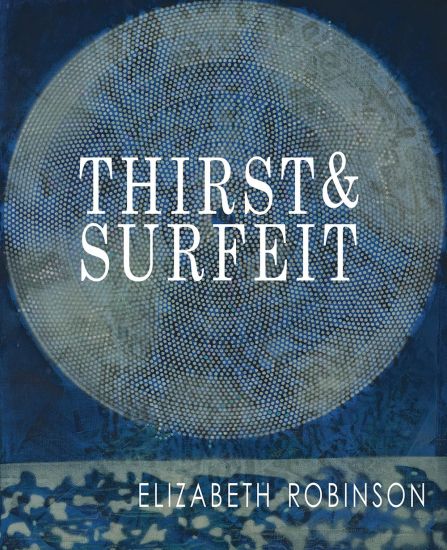
History, like "light untied and undone," disperses itself across time and memory. The poems in Thirst & Surfeit reach into these fragments to interpret and sing interactions of human and environment, spirit and subsistence. Whether exhuming a bog body, riding swells with a woman pirate, rediscovering a long lost garden, or lofting a futile resistance to an oppressive regime, the protagonists in these poems understand that the "barest contraction / makes birth into exile." Reclamation is a practice of resilience, of resourcefulness: that is what these historical fragments and splinters reveal. They pierce our complacency with the terms of survival: "What is real / deforms its witnesses." Hunger signals necessity and aspiration, both thirst and surfeit. Drawing on the resources of the past, these poems make the present resonant and immediate.
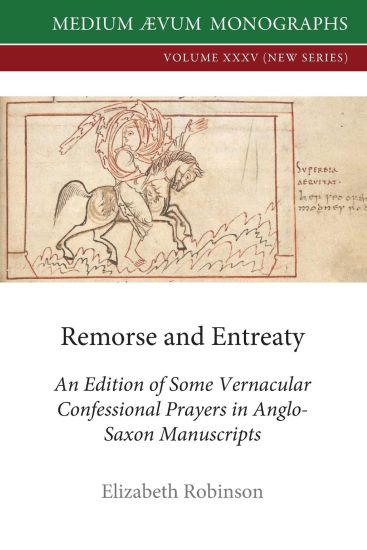
This study establishes groupings for a range of vernacular confessional prayers from the tenth and eleventh centuries, thereby revealing not only key divergences but the even more striking parallels in their English phrases -- phrases doubtless familiar to their intended readers or reciters which would have helped them in confessing or meditating upon their sins. Each edited text is provided with notes and there is an extensive glossary. The manuscript context of each prayer is examined in detail to consider how far this throws any light on the expected usage. Where known, the Latin original that lies behind the texts is supplied, demonstrating how closely or freely the original translator (and perhaps others intervening in the texts here printed) followed the Latin.
This study establishes groupings for a range of vernacular confessional prayers from the tenth and eleventh centuries, thereby revealing not only key divergences but the even more striking parallels in their English phrases -- phrases doubtless familiar to their intended readers or reciters which would have helped them in confessing or meditating upon their sins. Each edited text is provided with notes and there is an extensive glossary. The manuscript context of each prayer is examined in detail to consider how far this throws any light on the expected usage. Where known, the Latin original that lies behind the texts is supplied, demonstrating how closely or freely the original translator (and perhaps others intervening in the texts here printed) followed the Latin.

Achieving A Lifetime of Smiles Visiting the dentist has historically been a chore, a dreaded task, a necessary nuisance. However, if dental health isn’t maintained, it can lead to severe, preventable consequences like infection and chronic pain. Your dental health is vital to not only your personal wellness, but your overall well-being. For something so important, your experience should be one you look forward to and anticipate. You deserve a dental practice that exists in a category apart from all the rest—a “category of one.” Drs. Beth and Scott Robinson have created a patient-centric approach to dental care that treats patients like family. In Finding Joy in Dentistry, you’ll discover what sets Robinson Dental apart and how they have created a unique environment focused on a comfortable, relaxed experience. You will also learn how to best care for your smile at every stage of your life, using it as leverage to: • Improve your overall health • Increase your self-confidence • Reduce your risk of disease • Unlock your full potential
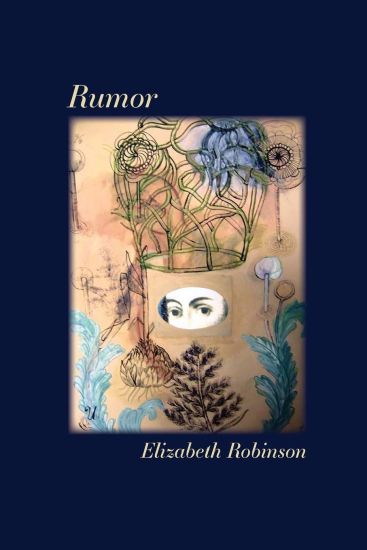
Robinson's ambition in Rumor is enormous--to understand the problem of violence, to understand how power subjugates bodies and souls and turns them to use. In the world these poems inhabit, language itself is a violent power tool, a buzzsaw, precise, ruthless, and often wrong. Yet language's instability allows Robinson to turn it on itself to question categories such as gender. Through brooding, bloody, clearwater analysis, through delicate, brutally uncertain self-questioning, Robinson's poems create a frictive warmth that's not comfortable, but rousing. --Catherine WagnerElizabeth Robinson has long been probing the interplay of the personal with the abstract or, as she has put it, "the brick floor from which the/ kingdom of God extends/ or could extend." In Rumor, the poet-victim (whom "grief evicts" from herself) tries to take on the persona of perpetrator as if it were a sanctuary from which to explore and understand the violence: "she lies a divided pronoun /. . . / knife slicing through softened self/. . . / She/ crouches over/ herself, a difficult/ situation." The poems worry at boundaries between subject/object, male/female/ transgender, but most of all between "abstract" violence and the physical ("the teacher/ flayed by removal from/ the student"). This process of incarnation, of word made flesh is frightening, nauseating, but must be faced: "we cough up words made of flesh/ and eat them anew." Here "I myself/ had no face, but took/ to smiling" and "wrapped my hand around my incomprehension." Rumor is fascinating, daunting, complex. Its exploration remains open, does not pretend to find answers, but instead offers memorable words: "How firmly the answer closes its eyes." --Rosmarie WaldropELIZABETH ROBINSON is the author of multiple collections of poetry, including the National Poetry Series winner, Pure Descent, and the Fence Modern Poets Prize winner, Apprehend. Her poetry has appeared in such anthologies as American Hybrid, The Norton Anthology of Postmodern American Poetry, and The Best American Poetry of 2002. She works as the homeless navigator for Boulder Municipal Court and teaches at Lighthouse Writers' Workshop.
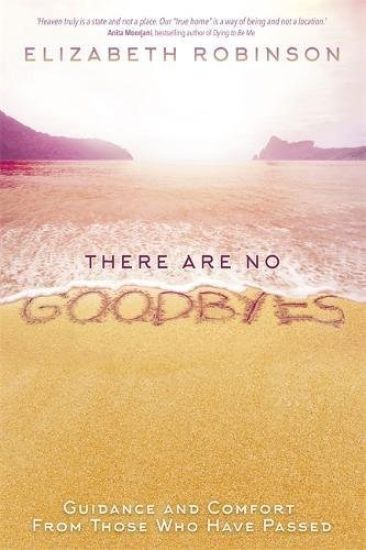
WHAT IF WE NEVER REALLY LOSE THOSE WE CARE ABOUT? WHAT IF THERE REALLY ARE NO GOODBYES?We live in an age where it isn't commonly believed that we can connect with those who have passed. Unlike many who are sceptical, Elizabeth Robinson has always known that it is possible to see 'beyond the veil' into the spiritual realm. In this deeply moving book, Elizabeth shares extraordinary stories and experiences of clients and colleagues who have passed. For anyone who has known grief, these insightful accounts provide comfort and guidance when it is needed most. French philosopher Pierre Teilhard de Chardi said that we are spiritual beings having a human experience. There Are No Goodbyes reminds us that there is no need to fear death, as we are all infinite and eternally connected by unconditional love.
There Are No Goodbyes: Guidance and Comfort from Those Who Have Passed
Elizabeth Robinson
Hay House LLC
2017
nidottu
WHAT IF WE NEVER REALLY LOSE THOSE WE CARE ABOUT?WHAT IF THERE REALLY ARE NO GOODBYES? From a young age, trained counsellor, Elizabeth Robinson, was aware of being able to sense and know beyond the five senses. Her ability to see 'beyond the veil' into the spiritual realm has allowed her to effectively illuminate and articulate what holds people back from expressing their true potential. We live in a society that teaches us that contact with those who have passed does not exist; we have a medical model that, for the most part, labels these as aberrant experiences, is finite and, frequently, judgmental. In her work, Elizabeth combines conventional wisdom with knowledge gleaned from beyond the physical. In this deeply moving account, Elizabeth shares her extraordinary path to self-awareness. Tracing her journey from practicing privately and in hospitals in Australia, to living and working in the U.S., and returning to Sydney, she outlines experiences with clients and colleagues who have passed, and the insight and comfort that those experiences provide to those still living. There Are No Goodbyes firmly makes the case that we are spiritual beings having a human experience. The phenomenal accounts in this book help us realize that there is no need to fear death, as we are all immortal and innately spiritual beings, connected eternally by the power of unconditional love
The poems in this collection delineate a passage through grief and change. Here, personal loss is continuous with threats to other species and landscapes. In response, Robinson has uprooted the terrain of language, what / bestows itself from / the almost-invisible / and its stain. If these uprootings are casualties of a poetics seeking to redress imbalance and pollution, then they are also opportunities to rethink what can exist in the field of poetic language as roots also quicken, bruise their plural pronouns, lose tune, / forsake terrain by moving through and on it. And so Blue Heron links poetic process with organic process, presence with the gap we know as hauntedness. The page is not only a resonant physical field, but also a site of dialogue between human and landscape, between lack and manifestation. If these poems constitute a poetics of loss, they are equally a movement toward a poetics of openness, risk, and renewed balance in which poetry shifts as a form of weather, a form/of following, falling from the form/as it twists."
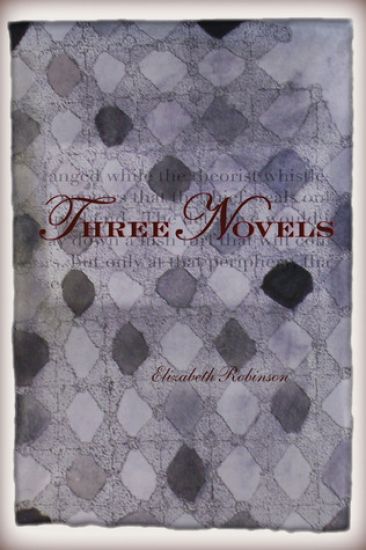
Three Novels revisits the terrain of the Victorian novel, entering that world with a particular affinity for the feminine within its social and physical landscape. Taking cues from three different novels, these poems show the intimacies that make "adhesive relation" through troth, kin or links to landscape. Who owns this body, this estate? Where does the woman hide and what is the empowering eros of her role? Three Novels proposes "disguise as clairvoyant," and here the wily female body is resistant to ownership as it slips through the hidden paths and plot twists, through the downy lawns, the nocturnal byways, and the gritty train stations into the "accounts most accurate to the invention.
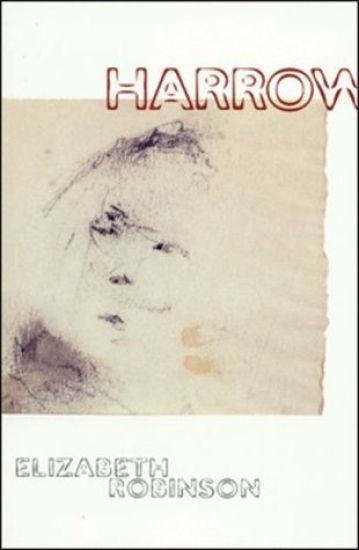
The vibrancy of these poems derives from the paradox between immanence and constancy of the spirit that infuses daily life and its provisional, intractable nature. Through these poems, Robinson demonstrates that we exercise our aliveness when we reach into the essence of experience, attempting to grasp exactly that which our grasp cannot contain.