Kirjojen hintavertailu. Mukana 12 500 677 kirjaa ja 12 kauppaa.

Kirjailija

Elizabeth Stafford

Kirjat ja teokset yhdessä paikassa: 4 kirjaa, julkaisuja vuosilta 2012-2024, suosituimpien joukossa Guildford F ire Station. Vertaile teosten hintoja ja tarkista saatavuus suomalaisista kirjakaupoista.

4 kirjaa

Kirjojen julkaisuhaarukka 2012-2024.

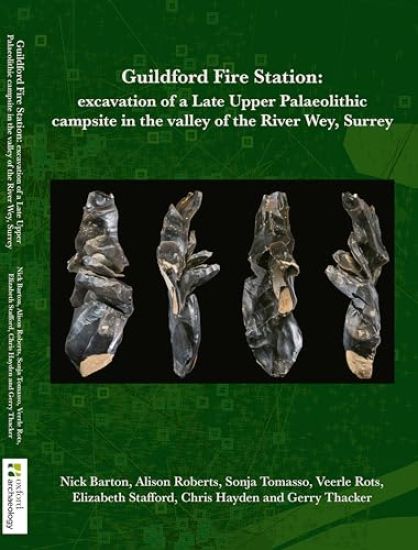
Guildford F ire Station

Guildford F ire Station

Nick Barton; Alison Roberts; Sonja Tomasso; Veerle Rots; Elizabeth Stafford; Christopher Hayden; Gerry Thacker

OXFORD ARCHAEOLOGY
2024
nidottu
Excavations carried out prior to the construction of a new fire station in Guildford, Surrey, revealed a well preserved, in situ Late Upper Palaeolithic flint scatter. The site lay on cold climate fluvial sandy gravels deposited in braided stream systems prior to the onset of the Late Glacial (Windermere) interstadial. Typological analysis of the flint and OSL dates suggest that the scatter itself dates from the first half of the Late Glacial (Windermere) interstadial (c 1415KBP). The lithic assemblage is homogeneous and, apart from initial extraction and nodule testing, all stages of flint manufacture are represented. Two main concentrations of knapping are represented, the main focus of which were the production of blade blanks some of which were removed from the site. Functional analysis of the tools suggests relatively short occupation during which hunting, smallscale craft activities linked with the retooling of hunting weapons and the manufacture of hide items, and limited processing of animal and plant materials took place. The assemblage is comparable to that from Wey Manor Farm, Surrey, 17km further downstream, and raises the question of the relationship between the two sites. Both share technological and typological features in common with the Creswellian, though Wey Manor Farm has a greater diversity in lithic point types. Comparison with Continental assemblages suggests that the Surrey sites share affinities with the Older Azilian or equivalents in northwest France and Germany and implies strong postMagdalenian influences in the Late Upper Palaeolithic of Britain.
Prehistoric Ebbsfleet

Prehistoric Ebbsfleet

Francis Wenban-Smith; Elizabeth Stafford; Martin Bates; Simon Parfitt

Oxford Wessex Archaeology
2020
sidottu
This volume concerns the HS1 study theme defined as ‘Prehistoric Ebbsfleet’. It focuses on landscape development and human occupation from the Palaeolithic through to the Early Iron Age, a span of around 300,000 years. This period incorporates fluctuating extremes of climate between harsh sub-arctic conditions when southern Britain would have been a frozen and uninhabitable treeless waste, and Mediterranean conditions when luxuriant forest was interspersed with grassy plains, rich in what we would now regard as tropical fauna such as lion, hippopotamus and hyaena. A reappraisal of the important Palaeolithic flint artefact collections from Baker’s Hole and the Ebbsfleet Channel is also presented.
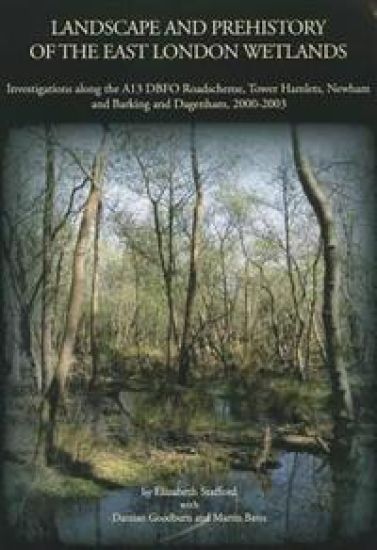
Landscape and Prehistory of the East London Wetlands

Landscape and Prehistory of the East London Wetlands

Damian Goodburn; Martin Bates; Elizabeth Stafford

Oxford Archaeology
2012
nidottu
Archaeological investigations carried out during improvements to five key junctions along a stretch of the A13 trunk road through the East London Boroughs of Tower Hamlets, Newham and Barking and Dagenham have revealed evidence for activity spanning the Mesolithic through to the post-Roman period. Regionally important evidence of Neolithic activity included artefact assemblages of pottery and worked flint. A rare cache of charred emmer wheat provides definitive evidence of early Neolithic cereal cultivation in the vicinity and a fragment of belt slider made from Whitby jet attests the long distance exchange networks. The greatest concentration of activity, however, dates to the 2nd Millenium BC and includes several waterlogged wooden structures and trackways, burnt mounds and other evidence associated with wetland edge occupation. Extensive geoarchaeological and palaeoenvironmental sampling provides an important record of landscape evolution and periods of major change can be detected, both natural and anthropogenically induced. As well as providing a context for the archaeology along the A13, this raises a number of issues regarding the interaction of local communities with the natural environment, how they responded to change and to a certain extent exploited it. Ultimately this is of relevance not only to understanding the past but also to current concerns regarding environmental management along the Thames estuary.