Kirjojen hintavertailu. Mukana 12 501 290 kirjaa ja 12 kauppaa.

Kirjailija

Elliot R. Wolfson

Kirjat ja teokset yhdessä paikassa: 23 kirjaa, julkaisuja vuosilta 1988-2026, suosituimpien joukossa Apophasis and Envisioning the Invisible: Unveiling Veils of Infinity. Vertaile teosten hintoja ja tarkista saatavuus suomalaisista kirjakaupoista.

Mukana myös kirjoitusasut: Elliot R Wolfson

23 kirjaa

Kirjojen julkaisuhaarukka 1988-2026.

Apophasis and Envisioning the Invisible: Unveiling Veils of Infinity
In this monograph, two of the most complicated theoretical topics confronting the scholar of mysticism (apophasis and infinity) are tackled. Writing about apophasis presents a unique dilemma as the term itself connotes the inability of language to name the namelessness of ultimate reality. Yet, the apophatic is a gesture of speaking-not, which entails saying the unsayable, as opposed to not speaking, which is the reticence appropriate to silence. The exploration of infinity presents an equally daunting demand as the intellect embarking on this path is summoned to circumscribe the uncircumscribable. Just as communicating the incommunicable is an endless enterprise of speaking the unspeakable, so mapping infinity is an unremitting pursuit of delimiting the limitless. The two subjects thus intersect at the vanishing point where the human mind reaches its limit by confronting the limitlessness that can be described only as indescribable.
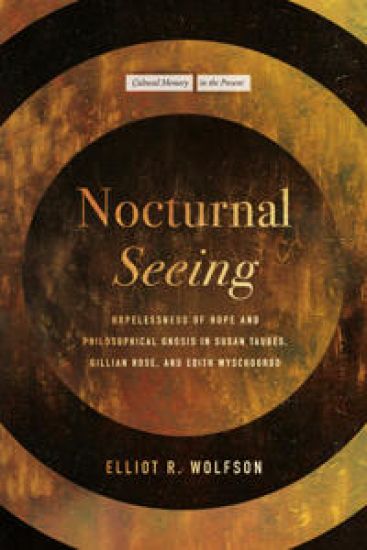
Nocturnal Seeing

Nocturnal Seeing

Elliot R. Wolfson

STANFORD UNIVERSITY PRESS
2024
pokkari
In this erudite new work, Elliot R. Wolfson explores philosophical gnosis in the writings of Susan Taubes, Gillian Rose, and Edith Wyschogrod. The juxtaposition of these three extraordinary, albeit relatively neglected, philosophers provides a prism through which Wolfson scrutinizes the interplay of ethics, politics, and theology. The bond that ties together the diverse and multifaceted worldviews promulgated by Taubes, Rose, and Wyschogrod is the mutual recognition of the need to enunciate a response to the calamities of the twentieth century based on an incontrovertible acknowledgment of the decadence and malevolence of human beings, without, however, succumbing to acrimony and despair. The speculation of each of these philosophers on melancholia and the tragicomedy of being is unquestionably intricate, exhibiting subtle variations and idiosyncrasies, but we can nevertheless identify a common denominator in their attempt to find the midpoint positioned between hope and hopelessness. As Wolfson articulates, Taubes, Rose, and Wyschogrod exemplify a philosophical sensibility informed by a nocturnal seeing, which is not merely a seeing in the night but rather a seeing of the night. Ultimately, the book reveals the potential for these thinkers' ideas to enhance our moral sensitivity and to encourage participation in the ongoing struggle for meaning and decency in the present.
Nocturnal Seeing

Nocturnal Seeing

Elliot R. Wolfson

STANFORD UNIVERSITY PRESS
2024
sidottu
In this erudite new work, Elliot R. Wolfson explores philosophical gnosis in the writings of Susan Taubes, Gillian Rose, and Edith Wyschogrod. The juxtaposition of these three extraordinary, albeit relatively neglected, philosophers provides a prism through which Wolfson scrutinizes the interplay of ethics, politics, and theology. The bond that ties together the diverse and multifaceted worldviews promulgated by Taubes, Rose, and Wyschogrod is the mutual recognition of the need to enunciate a response to the calamities of the twentieth century based on an incontrovertible acknowledgment of the decadence and malevolence of human beings, without, however, succumbing to acrimony and despair. The speculation of each of these philosophers on melancholia and the tragicomedy of being is unquestionably intricate, exhibiting subtle variations and idiosyncrasies, but we can nevertheless identify a common denominator in their attempt to find the midpoint positioned between hope and hopelessness. As Wolfson articulates, Taubes, Rose, and Wyschogrod exemplify a philosophical sensibility informed by a nocturnal seeing, which is not merely a seeing in the night but rather a seeing of the night. Ultimately, the book reveals the potential for these thinkers' ideas to enhance our moral sensitivity and to encourage participation in the ongoing struggle for meaning and decency in the present.
The Philosophical Pathos of Susan Taubes

The Philosophical Pathos of Susan Taubes

Elliot R. Wolfson

STANFORD UNIVERSITY PRESS
2023
sidottu
The Philosophical Pathos of Susan Taubes offers a detailed analysis of an extraordinary figure in the twentieth-century history of Jewish thought, Western philosophy, and the study of religion. Drawing on close readings of Susan Taubes's writings, including her correspondence with Jacob Taubes, scholarly essays, literary compositions, and poems, Elliot R. Wolfson plumbs the depths of the tragic sensibility that shaped her worldview, hovering between the poles of nihilism and hope. By placing Susan Taubes in dialogue with a host of other seminal thinkers, Wolfson illumines how she presciently explored the hypernomian status of Jewish ritual and belief after the Holocaust; the theopolitical challenges of Zionism and the dangers of ethnonationalism; the antitheological theology and gnostic repercussions of Heideggerian thought; the mystical atheism and apophaticism of tragedy in Simone Weil; and the understanding of poetry as the means to face the faceless and to confront the silence of death in the temporal overcoming of time through time. Wolfson delves into the abyss that molded Susan Taubes's mytheological thinking, making a powerful case for the continued relevance of her work to the study of philosophy and religion today.
Heidegger and Kabbalah

Heidegger and Kabbalah

Elliot R. Wolfson

Indiana University Press
2019
sidottu
While many scholars have noted Martin Heidegger's indebtedness to Christian mystical sources, as well as his affinity with Taoism and Buddhism, Elliot R. Wolfson expands connections between Heidegger's thought and kabbalistic material. By arguing that the Jewish esoteric tradition impacted Heidegger, Wolfson presents an alternative way of understanding the history of Western philosophy. Wolfson's comparison between Heidegger and kabbalah sheds light on key concepts such as hermeneutics, temporality, language, and being and nothingness, while yielding surprising reflections on their common philosophical ground. Given Heidegger's involvement with National Socialism and his use of antisemitic language, these innovative readings are all the more remarkable for their juxtaposition of incongruent fields of discourse. Wolfson's entanglement with Heidegger and kabbalah not only enhances understandings of both but, more profoundly, serves as an ethical corrective to their respective ethnocentrism and essentialism. Wolfson masterfully illustrates the redemptive capacity of thought to illuminate common ground in seemingly disparate philosophical traditions.
Heidegger and Kabbalah

Heidegger and Kabbalah

Elliot R. Wolfson

Indiana University Press
2019
pokkari
While many scholars have noted Martin Heidegger's indebtedness to Christian mystical sources, as well as his affinity with Taoism and Buddhism, Elliot R. Wolfson expands connections between Heidegger's thought and kabbalistic material. By arguing that the Jewish esoteric tradition impacted Heidegger, Wolfson presents an alternative way of understanding the history of Western philosophy. Wolfson's comparison between Heidegger and kabbalah sheds light on key concepts such as hermeneutics, temporality, language, and being and nothingness, while yielding surprising reflections on their common philosophical ground. Given Heidegger's involvement with National Socialism and his use of antisemitic language, these innovative readings are all the more remarkable for their juxtaposition of incongruent fields of discourse. Wolfson's entanglement with Heidegger and kabbalah not only enhances understandings of both but, more profoundly, serves as an ethical corrective to their respective ethnocentrism and essentialism. Wolfson masterfully illustrates the redemptive capacity of thought to illuminate common ground in seemingly disparate philosophical traditions.
The Duplicity of Philosophy's Shadow

The Duplicity of Philosophy's Shadow

Elliot R. Wolfson

Columbia University Press
2018
sidottu
Martin Heidegger (1889–1976) is considered one of the most influential philosophers of the twentieth century in spite of his well-known transgressions—his complicity with National Socialism and his inability to show remorse or compassion for its victims. In The Duplicity of Philosophy’s Shadow, Elliot R. Wolfson intervenes in a debate that has seen much attention in scholarly and popular media from a unique perspective, as a scholar of Jewish mysticism and philosophy who has been profoundly influenced by Heidegger’s work.Wolfson sets out to probe Heidegger’s writings to expose what remains unthought. In spite of Heidegger’s explicit anti-Semitic statements, Wolfson reveals some crucial aspects of his thinking—including criticism of the biological racism and militant apocalypticism of Nazism—that betray an affinity with dimensions of Jewish thought: the triangulation of the concepts of homeland, language, and peoplehood; Jewish messianism and the notion of historical time as the return of the same that is always different; inclusion, exclusion, and the status of the other; the problem of evil in kabbalistic symbolism. Using Heidegger’s own methods, Wolfson reflects on the inextricable link of truth and untruth and investigates the matter of silence and the limits of speech. He challenges the tendency to bifurcate the relationship of the political and the philosophical in Heidegger’s thought, but parts company with those who write off Heidegger as a Nazi ideologue. Ultimately, The Duplicity of Philosophy’s Shadow argues, the greatness and relevance of Heidegger’s work is that he presents us with the opportunity to think the unthinkable as part of our communal destiny as historical beings.
The Duplicity of Philosophy's Shadow

The Duplicity of Philosophy's Shadow

Elliot R. Wolfson

Columbia University Press
2018
pokkari
Martin Heidegger (1889–1976) is considered one of the most influential philosophers of the twentieth century in spite of his well-known transgressions—his complicity with National Socialism and his inability to show remorse or compassion for its victims. In The Duplicity of Philosophy’s Shadow, Elliot R. Wolfson intervenes in a debate that has seen much attention in scholarly and popular media from a unique perspective, as a scholar of Jewish mysticism and philosophy who has been profoundly influenced by Heidegger’s work.Wolfson sets out to probe Heidegger’s writings to expose what remains unthought. In spite of Heidegger’s explicit anti-Semitic statements, Wolfson reveals some crucial aspects of his thinking—including criticism of the biological racism and militant apocalypticism of Nazism—that betray an affinity with dimensions of Jewish thought: the triangulation of the concepts of homeland, language, and peoplehood; Jewish messianism and the notion of historical time as the return of the same that is always different; inclusion, exclusion, and the status of the other; the problem of evil in kabbalistic symbolism. Using Heidegger’s own methods, Wolfson reflects on the inextricable link of truth and untruth and investigates the matter of silence and the limits of speech. He challenges the tendency to bifurcate the relationship of the political and the philosophical in Heidegger’s thought, but parts company with those who write off Heidegger as a Nazi ideologue. Ultimately, The Duplicity of Philosophy’s Shadow argues, the greatness and relevance of Heidegger’s work is that he presents us with the opportunity to think the unthinkable as part of our communal destiny as historical beings.
Perspectives on Jewish Thought and Mysticism

Perspectives on Jewish Thought and Mysticism

Alfred L. Ivry; Elliot R. Wolfson; Allan Arkush

Routledge
2016
nidottu
First Published in 1998. This is the proceedings of the International Conference held by The Institute of Jewish Studies, University College London, 1994, in Celebration of its Fortieth Anniversary. Dedicated to the memory and academic legacy of its Founder Alexander Altmann.
Giving Beyond the Gift

Giving Beyond the Gift

Elliot R. Wolfson

Fordham University Press
2014
sidottu
This book explores the co-dependency of monotheism and idolatry by examining the thought of several prominent twentieth-century Jewish philosophers—Cohen, Buber, Rosenzweig, and Levinas. While all of these thinkers were keenly aware of the pitfalls of scriptural theism, to differing degrees they each succumbed to the temptation to personify transcendence, even as they tried either to circumvent or to restrain it by apophatically purging kataphatic descriptions of the deity. Derrida and Wyschogrod, by contrast, carried the project of denegation one step further, embarking on a path that culminated in the aporetic suspension of belief and the consequent removal of all images from God, a move that seriously compromises the viability of devotional piety. The inquiry into apophasis, transcendence, and immanence in these Jewish thinkers is symptomatic of a larger question. Recent attempts to harness the apophatic tradition to construct a viable postmodern negative theology, a religion without religion, are not radical enough. Not only are these philosophies of transcendence guilty of a turn to theology that defies the phenomenological presupposition of an immanent phenomenality, but they fall short on their own terms, inasmuch as they persist in employing metaphorical language that personalizes transcendence and thereby runs the risk of undermining the irreducible alterity and invisibility attributed to the transcendent other. The logic of apophasis, if permitted to run its course fully, would exceed the need to posit some form of transcendence that is not ultimately a facet of immanence. Apophatic theologies, accordingly, must be supplanted by a more far-reaching apophasis that surpasses the theolatrous impulse lying coiled at the crux of theism, an apophasis of apophasis, based on accepting an absolute nothingness—to be distinguished from the nothingness of an absolute—that does not signify the unknowable One but rather the manifold that is the pleromatic abyss at being's core. Hence, the much-celebrated metaphor of the gift must give way to the more neutral and less theologically charged notion of an unconditional givenness in which the distinction between giver and given collapses. To think givenness in its most elemental, phenomenological sense is to allow the apparent to appear as given without presuming a causal agency that would turn that given into a gift.
Giving Beyond the Gift

Giving Beyond the Gift

Elliot R. Wolfson

Fordham University Press
2014
pokkari
This book explores the co-dependency of monotheism and idolatry by examining the thought of several prominent twentieth-century Jewish philosophers—Cohen, Buber, Rosenzweig, and Levinas. While all of these thinkers were keenly aware of the pitfalls of scriptural theism, to differing degrees they each succumbed to the temptation to personify transcendence, even as they tried either to circumvent or to restrain it by apophatically purging kataphatic descriptions of the deity. Derrida and Wyschogrod, by contrast, carried the project of denegation one step further, embarking on a path that culminated in the aporetic suspension of belief and the consequent removal of all images from God, a move that seriously compromises the viability of devotional piety. The inquiry into apophasis, transcendence, and immanence in these Jewish thinkers is symptomatic of a larger question. Recent attempts to harness the apophatic tradition to construct a viable postmodern negative theology, a religion without religion, are not radical enough. Not only are these philosophies of transcendence guilty of a turn to theology that defies the phenomenological presupposition of an immanent phenomenality, but they fall short on their own terms, inasmuch as they persist in employing metaphorical language that personalizes transcendence and thereby runs the risk of undermining the irreducible alterity and invisibility attributed to the transcendent other. The logic of apophasis, if permitted to run its course fully, would exceed the need to posit some form of transcendence that is not ultimately a facet of immanence. Apophatic theologies, accordingly, must be supplanted by a more far-reaching apophasis that surpasses the theolatrous impulse lying coiled at the crux of theism, an apophasis of apophasis, based on accepting an absolute nothingness—to be distinguished from the nothingness of an absolute—that does not signify the unknowable One but rather the manifold that is the pleromatic abyss at being's core. Hence, the much-celebrated metaphor of the gift must give way to the more neutral and less theologically charged notion of an unconditional givenness in which the distinction between giver and given collapses. To think givenness in its most elemental, phenomenological sense is to allow the apparent to appear as given without presuming a causal agency that would turn that given into a gift.
Open Secret

Open Secret

Elliot R. Wolfson

Columbia University Press
2012
pokkari
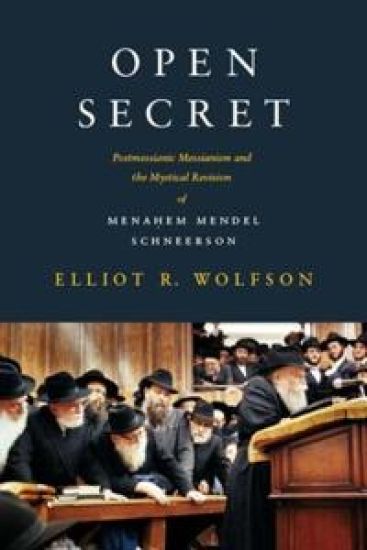
Menahem Mendel Schneerson (1902-1994) was the seventh and seemingly last Rebbe of the Habad-Lubavitch dynasty. Marked by conflicting tendencies, Schneerson was a radical messianic visionary who promoted a conservative political agenda, a reclusive contemplative who built a hasidic sect into an international movement, and a man dedicated to the exposition of mysteries who nevertheless harbored many secrets. Schneerson astutely masked views that might be deemed heterodox by the canons of orthodoxy while engineering a fundamentalist ideology that could subvert traditional gender hierarchy, the halakhic distinction between permissible and forbidden, and the social-anthropological division between Jew and Gentile. While most literature on the Rebbe focuses on whether or not he identified with the role of Messiah, Elliot R. Wolfson, a leading scholar of Jewish mysticism and the phenomenology of religious experience, concentrates instead on Schneerson's apocalyptic sensibility and his promotion of a mystical consciousness that undermines all discrimination. For Schneerson, the ploy of secrecy is crucial to the dissemination of the messianic secret. To be enlightened messianically is to be delivered from all conceptual limitations, even the very notion of becoming emancipated from limitation. The ultimate liberation, or true and complete redemption, fuses the believer into an infinite essence beyond all duality, even the duality of being emancipated and not emancipated--an emancipation, in other words, that emancipates one from the bind of emancipation. At its deepest level, Schneerson's eschatological orientation discerned that a spiritual master, if he be true, must dispose of the mask of mastery. Situating Habad's thought within the evolution of kabbalistic mysticism, the history of Western philosophy, and Mahayana Buddhism, Wolfson articulates Schneerson's rich theology and profound philosophy, concentrating on the nature of apophatic embodiment, semiotic materiality, hypernomian transvaluation, nondifferentiated alterity, and atemporal temporality.
A Dream Interpreted within a Dream

A Dream Interpreted within a Dream

Elliot R. Wolfson

Zone Books
2011
sidottu
An exploration of the wakeful character of the dream and the dreamful character of wakefulness.Dreams have attracted the curiosity of humankind for millennia. In A Dream Interpreted Within a Dream, Elliot Wolfson guides the reader through contemporary philosophical and scientific models to the archaic wisdom that the dream state and waking reality are on an equal phenomenal footing-that the phenomenal world is the dream from which one must awaken by waking to the dream that one is merely dreaming that one is awake. By interpreting the dream within the dream, one ascertains the wakeful character of the dream and the dreamful character of wakefulness. Assuming that the manner in which the act of dreaming is interpreted may illuminate the way the interpreter comprehends human nature more generally, Wolfson draws on psychoanalysis, phenomenology, and neuroscience to elucidate the phenomenon of dreaming in a vast array of biblical, rabbinic, philosophical, and kabbalistic texts.To understand the dream, Wolfson writes, it is necessary to embrace the paradox of the fictional truth-a truth whose authenticity can be gauged only from the standpoint of its artificiality. The dream, on this score, may be considered the semblance of the simulacrum, wherein truth is not opposed to deception because the appearance of truthfulness cannot be determined independently of the truthfulness of appearance.
Open Secret

Open Secret

Elliot R. Wolfson

Columbia University Press
2009
sidottu
Menahem Mendel Schneerson (1902-1994) was the seventh and seemingly last Rebbe of the Habad-Lubavitch dynasty. Marked by conflicting tendencies, Schneerson was a radical messianic visionary who promoted a conservative political agenda, a reclusive contemplative who built a hasidic sect into an international movement, and a man dedicated to the exposition of mysteries who nevertheless harbored many secrets. Schneerson astutely masked views that might be deemed heterodox by the canons of orthodoxy while engineering a fundamentalist ideology that could subvert traditional gender hierarchy, the halakhic distinction between permissible and forbidden, and the social-anthropological division between Jew and Gentile. While most literature on the Rebbe focuses on whether or not he identified with the role of Messiah, Elliot R. Wolfson, a leading scholar of Jewish mysticism and the phenomenology of religious experience, concentrates instead on Schneerson's apocalyptic sensibility and his promotion of a mystical consciousness that undermines all discrimination. For Schneerson, the ploy of secrecy is crucial to the dissemination of the messianic secret. To be enlightened messianically is to be delivered from all conceptual limitations, even the very notion of becoming emancipated from limitation. The ultimate liberation, or true and complete redemption, fuses the believer into an infinite essence beyond all duality, even the duality of being emancipated and not emancipated--an emancipation, in other words, that emancipates one from the bind of emancipation. At its deepest level, Schneerson's eschatological orientation discerned that a spiritual master, if he be true, must dispose of the mask of mastery. Situating Habad's thought within the evolution of kabbalistic mysticism, the history of Western philosophy, and Mahayana Buddhism, Wolfson articulates Schneerson's rich theology and profound philosophy, concentrating on the nature of apophatic embodiment, semiotic materiality, hypernomian transvaluation, nondifferentiated alterity, and atemporal temporality.
Footdreams and Treetales

Footdreams and Treetales

Elliot R. Wolfson; Barbara E. Galli

Fordham University Press
2007
sidottu
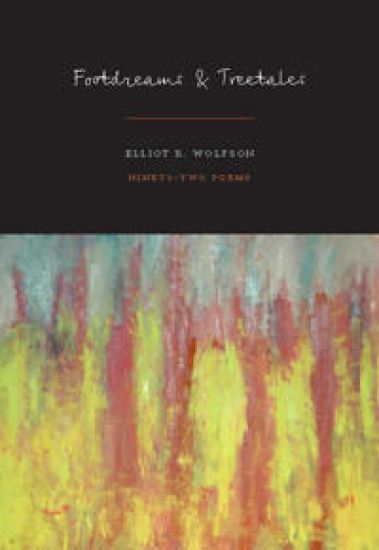
Footdreams and Treetales is a collection of ninety-two poems spanning several decades. Like paintings that attempt to render visible the invisible, the poems reflect Wolfson's interests in philosophy, the history of religions, and, in particular, the mystical dimensions of Judaism, Christianity, Islam, Hinduism, Taoism, and Buddhism. Although explicit references to the divine are rarely found in the poems, they issue from an encounter with the mystery of transcendence, performatively embodying the dialectic of concealment and disclosure. Seeking to articulate the unsaying that makes possible all saying, a response always on the way, a word as yet unspoken, these poems can be imagined in liturgical terms. They do not utter words of conventional prayer but are a contemplative gaze at what eludes contemplation—a present that comes to be in the future awaiting its past. For Wolfson, the poem is an opening to time, which is, at once, an embrace of life and a preparation for death. friday's hymn pour oil on my head, before the burning ends, let us rise to count the minutes, to dot the hours, let us rise to wake the children who must bury the dead. night approaches day, neither black nor white, her sun is my moon.
Luminal Darkness

Luminal Darkness

Elliot R. Wolfson

Oneworld Publications
2007
nidottu
Renowned as one of the world’s most astute interpreters of Kabbalistic texts, Elliot Wolfson offers an illuminating and original presentation of Kabbalah. Combining its wisdom with Western philosophical heritage from Plato to Heidegger and beyond, synergy guides his elucidation of the fundamentals of Jewish mysticism and shapes his taxonomy of Kabbalistic thought. An insightful collection of seminal essays written between 1986 and 1998, Luminal Darkness reveals the unmistakably poetic nature of this important scholar’s creative process, and delineates the evolution of his thinking on the role and importance of the Zohar in Kabbalistic tradition.
Venturing Beyond - Law and Morality in Kabbalistic Mysticism

Venturing Beyond - Law and Morality in Kabbalistic Mysticism

Elliot R. Wolfson

Oxford University Press
2006
sidottu
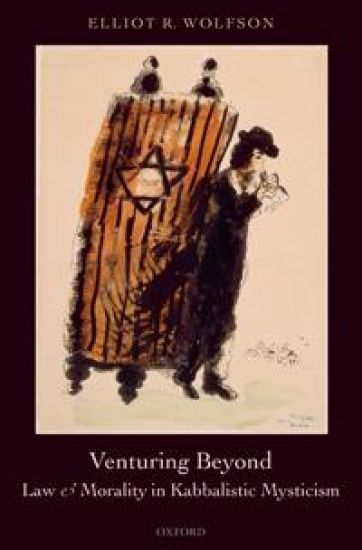
Are mysticism and morality compatible or at odds with one another? If mystical experience embraces a form of non-dual consciousness, then in such a state of mind, the regulative dichotomy so basic to ethical discretion would seemingly be transcended and the very foundation for ethical decisions undermined. Venturing Beyond - Law and Morality in Kabbalistic Mysticism is an investigation of the relationship of the mystical and moral as it is expressed in the particular tradition of Jewish mysticism known as the Kabbalah. The particular themes discussed include the denigration of the non-Jew as the ontic other in kabbalistic anthropology and the eschatological crossing of that boundary anticipated in the instituition of religious conversion; the overcoming of the distinction between good and evil in the mystical experience of the underlying unity of all things; divine suffering and the ideal of spiritual poverty as the foundation for transmoral ethics and hypernomian lawfulness.
Language, Eros, Being

Language, Eros, Being

Elliot R. Wolfson

Fordham University Press
2004
pokkari
This long-awaited, magisterial study-an unparalleled blend of philosophy, poetry, and philology-draws on theories of sexuality, phenomenology, comparative religion, philological writings on Kabbalah, Russian formalism, Wittgenstein, Rosenzweig, William Blake, and the very physics of the time-space continuum to establish what will surely be a highwater mark in work on Kabbalah. Not only a study of texts, Language, Eros, Being is perhaps the fullest confrontation of the body in Jewish studies, if not in religious studies as a whole. Elliot R. Wolfson explores the complex gender symbolism that permeates Kabbalistic literature. Focusing on the nexus of asceticism and eroticism, he seeks to define the role of symbolic and poetically charged language in the erotically configured visionary imagination of the medieval Kabbalists. He demonstrates that the traditional Kabbalistic view of gender was a monolithic and androcentric one, in which the feminine was conceived as being derived from the masculine. He does not shrink from the negative implications of this doctrine, but seeks to make an honest acknowledgment of it as the first step toward the redemption of an ancient wisdom. Comparisons with other mystical traditions-including those in Christianity, Buddhism, and Islam-are a remarkable feature throughout the book. They will make it important well beyond Jewish studies, indeed, a must for historians of comparative religion, in particular of comparative mysticism. Praise for Elliot R. Wolfson: "Through a Speculum That Shines is an important and provocative contribution to the study of Jewish mysticism by one of the major scholars now working in this field."-Speculum
Language, Eros, Being

Language, Eros, Being

Elliot R. Wolfson

Fordham University Press
2004
sidottu
This long-awaited, magisterial study-an unparalleled blend of philosophy, poetry, and philology-draws on theories of sexuality, phenomenology, comparative religion, philological writings on Kabbalah, Russian formalism, Wittgenstein, Rosenzweig, William Blake, and the very physics of the time-space continuum to establish what will surely be a highwater mark in work on Kabbalah. Not only a study of texts, Language, Eros, Being is perhaps the fullest confrontation of the body in Jewish studies, if not in religious studies as a whole. Elliot R. Wolfson explores the complex gender symbolism that permeates Kabbalistic literature. Focusing on the nexus of asceticism and eroticism, he seeks to define the role of symbolic and poetically charged language in the erotically configured visionary imagination of the medieval Kabbalists. He demonstrates that the traditional Kabbalistic view of gender was a monolithic and androcentric one, in which the feminine was conceived as being derived from the masculine. He does not shrink from the negative implications of this doctrine, but seeks to make an honest acknowledgment of it as the first step toward the redemption of an ancient wisdom. Comparisons with other mystical traditions-including those in Christianity, Buddhism, and Islam-are a remarkable feature throughout the book. They will make it important well beyond Jewish studies, indeed, a must for historians of comparative religion, in particular of comparative mysticism. Praise for Elliot R. Wolfson: "Through a Speculum That Shines is an important and provocative contribution to the study of Jewish mysticism by one of the major scholars now working in this field."-Speculum
Perspectives on Jewish Thought and Mysticism

Perspectives on Jewish Thought and Mysticism

Alfred L. Ivry; Elliot R. Wolfson; Allan Arkush

Routledge
1998
sidottu
First Published in 1998. Proceedings of the International Conference held by The Institute of Jewish Studies, University College London, 1994, in Celebration of its Fortieth Anniversary. Dedicated to the memory and academic legacy of its Founder Alexander Altmann