Kirjojen hintavertailu. Mukana 12 595 353 kirjaa ja 12 kauppaa.

Kirjailija

Ellis Amdur

Kirjat ja teokset yhdessä paikassa: 26 kirjaa, julkaisuja vuosilta 2010-2019, suosituimpien joukossa Words of Power. Vertaile teosten hintoja ja tarkista saatavuus suomalaisista kirjakaupoista.

26 kirjaa

Kirjojen julkaisuhaarukka 2010-2019.

Safe Within the Walls

Safe Within the Walls

Ellis Amdur

Edgework: Crisis Intervention Resources Pllc
2019
sidottu
The first sections of this book are concerned with threat assessment: rather than a mere list of risk factors, the authors offer concrete skills on the development of a safety mindset, and further, techniques to develop and hone intuition, that early warning system that warns of danger before your conscious mind is even aware there is something wrong. This also includes what we can do to achieve a state of integrity and powerful calm. Rather than abstract pronouncements, the author offers specific strategies, including a method of breathing for the purpose of maintaining one's center in crisis situations.The next sections are the heart of the book, discussing specific behaviors ranging from confusion and obsessive concerns to psychosis, mania and acute disorganization. In one very important section, the author discusses interactions with opportunistic and manipulative individuals (at worst, those referred to as psychopaths), people who present a danger to the psychological and physical well-being of anyone with whom they come in contact.This is followed by a section on suicide: recognition of patterns of behavior that suggest suicidal intent and best-practice communication and interventions for frontline officers, who must deal with the suicidal inmate first.Next is a discussion of aggression, whether directed at the correctional officer or others. These sections focus how to de-escalate aggressive and chaotic inmates once a crisis is in play. The author elucidates the various motivations that drive aggression and further delineate the different types of aggression that result. De-escalation tactics are specific - one learns how to immediately recognize what mode of aggression other person is displaying, and the, one can quickly and effectively implement the de-escalation tactics that are best suited to deal with it. Safe Within the Walls is ideal to use as a core text to set up a comprehensive program within a prison to protect both inmates with mental illness and correctional officers. Finally, in essential appendices, the book presents protocols on current information on positional and compression asphyxiation (authored by Dr. Gary Vilke), and a protocol, specific to correctional officers, on excited delirium (authored by Lieutenant Michael Paulus, ret.) Rather than abstract information, more useful in a consulting room than in the field, Safe Within the Walls is tactically based, from start to finish.
The Coordinator

The Coordinator

Ellis Amdur; Robert Hubal

Edgework: Crisis Intervention Resources Pllc
2019
sidottu
How should a law enforcement officer manage an encounter with someone who might be mentally unstable or in crisis--but does not appear to pose an immediate threat? How might a platoon commander engage with a foreign civilian who has key information for an intelligence-gathering mission, but is wary of sharing--maybe even being seen--with a stranger? In both cases, how does that officer remain prepared for something going terribly wrong at any moment, while still maintaining the intention and ability to help? What common skills do these scenarios--and many others like them--require?In The Coordinator, Ellis Amdur and Robert Hubal share their decades of experience working with law enforcement and military personnel in training and developing social interaction skills, particularly in 'high risk, high consequence' situations with individuals who may always view themselves as adversaries. The Coordinator is someone who is always trying to reach an accord with the other person, striving to establish community liaison, rapport, crisis management, and deescalation of aggression. The Coordinator maintains a focus on tactics, doing everything possible to enhance the safety of all people involved in the encounter. Simultaneously, the Coordinator strives to achieve a level of trust, engaging others with professionalism and respect. The Coordinator crafts the communication to form a working relationship to share in achieving the aims of the mission."I have known Robert Hubal for many years, starting as a colleague at RTI International, and continuing to other training and educational efforts involving military and law enforcement. The Coordinator, a result of his collaboration with Ellis Amdur, offers a clear approach to confrontations with adversarial, potentially dangerous individuals. This 'Coordinator Mindset' focuses everyone involved on both the problems and resolution of an incident. From my over 40 years of service in the military and then in law enforcement, as well as my studies on interviewing and effective methods for training interviewing skills, I see these skills as valuable in military personnel at various levels as well as in the law enforcement and intelligence areas. This is a great book to have around to aid in achieving the best solution possible, while lowering the risk of the encounter turning violent, without compromising the military or law enforcement mission that brought one into the situation."- Dr. Don Gemeinhardt (Col. USAF Retired)
Words of Power

Words of Power

Ellis Amdur

Edgework: Crisis Intervention Resources Pllc
2019
pokkari
Aggression touches all of our lives. Whether it is a customer or angry coworker, an upset family member, a fellow student at school or college, or a stranger we bump into on the street, all of us, at times, must deal with aggressive people. Ellis Amdur has become well-known for his series of profession-specific books on dealing with aggressive and emotionally disturbed individuals. These books, however, are for specialists: police, hospitals, fire/EMS, social services, to name a few. Words of Power is different. It is written for ordinary people who may, on occasion, have to deal with an angry, even an enraged person.This book was written with the help of a unique cadre of critical readers. Rather than specialists, they are people from ordinary walks of life. They share several things in common: their professions do not require them to interact on a regular basis with aggressive people; their family lives are healthy; they are not experts at self-defense or martial arts; and they lead happy lives, largely untouched by violence. Their job was to read through the original manuscript and highlight all the things that they felt they did NOT need to know. What remains is the information that ordinary people need: no more, no less. The book is simple without being simplistic. It is a comprehensive guidebook on how to de-escalate angry people and how to use verbal control tactics to manage the behaviors of enraged people. Words of Power also teaches how to develop your intuition, so that you become aware and can react before something has truly become dangerous. Most importantly, this book teaches how to calm and center yourself so that you have access to your best, most powerful qualities. You have the best chance of achieving peace when you embody peace.
From Chaos to Compliance

From Chaos to Compliance

Ellis Amdur; Alan Pelton

Edgework: Crisis Intervention Resources Pllc
2019
sidottu
Parole and probation officers must deal with individuals suffering from psychiatric or substance abuse disorders on a frequent basis. Ellis Amdur and Alan Pelton offer parole and probation officers a comprehensive set of strategies to keep themselves as well as the general public safe, while functioning at the highest level of professionalism. The first section of this book offers an overview of the role of community corrections in dealing with the mentally ill and/or substance abusing offender. The second section is tactical: everything from field safety and tactical planning on one side, to honing your intuition to pick up early signs of danger on the other. In the third section of the book, the authors focus on us: what we can do to achieve a state of integrity and powerful calm. Rather than abstract pronouncements, they offer specific strategies, including a method of breathing for the purpose of maintaining one's own center in crisis situations. They then discuss specific behaviors ranging from confusion and obsessive concerns to psychosis, mania and acute disorganization. In one very important section, they discuss interactions with manipulative individuals (at worst, those referred to as psychopaths), people who present a danger to the psychological and physical well-being of anyone with whom they come in contact. They then move on to a discussion of aggression, whether directed at the parole or probation officer or others. There is a specific section set aside on dealing with aggressive youthful offenders. Amdur and Pelton discuss how to de-escalate aggressive and chaotic individuals once a crisis is in play. De-escalation tactics are specific - one learns how to immediately recognize what mode of aggression the person is displaying, and then, one can effectively implement the de-escalation tactics that are best suited to deal with the aggression one is facing.
Safety At Work

Safety At Work

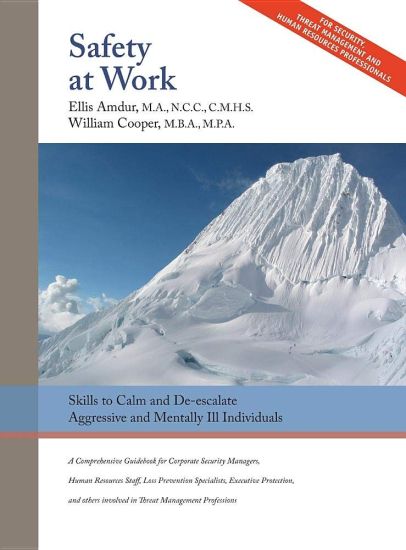
Ellis Amdur; William Cooper

Edgework: Crisis Intervention Resources Pllc
2019
sidottu
Individuals suffering from psychiatric or substance use disorders sometimes display any one of a number of frightening behaviors: verbal outbursts, physical threats and even violence. Not only Corporate Security, Human Resources, Executive Protection, and Loss Prevention Professionals, but anyone who works may be forced to deal with such individuals. In this comprehensive guidebook, Ellis Amdur and William Cooper offer everyone a comprehensive set of strategies to keep themselves, those they may be responsible for protecting, as well as the general public safe while functioning at the highest level of professionalism. The first sections of this book focus on tactical concerns: threat assessment, tactical planning and the development of a safety mindset. In the second major section of the book, the authors focus on us: what we can do to achieve a state of integrity and powerful calm. Rather than abstract pronouncements, they offer specific strategies, including a method of breathing for the purpose of maintaining one's own center in crisis situations. In the heart of the book, they discuss specific behaviors ranging from confusion and obsessive concerns to psychosis, mania and acute disorganization. In two very important chapters, they discuss interactions with opportunistic and manipulative individuals (at worst, those referred to as psychopaths), people who present a danger to the psychological and physical well-being of anyone with whom they come in contact. They then move on a discussion of aggression, and how to de-escalate aggressive and chaotic individuals once a crisis begins. Amdur and Cooper elucidate the various motivations that drive aggression and further delineate the different types of aggression that result. De-escalation tactics are specific -- one learns how to immediately recognize what mode of aggression the person is displaying, and then, one can quickly and effectively implement the de-escalation tactics that are best suited to deal with the aggression one is facing. Final sections address staff members who function in specialized roles, including recommendations for training of support personnel and new hires.
The Thin Blue Lifeline

The Thin Blue Lifeline

Ellis Amdur; Hutchings John

Edgework: Crisis Intervention Resources Pllc
2019
sidottu
Individuals suffering from psychiatric or substance abuse disorders can display verbal outbursts, physical threats and even violence. This comprehensive guidebook offers law enforcement officers a comprehensive set of strategies to keep themselves as well as the general public safe, while functioning at the highest level of professionalism.
Grace Under Fire

Grace Under Fire

Ellis Amdur

Edgework: Crisis Intervention Resources Pllc
2019
sidottu
Individuals suffering from psychiatric or substance use disorders sometimes display any one of a number of frightening behaviors: verbal outbursts, physical threats and even violence. In this comprehensive guidebook, Ellis Amdur walks professionals working in healthcare and social services settings through a multitude of steps they can take to keep themselves, their colleagues, and their clientele safe. The focus of this book is behavior not diagnosis. The first sections of the book discuss specific behaviors ranging from such relatively minor irritants as reluctance to complete tasks and obsessive concerns to more troubling, pervasive syndromes such as psychosis, mania and disorganization. In one very important section, he discusses interactions with anti-social and psychopathic individuals, people who present danger to the psychological and physical well being of both staff and patients. The second major section of the book focuses on us: what we can do to achieve a state of integrity and powerful calm. Rather than abstract pronouncements, he offers specific strategies, including a method of breathing that is for the purpose of maintaining one's center in emergency situations. He then moves on to direct face-to-face encounters, covering situations that may occur within a clinic or office, as well as out in the community, be it someone's residence, on the street, or even one's car. This includes how to handle tense situations before they deteriorate into chaos, and how to de-escalate once a crisis has started. Amdur elucidates the various motivations that drive aggression and further delineates the different types of aggression that result. De-escalation tactics are specific -- one learns how to instantly recognize what mode of aggression the person is in, and then, well-trained and practiced, one can almost instantaneously shift into the correct de-escalation tactic that fits the aggression one is facing. The final sections of the book offer a macro-view: how to establish and maintain a culture of safety both within your agency and your personal life. The likelihood that one will have to use de-escalation skills or other self-protective strategies is far diminished when such a culture of safety is in place.
Safe Haven

Safe Haven

Ellis Amdur

Edgework: Crisis Intervention Resources Pllc
2019
sidottu
Individuals suffering from psychiatric or substance use disorders sometimes display any one of a number of frightening behaviors: verbal outbursts, physical threats and even violence. In this comprehensive guidebook, Ellis Amdur walks professionals working in inpatient and residential settings through a multitude of steps they can take to keep themselves, their colleagues, and their clientele safe. Amdur's focus is based on behavior rather than diagnosis. The first sections of the book discuss specific behaviors ranging from such relatively minor irritants as reluctance to complete tasks and obsessive concerns to more troubling, pervasive syndromes such as psychosis, mania and disorganization.In one very important section, he discusses interactions with anti-social and psychopathic individuals, people who present danger to the psychological and physical well being of both staff and patients.In the second major section of the book, he focuses on us: what we can do to achieve a state of integrity and powerful calm. Rather than abstract pronouncements, he offers specific strategies, including a method of breathing that is for the purpose of maintaining one s center in crisis situations.He then moves on to direct face-to-face encounters. This includes how to handle tense situations before they deteriorate into chaos, and how to de-escalate once a crisis is in play. Amdur elucidates the various motivations that drive aggression and further delineates the different types of aggression that result. De-escalation tactics are specific one learns how to instantly recognize what mode of aggression the person is in, and then, well-trained and practiced, one can almost instantaneously shift into the correct de-escalation tactic that fits the aggression one is facing.The final sections of the book offer a macro-view: how to establish and maintain a culture of safety within the hospital or residential setting. The likelihood that one will have to use de-escalation skills or other self-protective strategies is far diminished when such a culture of safety is in place.
In the Eye of the Hurricane

In the Eye of the Hurricane

Ellis Amdur

Edgework
2019
sidottu
Individuals suffering from psychiatric or substance use disorders sometimes display any one of a number of frightening behaviors: verbal outbursts, physical threats and even violence. In this comprehensive guidebook, Ellis Amdur walks families through a multitude of strategies they can use to keep themselves, and their mentally ill family member safe. Amdur's focus is based on behavior rather than diagnosis.The first sections of the book discuss specific behaviors ranging from such relatively minor irritants as reluctance to complete tasks and obsessive concerns to more troubling, pervasive syndromes such as psychosis, mania and disorganization. In one very important section, he discusses interactions with manipulative individuals, people who present danger to the psychological and physical well being of everyone in your family.In the second major section of the book, he focuses on us: what we can do to achieve a state of integrity and powerful calm. Rather than abstract pronouncements, he offers specific strategies, including a method of breathing that is for the purpose of maintaining one s center in crisis situations.He then moves on to direct face-to-face encounters, covering situations that can occur anywhere: in the community, at your residence, on the street, or even your car. Instruction includes how to handle tense situations before they deteriorate into chaos, and how to manage a crisis once it has started, whether it concerns an adult or a young person. He instructs you on how to instantly recognize what mode of aggression the person is in, and then, well-trained and practiced, how to almost instantaneously shift into the correct de- escalation tactic that fits the aggression one is facing.
Hidden in Plain Sight

Hidden in Plain Sight

Ellis Amdur

FreeLance Academy Press
2018
nidottu
Ellis Amdur's writing on martial arts has been groundbreaking. In Dueling with O-sensei, he challenged practitioners that the moral dimension of martial arts is expressed in acts of integrity, not spiritual platitudes and the deification of fantasized warrior-sages. In Old School, he applied both academic rigor and keen observation towards some of the classical martial arts of Japan, leavening his writing with vivid descriptions of many of the actual practitioners of these wonderful traditions. His first edition of Hidden in Plain Sight was a discussion of esoteric training methods once common, but now all but lost within Japanese martial arts. These methodologies encompassed mental imagery, breath-work, and a variety of physical techniques, offering the potential to develop skills and power sometimes viewed as nearly superhuman. Usually believed to be the provenance of Chinese martial arts, Amdur asserted that elements of such training still remain within a few martial traditions: literally, 'hidden in plain sight.' Two-thirds larger, this second edition is so much more. Amdur digs deep into the past, showing the complexity of human strength, its adaptation to varying lifestyles, and the nature of physical culture pursued for martial ends. Amdur goes into detail concerning varieties of esoteric power training within martial arts, culminating in a specific methodology known as 'six connections' or 'internal strength.' With this discussion as a baseline, he then discusses the transfer of esoteric power training from China to various Japanese jujutsu systems as well as Japanese swordsman-ship emanating from the Kurama traditions. Finally, he delves into the innovative martial tradition of Daito-ryu and its most important offshoot, aikido, showing how the mercurial, complicated figures of Takeda Sokaku and Morihei Ueshiba were less the embodiment of something new, than a re-imagining of their past. 202 b&w illus.
The Girl with the Face of the Moon

The Girl with the Face of the Moon

Ellis Amdur

Createspace Independent Publishing Platform
2018
pokkari
The Girl with the Face of the Moon is a combination of two of the oldest stories of humanity, the hero's journey and that of love a driving force with a power that can triumph over death: a mother seeking to save her child from hell.A young woman of samurai lineage is raised in an impoverished mountain village by bitter parents, identical to the peasants among whom they live, but for their ancestry. Unloved and mistreated, she runs off with a Matagi, a man of a caste of hunters, who were outcast but nearly free from the rules that governed the rest of Japanese society. After a few years of happiness, their child is stolen by a being perhaps human, perhaps not. Bereft, the young woman will challenge death itself to recover her child.The Girl with the Face of the Moon is set in Bakumatsu and Meiji Japan, a transitional period in the mid-1800's, when Japan went from Medieval to Modern in only a few years. This, however, is not a book about the privileged few; rather, this is a story of those on the fringes: a blind wandering masseuse, the abalone divers, the aboriginal mountain folk, a wild yojimbo (body guard and bar thug both), the hunters who worship bears, seeing them as the true power of the mountains, and a woman with no place in any of Japan's societies. The description of the hero's training and that of her allies are based on historical figures and the actual training methods and techniques of archaic Japanese martial arts, something the author learned, first hand, for thirteen years in Japan. Threaded throughout is the terrible question how one can retain one's humanity, and even further, what happens to love, in a world of pervasive terror.
Words of Power

Words of Power

Ellis Amdur

Createspace Independent Publishing Platform
2018
pokkari
Aggression touches all of our lives. Whether it is a customer or angry coworker, an upset family member or a stranger we bump into on the street, all of us, at times, must deal with aggressive people.Words of Power is not a book for specialists. It is written for ordinary people who may, on occasion, have to deal with an angry, even an enraged person.This book was written with the help of a unique cadre of critical readers. Rather than professionals, they are people from ordinary walks of life. They share several things in common: their professions do not require them to interact on a regular basis with aggressive people; their family lives are healthy; they are not experts at self-defense or martial arts; and they lead happy lives, largely untouched by violence. Their job was to read through the original manuscript and highlight all the things that they felt they did NOT need to know. What remains is the information that ordinary people need: no more, no less.The book is simple without being simplistic. It is a comprehensive guidebook on how to de-escalate angry people and how to use verbal control tactics to manage the behaviors of enraged people. Words of Power also teaches how to develop your intuition, so that you become aware and can react before something has truly become dangerous. Most importantly, this book teaches how to calm and center yourself so that you have access to your best, most powerful qualities. You have the best chance of achieving peace when you embody peace.
Dueling with O-Sensei

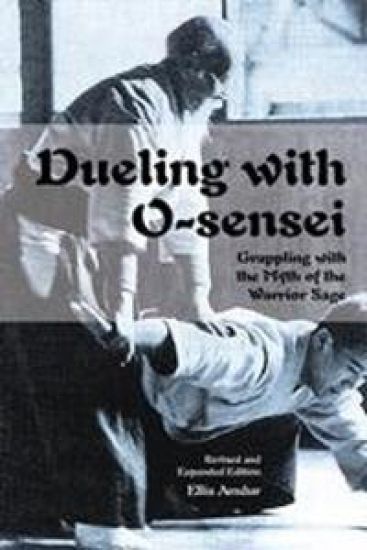
Dueling with O-Sensei

Ellis Amdur

FreeLance Academy Press
2016
nidottu
If you are a long-time martial artist, you have likely been either the recipient, the victim – or both – of the "wise old master" phenomenon, whereby budo students reverentially enfold their teachers as martial, moral and mystical juggernauts sans reproach, in which case, this book will make you clench your fists and laugh out loud, often while reading the same sentence. Iconoclastic, rebellious, yet fiercely holding to some of the most traditional values of Japanese martial culture, Amdur brought something new to martial arts writing - a startling honesty about the flaws, not only within martial arts culture, but also within its practitioners, often using himself as an exemplar of the latter. Originally published in 2000, and now fully revised, with eight new chapters, new artwork and photography, Dueling with O Sensei, Revised and Expanded Edition will be an invaluable addition to the library of old readers and new alike.
Body and Soul

Body and Soul

Ellis Amdur

Createspace Independent Publishing Platform
2016
pokkari
Therapy is a dialogueThe first two chapters of this small book are an inquiry into the nature of psychotherapy, an asymmetric dialogue, where one person, the therapist, literally attends to another. Weaving together overlapping perspectives from Emmanuel Levinas, Martin Heidegger, Maurice Merleau-Ponty and Martin Buber, Amdur asserts that the greatest gifts of therapy arise from a fundamental estrangement from each other. The realization of this unbridgeable distance, however close we may be, is a profound shock that gives birth to a genuine relationship, comprised of two beings, two bodies, not merging into one. It is the maintenance of separation that allows, in every dialogue, the birth of something new and unique in the world. The chapters that follow bring these rarified notions to earth, through accounts of two therapeutic relationships: one, with an achingly melancholic man, so wounded that improvement was meaningless to him; the second, with a man struggling with anguish, his psychosis torturing him into a rage, in which others must die to pay for what he believed was done to him. Ellis Amdur here strips psychotherapy of all technique and jargon. He asserts that it must be, at core, a willingness to wrestle with the unanswerable questions--through which two beings can engage in therapeutic dialogue and change can occur: What of my death? What of yours? What of my life? What of yours? This book is an unusual combination of lyric philosophical writing and harsh humanity, reeking, at times, of flesh and pain, yet finding, at other moments, traces of beauty, kindness, even love. There are no cures here, because some wounds may never heal. Nonetheless, a person's integrity and unassailable dignity is to be found in stark moments where two people receive the ultimate in human gifts: the realization that we are always two, not one, and therefore, never alone.