Kirjojen hintavertailu. Mukana 12 595 353 kirjaa ja 12 kauppaa.

Kirjailija

Elspeth Guild

Kirjat ja teokset yhdessä paikassa: 11 kirjaa, julkaisuja vuosilta 2004-2026, suosituimpien joukossa European Yearbook on Human Rights 2018. Vertaile teosten hintoja ja tarkista saatavuus suomalaisista kirjakaupoista.

11 kirjaa

Kirjojen julkaisuhaarukka 2004-2026.

Lawless Borders

Lawless Borders

Elspeth Guild; Valsamis Mitsilegas; Niovi Vavoula

Bristol University Press
2025
sidottu
Immigration control in the West has increasingly focused on preventing migrants from reaching the external border and the territory of states. This book provides an in-depth analysis of the evolving preventive immigration control system and highlights the many ways in which contemporary border controls undermine the rule of law. By examining border control practices at the state and European levels (including by EU agencies and through the use of AI), the book explores how these measures affect the rule of law across different areas, including extraterritorial immigration control, control of the external borders and the digitalization of border control. This is an essential resource, presenting a comprehensive and nuanced understanding of today’s border management challenges.
European Yearbook on Human Rights 2018

European Yearbook on Human Rights 2018

Lize Glas; Filippo Fontanelli; Theodor Rathgeber; Monika Mayrhofer; Agnieszka Szklanna; Vladislava Stoyanova; Hans-Peter Folz; Alma Stankovic; Adina Portaru; David Reichel; Mathieu Leluup; Claudia Elion; Jean P. Froehly; Gregor Fischer; Joyce De Coninck; Johanna Pruessing; Ewa Sapiezynska; Jacopo Leone; Christian Strohal; Stefan Kieber; Mathilde Duhaâ; Miroslaw Wyrzykowski; Danaé Coquelet; Ajla van Heel; Elspeth Guild; Gareth Davies; Kanstantsin Dzehtsiarou

Intersentia Ltd
2018
nidottu
Both in Europe and around the world, 2017 has been another difficult year for the protection of human rights. Examples of the increased pressure on the European human rights system are apparent: the attack on the independence of the judiciary in Poland, which was responded to by the first time initiation of the rule of law procedure by the European Commission; the increasing human rights issues arising from European migration policy; Russia's suspension of its financial contribution to the Council of Europe and Turkey's lowering of its contribution; and the difficulties in appointing key human rights positions in the Organization for Security and Cooperation in Europe.Split into its customary four parts and complemented by book reviews of recent publications on human rights in Europe, the tenth volume of the European Yearbook on Human Rights brings together renowned scholars to analyse some of the most pressing and topical human rights issues being faced in Europe today.
The EU Citizenship Directive

The EU Citizenship Directive

Elspeth Guild; Steve Peers; Jonathan Tomkin

Oxford University Press
2026
sidottu
The EU Citizenship Directive defines the right of free movement for citizens of the European Economic Area. It applies to EU citizens and their family members who move to another Member State. This might at first seem like a straightforward definition, but immediately questions arise. Who determines if a person is an EU citizen at all? What about dual citizens of two Member States, or of one Member State and a non-Member State (a 'third State')? What is the position of EU citizens who move to one Member State, and then return to their home Member State? This book provides a comprehensive commentary on the EU's Citizens' Directive tracing the evolution of the Directive's provisions, placing each article in its historical and legislative context. Special emphasis is placed on highlighting the connections and interactions between the Directive's constituent provisions so as to permit a global appreciation of the system of free movement rights to which the Directive gives effect. Each provision is annotated containing a detailed analysis of the case-law of the Court of Justice as well as of related measures impacting upon the Directive's interpretation including European Commission reports and guidelines on the Directive's implementation. The fully updated third edition updates key legal developments, including case law, Commission guidance, Brexit implications, and new EU free movement agreements with Switzerland and others.
The EU Citizenship Directive: A Commentary

The EU Citizenship Directive: A Commentary

Elspeth Guild; Steve Peers; Jonathan Tomkin

Oxford University Press
2019
sidottu
The EU Citizenship Directive defines the right of free movement for citizens of the European Economic Area. It applies to EU citizens and their family members who move to another Member State. This might at first seem like a straightforward definition, but immediately questions arise. Who determines if a person is an EU citizen at all? What about dual citizens of two Member States, or of one Member State and a non-Member State (a 'third State')? What is the position of EU citizens who move to one Member State, and then return to their home Member State? This book provides a comprehensive commentary of the EU's Citizens' Directive tracing the evolution of the Directive's provisions, placing each article in its historical and legislative context. Special emphasis is placed on highlighting the connections and interactions between the Directive's constituent provisions so as to permit a global appreciation of the system of free movement rights to which the Directive gives effect. Each provision is annotated containing a detailed analysis of the case-law of the Court of Justice as well as of related measures impacting upon the Directive's interpretation including European Commission reports and guidelines on the Directive's implementation. This fully-updated new edition includes dscussion of relevant case law since the first edition, and has been expanded to include detailed discussion of rights of EU and UK citizens after Brexit in the withdrawal agreement.
BREXIT and its Consequences for UK and EU Citizenship or Monstrous Citizenship
This book examines the result of the 23 June 2016 UK referendum on leaving the EU where 51.9% of the eligible voters who voted chose to leave. Politicians and media have stressed not only that leave means leave, but also that much of the British voting public was motivated to vote leave by issues of immigration and border control. Guild investigates how the issue of EU citizenship became transformed into a discussion about immigration through four themes: the negotiations between the UK and the EU before the referendum; the nature of and difference between British and EU citizenship; the issue of third country national family members and the fears incited by the referendum in light of the rejection of expertise.
Illiberal Liberal States

Illiberal Liberal States

Elspeth Guild; Kees Groenendijk

Ashgate Publishing Limited
2009
sidottu
Understanding the dynamics of the illiberal practices of liberal states is increasingly important in Europe today. This book examines the changing relationship between immigration, citizenship and integration at the European and national arenas. It studies some of the main effects and questions the comprehensiveness of the exchange and coordination of public responses to the inclusion of third country nationals in Europe, as well as their compatibility with a common European immigration policy driven by a rights-based approach and the respect of the principles of fair and equal treatment of third country nationals. The volume reviews key national experiences of immigration and citizenship laws, the use of integration and the 'moving of ideas' between national arenas. The framing of integration in immigration and citizenship law and the ways in which policy convergence is being achieved through the EU framework on integration raises a number of conceptual dilemmas and a set of definitional premises in need of reflection and consideration.
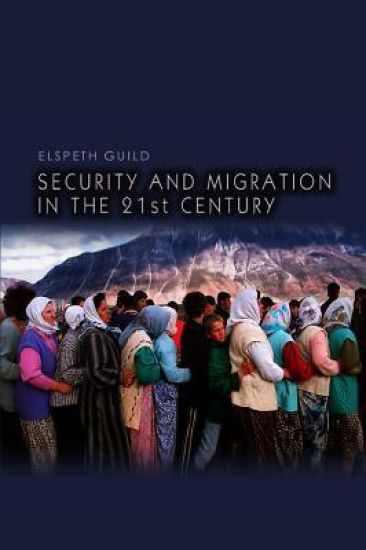
Security and Migration in the 21st Century
The 21st century has brought new and challenging dimensions to our understanding of security and migration. The old Cold War framework of security as related to war and peace, international relations and foreign affairs has given way to a multiplicity of competing notions, including internal security, human security and even social security. At the same time, migration has become a hotly contested issue, characterised by an enormous difference of views and objectives. So what do we mean by security and migration in the contemporary world? How do these two important fields intersect? And what does this collision of policy concerns and public interests mean for states and individuals alike? In this cutting-edge book, Elspeth Guild seeks to answer these pressing questions, drawing on a wide range of recent examples from the impact of asylum seekers on state border security to identity security in citizenship rules to illustrate her arguments. By approaching the topic from the perspective of the individual – citizen of one state, migrant in another – the book examines key aspects of the security-migration nexus, such as the relationship with refugees; torture; extraordinary rendition; privacy and the retention of personal data; and human rights' protection. The first volume in Polity's new 'Dimensions of Security' series, this book is a must-read for all students of international politics, development studies and related fields.
Security and Migration in the 21st Century
The 21st century has brought new and challenging dimensions to our understanding of security and migration. The old Cold War framework of security as related to war and peace, international relations and foreign affairs has given way to a multiplicity of competing notions, including internal security, human security and even social security. At the same time, migration has become a hotly contested issue, characterised by an enormous difference of views and objectives. So what do we mean by security and migration in the contemporary world? How do these two important fields intersect? And what does this collision of policy concerns and public interests mean for states and individuals alike? In this cutting-edge book, Elspeth Guild seeks to answer these pressing questions, drawing on a wide range of recent examples from the impact of asylum seekers on state border security to identity security in citizenship rules to illustrate her arguments. By approaching the topic from the perspective of the individual – citizen of one state, migrant in another – the book examines key aspects of the security-migration nexus, such as the relationship with refugees; torture; extraordinary rendition; privacy and the retention of personal data; and human rights' protection. The first volume in Polity's new 'Dimensions of Security' series, this book is a must-read for all students of international politics, development studies and related fields.
Whose Freedom, Security and Justice?

Whose Freedom, Security and Justice?

Anneliese Baldaccini; Elspeth Guild; Helen Toner

Hart Publishing
2007
sidottu
This book brings together contributions from some of the leading authorities in the field of EU immigration and asylum law to reflect upon developments since the Amsterdam Treaty and, particularly, the Tampere European Council in 1999. At Tampere, Heads of State and Government met to set guidelines for the implementation of the powers and competences introduced by the Amsterdam Treaty and make the development of the Union as an area of freedom, security and justice a reality. Since 1999, a substantial body of law and policy has developed, but the process has been lengthy and the results open to critique. This book presents a series of analyses of and reflections on the major legal instruments and policy themes, with the underlying question, to what extent the ideals held out of 'freedom, security and justice accessible to all', are in fact reflected in these legislative and policy developments. Has freedom from terrorism and the spectre of illegal or irregular migration, and increasingly strict border securitisation and surveillance overshadowed the freedom of the migrant to seek entry or residence for legitimate touristic, work, study, or family reasons, a secure refuge from persecution, and effective access to justice? In 2004, the Heads of State and Government presented a programme for the next stage of development in these areas, the Hague Programme, and the Directives and Regulations that have been agreed are now being transposed and applied in Member States legal systems. What are the main challenges in the years ahead as the Hague Programme and the existing legislative acquis are implemented?
Controlling Frontiers

Controlling Frontiers

Elspeth Guild

Ashgate Publishing Limited
2005
sidottu
Focusing in particular on the European borders, this volume brings together an interdisciplinary group of academics to consider questions of immigration and the free movement of people, linking control within the state to the role of the police and internal security. The contributors all take as the point of departure the significance of European governmentality within the Foucauldian meaning as opposed to the European governance perspective which is already well represented in the literature. They discuss the relation between control of borders, introduction of biometrics and freedom. The book makes available in English an analysis of an important and politically highly charged field from a major French critical perspective. It draws on different disciplines including law, politics, international relations and philosophy.
The Legal Elements of European Identity

The Legal Elements of European Identity

Elspeth Guild

Kluwer Law International
2004
nidottu
The individual has become visible throughout Europe and within its institutions as a potential or actual rights holder. He or she is no longer defined as visible or invisible in law by the nation state alone. In today's Europe, he or she establishes identity-that is, the rights to entry, residence, work, family life, and protection from expulsion-through a multilayered legal structure involving the nation state, the EU, and the Council of Europe and all their political, administrative, and judicial arenas. In this remarkable study Elspeth Guild examines the ways in which law in Europe defines the status of the individual and his or her entitlements as regards identity. Among her enlightening approaches to this complex subject the following may be listed: the right to move across borders; the limitations of citizenship of the Union as currently construed; social benefits of citizenship; residence; immigration; family reunification; human rights of foreigners; asylum; expulsion and readmission; recial discrimination; and, long-resident third-country nationals.The analysis includes extensive reference to relevant cases, especially European Court of Justice and European Court of Human Rights decisions. This is a work of great value and insight. As more and more legislation is adopted in the area of European citizenship, courts will increasingly be called upon to articulate the relationship of individuals to the territory and society in which they find themselves. And as this inevitable development is defined, all jurists and legal academics who care for civil society in Europe will discover this deeply considered book afresh.