Kirjojen hintavertailu. Mukana 12 595 353 kirjaa ja 12 kauppaa.

Kirjailija

Elspeth Probyn

Kirjat ja teokset yhdessä paikassa: 10 kirjaa, julkaisuja vuosilta 1993-2020, suosituimpien joukossa Sustaining Seas. Vertaile teosten hintoja ja tarkista saatavuus suomalaisista kirjakaupoista.

10 kirjaa

Kirjojen julkaisuhaarukka 1993-2020.

Sustaining Seas

Sustaining Seas

Elspeth Probyn; Kate Johnston; Nancy Lee

Rowman Littlefield International
2020
nidottu
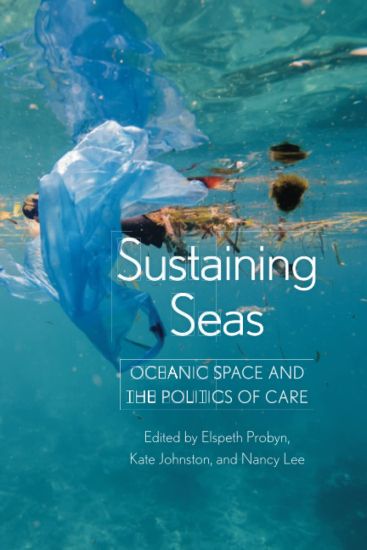
Why read Sustaining Seas? It is as simple as this: the seas sustain all life. This edited book emerges from conversations across several disciplines, and including practitioners of different specialities (artists, writers, planners, policy makers) about how to sustain the seas, as they sustain us. Sustaining Seas: Oceanic space and the politics of care aims to build a better understanding of what it means to care for aquatic places and their biocultural communities. The book is truly interdisciplinary and brings together a wide range of authors including, academics from diverse fields (architecture, science, cultural studies, law), artists, fisheries managers, and Indigenous Traditional Owners. It provides readers with new theoretical framings, as well as grounded case studies with a wide geographical and cultural breadth. This book assumes that understanding complexity, including social, cultural, ecological and economic interconnections, is crucial to any solution. Sustaining the seas is one of the most pressing global challenges for the planet and all her inhabitants. How to do justice to this challenge is an exigency for all scholars, and how to represent the oceans is a guiding theme in the book that is addressed by scholars, artists, and practitioners.
Sustaining Seas

Sustaining Seas

Elspeth Probyn; Kate Johnston; Nancy Lee

Rowman Littlefield International
2020
sidottu
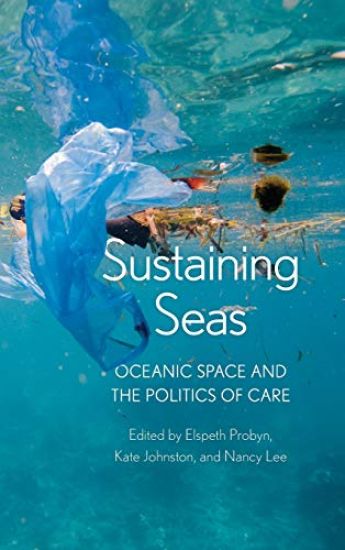
Why read Sustaining Seas? It is as simple as this: the seas sustain all life. This edited book emerges from conversations across several disciplines, and including practitioners of different specialities (artists, writers, planners, policy makers) about how to sustain the seas, as they sustain us. Sustaining Seas: Oceanic space and the politics of care aims to build a better understanding of what it means to care for aquatic places and their biocultural communities. The book is truly interdisciplinary and brings together a wide range of authors including, academics from diverse fields (architecture, science, cultural studies, law), artists, fisheries managers, and Indigenous Traditional Owners. It provides readers with new theoretical framings, as well as grounded case studies with a wide geographical and cultural breadth. This book assumes that understanding complexity, including social, cultural, ecological and economic interconnections, is crucial to any solution. Sustaining the seas is one of the most pressing global challenges for the planet and all her inhabitants. How to do justice to this challenge is an exigency for all scholars, and how to represent the oceans is a guiding theme in the book that is addressed by scholars, artists, and practitioners.
Eating the Ocean

Eating the Ocean

Elspeth Probyn

Duke University Press
2016
pokkari
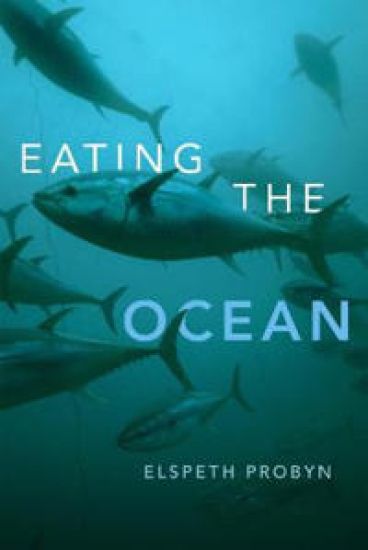
In Eating the Ocean Elspeth Probyn investigates the profound importance of the ocean and the future of fish and human entanglement. On her ethnographic journey around the world's oceans and fisheries, she finds that the ocean is being simplified in a food politics that is overwhelmingly land based and preoccupied with buzzwords like "local" and "sustainable." Developing a conceptual tack that combines critical analysis and embodied ethnography, she dives into the lucrative and endangered bluefin tuna market, the gendered politics of "sustainability," the ghoulish business of producing fish meal and fish oil for animals and humans, and the long history of encounters between humans and oysters. Seeing the ocean as the site of the entanglement of multiple species-which are all implicated in the interactions of technology, culture, politics, and the market-enables us to think about ways to develop a reflexive ethics of taste and place based in the realization that we cannot escape the food politics of the human-fish relationship.
Eating the Ocean

Eating the Ocean

Elspeth Probyn

Duke University Press
2016
sidottu
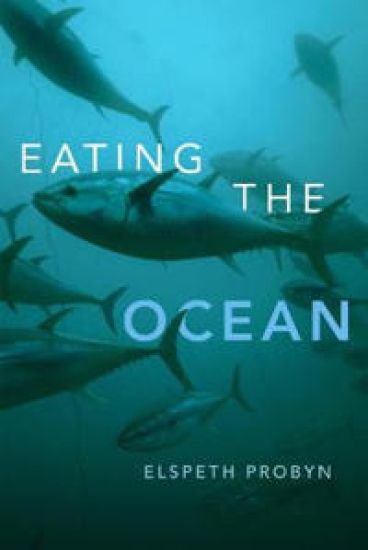
In Eating the Ocean Elspeth Probyn investigates the profound importance of the ocean and the future of fish and human entanglement. On her ethnographic journey around the world's oceans and fisheries, she finds that the ocean is being simplified in a food politics that is overwhelmingly land based and preoccupied with buzzwords like "local" and "sustainable." Developing a conceptual tack that combines critical analysis and embodied ethnography, she dives into the lucrative and endangered bluefin tuna market, the gendered politics of "sustainability," the ghoulish business of producing fish meal and fish oil for animals and humans, and the long history of encounters between humans and oysters. Seeing the ocean as the site of the entanglement of multiple species-which are all implicated in the interactions of technology, culture, politics, and the market-enables us to think about ways to develop a reflexive ethics of taste and place based in the realization that we cannot escape the food politics of the human-fish relationship.
Blush

Blush

Elspeth Probyn

University of Minnesota Press
2005
sidottu
With the rise of pride - national pride, gay pride, black pride, fat pride - shame, the "sickness of the soul," has acquired a bad reputation. While the repudiation of some forms and consequences of societal shame are undoubtedly necessary, Elspeth Probyn contends that this emotion is a powerful resource in rethinking who we are and who we want to be. When we blush, we are driven to question what we value about ourselves and why. Blush argues that we are all born with a capacity for shame, much as we are born with the capacity for anger or pride, and that shame, like these other emotions, can be good for us and reveal the good in us. Painfully introspective, shame demands that we question our actions and our relationship to others. Shame's physical manifestation - the blush - gives us away, connecting us to our humanity. What shames us says a great deal about our character as individuals and as a society, about our past and our desires for the future. Written in an engaging and personal style, Blush combines psychology and cultural criticism, sociology and popular science, to present a unique perspective on debates about the ethics and emotion of identity.
Blush

Blush

Elspeth Probyn

University of Minnesota Press
2005
nidottu
With the rise of pride - national pride, gay pride, black pride, fat pride - shame, the "sickness of the soul," has acquired a bad reputation. While the repudiation of some forms and consequences of societal shame are undoubtedly necessary, Elspeth Probyn contends that this emotion is a powerful resource in rethinking who we are and who we want to be. When we blush, we are driven to question what we value about ourselves and why. Blush argues that we are all born with a capacity for shame, much as we are born with the capacity for anger or pride, and that shame, like these other emotions, can be good for us and reveal the good in us. Painfully introspective, shame demands that we question our actions and our relationship to others. Shame's physical manifestation - the blush - gives us away, connecting us to our humanity. What shames us says a great deal about our character as individuals and as a society, about our past and our desires for the future. Written in an engaging and personal style, Blush combines psychology and cultural criticism, sociology and popular science, to present a unique perspective on debates about the ethics and emotion of identity.
Carnal Appetites

Carnal Appetites

Elspeth Probyn

Routledge
2000
nidottu
In Carnal Appetites, Elspeth Probyn charts the explosion of interest in food - from the cults that spring up around celebrity chefs, to our love/hate relationship with fast food, our fetishization of food and sex, and the impact of our modes of consumption on our identities. 'You are what you eat' the saying goes, but is the tenet truer than ever? As the range of food options proliferates in the West, our food choices become inextricably linked with our lives and lifestyles. Probyn also tackles issues that trouble society, asking questions about the nature of appetite, desire, greed and pleasure, and shedding light on subjects including: fast food, vegetarianism, food sex, cannibalism, forced feeding, and fat politics.
Outside Belongings

Outside Belongings

Elspeth Probyn

Routledge
1996
nidottu
Outside Belongings argues against a psychological depth model of identity--one in which individuals possess an intrinsic quality that guarantees authentic belonging. Instead, Probyn proposes a model of identity that takes into account the desires of individuals, and groups of individuals, to belong. The main ideas she considers--"the outside", "the surface", and "belonging"--allow her to articulate, in concrete terms, her precise concerns about sexuality and nationality.
Sexing the Self

Sexing the Self

Elspeth Probyn

Routledge
1993
sidottu
Faced with the seemingly enormous difficulty of representing `others', many theorists working in Cultural Studies have been turning to themselves as a way of speaking about the personal. In Sexing the Self Elspeth Probyn tackles this question of the sex of the self, an issue of vital importance to feminists and yet neglected by feminist theory until now, to suggest that there are ways of using our gendered selves in order to speak and theorize non-essential but embodied selves. Arguing for `feminisms with attitude', Sexing the Self ranges across a wide range of theoretical strands, drawing upon a body of literature from early Cultural Studies to Anglo-American feminist literary criticism, from `identity debates' to Foucault's `care of the self'.
Sexing the Self

Sexing the Self

Elspeth Probyn

Routledge
1993
nidottu
Faced with the seemingly enormous difficulty of representing `others', many theorists working in Cultural Studies have been turning to themselves as a way of speaking about the personal. In Sexing the Self Elspeth Probyn tackles this question of the sex of the self, an issue of vital importance to feminists and yet neglected by feminist theory until now, to suggest that there are ways of using our gendered selves in order to speak and theorize non-essential but embodied selves. Arguing for `feminisms with attitude', Sexing the Self ranges across a wide range of theoretical strands, drawing upon a body of literature from early Cultural Studies to Anglo-American feminist literary criticism, from `identity debates' to Foucault's `care of the self'.