
Kirjailija
Elsy Lahner
Kirjat ja teokset yhdessä paikassa: 3 kirjaa, julkaisuja vuosilta 2017-2023, suosituimpien joukossa simply... art. Vertaile teosten hintoja ja tarkista saatavuus suomalaisista kirjakaupoista.
3 kirjaa
Kirjojen julkaisuhaarukka 2017-2023.
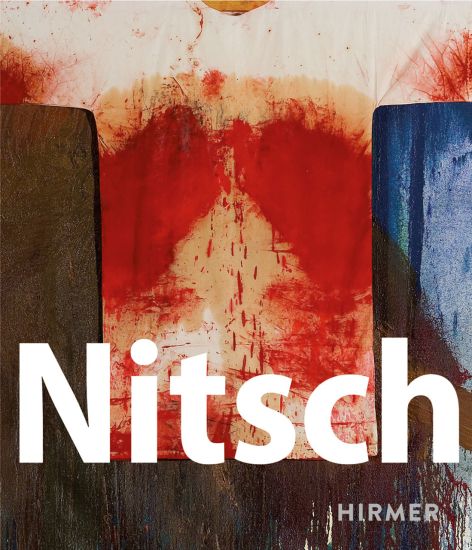
Hermann Nitsch produced his first “poured” paintings around 1960. In this form of action painting, the artist is primarily concerned with the substance of the paint, which he investigates from one Painting Action to the next. This catalog illustrates the development of his painterly works from the early 1960s to the present day. The main focus of the content lies in the characteristics of the various work cycles. In addition to the first “splatter” paintings it shows floor “splatter” paintings from the Red Cycle (1995), works from the Six-Day Play (1989) or the yellow Resurrection Cycle (2002). While one colour dominates in the monochrome works, in others a real explosion of colours takes place. The paint is splattered or sprayed; it may be applied in liquid form or impasto. The artist may use a paintbrush or smear the paint with his hands. The focal point is the exploration of the state of the paint, which varies between liquid and solid.

The wall was his passion. If we look at urban walls with the eyes of Burhan Dogancay, a completely different world opens up: half - ripped posters on rough brickwork, covered in graffiti, scribblings, messages, signs, stickers. From this rich stock of struct ures, signs and symbols the artist created his wall fragments, his “Urban Walls”. Dogancay (1929 – 2013) was born in Istanbul and settled in New York in 1964, where he moved within the art scene around Robert Rauschenberg und Jasper Johns. His subject is the visual perception of texture, place and memory, which he researches in serial wor ks. For his “Urban Walls” he records house walls and façades all over the world in a variety of media, using a wide range of materials and techniques such as photography, collage and painting. His works are archives of past decades which capture the spirit of the times. From the 1970s and 1980s he progresses from these works to develop his “Ribbons” – calligraphic paintings of poetic charm.