Kirjojen hintavertailu. Mukana 12 390 323 kirjaa ja 12 kauppaa.

Kirjailija

Elzbieta M. Gozdziak

Kirjat ja teokset yhdessä paikassa: 5 kirjaa, julkaisuja vuosilta 2016-2022, suosituimpien joukossa Human Trafficking as a New (In)Security Threat. Vertaile teosten hintoja ja tarkista saatavuus suomalaisista kirjakaupoista.

Mukana myös kirjoitusasut: Elzbieta M Gozdziak

5 kirjaa

Kirjojen julkaisuhaarukka 2016-2022.

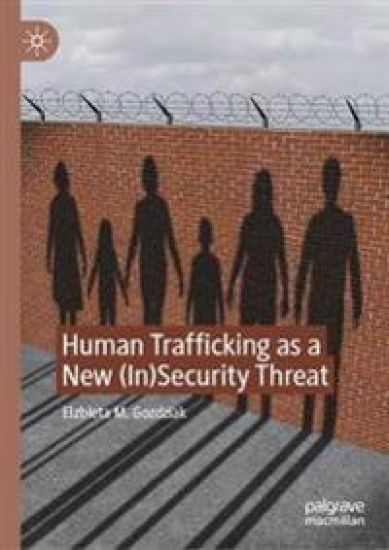
Human Trafficking as a New (In)Security Threat

Human Trafficking as a New (In)Security Threat

Elzbieta M. Gozdziak

Springer Nature Switzerland AG
2022
nidottu
This book challenges the rhetoric linking ‘war on terror’ with ‘war on human trafficking’ by juxtaposing lived experiences of survivors of trafficking, refugees, and labor migrants with macro-level security concerns. Drawing on research in the United States and in Europe, Gozdziak shows how human trafficking has replaced migration in public narratives, policy responses, and practice with migrants and analyzes lived experiences of (in)security of trafficked victims, irregular migrants, and asylum seekers. .
International Migration

International Migration

Elzbieta M Gozdziak

Tibidabo Publishing, Inc.
2021
pokkari
Anti-immigrant sentiments are high across the globe. Citizens are concerned about the failure of politicians to show effective leadership on migration. An ill-informed understanding of migration -and the resulting xenophobia and racism against refugees and immigrants- has people turning to populist politicians who wish to bring back protectionism, reverse globalization, and erect walls and fences. This book dispels some of the misperceptions that migrants are the source of societal ills and provides non-specialists with a basic understanding of the phenomenon of international migration to be able to engage in constructive debates on refugees and migrants. ENDORSEMENTS: This engagingly written and expansive book centers on the questions of why migration matters and why an understanding of human population movementsis important to an understanding of the world in which we live. Dianna Shandy, Professor of Anthropology and Associate Provost, Macalester College, United States.Key questions on migration - such as why are we challenged by the arrival of migrants in our country? Aren't there terrorists among migrants? Will migrants steal our jobs? - are answered in simple and accessible prose. Dr Benjamin Nickl, The University of Sydney, Australia. The book judiciously covers key debates that shaped contemporary scholarship on international migration including the multi-faceted contribution of immigrants, ill effects of the early European settlers on indigenous people, different types of migration, and myriad migrant identities in Australia, Canada, and the United States. NergisCanefe, Associate Professor, York University, Toronto, Canada.
Human Trafficking as a New (In)Security Threat

Human Trafficking as a New (In)Security Threat

Elzbieta M. Gozdziak

Springer Nature Switzerland AG
2021
sidottu
This book challenges the rhetoric linking ‘war on terror’ with ‘war on human trafficking’ by juxtaposing lived experiences of survivors of trafficking, refugees, and labor migrants with macro-level security concerns. Drawing on research in the United States and in Europe, Gozdziak shows how human trafficking has replaced migration in public narratives, policy responses, and practice with migrants and analyzes lived experiences of (in)security of trafficked victims, irregular migrants, and asylum seekers. .
Trafficked Children and Youth in the United States

Trafficked Children and Youth in the United States

Elzbieta M. Gozdziak

Rutgers University Press
2016
nidottu
Trafficked children are portrayed by the media—and even by child welfare specialists—as hapless victims who are forced to migrate from a poor country to the United States, where they serve as sex slaves. But as Elzbieta M. Gozdziak reveals in Trafficked Children in the United States, the picture is far more complex. Basing her observations on research with 140 children, most of them girls, from countries all over the globe, Gozdziak debunks many myths and uncovers the realities of the captivity, rescue, and rehabilitation of trafficked children. She shows, for instance, that none of the girls and boys portrayed in this book were kidnapped or physically forced to accompany their traffickers. In many instances, parents, or smugglers paid by family members, brought the girls to the U.S. Without exception, the girls and boys in this study believed they were coming to the States to find employment and in some cases educational opportunities. Following them from the time they were trafficked to their years as young adults, Gozdziak gives the children a voice so they can offer their own perspective on rebuilding their lives—getting jobs, learning English, developing friendships, and finding love. Gozdziak looks too at how the children’s perspectives compare to the ideas of child welfare programs, noting that the children focus on survival techniques while the institutions focus, not helpfully, on vulnerability and pathology. Gozdziak concludes that the services provided by institutions are in effect a one-size-fits-all, trauma-based model, one that ignores the diversity of experience among trafficked children. Breaking new ground, Trafficked Children in the United States offers a fresh take on what matters most to these young people as they rebuild their lives in America.
Trafficked Children and Youth in the United States

Trafficked Children and Youth in the United States

Elzbieta M. Gozdziak

Rutgers University Press
2016
sidottu
Trafficked children are portrayed by the media—and even by child welfare specialists—as hapless victims who are forced to migrate from a poor country to the United States, where they serve as sex slaves. But as Elzbieta M. Gozdziak reveals in Trafficked Children in the United States, the picture is far more complex. Basing her observations on research with 140 children, most of them girls, from countries all over the globe, Gozdziak debunks many myths and uncovers the realities of the captivity, rescue, and rehabilitation of trafficked children. She shows, for instance, that none of the girls and boys portrayed in this book were kidnapped or physically forced to accompany their traffickers. In many instances, parents, or smugglers paid by family members, brought the girls to the U.S. Without exception, the girls and boys in this study believed they were coming to the States to find employment and in some cases educational opportunities. Following them from the time they were trafficked to their years as young adults, Gozdziak gives the children a voice so they can offer their own perspective on rebuilding their lives—getting jobs, learning English, developing friendships, and finding love. Gozdziak looks too at how the children’s perspectives compare to the ideas of child welfare programs, noting that the children focus on survival techniques while the institutions focus, not helpfully, on vulnerability and pathology. Gozdziak concludes that the services provided by institutions are in effect a one-size-fits-all, trauma-based model, one that ignores the diversity of experience among trafficked children. Breaking new ground, Trafficked Children in the United States offers a fresh take on what matters most to these young people as they rebuild their lives in America.