Kirjojen hintavertailu. Mukana 12 595 353 kirjaa ja 12 kauppaa.

Kirjailija

Emiko Ohnuki-Tierney

Kirjat ja teokset yhdessä paikassa: 11 kirjaa, julkaisuja vuosilta 1984-2025, suosituimpien joukossa The Chrysanthemum and the Sword. Vertaile teosten hintoja ja tarkista saatavuus suomalaisista kirjakaupoista.

11 kirjaa

Kirjojen julkaisuhaarukka 1984-2025.

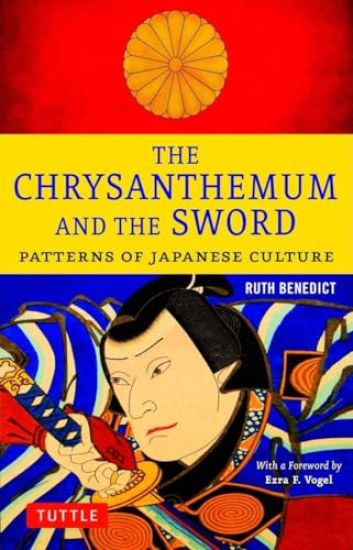
The Chrysanthemum and the Sword

The Chrysanthemum and the Sword

Ruth Benedict; Emiko Ohnuki-Tierney

TUTTLE PUBLISHING
2025
nidottu
The classic study of Japan and Japanese culture—now reissued with a new foreword by Emiko Ohnuki-Tierney!THE CHRYSANTHEMUM AND THE SWORD is the classic work that has defined our understanding of Japanese culture- of why it is seemingly self-contradictory, and how and why it differs from our own. The book focuses on the heart of Japanese social structure-hierarchy, marriage and family, filial piety, self-discipline and other core values—explaining the fact that while much has changed, much also remains the same.Although Japan has changed drastically over the years, this masterpiece remains unsurpassed in its keen observations about Japanese culture. By shedding light on the set of core values that make the Japanese way of life unique, it reveals a great deal about culture in general and provides a lens through which to view ourselves.

Representations of “Japanese Nature”

Representations of “Japanese Nature”

Emiko Ohnuki-Tierney

BERGHAHN BOOKS
2025
nidottu
“Nature” as a concept and word is extremely elusive, yet it is commonly taken for granted that “the pristine nature” is “out there.” This book explores the factors that have naturalized the idea of nature as “pristine” into our psyche, and as something that has a spatial, visual, and temporal dimension for “seasons”. Much emphasis is given to the inhabitants demonstrating the dynamic characteristic of nature. As a study done over a long period of history, Representations of “Japanese Nature” shows the mutual support between conceptual principles of nature and the daily activities of the people .
Representations of “Japanese Nature”

Representations of “Japanese Nature”

Emiko Ohnuki-Tierney

BERGHAHN BOOKS
2025
sidottu
“Nature” as a concept and word is extremely elusive, yet it is commonly taken for granted that “the pristine nature” is “out there.” This book explores the factors that have naturalized the idea of nature as “pristine” into our psyche, and as something that has a spatial, visual, and temporal dimension for “seasons”. Much emphasis is given to the inhabitants demonstrating the dynamic characteristic of nature. As a study done over a long period of history, Representations of “Japanese Nature” shows the mutual support between conceptual principles of nature and the daily activities of the people .
Flowers That Kill

Flowers That Kill

Emiko Ohnuki-Tierney

Stanford University Press
2015
sidottu
Flowers are beautiful. People often communicate their love, sorrow, and other feelings to each other by offering flowers, like roses. Flowers can also be symbols of collective identity, as cherry blossoms are for the Japanese. But, are they also deceptive? Do people become aware when their meaning changes, perhaps as flowers are deployed by the state and dictators? Did people recognize that the roses they offered to Stalin and Hitler became a propaganda tool? Or were they like the Japanese, who, including the soldiers, did not realize when the state told them to fall like cherry blossoms, it meant their deaths? Flowers That Kill proposes an entirely new theoretical understanding of the role of quotidian symbols and their political significance to understand how they lead people, if indirectly, to wars, violence, and even self-exclusion and self-destruction precisely because symbolic communication is full of ambiguity and opacity. Using a broad comparative approach, Emiko Ohnuki-Tierney illustrates how the aesthetic and multiple meanings of symbols, and at times symbols without images become possible sources for creating opacity which prevents people from recognizing the shifting meaning of the symbols.
Flowers That Kill

Flowers That Kill

Emiko Ohnuki-Tierney

Stanford University Press
2015
pokkari
Flowers are beautiful. People often communicate their love, sorrow, and other feelings to each other by offering flowers, like roses. Flowers can also be symbols of collective identity, as cherry blossoms are for the Japanese. But, are they also deceptive? Do people become aware when their meaning changes, perhaps as flowers are deployed by the state and dictators? Did people recognize that the roses they offered to Stalin and Hitler became a propaganda tool? Or were they like the Japanese, who, including the soldiers, did not realize when the state told them to fall like cherry blossoms, it meant their deaths? Flowers That Kill proposes an entirely new theoretical understanding of the role of quotidian symbols and their political significance to understand how they lead people, if indirectly, to wars, violence, and even self-exclusion and self-destruction precisely because symbolic communication is full of ambiguity and opacity. Using a broad comparative approach, Emiko Ohnuki-Tierney illustrates how the aesthetic and multiple meanings of symbols, and at times symbols without images become possible sources for creating opacity which prevents people from recognizing the shifting meaning of the symbols.
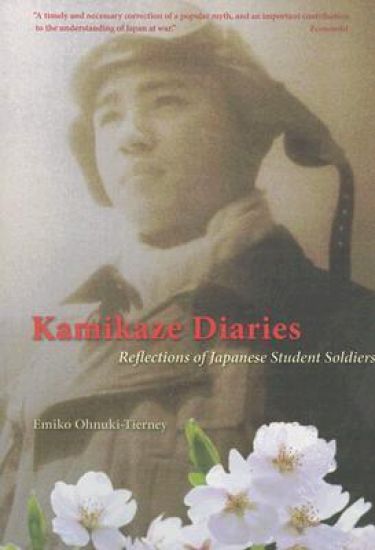
Kamikaze Diaries

Kamikaze Diaries

Emiko Ohnuki-Tierney

University of Chicago Press
2007
nidottu
We tried to live with 120 percent intensity, rather than waiting for death. We read and read, trying to understand why we had to die in our early twenties. We felt the clock ticking away towards our death, every sound of the clock shortening our lives." So wrote Irokawa Daikichi, one of the many kamikaze pilots, or tokkotai, who faced almost certain death in the futile military operations conducted by Japan at the end of World War II. This moving history presents diaries and correspondence left by members of the tokkotai and other Japanese student soldiers who perished during the war. Outside of Japan, these kamikaze pilots were considered unbridled fanatics who willingly sacrificed their lives for the emperor. But the writings explored here by Emiko Ohnuki-Tierney clearly and eloquently speak otherwise. A significant number of the kamikaze were university students who were drafted and forced to volunteer, and in their diaries and correspondence they often wrote heartbreaking soliloquies in which they poured out their anguish and fear and expressed profound ambivalence toward the war as well as opposition to their nation's imperialism. A salutary correction to the many caricatures of the kamikaze, this poignant work will be essential to anyone interested in the history of Japan and World War II.
Kamikaze Diaries

Kamikaze Diaries

Emiko Ohnuki-Tierney

University of Chicago Press
2006
sidottu
We tried to live with 120 percent intensity, rather than waiting for death. We read and read, trying to understand why we had to die in our early twenties. We felt the clock ticking away towards our death, every sound of the clock shortening our lives." So wrote Irokawa Daikichi, one of the many kamikaze pilots, or tokkotai, who faced almost certain death in the futile military operations conducted by Japan at the end of World War II. This moving history presents diaries and correspondence left by members of the tokkotai and other Japanese student soldiers who perished during the war. Outside of Japan, these kamikaze pilots were considered unbridled fanatics who willingly sacrificed their lives for the emperor. But the writings explored here by Emiko Ohnuki-Tierney clearly and eloquently speak otherwise. A significant number of the kamikaze were university students who were drafted and forced to volunteer, and in their diaries and correspondence they often wrote heartbreaking soliloquies in which they poured out their anguish and fear and expressed profound ambivalence toward the war as well as opposition to their nation's imperialism. A salutary correction to the many caricatures of the kamikaze, this poignant work will be essential to anyone interested in the history of Japan and World War II.
Kamikaze, Cherry Blossoms, and Nationalisms

Kamikaze, Cherry Blossoms, and Nationalisms

Emiko Ohnuki-Tierney

University of Chicago Press
2002
nidottu
Why did almost 1000 highly educated "student soldiers" volunteer to serve in Japan's kamikaze operations at the end of World War II, even though Japan was losing the war? This study of the role of the state in pushing imperial ideology shows the power of symbolic communication.
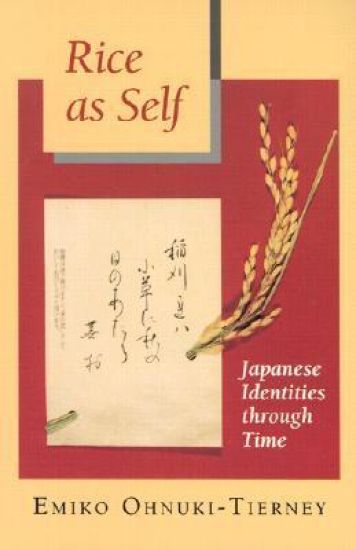
Rice as Self

Rice as Self

Emiko Ohnuki-Tierney

Princeton University Press
1994
pokkari
Are we what we eat? What does food reveal about how we live and how we think of ourselves in relation to others? Why do people have a strong attachment to their own cuisine and an aversion to the foodways of others? In this engaging account of the crucial significance rice has for the Japanese, Rice as Self examines how people use the metaphor of a principal food in conceptualizing themselves in relation to other peoples. Emiko Ohnuki-Tierney traces the changing contours that the Japanese notion of the self has taken as different historical Others--whether Chinese or Westerner--have emerged, and shows how rice and rice paddies have served as the vehicle for this deliberation. Using Japan as an example, she proposes a new cross-cultural model for the interpretation of the self and other.
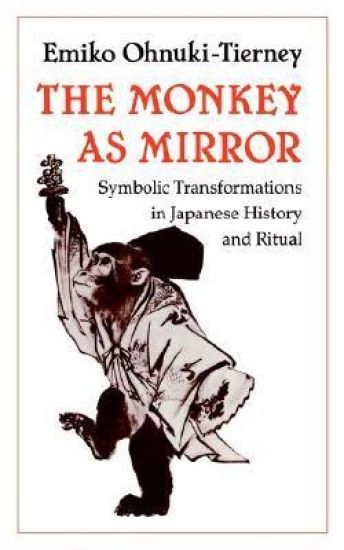
The Monkey as Mirror

The Monkey as Mirror

Emiko Ohnuki-Tierney

Princeton University Press
1989
pokkari
This tripartite study of the monkey metaphor, the monkey performance, and the 'special status' people traces changes in Japanese culture from the eighth century to the present. During early periods of Japanese history the monkey's nearness to the human-animal boundary made it a revered mediator or an animal deity closest to humans. Later it became a scapegoat mocked for its vain efforts to behave in a human fashion. Modern Japanese have begun to see a new meaning in the monkey--a clown who turns itself into an object of laughter while challenging the basic assumptions of Japanese culture and society.
Illness and Culture in Contemporary Japan

Illness and Culture in Contemporary Japan

Emiko Ohnuki-Tierney

Cambridge University Press
1984
pokkari
Health care in contemporary Japan - a modern industrial state with high technology, but a distinctly non-Western cultural tradition - operates on several different levels. In this book Emiko Ohnuki-Tierney provides a detailed and historically informed account of the cultural practices and cultural meaning of health care in urban Japan. In contrast to most ethnomedical studies, this book pays careful attention to everyday hygienic practices and beliefs, as well as presenting a comprehensive picture of formalized medicine, health care aspects of Japanese religions, and biomedicine. These different systems compete with one another at some levels, but are complementary in providing health care to urban Japanese, who often use more than one system simultaneously. As an unequalled portrayal of health care in a modern industrial, but non-Western, setting, it will be of widespread interest to scholars and students of anthropology, medicine, and East Asian studies.