Kirjojen hintavertailu. Mukana 12 290 406 kirjaa ja 12 kauppaa.

Kirjailija

Emilia Philippot

Kirjat ja teokset yhdessä paikassa: 6 kirjaa, julkaisuja vuosilta 2014-2020, suosituimpien joukossa Picasso and Paper. Vertaile teosten hintoja ja tarkista saatavuus suomalaisista kirjakaupoista.

Mukana myös kirjoitusasut: Émilia Philippot

6 kirjaa

Kirjojen julkaisuhaarukka 2014-2020.

Picasso and Paper

Picasso and Paper

Ann Dumas; Emmanuelle Hincelin; Christopher Lloyd; Emilia Philippot; Bill Robinson; Stephen Coppel; Violette Andres

Royal Academy of Arts
2020
nidottu
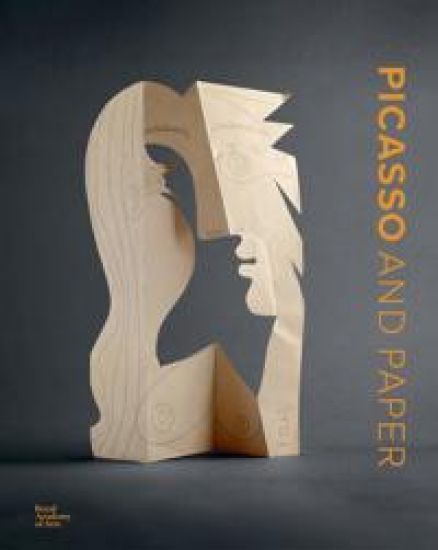
Pablo Picasso's artistic output is astonishing in its ambition and variety. This handsome publication examines a particular aspect of his legendary capacity for invention: his imaginative and original use of paper. He used it as a support for autonomous works, including etchings, prints and drawings, as well as for his papier-collé experiments of the 1910s and his revolutionary three-dimensional 'constructions', made of cardboard, paper and string. Sometimes, his use of paper was simply determined by circumstance: in occupied Paris, where art supplies were hard to come by, he ripped up paper tablecloths to make works of art. And, of course, his works on paper comprise the preparatory stages of some of his very greatest paintings, among them Les Demoiselles d'Avignon (1907) and Guernica (1937). With reproductions of more than 300 works of art and additional texts by Violette Andres, Stephen Coppel, Emmanuelle Hincelin, Christopher Lloyd, Johan Popelard and Claustre Rafart Planas, this sumptuous study reveals the myriad ways in which Picasso's genius seized the potential of paper at different stages throughout his career.
Picasso and Paper

Picasso and Paper

Ann Dumas; Emilia Philippot; William H. Robinson

Royal Academy of Arts
2020
sidottu
Pablo Picasso's artistic output is astonishing in its ambition and variety. This handsome new publication examines a particular aspect of his legendary capacity for invention: his imaginative and original use of paper. He used it as a support for autonomous works, including etchings, prints and drawings, as well as for his papier-collé experiments of the 1910s and his revolutionary three-dimensional 'constructions', made of cardboard, paper and string. Sometimes, his use of paper was simply determined by circumstance: in occupied Paris, where art supplies were hard to come by, he ripped up paper tablecloths to make works of art. And, of course, his works on paper comprise the preparatory stages of some of his very greatest paintings, among them Les Demoiselles d'Avignon (1907) and Guernica (1937). With reproductions of more than 300 works of art and additional texts by Violette Andres, Stephen Coppel, Emmanuelle Hincelin, Christopher Lloyd, Johan Popelard and Claustre Rafart Planas, this sumptuous study reveals the myriad ways in which Picasso's genius seized the potential of paper at different stages throughout his career.
Calder-Picasso

Calder-Picasso

Mariah Coulibaly; Estrella de Diego; Simona Dvorakova; Claire Garnier; Donatien Grau; Chus Martinez; Jordana Mendelson; Jed Perl; Emilia Philippot; Alexander S. C. Rower; Bernard Ruis-Picasso

Editions Skira Paris
2019
sidottu
Olga Picasso

Olga Picasso

Emilia Philippot; Joachim Pissarro; Bernard Ruiz-Picasso

Gallimard
2019
sidottu
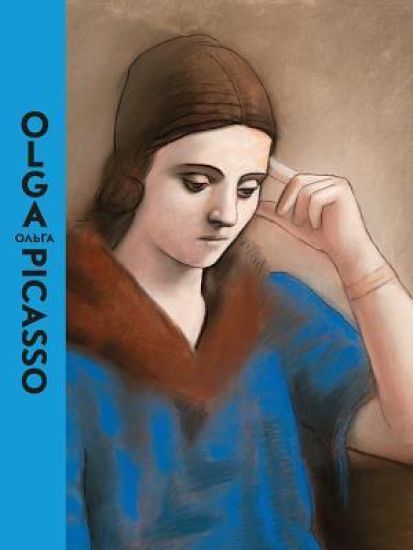
In light of a large selection of previously unpublished personal archives - documents, photographs and films - this title explores Picasso's 'Olga period' by contextualising his work during this period and by questioning the contrast between the subject and its portrayal. A favourite model since their meeting in 1917, Olga Khokhlova, a Russian ballet dancer who married Picasso in July 1918, is the most represented female figure in the artist's work of the late 1910s and 1920s. Picasso renders the ambiguity of his first wife, her beauty, her Ingres-like contours, and her deep, pensive, melancholy, in many of his most famous portraits. The exhibition that this book accompanies brings to light materials conserved by Olga's family until recently, including memorabilia of her life as a dancer, photos of Picasso, their son Paul, and their daily life together, and their travels to Barcelona, Naples, and Monte Carlo.
Romanesque - Picasso

Romanesque - Picasso

Juan Jose Lahuerta; Emilia Philippot

Editorial Tenov S.L.
2017
nidottu
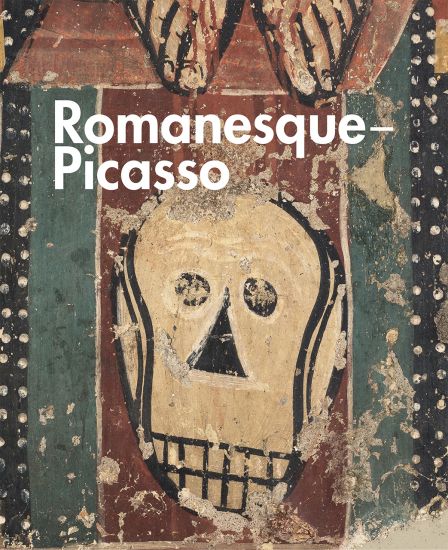
This beautifully illustrated book, the catalog for an exhibition on view at the National Museum of Art of Catalonia in Barcelona and coorganized with the Picasso Museum in Paris, explores important affinities between Picasso and Romanesque art. Using two key moments as starting points, Juan Jose Lahuerta and Emilia Philippot first discuss the summer of 1906, when Picasso stayed in the village of Gosol in the Catalan Pyrenees, and then turn to 1934, as he visited the Romanesque art collections of what is today the National Museum of Art of Catalonia. Picasso's discovery of the Romanesque nurtured his interest in other "primitive" or ethnographic art, later echoed in such decisive works as Les Demoiselles d'Avignon. Importantly, while Lahuerta and Philippot avoid any attempt to trace direct Romanesque influences on Picasso as they note, his work consistently escapes such linear accounts they do demonstrate that Picasso's interest in the twelfth-century sculpture Virgin from Gosol, his lifelong fascination with the theme of the crucifixion, and his study of the skull all reflect elements that were also of major importance in Romanesque art and architecture. What these shared features allow, Lahuerta and Philippot ultimately argue, is not only a richer understanding of Picasso's work, but also a rediscovering and reinvention of Romanesque art in our contemporary moment, causing the medieval to become refreshingly and paradoxically modern.
Picasso's Masterpieces

Picasso's Masterpieces

Virginie Perdrisot; Émilia Philippot; Jeanne-Yvette Sudour; Laure Collignon; Sylvie Fresnault; Nadège Raymond-Clergue

Flammarion
2014
sidottu
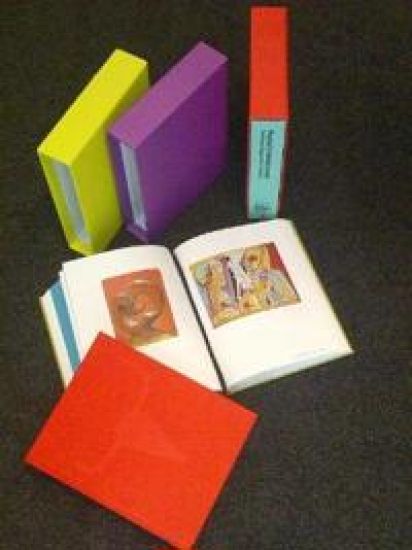
This lavish edition comes in three striking color combinations that will be shipped to customers at random. The Musee Picasso Paris, housed in the magnificent Hotel Sale since 1985, includes more than 5,000 pieces, constituting the finest public collection of the artists works ever assembled. This definitive reference, which features an extensive album showcasing more than 450 of Picassos masterpieces, is arranged chronologically and by theme. It traces every stage in the development of his oeuvre, from the Blue Period to his late portrait The Young Painter (1972). The museums authoritative team provides in-depth essays that examine Picassos paintings, as well as his proficiency in all artistic formsfrom sculpture or ceramics to photography, drawing, and engraving. His personal art collection and ephemera from his private archives provide insight into the great twentieth-century artist himself, and the comprehensive tome is completed with a detailed chronology.The greatest works by prolific artist Picasso are reproduced in this massive cloth-bound volume that features a handsome slipcase, ribbon page marker, and is printed on three types of paper to present the diverse artworks to their best advantage.