Kirjojen hintavertailu. Mukana 12 595 353 kirjaa ja 12 kauppaa.

Kirjailija

Emilie Savage-Smith

Kirjat ja teokset yhdessä paikassa: 5 kirjaa, julkaisuja vuosilta 2007-2019, suosituimpien joukossa Medieval Islamic Medicine. Vertaile teosten hintoja ja tarkista saatavuus suomalaisista kirjakaupoista.

5 kirjaa

Kirjojen julkaisuhaarukka 2007-2019.

Lost Maps of the Caliphs

Lost Maps of the Caliphs

Yossef Rapoport; Emilie Savage-Smith

Bodleian Library
2019
sidottu
About a millennium ago, in Cairo, someone completed a large and richly illustrated book. In the course of thirty-five chapters, our unknown author guided the reader on a journey from the outermost cosmos and planets to Earth and its lands, islands, features and inhabitants. This treatise, known as The Book of Curiosities, was unknown to modern scholars until a remarkable manuscript copy surfaced in 2000. Lost Maps of the Caliphs provides the first general overview of The Book of Curiosities and the unique insight it offers into medieval Islamic thought. Opening with an account of the remarkable discovery of the manuscript and its purchase by the Bodleian Library, the authors use The Book of Curiosities to re-evaluate the development of astrology, geography and cartography in the first four centuries of Islam. Early astronomical ‘maps’ and drawings demonstrate the medieval understanding of the structure of the cosmos and illustrate the pervasive assumption that almost any visible celestial event had an effect upon life on Earth. Lost Maps of the Caliphs also reconsiders the history of global communication networks at the turn of the previous millennium. Not only is The Book of Curiosities one of the greatest achievements of medieval map-making, it is also a remarkable contribution to the story of Islamic civilization.
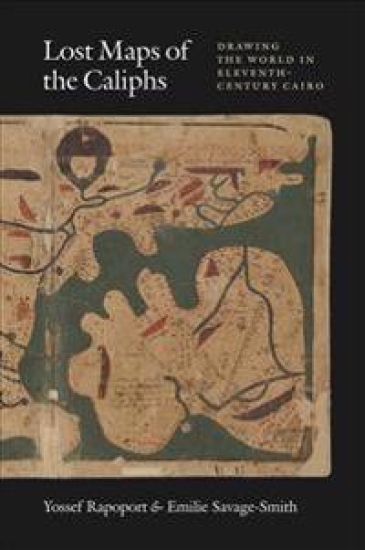
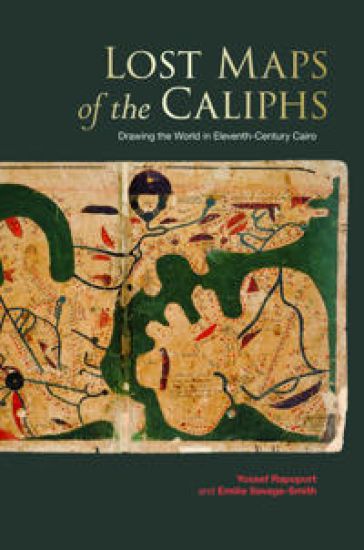
Lost Maps of the Caliphs: Drawing the World in Eleventh-Century Cairo

Lost Maps of the Caliphs: Drawing the World in Eleventh-Century Cairo

Yossef Rapoport; Emilie Savage-Smith

University of Chicago Press
2018
sidottu
About a millennium ago, in Cairo, an unknown author completed a large and richly illustrated book. In the course of thirty-five chapters, this book guided the reader on a journey from the outermost cosmos and planets to Earth and its lands, islands, features, and inhabitants. This treatise, known as The Book of Curiosities, was unknown to modern scholars until a remarkable manuscript copy surfaced in 2000. Lost Maps of the Caliphs provides the first general overview of The Book of Curiosities and the unique insight it offers into medieval Islamic thought. Opening with an account of the remarkable discovery of the manuscript and its purchase by the Bodleian Library, the authors use The Book of Curiosities to re-evaluate the development of astrology, geography, and cartography in the first four centuries of Islam. Their account assesses the transmission of Late Antique geography to the Islamic world, unearths the logic behind abstract maritime diagrams, and considers the palaces and walls that dominate medieval Islamic plans of towns and ports. Early astronomical maps and drawings demonstrate the medieval understanding of the structure of the cosmos and illustrate the pervasive assumption that almost any visible celestial event had an effect upon life on Earth. Lost Maps of the Caliphs also reconsiders the history of global communication networks at the turn of the previous millennium. It shows the Fatimid Empire, and its capital Cairo, as a global maritime power, with tentacles spanning from the eastern Mediterranean to the Indus Valley and the East African coast. As Lost Maps of the Caliphs makes clear, not only is The Book of Curiosities one of the greatest achievements of medieval mapmaking, it is also a remarkable contribution to the story of Islamic civilization that opens an unexpected window to the medieval Islamic view of the world.
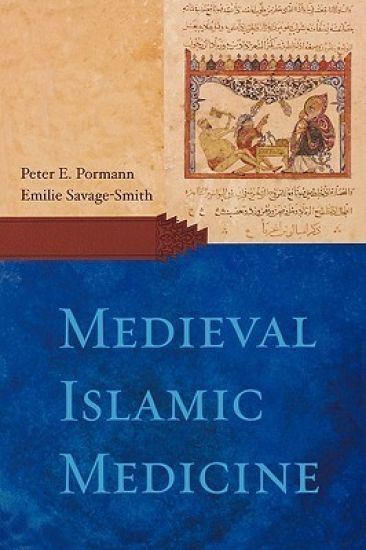
Medieval Islamic Medicine

Medieval Islamic Medicine

Peter E. Pormann; Emilie Savage-Smith

Georgetown University Press
2007
pokkari
The medical tradition that developed in the lands of Islam during the medieval period (c. 650-1500) has, like few others, influenced the fates and fortunes of countless human beings. It is a story of contact and cultural exchange across countries and creeds, affecting many people from kings to the common crowd. This tradition formed the roots from which modern Western medicine arose. Contrary to the stereotypical picture, medieval Islamic medicine was not simply a conduit for Greek ideas, but a venue for innovation and change. Medieval Islamic Medicine is organized around five topics: the emergence of medieval Islamic medicine and its intense crosspollination with other cultures; the theoretical medical framework; the function of physicians within the larger society; medical care as seen through preserved case histories; and the role of magic and devout religious invocations in scholarly as well as everyday medicine. A concluding chapter on the "afterlife" concerns the impact of this tradition on modern European medical practices, and its continued practice today.The book includes an index of persons and their books; a timeline of developments in East and West; and a section on further reading.
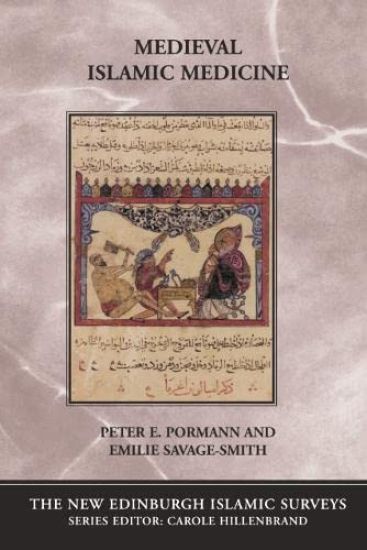
Medieval Islamic Medicine

Medieval Islamic Medicine

Peter Pormann; Emilie Savage-Smith

Edinburgh University Press
2007
sidottu
The medical tradition that developed in the lands of Islam during the medieval period (c. 650--1500) has, like few others, influenced the fates and fortunes of countless human beings. It is the story of contact and cultural exchange across countries and creeds, affecting caliphs, kings, courtiers, courtesans, and the common crowd. In addition to being fascinating in its own right, it formed the roots from which modern Western medicine arose. Contrary to the stereotypical picture, medieval Islamic medicine was not simply a conduit for Greek ideas, but was a locus for innovation and change. The book is organised around five topics: the emergence of medieval Islamic medicine and its intense cross-pollination with other cultures, the theoretical medical framework, the function of physicians within the larger society, the medical care as seen through preserved case histories, and the role of magic and devout religious invocations in scholarly as well as everyday medicine. A concluding chapter on the 'afterlife' concerns the impact of medieval Islamic medicine upon the European medical tradition and its continued practice today. The aim of this book is not to compress the entire history of medieval Islamic medicine into a single small volume. Rather, it presents an overview, highlighted with particular examples.
Medieval Islamic Medicine

Medieval Islamic Medicine

Peter Pormann; Emilie Savage-Smith

Edinburgh University Press
2007
nidottu
The medical tradition that developed in the lands of Islam during the medieval period (c. 650--1500) has, like few others, influenced the fates and fortunes of countless human beings. It is the story of contact and cultural exchange across countries and creeds, affecting caliphs, kings, courtiers, courtesans, and the common crowd. In addition to being fascinating in its own right, it formed the roots from which modern Western medicine arose. Contrary to the stereotypical picture, medieval Islamic medicine was not simply a conduit for Greek ideas, but was a locus for innovation and change. The book is organised around five topics: the emergence of medieval Islamic medicine and its intense cross-pollination with other cultures, the theoretical medical framework, the function of physicians within the larger society, the medical care as seen through preserved case histories, and the role of magic and devout religious invocations in scholarly as well as everyday medicine. A concluding chapter on the 'afterlife' concerns the impact of medieval Islamic medicine upon the European medical tradition and its continued practice today. The aim of this book is not to compress the entire history of medieval Islamic medicine into a single small volume. Rather, it presents an overview, highlighted with particular examples.