Kirjojen hintavertailu. Mukana 12 657 676 kirjaa ja 12 kauppaa.

Kirjailija

Emilio Chuvieco

Kirjat ja teokset yhdessä paikassa: 8 kirjaa, julkaisuja vuosilta 2012-2026, suosituimpien joukossa Working and Caring for Creation. Vertaile teosten hintoja ja tarkista saatavuus suomalaisista kirjakaupoista.

8 kirjaa

Kirjojen julkaisuhaarukka 2012-2026.

Working and Caring for Creation

Working and Caring for Creation

Emilio Chuvieco

TAYLOR FRANCIS LTD
2026
sidottu
This book presents an innovative approach that connects ecotheology and theology of work. It expands on the concept of Christian materialism proposed by Saint Josemaría Escrivá (1902–1975) to overcome dualisms that ignore the spiritual value of material realities. The author broadens Escrivá's vision of sanctifying work, sanctifying oneself in work, and sanctifying others through work to the sanctification of the natural world. Escrivá's vocational reading of Genesis 2:15 grounds the relevance of work for finding God in everyday realities, but also establishes a clear connection between work and creation care. Following this notion, the book looks to extend Escrivá's ideas on the sanctification of work analogically to the sanctification of the natural world. It constructs a theological framework that proposes an earthcaring theology based on the ideas of ‘environmental moral empathy,’ ‘ecological conversion,’ and ‘priest of creation.’ An additional Trinitarian framework is developed along these lines that proposes a new type of work that is co-creative, co-redemptive and co-sanctifying, following the ad-extra attributes of the Father, the Son and the Holy Spirit in their providential care for creation. The volume is particularly relevant to scholars of theology with an interest in both work and the environment.
Fundamentals of Satellite Remote Sensing

Fundamentals of Satellite Remote Sensing

Emilio Chuvieco

TAYLOR FRANCIS LTD
2026
sidottu
The fourth edition of this core textbook in advanced remote sensing continues to be the best guide on satellite-based remote sensing tools and methods for space-based Earth observation, and the use of remote sensing satellite data for studying and monitoring the planet. It is thoroughly updated with information related to new satellite missions from different agencies with particular attention to the new constellations of high-resolution sensors and new field observations for model calibration and validation, including field sensors and drones. The commercialization of remote sensing data with open cloud services and new classifications by AI algorithms and cloud computing services are also discussed. New in the Fourth Edition: Thoroughly revised to include updates in all chapters due to the technological advances in space exploration. Covers new constellations of high-resolution sensors such as Planet, Maxar, Geo-Airbus etc Explains field sensors such as spectro-radiometers, ground lidars and drones Discusses image services including Earthengine and CreoDIAS, as well as public repositories: Copernicus, Earthexplorer, Glovis Provides an introduction to AI algorithms Discusses cloud computing approaches This textbook is for upper-level undergraduate and graduate students taking advanced courses in Remote Sensing and GIS in physical geography, geophysics, engineering, soil and plant sciences, urban planning, etc. It is also an excellent text for researchers and scientists interested in learning techniques and technologies for collecting, analyzing, managing, processing, and visualizing geospatial datasets.
Introduction to Environmental Ethics

Introduction to Environmental Ethics

Emilio Chuvieco; Maria A. Martin

TAYLOR FRANCIS LTD
2025
nidottu
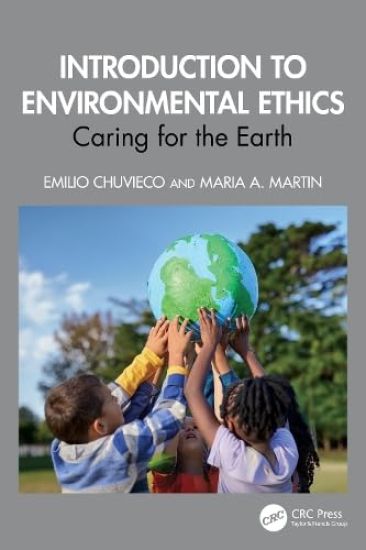
A comprehensive introductory textbook that integrates environmental ethics with social and religious perspectives, this cross-disciplinary approach helps students understand the depth and breadth of environmental issues in a globally relevant way. Environmental problems are explained by ecological, social, ethical, and religious dimensions that inspire environmental conservation. It underlines the reasons why intrinsic values of nature, and those who inhabit it, must be taken into consideration when making decisions that affect them. This book is also intended for those interested in understanding the environmental debate which is a critical component of environmental management.FeaturesPresents the historical review of the environmental movementIntroduces ethical reasoning in environmental problemsExplains environmental ethic approaches and practical implicationsDiscusses the role of religions in nature conservation and Eco-theologyIncludes exercises for reflection in each chapter to stimulate student engagement with environmental issuesThis great textbook gives readers new insight into caring for the environment. It is for undergraduate and graduate students taking courses in environmental studies, geography, sociology, anthropology, and philosophy, as well as professionals in environmental management and environmental policy, and for those interested in environmental issues and the ethics of nature conservation.
Introduction to Environmental Ethics

Introduction to Environmental Ethics

Emilio Chuvieco; Maria A. Martin

TAYLOR FRANCIS LTD
2025
sidottu
A comprehensive introductory textbook that integrates environmental ethics with social and religious perspectives, this cross-disciplinary approach helps students understand the depth and breadth of environmental issues in a globally relevant way. Environmental problems are explained by ecological, social, ethical, and religious dimensions that inspire environmental conservation. It underlines the reasons why intrinsic values of nature, and those who inhabit it, must be taken into consideration when making decisions that affect them. This book is also intended for those interested in understanding the environmental debate which is a critical component of environmental management.FeaturesPresents the historical review of the environmental movementIntroduces ethical reasoning in environmental problemsExplains environmental ethic approaches and practical implicationsDiscusses the role of religions in nature conservation and Eco-theologyIncludes exercises for reflection in each chapter to stimulate student engagement with environmental issuesThis great textbook gives readers new insight into caring for the environment. It is for undergraduate and graduate students taking courses in environmental studies, geography, sociology, anthropology, and philosophy, as well as professionals in environmental management and environmental policy, and for those interested in environmental issues and the ethics of nature conservation.
Fundamentals of Satellite Remote Sensing

Fundamentals of Satellite Remote Sensing

Emilio Chuvieco

TAYLOR FRANCIS LTD
2023
nidottu
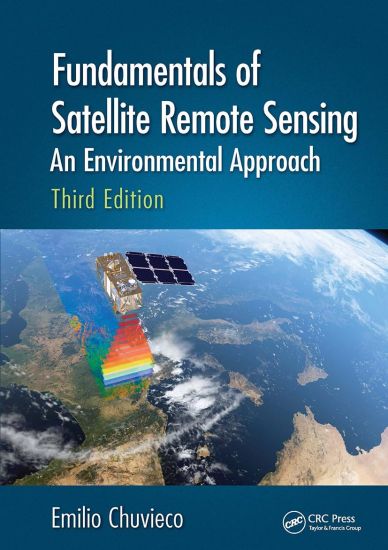
Fundamentals of Satellite Remote Sensing: An Environmental Approach, Third Edition, is a definitive guide to remote sensing systems that focuses on satellite-based remote sensing tools and methods for space-based Earth observation (EO). It presents the advantages of using remote sensing data for studying and monitoring the planet, and emphasizes concepts that make the best use of satellite data. The book begins with an introduction to the basic processes that ensure the acquisition of space-borne imagery, and provides an overview of the main satellite observation systems. It then describes visual and digital image analysis, highlights various interpretation techniques, and outlines their applications to science and management. The latter part of the book covers the integration of remote sensing with Geographic Information System (GIS) for environmental analysis. This latest edition has been written to reflect a global audience and covers the most recent advances incorporated since the publication of the previous book, relating to the acquisition and interpretation of remotely sensed data.New in the Third Edition: Includes additional illustrations in full color. Uses sample images acquired from different ecosystems at different spatial resolutions to illustrate different interpretation techniques. Includes updated EO missions, such as the third generations of geostationary meteorological satellites, the new polar orbiting platforms (Suomi), the ESA Sentinels program, and high-resolution commercial systems. Includes extended coverage of radar and LIDAR processing methods. Includes all new information on near-ground missions, including unmanned aerial vehicles (UAVs). Covers new ground sensors, as well as machine-learning approaches to classification. Adds more focus on land surface characterization, time series, change detection, and ecosystem processes. Extends the interactions of EO data and GIS that cover different environmental problems, with particular relevance to global observation.Fundamentals of Satellite Remote Sensing: An Environmental Approach, Third Edition, details the tools that provide global, recurrent, and comprehensive views of the processes affecting the Earth. As one of CRC’s Essential titles, this book and stands out as one of the best in its field and is a must-have for researchers, academics, students, and professionals involved in the field of environmental science, as well as for libraries developing collections on the forefront of this industry.
Fundamentals of Satellite Remote Sensing
Fundamentals of Satellite Remote Sensing: An Environmental Approach, Third Edition, is a definitive guide to remote sensing systems that focuses on satellite-based remote sensing tools and methods for space-based Earth observation (EO). It presents the advantages of using remote sensing data for studying and monitoring the planet, and emphasizes concepts that make the best use of satellite data. The book begins with an introduction to the basic processes that ensure the acquisition of space-borne imagery, and provides an overview of the main satellite observation systems. It then describes visual and digital image analysis, highlights various interpretation techniques, and outlines their applications to science and management. The latter part of the book covers the integration of remote sensing with Geographic Information System (GIS) for environmental analysis. This latest edition has been written to reflect a global audience and covers the most recent advances incorporated since the publication of the previous book, relating to the acquisition and interpretation of remotely sensed data.New in the Third Edition: Includes additional illustrations in full color. Uses sample images acquired from different ecosystems at different spatial resolutions to illustrate different interpretation techniques. Includes updated EO missions, such as the third generations of geostationary meteorological satellites, the new polar orbiting platforms (Suomi), the ESA Sentinels program, and high-resolution commercial systems. Includes extended coverage of radar and LIDAR processing methods. Includes all new information on near-ground missions, including unmanned aerial vehicles (UAVs). Covers new ground sensors, as well as machine-learning approaches to classification. Adds more focus on land surface characterization, time series, change detection, and ecosystem processes. Extends the interactions of EO data and GIS that cover different environmental problems, with particular relevance to global observation.Fundamentals of Satellite Remote Sensing: An Environmental Approach, Third Edition, details the tools that provide global, recurrent, and comprehensive views of the processes affecting the Earth. As one of CRC’s Essential titles, this book and stands out as one of the best in its field and is a must-have for researchers, academics, students, and professionals involved in the field of environmental science, as well as for libraries developing collections on the forefront of this industry.