Kirjojen hintavertailu. Mukana 12 595 353 kirjaa ja 12 kauppaa.

Kirjailija

Emily Beaulieu

Kirjat ja teokset yhdessä paikassa: 3 kirjaa, julkaisuja vuosilta 2014-2024, suosituimpien joukossa Electoral Protest and Democracy in the Developing World. Vertaile teosten hintoja ja tarkista saatavuus suomalaisista kirjakaupoista.

3 kirjaa

Kirjojen julkaisuhaarukka 2014-2024.

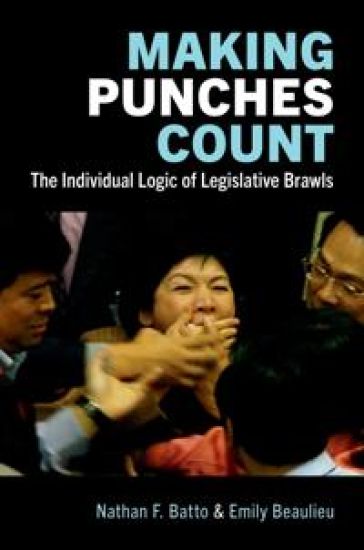
Making Punches Count

Making Punches Count

Nathan F. Batto; Emily Beaulieu

OXFORD UNIVERSITY PRESS INC
2024
nidottu
In Making Punches Count, the first comprehensive account of legislative floor violence and its consequences, Nathan Batto and Emily Beaulieu focus on recent episodes from a wide variety of countries, including Turkey, South Korea, Taiwan, Ukraine, Mexico, Uganda, and others. What do cultures of legislative brawling tell us about the health of democracy in a given country? Are the brawls mere fits of passion, or is there a deeper logic at work? Bacchus and Batto argue that legislative brawls are, in fact, calculated acts that serve the interests of the legislators who engage in them. Beginning from the incentives driving lawmakers in different party systems and drawing on both signaling theory and theories of contentious politics, they develop a powerful explanation of why individual legislators choose to brawl. As they show, brawls are more common in younger democracies, particularly ones with high levels of corruption, but sometimes there are contextual factors that make violence an attractive strategy even to legislators in long-established democracies. Ultimately, brawls should be seen as calculated acts of political violence initiated by legislators to advance their careers. Legislators can strategically use brawling to send costly signals to the actors--both opponents and allies--who will have the most influence over their political fortunes. A genuinely novel account of why conflict can reach such extreme levels in democracies, the book also sheds light on the structural mechanisms that drive politicians to violence in settings where we least expect it.
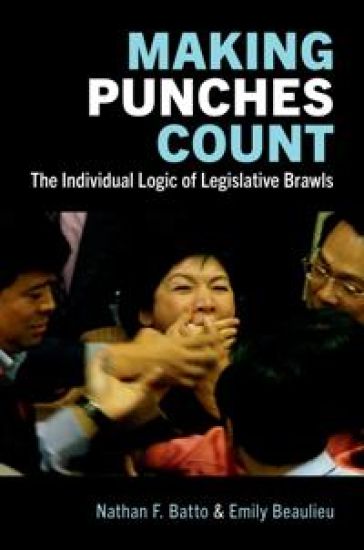
Making Punches Count

Making Punches Count

Nathan F. Batto; Emily Beaulieu

OXFORD UNIVERSITY PRESS INC
2024
sidottu
In Making Punches Count, the first comprehensive account of legislative floor violence and its consequences, Nathan Batto and Emily Beaulieu focus on recent episodes from a wide variety of countries, including Turkey, South Korea, Taiwan, Ukraine, Mexico, Uganda, and others. What do cultures of legislative brawling tell us about the health of democracy in a given country? Are the brawls mere fits of passion, or is there a deeper logic at work? Bacchus and Batto argue that legislative brawls are, in fact, calculated acts that serve the interests of the legislators who engage in them. Beginning from the incentives driving lawmakers in different party systems and drawing on both signaling theory and theories of contentious politics, they develop a powerful explanation of why individual legislators choose to brawl. As they show, brawls are more common in younger democracies, particularly ones with high levels of corruption, but sometimes there are contextual factors that make violence an attractive strategy even to legislators in long-established democracies. Ultimately, brawls should be seen as calculated acts of political violence initiated by legislators to advance their careers. Legislators can strategically use brawling to send costly signals to the actors--both opponents and allies--who will have the most influence over their political fortunes. A genuinely novel account of why conflict can reach such extreme levels in democracies, the book also sheds light on the structural mechanisms that drive politicians to violence in settings where we least expect it.
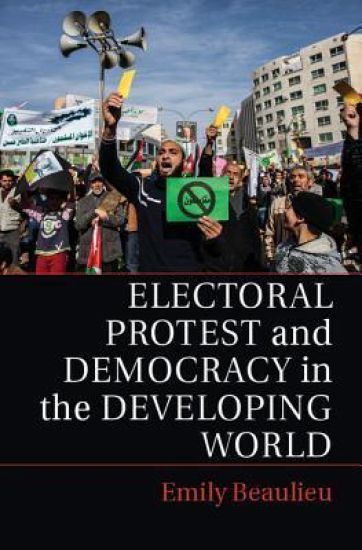
Electoral Protest and Democracy in the Developing World

Electoral Protest and Democracy in the Developing World

Emily Beaulieu

Cambridge University Press
2014
pokkari
This book shows that the third wave of democracy has been accompanied by a worldwide wave of opposition-initiated, election-related protests. Such electoral protests result from a failure on the part of incumbent and opposition elites in the developing world to negotiate acceptable terms of electoral conduct, and their consequences for democracy depend on the context in which they occur. Where election boycotts receive international support, they increase the probability of democratic reform, but where support is primarily domestic, there is a higher probability of authoritarian backsliding. Based on an extensive new data set covering nearly thirty years of electoral protest and election-related reform in the developing world, this book explores the causes of different types of electoral protest and their consequences for democracy. Statistical analysis and case studies provide readers with a complete picture of the dynamics surrounding developing world elections, protest, and democratization.