Kirjojen hintavertailu. Mukana 12 414 830 kirjaa ja 12 kauppaa.

Kirjailija

Emily Dexter

Kirjat ja teokset yhdessä paikassa: 3 kirjaa, julkaisuja vuosilta 2012-2026, suosituimpien joukossa Locusta (The Poisoned Empire Duology, Book 1). Vertaile teosten hintoja ja tarkista saatavuus suomalaisista kirjakaupoista.

3 kirjaa

Kirjojen julkaisuhaarukka 2012-2026.

Locusta (The Poisoned Empire Duology, Book 1)
Circe meets The Lost Apothecary in this sapphic romantasy duology featuring Ancient Rome’s most infamous poisoner who changed the course of history to save the woman she loved. Born in the ancient region of Gaul, Locusta is the last of her kind—a Druid whose communion with the spirit world grants her the dangerous gift of identifying and wielding deadly substances. When Roman soldiers attack her home and slaughter her mother, Locusta is captured and enslaved, taken to the heart of the empire where political plots abound and death commands a high price. Guided by Arawn, the god of death, she must learn to survive within the brutal, glittering world of ancient Rome. Her strange talents soon catch the attention of the Roman elite, and she becomes ensnared in a double life—poisoner by night for the cunning Domina Decima, and lady-in-waiting by day to Livia, the Emperor’s ambitious niece. As Locusta plants the seeds of revenge against those who destroyed her home, her connection with Livia deepens into a passionate, forbidden romance that threatens them both. Surrounded by danger and deceit, Locusta’s poisons become their only protection against the increasingly unstable Emperor Caligula and the enemies lurking in every shadow. A sweeping historical romantasy, Locusta reimagines the rise of one of history’s most complex women through a lens of myth, power, and feminine rage. Rich with ruthless twists, deadly magic, and a sapphic love story that burns from sweet to spicy, this is a story of survival, defiance, and the dangerous alchemy of love and death in a world ruled by men.
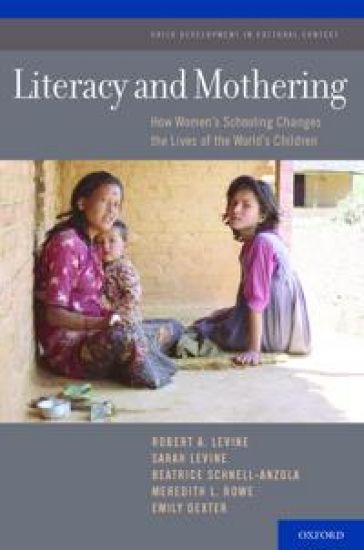
Literacy and Mothering

Literacy and Mothering

Robert A. LeVine; Sarah LeVine; Beatrice Schnell-Anzola; Meredith L. Rowe; Emily Dexter

Oxford University Press Inc
2016
nidottu
Women's schooling is strongly related to child survival and other outcomes beneficial to children throughout the developing world, but the reasons behind these statistical connections have been unclear. In Literacy and Mothering, the authors show, for the first time, how communicative change plays a key role: Girls acquire academic literacy skills, even in low-quality schools, which enable them, as mothers, to understand public health messages in the mass media and to navigate bureaucratic health services effectively, reducing risks to their children's health. With the acquisition of academic literacy, their health literacy and health navigation skills are enhanced, thereby reducing risks to children and altering interactions between mother and child. Assessments of these maternal skills in four diverse countries - Mexico, Nepal, Venezuela, and Zambia - support this model and are presented in the book. Chapter 1 provides a brief history of mass schooling, including the development of a bureaucratic Western form of schooling. Along with the bureaucratic organization of healthcare services and other institutions, this form of mass schooling spread across the globe, setting new standards for effective communication - standards that are, in effect, taught in school. Chapter 2 reviews the demographic and epidemiological evidence concerning the effects of mothers' education on survival, health, and fertility. In this chapter, the authors propose a model that shows how women's schooling, together with urbanization and changes in income and social status, reduce child mortality and improve health. In Chapter 3, the authors examine the concept of literacy and discuss how its meanings and measurements have been changed by educational research of the last few decades. Chapter 4 introduces the four-country study of maternal literacy. Chapters 5, 6, and 7 present the findings, focusing on academic literacy and its retention (Chapter 5), its impact on maternal health literacy and navigation skills (Chapter 6), and changes in mother-child interaction and child literacy skills (Chapter 7). Chapter 8 presents a new analysis of school experience, explores policy implications, and recommends further research.
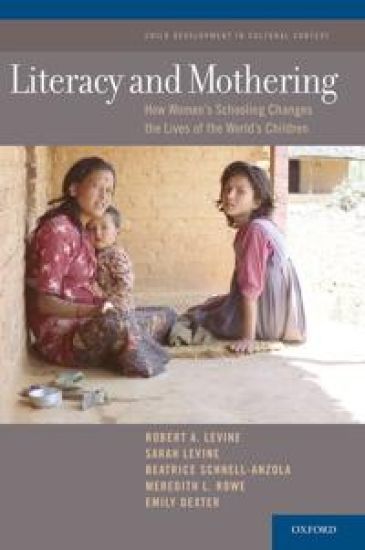
Literacy and Mothering

Literacy and Mothering

Robert A. LeVine; Sarah LeVine; Beatrice Schnell-Anzola; Meredith L. Rowe; Emily Dexter

Oxford University Press Inc
2012
sidottu
Women's schooling is strongly related to child survival and other outcomes beneficial to children throughout the developing world, but the reasons behind these statistical connections have been unclear. In Literacy and Mothering, the authors show, for the first time, how communicative change plays a key role: Girls acquire academic literacy skills, even in low-quality schools, which enable them, as mothers, to understand public health messages in the mass media and to navigate bureaucratic health services effectively, reducing risks to their children's health. With the acquisition of academic literacy, their health literacy and health navigation skills are enhanced, thereby reducing risks to children and altering interactions between mother and child. Assessments of these maternal skills in four diverse countries - Mexico, Nepal, Venezuela, and Zambia - support this model and are presented in the book. Chapter 1 provides a brief history of mass schooling, including the development of a bureaucratic Western form of schooling. Along with the bureaucratic organization of healthcare services and other institutions, this form of mass schooling spread across the globe, setting new standards for effective communication - standards that are, in effect, taught in school. Chapter 2 reviews the demographic and epidemiological evidence concerning the effects of mothers' education on survival, health, and fertility. In this chapter, the authors propose a model that shows how women's schooling, together with urbanization and changes in income and social status, reduce child mortality and improve health. In Chapter 3, the authors examine the concept of literacy and discuss how its meanings and measurements have been changed by educational research of the last few decades. Chapter 4 introduces the four-country study of maternal literacy. Chapters 5, 6, and 7 present the findings, focusing on academic literacy and its retention (Chapter 5), its impact on maternal health literacy and navigation skills (Chapter 6), and changes in mother-child interaction and child literacy skills (Chapter 7). Chapter 8 presents a new analysis of school experience, explores policy implications, and recommends further research.