Kirjojen hintavertailu. Mukana 12 142 147 kirjaa ja 12 kauppaa.

Kirjailija

Emily Greble

Kirjat ja teokset yhdessä paikassa: 4 kirjaa, julkaisuja vuosilta 2011-2026, suosituimpien joukossa Tito and His Comrades. Vertaile teosten hintoja ja tarkista saatavuus suomalaisista kirjakaupoista.

4 kirjaa

Kirjojen julkaisuhaarukka 2011-2026.

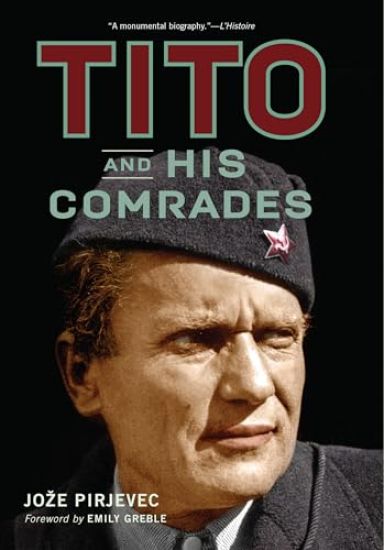
Tito and His Comrades

Tito and His Comrades

Jože Pirjevec; Emily Greble

UNIVERSITY OF WISCONSIN PRESS
2026
nidottu
Josip Broz (1892–1980), nicknamed Tito, led Yugoslavia for nearly four decades with charisma, cunning, and an iron fist. A leader of the non-aligned nations, he and his Partisans fought Hitler during World War II and resisted the Soviet Union's postwar grasp, and he long enjoyed a reputation in the West as "the only good Communist" despite a dubious human rights record at home. Jože Pirjevec employs impressive research from archives in eight languages to offer this illuminating portrait of one of the most powerful figures of the Cold War era. This edition includes a foreword by Emily Greble that reveals the life and legacy of a complex man in turbulent times.
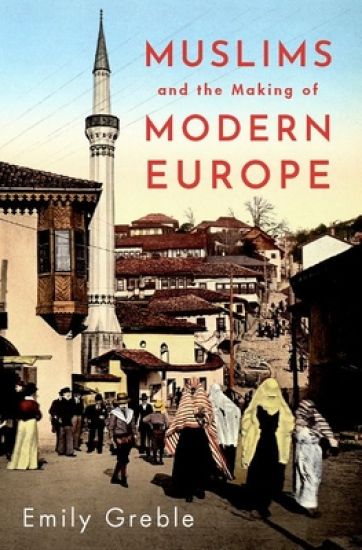
Muslims and the Making of Modern Europe

Muslims and the Making of Modern Europe

Emily Greble

Oxford University Press Inc
2022
sidottu
Muslims and the Making of Modern Europe shows that Muslims were citizens of modern Europe from its beginning and, in the process, rethinks Europe itself. Muslims are neither newcomers nor outsiders in Europe. In the twentieth century, they have been central to the continent's political development and the evolution of its traditions of equality and law. From 1878 into the period following World War II, over a million Ottoman Muslims became citizens of new European states. In Muslims and the Making of Modern Europe, Emily Greble follows the fortunes and misfortunes of several generations of these indigenous men, women and children; merchants, peasants, and landowners; muftis and preachers; teachers and students; believers and non-believers from seaside port towns on the shores of the Adriatic to mountainous villages in the Balkans. Drawing on a wide range of archives from government ministries in state capitals to madrasas in provincial towns, Greble uncovers Muslims' negotiations with state authorities--over the boundaries of Islamic law, the nature of religious freedom, and the meaning of minority rights. She shows how their story is Europe's story: Muslims navigated the continent's turbulent passage from imperial order through the interwar political experiments of liberal democracy and authoritarianism to the ideological programs of fascism, socialism, and communism. In doing so, they shaped the grand narratives upon which so much of Europe's fractious present now rests. Muslims and the Making of Modern Europe offers a striking new account of the history of citizenship and nation-building, the emergence of minority rights, and the character of secularism.
Tito and His Comrades

Tito and His Comrades

Jože Pirjevec; Emily Greble

University of Wisconsin Press
2018
sidottu
This landmark biography reveals the life of one of the most powerful figures of the Cold War era. Josip Broz (1892–1980), nicknamed Tito, led Yugoslavia for nearly four decades with charisma, cunning, and an iron fist.With his Partisans he fought Hitler during World War II, and after the war he shrewdly resisted the Soviet Union's grasp. A leader of the non-aligned nations, he long enjoyed a reputation in the West as ""the only good Communist"" despite a dubious human rights record at home. Jože Pirjevec employs impressive research from archives in eight languages to offer this illuminating, definitive portrait of a complex man in turbulent times.Pirjevec recounts how Tito, with little schooling but an astute intellect and driving ambition, rose through Communist Party ranks to shape and rule the Yugoslav federation. Surviving multiple assassination attempts by Nazis, Soviet spies, and others, Tito boldly threatened Stalin in return and may have, Pirjevec reveals, contrived Stalin's death. The narrative follows Tito's personal and political life into old age, as the specter of a Soviet invasion haunted him until his death at age eighty-seven. Available in English for the first time, this edition includes new material from Pirjevec and a foreword by Emily Greble.
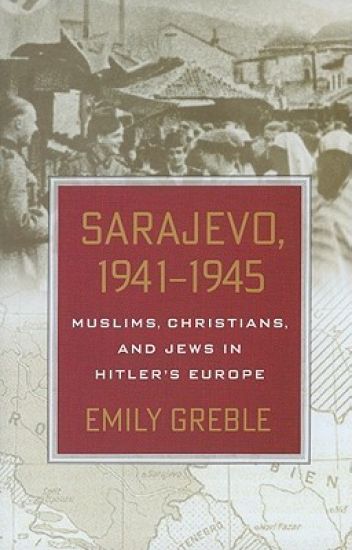
Sarajevo, 1941–1945

Sarajevo, 1941–1945

Emily Greble

Cornell University Press
2011
sidottu
On April 15, 1941, Sarajevo fell to Germany's 16th Motorized Infantry Division. The city, along with the rest of Bosnia, was incorporated into the Independent State of Croatia, one of the most brutal of Nazi satellite states run by the ultranationalist Croat Ustasha regime. The occupation posed an extraordinary set of challenges to Sarajevo's famously cosmopolitan culture and its civic consciousness; these challenges included humanitarian and political crises and tensions of national identity. As detailed for the first time in Emily Greble's book, the city's complex mosaic of confessions (Catholic, Orthodox, Muslim, Jewish) and ethnicities (Croat, Serb, Jew, Bosnian Muslim, Roma, and various other national minorities) began to fracture under the Ustasha regime's violent assault on "Serbs, Jews, and Roma"—contested categories of identity in this multiconfessional space—tearing at the city's most basic traditions. Nor was there unanimity within the various ethnic and confessional groups: some Catholic Croats detested the Ustasha regime while others rode to power within it; Muslims quarreled about how best to position themselves for the postwar world, and some cast their lot with Hitler and joined the ill-fated Muslim Waffen SS. In time, these centripetal forces were complicated by the Yugoslav civil war, a multisided civil conflict fought among Communist Partisans, Chetniks (Serb nationalists), Ustashas, and a host of other smaller groups. The absence of military conflict in Sarajevo allows Greble to explore the different sides of civil conflict, shedding light on the ways that humanitarian crises contributed to civil tensions and the ways that marginalized groups sought political power within the shifting political system. There is much drama in these pages: In the late days of the war, the Ustasha leaders, realizing that their game was up, turned the city into a slaughterhouse before fleeing abroad. The arrival of the Communist Partisans in April 1945 ushered in a new revolutionary era, one met with caution by the townspeople. Greble tells this complex story with remarkable clarity. Throughout, she emphasizes the measures that the city's leaders took to preserve against staggering odds the cultural and religious pluralism that had long enabled the city's diverse populations to thrive together.