Kirjojen hintavertailu. Mukana 12 595 353 kirjaa ja 12 kauppaa.

Kirjailija

Emily Noyes Vanderpoel

Kirjat ja teokset yhdessä paikassa: 7 kirjaa, julkaisuja vuosilta 2007-2025, suosituimpien joukossa American Lace and Lace-Makers. Vertaile teosten hintoja ja tarkista saatavuus suomalaisista kirjakaupoista.

7 kirjaa

Kirjojen julkaisuhaarukka 2007-2025.

Emily Vanderpoel's Color Problems

Emily Vanderpoel's Color Problems

Emily Noyes Vanderpoel

READ BOOKS
2024
pokkari
A key publication on colour theory from a pioneering female scientist, this unique work explores the world of colour, reimagining foundational theories for practical use in the fields of art, science, and design.First published in 1902, Color Problems is a seminal work of Emily Noyes Vanderpoel, a pioneering artist, scientist, and scholar. Developing the colour theories established by Newton, Goethe, and their later compeers, Chevruel and Rood, this unique guide presents accessible colour science to appeal across the disciplines, breaking down key ideas in a series of experimental and visually stunning illustrations.While underappreciated in its time, Vanderpoel's expressions of colour not only changed the face of colour science but also anticipated major developments in modern art by nearly half a century, becoming influential for abstract artists like Josef Albers and the Bauhaus School of Art.A proud addition to the Art Meets Science collection, Color Problems is a key text for those studying colour theory or interested in colour application and its history. This facsimile edition features Vanderpoel's original text and illustrations in a testament to her emotionally evocative work in the fields of both art and science.
Emily Vanderpoel's Color Problems

Emily Vanderpoel's Color Problems

Emily Noyes Vanderpoel

READ BOOKS
2024
sidottu
A key publication on colour theory from a pioneering female scientist, this unique work explores the world of colour, reimagining foundational theories for practical use in the fields of art, science, and design.First published in 1902, Color Problems is a seminal work of Emily Noyes Vanderpoel, a pioneering artist, scientist, and scholar. Developing the colour theories established by Newton, Goethe, and their later compeers, Chevruel and Rood, this unique guide presents accessible colour science to appeal across the disciplines, breaking down key ideas in a series of experimental and visually stunning illustrations.While underappreciated in its time, Vanderpoel's expressions of colour not only changed the face of colour science but also anticipated major developments in modern art by nearly half a century, becoming influential for abstract artists like Josef Albers and the Bauhaus School of Art.A proud addition to the Art Meets Science collection, Color Problems is a key text for those studying colour theory or interested in colour application and its history. This facsimile edition features Vanderpoel's original text and illustrations in a testament to her emotionally evocative work in the fields of both art and science.
Color Problems

Color Problems

Emily Noyes Vanderpoel

Sacred Bones
2018
pokkari
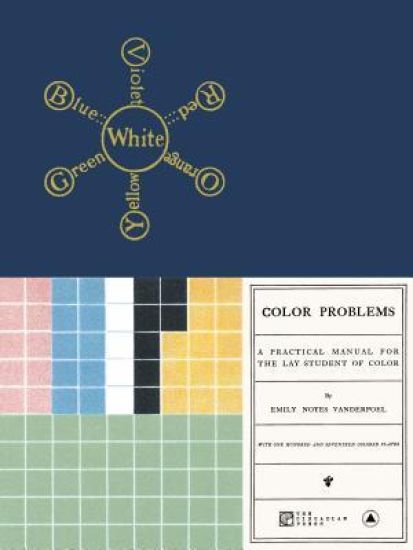
Emily Noyes Vanderpoel (1842-1939) was an artist, collector, scholar, and historian working at the dawn of the 20th century. Her first and most prominent work, Color Problems: A Practical Manual for the Lay Student of Color, provides a comprehensive overview of the main ideas of color theory at the time, as well as her wildly original approaches to color analysis and interaction. Through a 21st century lens, she appears to stumble upon midcentury design and minimalism decades prior to those movements. Presenting her work as a painting manual under the guise and genre of flower painting and the decorative arts-- subjects considered "appropriate" for a woman of her time--she was able to present a thoroughly studied, yet uniquely poetic, approach to color theory that was later taken up and popularized by men and became ubiquitous in contemporary art departments. Her remarkable inventiveness shines in a series of gridded squares, each 10 x 10, that analyze the proportions of color derived from actual objects: Assyrian tiles, Persian rugs, an Egyptian mummy case, and even a teacup and saucer. Vanderpoel had a deep knowledge of ceramics and analyzed many pieces from her personal collection. She leaves her process relatively mysterious but what is clear, as historian and science blogger John Ptak notes, is that Vanderpoel "sought not so much to analyze the components of color itself, but rather to quantify the overall interpretative effect of color on the imagination".