

Kirjailija
Emily West
Kirjat ja teokset yhdessä paikassa: 7 kirjaa, julkaisuja vuosilta 2004-2026, suosituimpien joukossa The missing pendant. Vertaile teosten hintoja ja tarkista saatavuus suomalaisista kirjakaupoista.
7 kirjaa
Kirjojen julkaisuhaarukka 2004-2026.


How Amazon combined branding and relationship marketing with massive distribution infrastructure to become the ultimate service brand in the digital economy. Amazon is ubiquitous in our daily lives--we stream movies and television on Amazon Prime Video, converse with Alexa, receive messages on our smartphone about the progress of our latest orders. In Buy Now, Emily West examines Amazon's consumer-facing services to investigate how Amazon as a brand grew so quickly and inserted itself into so many aspects of our lives even as it faded into the background, becoming a sort of infrastructure that can be taken for granted. Amazon promotes the comfort and care of its customers (but not its workers) to become the ultimate service brand in the digital economy. West shows how Amazon has cultivated personalized, intimate relationships with consumers that normalize its outsized influence on our selves and our communities. She describes the brand's focus on speedy and seamless ecommerce delivery, represented in the materiality of the branded brown box; the positioning of its book retailing, media streaming, and smart speakers as services rather than sales; and the brand's image control strategies. West considers why pushback against Amazon's ubiquity and market power has come mainly from among Amazon's workers rather than its customers or competitors, arguing that Amazon's brand logic fragments consumers as a political bloc. West's innovative account, the first to examine Amazon from a critical media studies perspective, offers a cautionary cultural study of bigness in today's economy.

More than a century after Emancipation, no comprehensive overview of the history of the female American slave exists. In this book, historian Emily West offers the first comprehensive overview of the lives of enslaved women in America by placing their stories within the broader context of slavery in this country from the colonial era through to the end of the Civil War. She compares the lives of enslaved women with the lives of enslaved men from the same period, and with the white men and women who unjustly held them in bondage. West’s thorough research and eye for detail construct a narrative of the enslaved woman’s life, giving voice to and revealing the significance of a singularly strong but largely overlooked member of early American society.
In the antebellum South, the presence of free people of color was problematic to the white population. Not only were they possible assistants to enslaved people and potential members of the labor force; their very existence undermined popular justifications for slavery. It is no surprise that, by the end of the Civil War, nine Southern states had enacted legal provisions for the "voluntary" enslavement of free blacks. What is surprising to modern sensibilities and perplexing to scholars is that some individuals did petition to rescind their freedom. Family or Freedom investigates the incentives for free African Americans living in the antebellum South to sacrifice their liberty for a life in bondage. Author Emily West looks at the many factors influencing these dire decisions -- from desperate poverty to the threat of expulsion -- and demonstrates that the desire for family unity was the most important consideration for African Americans who submitted to voluntary enslavement. The first study of its kind to examine the phenomenon throughout the South, this meticulously researched volume offers the most thorough exploration of this complex issue to date.

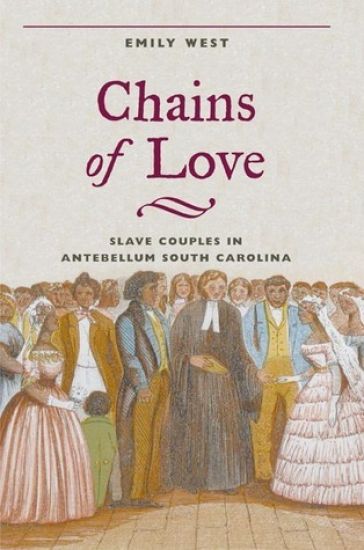
Historians have traditionally neglected relationships between slave men and women during the antebellum period. In Chains of Love, historian Emily West remedies this situation by investigating the social and cultural history of slave relationships in the very heart of the South. Focusing on South Carolina, West deals directly with the most intimate areas of the slave experience including courtship, love and affection between spouses, the abuse of slave women by white men, and the devastating consequences of forced separations. Slaves fought these separations through cross-gender bonding and cross-plantation marriages, illustrating West's thesis about slave marriage as a fierce source of resistance to the oppression of slavery in general. Making expert use of sources such as the Works Progress Administration narratives, slave autobiographies, slave owner records, and church records, this book-length study is the first to focus on the primacy of spousal support as a means for facing oppression. Chains of Love provides telling insights into the nature of the slave family that emerged from these tensions, celebrates its strength, and reveals new dimensions to the slaves' struggle for freedom.