Kirjojen hintavertailu. Mukana 12 390 323 kirjaa ja 12 kauppaa.

Kirjailija

Emma Dabiri

Kirjat ja teokset yhdessä paikassa: 9 kirjaa, julkaisuja vuosilta 2020-2026, suosituimpien joukossa Tavares Strachan. Vertaile teosten hintoja ja tarkista saatavuus suomalaisista kirjakaupoista.

9 kirjaa

Kirjojen julkaisuhaarukka 2020-2026.

Tavares Strachan

Tavares Strachan

Michele Robecchi; Gavin Delahunty; Emma Dabiri

PHAIDON PRESS LTD
2026
nidottu
The first comprehensive monograph on groundbreaking neo-conceptual artist Tavares Strachan, whose diverse practice speaks powerfully to today’s cultural climate Tavares Strachan is arguably one of the most important artists working today. His open-ended practice offers distinctive points of view on a broad range of urgent social and political themes: archaeology, history, geography, music, science, and extreme climatology are only a few of the subjects he has explored to create allegorical exhibitions that tell of colonialism and cultural displacement, human aspiration, mortal limitation, and the space race. Strachan’s extensively researched projects are often monumental in scale and scope. Created in collaboration with thought leaders and organizations across a wide spectrum of fields, his projects are also expansive in reach – The First Supper, Strachan’s massive sculpture at London’s Royal Academy, was one of the most popular art pieces exhibited in 2024. In his birthplace Nassau, Strachan established the scientific research platform BASEC (Bahamas Aerospace and Sea Exploration Center). In 2018, in collaboration with LACMA, Strachan launched ENOCH, a 3-U satellite bringing to light the forgotten story of Robert Henry Lawrence Jr., the first Black astronaut to be selected for any national space program. ENOCH circled the earth for three years in a sun-synchronous orbit before re-entering on December 2021. This timely monograph, created in close collaboration with the artist, reveals the breadth and impact of Strachan’s work. Part of Phaidon’s acclaimed Contemporary Artists Series, the book includes a conversation with Strachan; text contributions from writers and experts including Emma Dabiri, Gavin Delahunty, and Michele Robecchi; a studio visit with specially commissioned photography; and a comprehensive chronology of Strachan’s career.
The Line

The Line

The Line; Megan Piper; Sarah Carrington; c.f. prior; Gus Casely-Hayford; Emma Dabiri; Andrew Jones; Jes Fernie

Monacelli Press
2025
sidottu
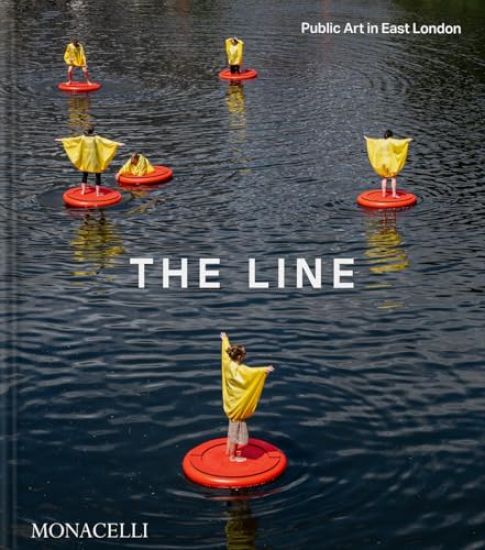
Take a journey along The Line, East London’s innovative outdoor art trail featuring world-renowned contemporary artists The Line has transformed East London’s urban landscape into a dynamic cultural corridor. Spanning nearly 8 kilometres (4.8 miles), the outdoor public art trail features monumental sculptures, intimate installations, and an evolving programme, offering a world-class contemporary art experience on a free and daily basis. Celebrating The Line’s 10th anniversary, The Line: Public Art in East London replicates the unique experience of exploring its groundbreaking public art programme. Across more than 200 pages, readers will journey through the iconic neighbourhoods of Queen Elizabeth Olympic Park, The O2 arena, and the waterways that connect three London boroughs. This beautifully illustrated book presents work by 35 international artists, including Antony Gormley, Tracey Emin, Thomas J Price, Rasheed Araeen, Rana Begum, and Helen Cammock. More than 150 colour photographs – from eye-level images of the installations to spectacular aerial drone shots – contextualize The Line’s natural and industrial environs, creating an immersive homage to this inspiring public art walk.
Disobedient Bodies

Disobedient Bodies

Emma Dabiri

Profile Books Ltd
2023
pokkari
An unmissable essay from the Sunday Times bestselling author of Don't Touch My Hair and What White People Can Do Next 'A magnificent text' KATY HESSEL 'This is so sharp, and funny, and will be so generously liberating for so many - read it!' KATHERINE RUNDELL 'A must-read' PSYCHOLOGIES For too long, beauty has been entangled in the forces of patriarchy and capitalism: objectification, shame, control, competition and consumerism. We need to find a way to do beauty differently. This radical, deeply personal and empowering essay points to ways we can all embrace our unruly beauty and enjoy our magnificent, disobedient bodies. 'This call to joyful disobedience is proof that Dabiri is one of our most important thinkers and writers ... Fresh, new and important' IRISH TIMES 'Radical, incisive, thoughtful ... I can't recommend enough' VICKY SPRATT
What White People Can Do Next: From Allyship to Coalition
INTERNATIONAL BESTSELLERIn the spirit of We Should All Be Feminists and How to Be an Antiracist, a poignant and sensible guide to questioning the meaning of whiteness and creating an antiracist world from the acclaimed historian and author of Twisted. Vital and empowering What White People Can Do Next teaches each of us how to be agents of change in the fight against racism and the establishment of a more just and equitable world. In this affecting and inspiring collection of essays, Emma Dabiri draws on both academic discipline and lived experience to probe the ways many of us are complacent and complicit--and can therefore combat--white supremacy. She outlines the actions we must take, including: Stop the Denial Interrogate Whiteness Abandon Guilt Redistribute Resources Realize this shit is killing you too . . . To move forward, we must begin to evaluate our prejudices, our social systems, and the ways in which white supremacy harms us all. Illuminating and practical, What White People Can Do Next is essential for everyone who wants to go beyond their current understanding and affect real--and lasting--change.
What White People Can Do Next Lib/E: From Allyship to Coalition
INTERNATIONAL BESTSELLERIn the spirit of We Should All Be Feminists and How to Be an Antiracist, a poignant and sensible guide to questioning the meaning of whiteness and creating an antiracist world from the acclaimed historian and author of Twisted. Vital and empowering What White People Can Do Next teaches each of us how to be agents of change in the fight against racism and the establishment of a more just and equitable world. In this affecting and inspiring collection of essays, Emma Dabiri draws on both academic discipline and lived experience to probe the ways many of us are complacent and complicit--and can therefore combat--white supremacy. She outlines the actions we must take, including: Stop the Denial Interrogate Whiteness Abandon Guilt Redistribute Resources Realize this shit is killing you too . . . To move forward, we must begin to evaluate our prejudices, our social systems, and the ways in which white supremacy harms us all. Illuminating and practical, What White People Can Do Next is essential for everyone who wants to go beyond their current understanding and affect real--and lasting--change.
What White People Can Do Next: From Allyship to Coalition
INTERNATIONAL BESTSELLERIn the spirit of We Should All Be Feminists and How to Be an Antiracist, a poignant and sensible guide to questioning the meaning of whiteness and creating an antiracist world from the acclaimed historian and author of Twisted.Vital and empowering What White People Can Do Next teaches each of us how to be agents of change in the fight against racism and the establishment of a more just and equitable world. In this affecting and inspiring collection of essays, Emma Dabiri draws on both academic discipline and lived experience to probe the ways many of us are complacent and complicit--and can therefore combat--white supremacy. She outlines the actions we must take, including: Stop the DenialInterrogate WhitenessAbandon GuiltRedistribute ResourcesRealize this shit is killing you too . . . To move forward, we must begin to evaluate our prejudices, our social systems, and the ways in which white supremacy harms us all. Illuminating and practical, What White People Can Do Next is essential for everyone who wants to go beyond their current understanding and affect real--and lasting--change.
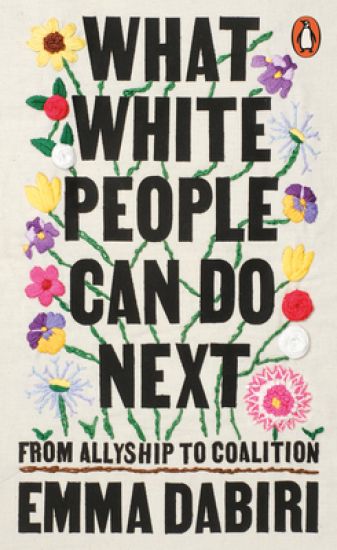
What White People Can Do Next

What White People Can Do Next

Emma Dabiri

PENGUIN BOOKS LTD
2021
pokkari
THE SUNDAY TIMES AND IRISH TIMES BESTSELLER 'An absolute blockbuster of clear thinking and new angles...the most clear, alliance building, shame removing look at race. Emma is once-in-a generation clever' Caitlin MoranWe need to talk about racial injustice in a different way: one that builds on the revolutionary ideas of the past and forges new connections. In this incisive, radical and practical essay, Emma Dabiri - acclaimed author of Don't Touch My Hair - draws on years of research and personal experience to challenge us to create meaningful, lasting change. 'Impactful . . . Emma expertly outlines how the idea of race was constructed to bolster capitalism and explains how, in a divided world, unity and coalition are needed to create a future that works for everyone' Cosmopolitan
Twisted: The Tangled History of Black Hair Culture
A Kirkus Best Book of the YearStamped from the Beginning meets You Can't Touch My Hair in this timely and resonant essay collection from Guardian contributor and prominent BBC race correspondent Emma Dabiri, exploring the ways in which black hair has been appropriated and stigmatized throughout history, with ruminations on body politics, race, pop culture, and Dabiri's own journey to loving her hair.Emma Dabiri can tell you the first time she chemically straightened her hair. She can describe the smell, the atmosphere of the salon, and her mix of emotions when she saw her normally kinky tresses fall down her shoulders. For as long as Emma can remember, her hair has been a source of insecurity, shame, and--from strangers and family alike--discrimination. And she is not alone. Despite increasingly liberal world views, black hair continues to be erased, appropriated, and stigmatized to the point of taboo. Through her personal and historical journey, Dabiri gleans insights into the way racism is coded in society's perception of black hair--and how it is often used as an avenue for discrimination. Dabiri takes us from pre-colonial Africa, through the Harlem Renaissance, and into today's Natural Hair Movement, exploring everything from women's solidarity and friendship, to the criminalization of dreadlocks, to the dubious provenance of Kim Kardashian's braids. Through the lens of hair texture, Dabiri leads us on a historical and cultural investigation of the global history of racism--and her own personal journey of self-love and finally, acceptance. Deeply researched and powerfully resonant, Twisted proves that far from being only hair, black hairstyling culture can be understood as an allegory for black oppression and, ultimately, liberation.
Don't Touch My Hair

Don't Touch My Hair

Emma Dabiri

Penguin Books Ltd
2020
pokkari
'Groundbreaking . . . a scintillating, intellectual investigation into black women and the very serious business of our hair, as it pertains to race, gender, social codes, tradition, culture, cosmology, maths, politics, philosophy and history' Bernardine Evaristo Straightened. Stigmatized. 'Tamed'. Celebrated. Erased. Managed. Appropriated. Forever misunderstood. Black hair is never 'just hair'.This book is about why black hair matters and how it can be viewed as a blueprint for decolonisation. Over a series of wry, informed essays, Emma Dabiri takes us from pre-colonial Africa, through the Harlem Renaissance, Black Power and on to today's Natural Hair Movement, the Cultural Appropriation Wars and beyond. We look everything from hair capitalists like Madam C.J. Walker in the early 1900s to the rise of Shea Moisture today, from women's solidarity and friendship to 'black people time', forgotten African scholars and the dubious provenance of Kim Kardashian's braids.The scope of black hairstyling ranges from pop culture to cosmology, from prehistoric times to the (afro)futuristic. Uncovering sophisticated indigenous mathematical systems in black hairstyles, alongside styles that served as secret intelligence networks leading enslaved Africans to freedom, Don't Touch My Hair proves that far from being only hair, black hairstyling culture can be understood as an allegory for black oppression and, ultimately, liberation.