Kirjojen hintavertailu. Mukana 12 390 323 kirjaa ja 12 kauppaa.

Kirjailija

Emma Goldman

Kirjat ja teokset yhdessä paikassa: 138 kirjaa, julkaisuja vuosilta 1923-2026, suosituimpien joukossa Anarchism and Other Essays. Vertaile teosten hintoja ja tarkista saatavuus suomalaisista kirjakaupoista.

138 kirjaa

Kirjojen julkaisuhaarukka 1923-2026.

Emma Goldman, Vol. 2

Emma Goldman, Vol. 2

Emma Goldman

University of Illinois Press
2008
nidottu
Emma Goldman: A Documentary History of the American Years reconstructs the life of Emma Goldman through significant texts and documents. These volumes collect personal letters, lecture notes, newspaper articles, court transcripts, government surveillance reports, and numerous other documents, many of which appear here in English for the first time. Supplemented with thorough annotations, multiple appendixes, and detailed chronologies, the texts bring to life the memory of this singular, pivotal figure in American and European radical history.Volume 2: Making Speech Free, 1902-1909 extends many of the themes introduced in the previous volume, including Goldman's evolving attitudes toward political violence and social reform, intensified now by documentary accounts of the fomenting revolution in Russia and the legal opposition toward anarchism and labor organizing in the United States. Always an impassioned defender of free expression, Goldman's launch of her magazine Mother Earth in 1906 signaled a desire to bring radical thought into wider circulation, and its pages brought together modern literary and cultural ideas with a radical social agenda, quickly becoming a platform for her feminist critique, among her many other challenges to the status quo. With abundant examples from her writings and speeches, this volume details Goldman's emergence as one of American history's most fiercely outspoken opponents of hypocrisy and pretension in politics and public life.
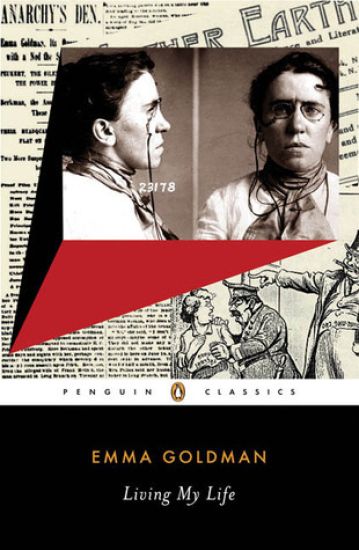
Living My Life

Living My Life

Emma Goldman

Penguin Classics
2006
pokkari
An uncompromising autobiography of an early radical leader documents her participation in communist, anarchist, and feminist activities, in an abridged version of her two-part memoir, which takes her from her birth in czarist Russia to the social upheaval of Manhattan's Lower East Side. Original.
Anarchism and Other Essays

Anarchism and Other Essays

Emma Goldman

Cosimo Classics
2006
pokkari
Destruction and violence How is the ordinary man to know that the most violent element in society is ignorance; that it's power of destruction is the very thing Anarchism is combating? - Emma Goldman, from "Anarchism: What It Really Stands For" From the turn of the 20th century to the turn of the 21st, the fiery words of "notorious" anarchist Emma Goldman continue to echo with passion, insight, and intelligence. Beyond the title essay, Goldman's impassioned calls for equality, individual freedom, and social justice encompass: . Minorities versus Majorities . The Psychology of Political Violence . Prisons: A Social Crime and Failure . Patriotism: A Menace to Liberty . The Hypocrisy of Puritanism . The Traffic in Women . The Tragedy of Women's Emancipation . Marriage and Love . The Drama: A Powerful Disseminator of Radical Thought . and more. They were prophetic when they were first published in 1910, but these essays demonstrate that even today Goldman, a thinker of profound wisdom, has not yet seen her time come. Also available from Cosimo Classics: The Social Significance of Modern Drama, by Emma Goldman. Anarchist and feminist EMMA GOLDMAN (1869-1940) is one of the towering figures in global radicalism of the late 19th and early 20th centuries. Born in Lithuania, she emigrated to the United States as a teenager, was deported in 1919 for her criticism of the U.S. military draft in World War I, and died in Toronto after a globetrotting life. An early advocate of birth control, women's rights, and workers unions, she was an important and influential figure in such far-flung geopolitical events as the Russian Revolution and the Spanish Civil War. Among her many books are My Disillusionment in Russia (1925) and Living My Life (1931).
The Social Significance of Modern Drama

The Social Significance of Modern Drama

Emma Goldman

Cosimo Classics
2005
pokkari
The Modern Drama, as all modern literature, mirrors the complex struggle of life... -Emma Goldman, in the Foreword With her reputation as a political radical, it is often forgotten that much of Emma Goldman's activism was rooted in the arts. As a member of The Progressive Stage Society, a founding force in the experimental theater movement, and through her work as a theatrical manager herself, she moved in quite artistic circles. And in these 1914 essays, adapted from a lecture series, she turned her passionate and philosophical eye on the stage, blending social commentary and theatrical criticism as she dissects: - Henrik Ibsen's A Doll's House and An Enemy of the People - August Strindberg's Miss Julie and Comrades - Edmond Rostand's Chantecler - George Bernard Shaw's Mrs. Warren's Profession and Major Barbara - William Butler Yeats's Where There Is Nothing - Anton Chekhov's The Seagull and The Cherry Orchard - Leonid Andreyev's King Hunger and others from Scandinavia, Germany, France, England, Ireland, and Russia who were the "social iconoclasts" of her time... and ours. Also available from Cosimo Classics: Anarchism and Other Essays, by Emma Goldman. Anarchist and feminist EMMA GOLDMAN (1869-1940) is one of the towering figures in global radicalism of the late 19th and early 20th centuries. Born in Lithuania, she emigrated to the United States as a teenager, was deported in 1919 for her criticism of the U.S. military draft in World War I, and died in Toronto after a globetrotting life. An early advocate of birth control, women's rights, and workers unions, she was an important and influential figure in such far-flung geopolitical events as the Russian Revolution and the Spanish Civil War. Among her many books are My Disillusionment in Russia (1925) and Living My Life (1931).
The ABC of Anarchism

The ABC of Anarchism

Alexander Berkman; Emma Goldman

Dover Publications Inc.
2005
nidottu
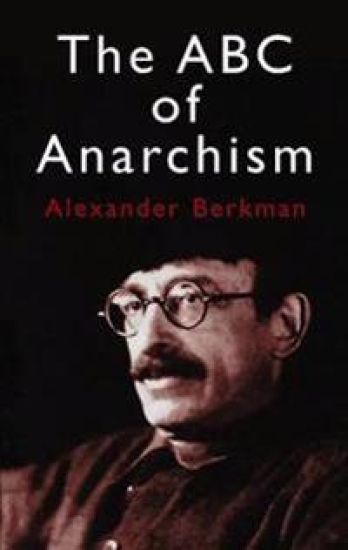
First published in 1929, this book by one of the most gifted writers for the anarchist movement answers some of the charges made against it and presents the case for communist anarchism clearly and intelligently. Thorough and well stated, it is today regarded as a classic statement of the cause's goals and methods.
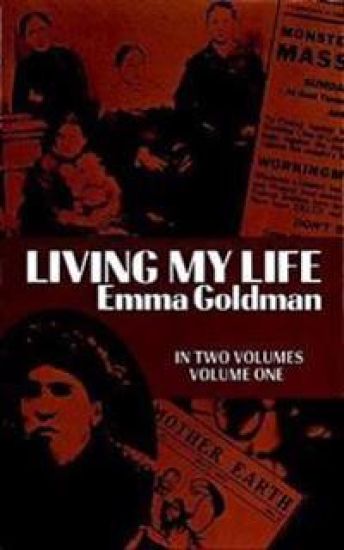
Living My Life, Vol. 1

Living My Life, Vol. 1

Emma Goldman

Dover Publications Inc.
2003
nidottu
"You damn bitch of an anarchist, I wish I could get at you. I would tear your heart out and feed it to my dog." This was one of the less obscene messages received by Emma Goldman (1869-1940), while in jail on suspicion of complicity in the assassination of McKinley. The most notorious woman of her day, she was bitterly hated by millions and equally revered by millions. The strong feelings she aroused are understandable. She was an alien, a practicing anarchist, a labor agitator, a pacifist in World War 1, an advocate of political violence, a feminist, a proponent of free love and birth control, a communist, a street-fighter for justice -- all of which she did with strong intellect and boundless passion. Today, of course, many of the issues that she fought over are just as vital as they were then. Emma Goldman came from Russia at the age of 17. After an encounter with the sweatshop and an unfortunate marriage, she plunged into the bewildering intellectual and activist chaos that attended American social evolution around the turn of the twentieth century. She knew practically everyone of importance in radical circles. She dominated many areas of the radical movement, lecturing, writing, haranguing, and publishing to awaken the world to her ideas. After World War I she was deported to Russia, where she soon discovered that anarchists were no better liked than in America, despite Lenin's first gesture of welcome. She escaped with her life but never was allowed to return to the United States. Emma Goldman was a devastatingly honest woman, who spared herself as little as she spared anyone else. From her account the reader can gain insight into a curious personality type of recurrent interest: a woman who devoted her life to eliminating suffering, yet could make a bomb or assist in staging an assassination. Equally interesting are her comments on other radicals of the period, such as Kropotkin, Berkman, Mooney, Lenin, Trotsky, Haywood, Most, the Haymarket martyrs, and many others. Her autobiography, written with vigor, ranks among the finest in the English language.
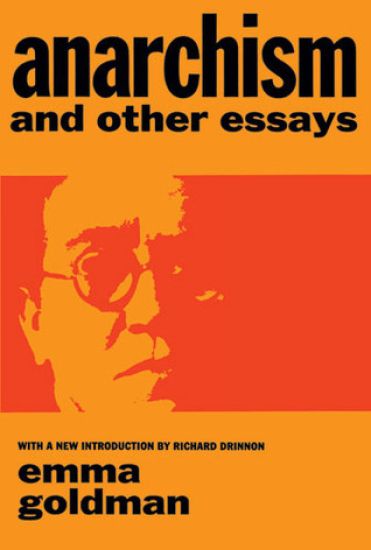
Anarchism and Other Essays

Anarchism and Other Essays

Emma Goldman

Dover Publications Inc.
2003
nidottu
Twelve essays by the influential radical include "Marriage and Love," "The Hypocrisy of Puritanism," "The Traffic in Women," Anarchism," and "The Psychology of Political Violence." Other enduringly relevant essays examine patriotism, the failure of the penal system, and drama as a means of conveying political theory.
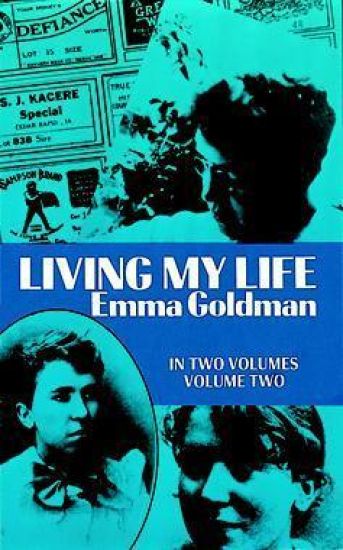
Living My Life, Vol. 2

Living My Life, Vol. 2

Emma Goldman

Dover Publications Inc.
2003
nidottu
-You damn bitch of an anarchist, I wish I could get at you. I would tear your heart out and feed it to my dog.- This was one of the less obscene messages received by Emma Goldman (1869-1940), while in jail on suspicion of complicity in the assassination of McKinley. The most notorious woman of her day, she was bitterly hated by millions and equally revered by millions.The strong feelings she aroused are understandable. She was an alien, a practicing anarchist, a labor agitator, a pacifist in World War 1, an advocate of political violence, a feminist, a proponent of free love and birth control, a communist, a street-fighter for justice -- all of which she did with strong intellect and boundless passion. Today, of course, many of the issues that she fought over are just as vital as they were then.Emma Goldman came from Russia at the age of 17. After an encounter with the sweatshop and an unfortunate marriage, she plunged into the bewildering intellectual and activist chaos that attended American social evolution around the turn of the twentieth century. She knew practically everyone of importance in radical circles. She dominated many areas of the radical movement, lecturing, writing, haranguing, and publishing to awaken the world to her ideas. After World War I she was deported to Russia, where she soon discovered that anarchists were no better liked than in America, despite Lenin's first gesture of welcome. She escaped with her life but never was allowed to return to the United States.Emma Goldman was a devastatingly honest woman, who spared herself as little as she spared anyone else. From her account the reader can gain insight into a curious personality type of recurrent interest: a woman who devoted her life to eliminating suffering, yet could make a bomb or assist in staging an assassination. Equally interesting are her comments on other radicals of the period, such as Kropotkin, Berkman, Mooney, Lenin, Trotsky, Haywood, Most, the Haymarket martyrs, and many others. Her autobiography, written with vigor, ranks among the finest in the English language.
Red Emma Speaks

Red Emma Speaks

Emma Goldman

Humanity Books
1996
nidottu
Unlike any other collection of Goldman's work, Red Emma Speaks presents in a single, handy volume the full sweep of her opinions and personality. In addition to nine essays from Goldman's own 1910 collection, Anarchism and Other Essays,three dramatic sections from her 1931 autobiography, Living My Life,and the afterword to her My Disillusionment in Russia (which the collapse of the Soviet Union later revealed as prescient), this book contains sixteen more pieces covering a great range of subjects, assembled here for the first time to offer a rich composite or Goldman's life and thought. Red Emma speaks on: anarchism, sex, prostitution, marriage, jealousy, prisons, religion, schools, violence, war, communism, and much more. This new third edition, containing a new foreword by Alix Kates Shulman and more accessible source listings, has been revised to situate the works more precisely in light of burgeoning Goldman scholarship.
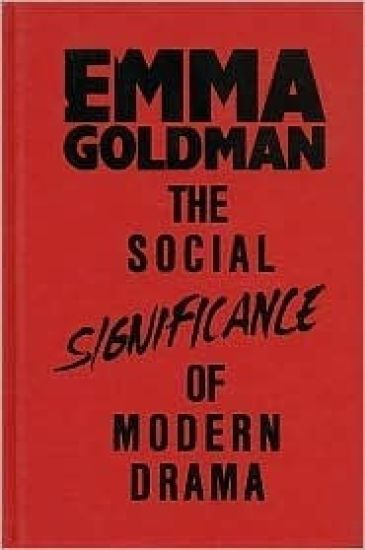
The Social Significance of Modern Drama

The Social Significance of Modern Drama

Emma Goldman

Applause Theatre Book Publishers
1987
sidottu
(Applause Books). Out of print virtually since its completion in 1914, Emma Goldman's pioneer work Social Significance in Modern Drama bridges modern drama and political philosophy, pointing out the road that remains to be travelled toward a theatre of social empowerment. Activist, feminist, philosopher and anarchist, Emma Goldman was a passionate thinker about all things modern when the 20th century was still raw and new. The emergence of her treatise on the theatre after years of obscurity is certain to arouse a new generation of artists and scholars with its timely and provocative vision.