Kirjojen hintavertailu. Mukana 12 390 323 kirjaa ja 12 kauppaa.

Kirjailija

Enrique Castillo

Kirjat ja teokset yhdessä paikassa: 17 kirjaa, julkaisuja vuosilta 1988-2013, suosituimpien joukossa Expert Systems: Uncertainty and Learning. Vertaile teosten hintoja ja tarkista saatavuus suomalaisista kirjakaupoista.

17 kirjaa

Kirjojen julkaisuhaarukka 1988-2013.

Conditional Specification of Statistical Models

Conditional Specification of Statistical Models

Barry C. Arnold; Enrique Castillo; Jose M. Sarabia

Springer-Verlag New York Inc.
2013
nidottu
Efforts to visualize multivariate densities necessarily involve the use of cross-sections, or, equivalently, conditional densities. This book focuses on distributions that are completely specified in terms of conditional densities. They are appropriately used in any modeling situation where conditional information is completely or partially available. All statistical researchers seeking more flexible models than those provided by classical models will find conditionally specified distributions of interest.
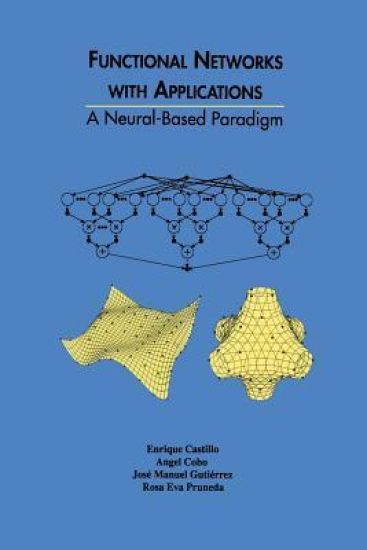
Functional Networks with Applications

Functional Networks with Applications

Enrique Castillo; Angel Cobo; Jose Antonio Gutierrez; Rosa Eva Pruneda

Springer-Verlag New York Inc.
2013
nidottu
Artificial neural networks have been recognized as a powerful tool to learn and reproduce systems in various fields of applications. Neural net­ works are inspired by the brain behavior and consist of one or several layers of neurons, or computing units, connected by links. Each artificial neuron receives an input value from the input layer or the neurons in the previ­ ous layer. Then it computes a scalar output from a linear combination of the received inputs using a given scalar function (the activation function), which is assumed the same for all neurons. One of the main properties of neural networks is their ability to learn from data. There are two types of learning: structural and parametric. Structural learning consists of learning the topology of the network, that is, the number of layers, the number of neurons in each layer, and what neurons are connected. This process is done by trial and error until a good fit to the data is obtained. Parametric learning consists of learning the weight values for a given topology of the network. Since the neural functions are given, this learning process is achieved by estimating the connection weights based on the given information. To this aim, an error function is minimized using several well known learning methods, such as the backpropagation algorithm. Unfortunately, for these methods: (a) The function resulting from the learning process has no physical or engineering interpretation. Thus, neural networks are seen as black boxes.
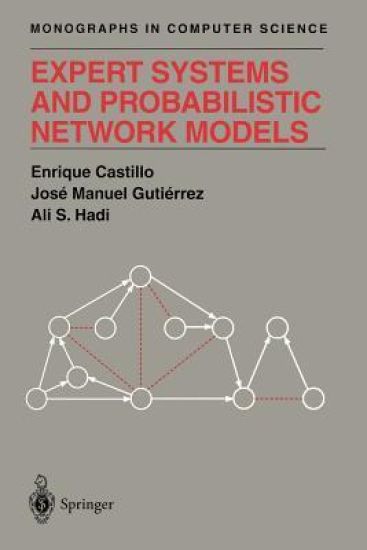
Expert Systems and Probabilistic Network Models

Expert Systems and Probabilistic Network Models

Enrique Castillo; Jose M. Gutierrez; Ali S. Hadi

Springer-Verlag New York Inc.
2011
nidottu
Artificial intelligence and expert systems have seen a great deal of research in recent years, much of which has been devoted to methods for incorporating uncertainty into models. This book is devoted to providing a thorough and up-to-date survey of this field for researchers and students.
A Unified Statistical Methodology for Modeling Fatigue Damage

A Unified Statistical Methodology for Modeling Fatigue Damage

Enrique Castillo; Alfonso Fernandez-Canteli

Springer
2010
nidottu
This book is an attempt to provide a uni?ed methodology to derive models for fatigue life. This includes S-N, ?-N and crack propagation models. This is not a conventional book aimed at describing the fatigue fundamentals, but rather a book in which the basic models of the three main fatigue approaches, the stress-based, the strain-based and the fracture mechanics approaches, are contemplated from a novel and integrated point of view. On the other hand, as an alternative to the preferential attention paid to deterministic models based on the physical, phenomenological and empirical description of fatigue, their probabilistic nature is emphasized in this book, in which stochastic fatigue and crack growth models are presented. This book is the result of a long period of close collaborationbetween its two authors who, although of di?erent backgrounds, mathematical and mechanical, both have a strong sense of engineering with respect to the fatigue problem. When the authors of this book ?rst approached the fatigue ?eld in 1982 (twenty six years ago), they found the following scenario: 1. Linear, bilinear or trilinear models were frequently proposed by relevant laboratoriesandacademiccenterstoreproducetheW¨ ohler?eld. Thiswas the case of well known institutions, which justi?ed these models based on clientrequirementsorpreferences. Thisledtotheinclusionofsuchmodels and methods as, for example, the up-and-down, in standards and o?cial practical directives (ASTM, Euronorm, etc.), which have proved to be unfortunate.
Decomposition Techniques in Mathematical Programming

Decomposition Techniques in Mathematical Programming

Antonio J. Conejo; Enrique Castillo; Roberto Minguez; Raquel Garcia-Bertrand

Springer-Verlag Berlin and Heidelberg GmbH Co. K
2010
nidottu
Optimization plainly dominates the design, planning, operation, and c- trol of engineering systems. This is a book on optimization that considers particular cases of optimization problems, those with a decomposable str- ture that can be advantageously exploited. Those decomposable optimization problems are ubiquitous in engineering and science applications. The book considers problems with both complicating constraints and complicating va- ables, and analyzes linear and nonlinear problems, with and without in- ger variables. The decomposition techniques analyzed include Dantzig-Wolfe, Benders, Lagrangian relaxation, Augmented Lagrangian decomposition, and others. Heuristic techniques are also considered. Additionally, a comprehensive sensitivity analysis for characterizing the solution of optimization problems is carried out. This material is particularly novel and of high practical interest. This book is built based on many clarifying, illustrative, and compu- tional examples, which facilitate the learning procedure. For the sake of cl- ity, theoretical concepts and computational algorithms are assembled based on these examples. The results are simplicity, clarity, and easy-learning. We feel that this book is needed by the engineering community that has to tackle complex optimization problems, particularly by practitioners and researchersinEngineering,OperationsResearch,andAppliedEconomics.The descriptions of most decomposition techniques are available only in complex and specialized mathematical journals, di?cult to understand by engineers. A book describing a wide range of decomposition techniques, emphasizing problem-solving, and appropriately blending theory and application, was not previously available.
A Unified Statistical Methodology for Modeling Fatigue Damage

A Unified Statistical Methodology for Modeling Fatigue Damage

Enrique Castillo; Alfonso Fernandez-Canteli

Springer-Verlag New York Inc.
2009
sidottu
This book is an attempt to provide a uni?ed methodology to derive models for fatigue life. This includes S-N, ?-N and crack propagation models. This is not a conventional book aimed at describing the fatigue fundamentals, but rather a book in which the basic models of the three main fatigue approaches, the stress-based, the strain-based and the fracture mechanics approaches, are contemplated from a novel and integrated point of view. On the other hand, as an alternative to the preferential attention paid to deterministic models based on the physical, phenomenological and empirical description of fatigue, their probabilistic nature is emphasized in this book, in which stochastic fatigue and crack growth models are presented. This book is the result of a long period of close collaborationbetween its two authors who, although of di?erent backgrounds, mathematical and mechanical, both have a strong sense of engineering with respect to the fatigue problem. When the authors of this book ?rst approached the fatigue ?eld in 1982 (twenty six years ago), they found the following scenario: 1. Linear, bilinear or trilinear models were frequently proposed by relevant laboratoriesandacademiccenterstoreproducetheW¨ ohler?eld. Thiswas the case of well known institutions, which justi?ed these models based on clientrequirementsorpreferences. Thisledtotheinclusionofsuchmodels and methods as, for example, the up-and-down, in standards and o?cial practical directives (ASTM, Euronorm, etc.), which have proved to be unfortunate.
Decomposition Techniques in Mathematical Programming

Decomposition Techniques in Mathematical Programming

Antonio J. Conejo; Enrique Castillo; Roberto Minguez; Raquel Garcia-Bertrand

Springer-Verlag Berlin and Heidelberg GmbH Co. K
2006
sidottu
Optimization plainly dominates the design, planning, operation, and c- trol of engineering systems. This is a book on optimization that considers particular cases of optimization problems, those with a decomposable str- ture that can be advantageously exploited. Those decomposable optimization problems are ubiquitous in engineering and science applications. The book considers problems with both complicating constraints and complicating va- ables, and analyzes linear and nonlinear problems, with and without in- ger variables. The decomposition techniques analyzed include Dantzig-Wolfe, Benders, Lagrangian relaxation, Augmented Lagrangian decomposition, and others. Heuristic techniques are also considered. Additionally, a comprehensive sensitivity analysis for characterizing the solution of optimization problems is carried out. This material is particularly novel and of high practical interest. This book is built based on many clarifying, illustrative, and compu- tional examples, which facilitate the learning procedure. For the sake of cl- ity, theoretical concepts and computational algorithms are assembled based on these examples. The results are simplicity, clarity, and easy-learning. We feel that this book is needed by the engineering community that has to tackle complex optimization problems, particularly by practitioners and researchersinEngineering,OperationsResearch,andAppliedEconomics.The descriptions of most decomposition techniques are available only in complex and specialized mathematical journals, di?cult to understand by engineers. A book describing a wide range of decomposition techniques, emphasizing problem-solving, and appropriately blending theory and application, was not previously available.
From Vectors to Tensors

From Vectors to Tensors

Juan R. Ruiz-Tolosa; Enrique Castillo

Springer-Verlag Berlin and Heidelberg GmbH Co. K
2004
nidottu
It is true that there exist many books dedicated to linear algebra and some­ what fewer to multilinear algebra, written in several languages, and perhaps one can think that no more books are needed. However, it is also true that in algebra many new results are continuously appearing, different points of view can be used to see the mathematical objects and their associated structures, and different orientations can be selected to present the material, and all of them deserve publication. Under the leadership of Juan Ramon Ruiz-Tolosa, Professor of multilin­ ear algebra, and the collaboration of Enrique Castillo, Professor of applied mathematics, both teaching at an engineering school in Santander, a tensor textbook has been born, written from a practical point of view and free from the esoteric language typical of treatises written by algebraists, who are not interested in descending to numerical details. The balance between follow­ ing this line and keeping the rigor of classical theoretical treatises has been maintained throughout this book. The book assumes a certain knowledge of linear algebra, and is intended as a textbook for graduate and postgraduate students and also as a consultation book. It is addressed to mathematicians, physicists, engineers, and applied scientists with a practical orientation who are looking for powerful tensor tools to solve their problems.
Extreme Value and Related Models with Applications in Engineering and Science

Extreme Value and Related Models with Applications in Engineering and Science

Enrique Castillo; Ali S. Hadi; Narayanaswamy Balakrishnan; Jose M. Sarabia

John Wiley Sons Inc
2004
sidottu
This book provides readers with an elementary and comprehensive discussion on extreme value and related models. By using a large number of practical data from different science and engineering disciplines, it illustrates the practical importance and usefulness of extreme value modeling. Unusual, provocative, and concrete examples are derived from areas such as ocean engineering, structural engineering, hydraulics, meteorology, materials science, fatigue studies, electrical strength of materials, highway traffic analysis, corrosion science, environmetrics, climatology, among others.
Building and Solving Mathematical Programming Models in Engineering and Science

Building and Solving Mathematical Programming Models in Engineering and Science

Enrique Castillo; Antonio J. Conejo; Pablo Pedregal; Ricardo García; Natalia Alguacil

John Wiley Sons Inc
2001
sidottu
Fundamental concepts of mathematical modeling Modeling is one of the most effective, commonly used tools in engineering and the applied sciences. In this book, the authors deal with mathematical programming models both linear and nonlinear and across a wide range of practical applications. Whereas other books concentrate on standard methods of analysis, the authors focus on the power of modeling methods for solving practical problems–clearly showing the connection between physical and mathematical realities–while also describing and exploring the main concepts and tools at work. This highly computational coverage includes: *Discussion and implementation of the GAMS programming system *Unique coverage of compatibility *Illustrative examples that showcase the connection between model and reality *Practical problems covering a wide range of scientific disciplines, as well as hundreds of examples and end-of-chapter exercises *Real-world applications to probability and statistics, electrical engineering, transportation systems, and more Building and Solving Mathematical Programming Models in Engineering and Science is practically suited for use as a professional reference for mathematicians, engineers, and applied or industrial scientists, while also tutorial and illustrative enough for advanced students in mathematics or engineering.
Conditional Specification of Statistical Models

Conditional Specification of Statistical Models

Barry C. Arnold; Enrique Castillo; Jose M. Sarabia

Springer-Verlag New York Inc.
1999
sidottu
Efforts to visualize multivariate densities necessarily involve the use of cross-sections, or, equivalently, conditional densities. This book focuses on distributions that are completely specified in terms of conditional densities. They are appropriately used in any modeling situation where conditional information is completely or partially available. All statistical researchers seeking more flexible models than those provided by classical models will find conditionally specified distributions of interest.
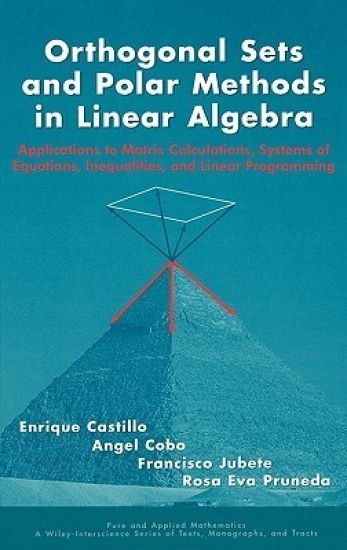
Orthogonal Sets and Polar Methods in Linear Algebra

Orthogonal Sets and Polar Methods in Linear Algebra

Enrique Castillo; Angel Cobo; Francisco Jubete; Rosa Eva Pruneda

John Wiley Sons Inc
1999
sidottu
A unique, applied approach to problem solving in linear algebra Departing from the standard methods of analysis, this unique book presents methodologies and algorithms based on the concept of orthogonality and demonstrates their application to both standard and novel problems in linear algebra. Covering basic theory of linear systems, linear inequalities, and linear programming, it focuses on elegant, computationally simple solutions to real-world physical, economic, and engineering problems. The authors clearly explain the reasons behind the analysis of different structures and concepts and use numerous illustrative examples to correlate the mathematical models to the reality they represent. Readers are given precise guidelines for: *Checking the equivalence of two systems *Solving a system in certain selected variables *Modifying systems of equations *Solving linear systems of inequalities *Using the new exterior point method *Modifying a linear programming problem With few prerequisites, but with plenty of figures and tables, end-of-chapter exercises as well as Java and Mathematica programs available from the authors' Web site, this is an invaluable text/reference for mathematicians, engineers, applied scientists, and graduate students in mathematics.
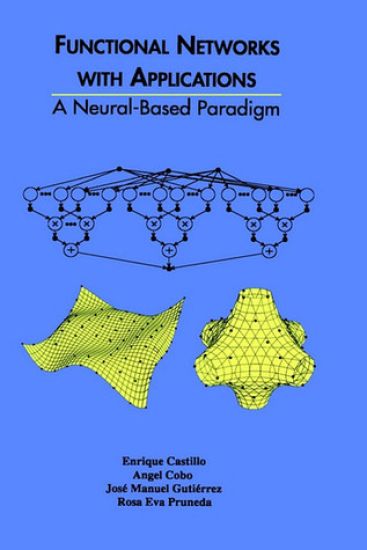
Functional Networks with Applications

Functional Networks with Applications

Enrique Castillo; Angel Cobo; Jose Antonio Gutierrez; Rosa Eva Pruneda

Springer
1998
sidottu
Artificial neural networks have been recognized as a powerful tool to learn and reproduce systems in various fields of applications. Neural net­ works are inspired by the brain behavior and consist of one or several layers of neurons, or computing units, connected by links. Each artificial neuron receives an input value from the input layer or the neurons in the previ­ ous layer. Then it computes a scalar output from a linear combination of the received inputs using a given scalar function (the activation function), which is assumed the same for all neurons. One of the main properties of neural networks is their ability to learn from data. There are two types of learning: structural and parametric. Structural learning consists of learning the topology of the network, that is, the number of layers, the number of neurons in each layer, and what neurons are connected. This process is done by trial and error until a good fit to the data is obtained. Parametric learning consists of learning the weight values for a given topology of the network. Since the neural functions are given, this learning process is achieved by estimating the connection weights based on the given information. To this aim, an error function is minimized using several well known learning methods, such as the backpropagation algorithm. Unfortunately, for these methods: (a) The function resulting from the learning process has no physical or engineering interpretation. Thus, neural networks are seen as black boxes.
Conditionally Specified Distributions

Conditionally Specified Distributions

Barry C. Arnold; Enrique Castillo; Jose-Maria Sarabia Alegria

Springer-Verlag New York Inc.
1992
nidottu
The concept of conditional specification is not new. It is likely that earlier investigators in this area were deterred by computational difficulties encountered in the analysis of data following con­ ditionally specified models. Readily available computing power has swept away that roadblock. A broad spectrum of new flexible models may now be added to the researcher's tool box. This mono­ graph provides a preliminary guide to these models. Further development of inferential techniques, especially those involving concomitant variables, is clearly called for. We are grateful for invaluable assistance in the preparation of this monograph. In Riverside, Carole Arnold made needed changes in grammer and punctuation and Peggy Franklin miraculously transformed minute hieroglyphics into immaculate typescript. In Santander, Agustin Manrique ex­ pertly transformed rough sketches into clear diagrams. Finally, we thank the University of Cantabria for financial support which made possible Barry C. Arnold's enjoyable and productive visit to S- tander during the initial stages of the project. Barry C. Arnold Riverside, California USA Enrique Castillo Jose Maria Sarabia Santander, Cantabria Spain January, 1991 Contents 1 Conditional Specification 1 1.1 Why? ............. ........ . 1 1.2 How may one specify a bivariate distribution? 2 1.3 Early work on conditional specification 4 1.4 Organization of this monograph . . . . . . . . . . . . . . . . . . . . . . . . . . . .. 5 2 Basic Theorems 7 Compatible conditionals: The finite discrete case.
Extreme Value Theory in Engineering

Extreme Value Theory in Engineering

Enrique Castillo

Academic Press Inc
1988
sidottu
This book is a comprehensive guide to extreme value theory in engineering. Written for the end user with intermediate and advanced statistical knowledge, it covers classical methods as well as recent advances. A collection of 150 examples illustrates the theoretical results and takes the reader from simple applications through complex cases of dependence.