Kirjojen hintavertailu. Mukana 12 390 323 kirjaa ja 12 kauppaa.

Kirjailija

Eoin Flannery

Kirjat ja teokset yhdessä paikassa: 8 kirjaa, julkaisuja vuosilta 2009-2023, suosituimpien joukossa Colum McCann and the Aesthetics of Redemption. Vertaile teosten hintoja ja tarkista saatavuus suomalaisista kirjakaupoista.

Mukana myös kirjoitusasut: Eóin Flannery

8 kirjaa

Kirjojen julkaisuhaarukka 2009-2023.

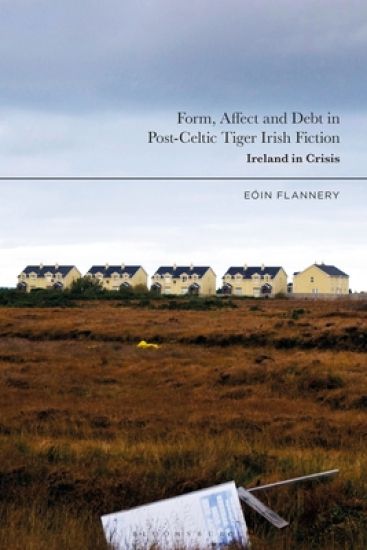
Form, Affect and Debt in Post-Celtic Tiger Irish Fiction

Form, Affect and Debt in Post-Celtic Tiger Irish Fiction

Eoin Flannery

BLOOMSBURY PUBLISHING PLC
2023
nidottu
Based on readings of some of the leading literary voices in contemporary Irish writing, this book explores how these authors have engaged with the events of Ireland’s recent economic ‘boom’ and the demise of the Celtic Tiger period, and how they have portrayed the widespread and contrasting aftermaths. Drawing upon economic literary criticism, affect theory in relation to shame and guilt, and the philosophy of debt, this book offers an entirely original suit of perspectives on both established and emerging authors. Through analyses of the work of writers including Donal Ryan, Anne Haverty, Claire Kilroy, Dermot Bolger, Deirdre Madden, Chris Binchy, Peter Cunningham, Justin Quinn, and Paul Murray, author Eóin Flannery illuminates their formal and thematic concerns. Paying attention to generic and thematic differences, Flannery’s analyses touch upon issues such as: the politics of indebtedness; temporality and narrative form; the relevance of affect theory to understandings of Irish culture and society in an age of austerity; and the relationship between literary fiction and the mechanics of high finance. Insightful and original, Form, Affect and Debt in Post-Celtic Tiger Irish Fiction provides a seminal intervention in trying to grasp the cultural context and the literature of the Celtic Tiger period and its wake.
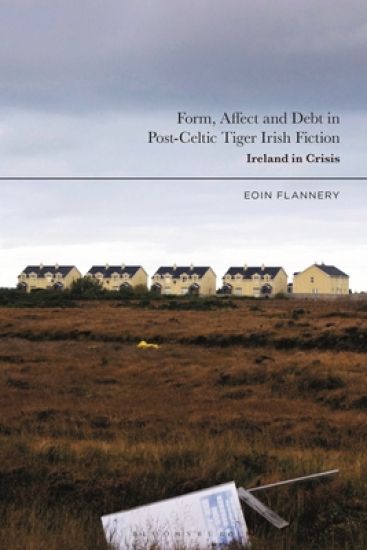
Form, Affect and Debt in Post-Celtic Tiger Irish Fiction

Form, Affect and Debt in Post-Celtic Tiger Irish Fiction

Eoin Flannery

BLOOMSBURY PUBLISHING PLC
2022
sidottu
Based on readings of some of the leading literary voices in contemporary Irish writing, this book explores how these authors have engaged with the events of Ireland’s recent economic ‘boom’ and the demise of the Celtic Tiger period, and how they have portrayed the widespread and contrasting aftermaths. Drawing upon economic literary criticism, affect theory in relation to shame and guilt, and the philosophy of debt, this book offers an entirely original suit of perspectives on both established and emerging authors. Through analyses of the work of writers including Donal Ryan, Anne Haverty, Claire Kilroy, Dermot Bolger, Deirdre Madden, Chris Binchy, Peter Cunningham, Justin Quinn, and Paul Murray, author Eóin Flannery illuminates their formal and thematic concerns. Paying attention to generic and thematic differences, Flannery’s analyses touch upon issues such as: the politics of indebtedness; temporality and narrative form; the relevance of affect theory to understandings of Irish culture and society in an age of austerity; and the relationship between literary fiction and the mechanics of high finance. Insightful and original, Form, Affect and Debt in Post-Celtic Tiger Irish Fiction provides a seminal intervention in trying to grasp the cultural context and the literature of the Celtic Tiger period and its wake.
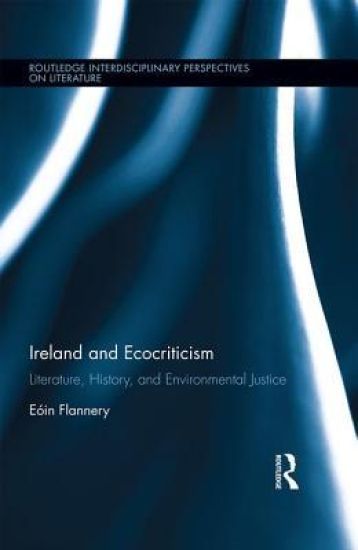
Ireland and Ecocriticism

Ireland and Ecocriticism

Eóin Flannery

Routledge
2018
nidottu
This book is the first truly interdisciplinary intervention into the burgeoning field of Irish ecological criticism. Providing original and nuanced readings of Irish cultural texts and personalities in terms of contemporary ecological criticism, Flannery’s readings of Irish literary fiction, poetry, travel writing, non-fiction, and essay writing are ground-breaking in their depth and scope. Explorations of figures and texts from Irish cultural and political history, including John McGahern, Derek Mahon, Roger Casement, and Tim Robinson, among many others, enable and invigorate the discipline of Irish cultural studies, and international ecocriticism on the whole. This book addresses the need to impress the urgency of lateral ecological awareness and responsibility among Irish cultural and political commentators; to highlight continuities and disparities between Irish ecological thought, writing, and praxis, and those of differential international writers, critics, and activists; and to establish both the singularity and contiguity of Irish ecological criticism to the wider international field of ecological criticism. With the introduction of concepts such as ecocosmopolitanism, "deep" history, ethics of proximity, Gaia Theory, urban ecology, and postcolonial environmentalism to Irish cultural studies, it takes Irish cultural studies in bracing new directions. Flannery furnishes working examples of the necessary interdisciplinarity of ecological criticism, and impresses the relevance of the Irish context to the broader debates within international ecological criticism. Crucially, the volume imports ecological critical paradigms into the field of Irish studies, and demonstrates the value of such conceptual dialogue for the future of Irish cultural and political criticism. This pioneering intervention exhibits the complexity of different Irish cultural and historical responses to ecological exploitation, degradation, and social justice.
Ireland and Ecocriticism

Ireland and Ecocriticism

Eóin Flannery

Routledge
2015
sidottu
This book is the first truly interdisciplinary intervention into the burgeoning field of Irish ecological criticism. Providing original and nuanced readings of Irish cultural texts and personalities in terms of contemporary ecological criticism, Flannery’s readings of Irish literary fiction, poetry, travel writing, non-fiction, and essay writing are ground-breaking in their depth and scope. Explorations of figures and texts from Irish cultural and political history, including John McGahern, Derek Mahon, Roger Casement, and Tim Robinson, among many others, enable and invigorate the discipline of Irish cultural studies, and international ecocriticism on the whole. This book addresses the need to impress the urgency of lateral ecological awareness and responsibility among Irish cultural and political commentators; to highlight continuities and disparities between Irish ecological thought, writing, and praxis, and those of differential international writers, critics, and activists; and to establish both the singularity and contiguity of Irish ecological criticism to the wider international field of ecological criticism. With the introduction of concepts such as ecocosmopolitanism, "deep" history, ethics of proximity, Gaia Theory, urban ecology, and postcolonial environmentalism to Irish cultural studies, it takes Irish cultural studies in bracing new directions. Flannery furnishes working examples of the necessary interdisciplinarity of ecological criticism, and impresses the relevance of the Irish context to the broader debates within international ecological criticism. Crucially, the volume imports ecological critical paradigms into the field of Irish studies, and demonstrates the value of such conceptual dialogue for the future of Irish cultural and political criticism. This pioneering intervention exhibits the complexity of different Irish cultural and historical responses to ecological exploitation, degradation, and social justice.
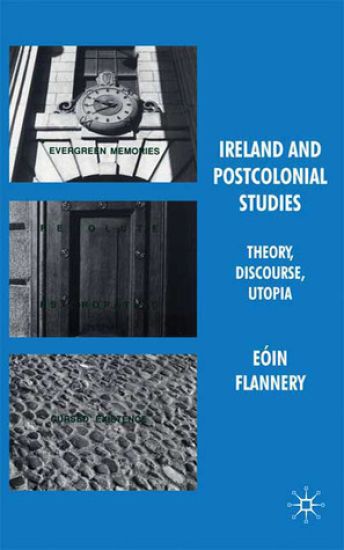
Ireland and Postcolonial Studies

Ireland and Postcolonial Studies

Eóin Flannery

Palgrave Macmillan
2009
nidottu
A pioneering study of the development of one of the key critical discourses in contemporary Irish studies, this book covers all the major figures, publications and debates within Irish postcolonial criticism, delivering a commentary on this diverse body of work as well as positioning Irish postcolonial criticism within the wider postcolonial field.
Ireland and Postcolonial Studies

Ireland and Postcolonial Studies

Eóin Flannery

Palgrave Macmillan
2009
sidottu
A pioneering study of the development of one of the key critical discourses in contemporary Irish studies, this book covers all the major figures, publications and debates within Irish postcolonial criticism, delivering a commentary on this diverse body of work as well as positioning Irish postcolonial criticism within the wider postcolonial field.
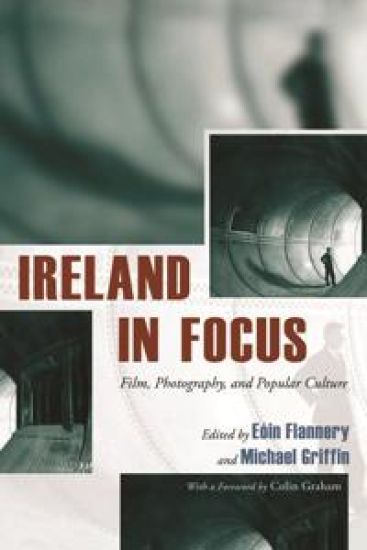
Ireland in Focus

Ireland in Focus

Eoin Flannery

Syracuse University Press
2009
sidottu
From an analysis of the Guinness brand's reflection of Irish identity to an exploration of murals and film portrayals of political prisoners, this pioneering collection of essays seeks to present Ireland's relationship to visual culture as a whole. While other works have explored the imagistic history of Ireland, most have restricted their lens to a single form of visual representation. ""Ireland in Focus"" is the first book to address the diverse range of visual representations of national and communal identity in Ireland. The contributors examine the politics of visual representation from both historical and contemporary perspectives. Drawing from the areas of cultural theory, postcolonial studies, art criticism, documentary and archival history, and gender studies, the essays provide novel insights on a variety of visual-cultural forms, including film, theater, photography, landscape art, political murals, and the visual iconography of commercial marketing. Bringing together established scholars and emerging young critics in the field, ""Ireland in Focus"" breaks new ground in showcasing the essential dynamism of visual culture and its relationship to Irish studies.