Kirjojen hintavertailu. Mukana 12 459 402 kirjaa ja 12 kauppaa.

Kirjailija

Eran Ben-Joseph

Kirjat ja teokset yhdessä paikassa: 5 kirjaa, julkaisuja vuosilta 2003-2022, suosituimpien joukossa New Industrial Urbanism. Vertaile teosten hintoja ja tarkista saatavuus suomalaisista kirjakaupoista.

5 kirjaa

Kirjojen julkaisuhaarukka 2003-2022.

New Industrial Urbanism

New Industrial Urbanism

Tali Hatuka; Eran Ben-Joseph

TAYLOR FRANCIS LTD
2022
sidottu
Since the Industrial Revolution, cities and industry have grown together; towns and metropolitan regions have evolved around factories and expanding industries. New Industrial Urbanism explores the evolving and future relationships between cities and places of production, focusing on the spatial implications and physical design of integrating contemporary manufacturing into the city. The book examines recent developments that have led to dramatic shifts in the manufacturing sector – from large-scale mass production methods to small-scale distributed systems; from polluting and consumptive production methods to a cleaner and more sustainable process; from broad demand for unskilled labor to a growing need for a more educated and specialized workforce – to show how cities see new investment and increased employment opportunities. Looking ahead to the quest to make cities more competitive and resilient, New Industrial Urbanism provides lessons from cases around the world and suggests adopting New Industrial Urbanism as an action framework that reconnects what has been separated: people, places, and production. Moving the conversation beyond the reflexively-negative characterizations of industry, more than two centuries after the start of the Industrial Revolution, this book calls to re-consider the ways in which industry creates places, sustains jobs, and supports environmental sustainability in our cities.This book is available as Open Acess through https://www.taylorfrancis.com/.
New Industrial Urbanism

New Industrial Urbanism

Tali Hatuka; Eran Ben-Joseph

TAYLOR FRANCIS LTD
2022
nidottu
Since the Industrial Revolution, cities and industry have grown together; towns and metropolitan regions have evolved around factories and expanding industries. New Industrial Urbanism explores the evolving and future relationships between cities and places of production, focusing on the spatial implications and physical design of integrating contemporary manufacturing into the city. The book examines recent developments that have led to dramatic shifts in the manufacturing sector – from large-scale mass production methods to small-scale distributed systems; from polluting and consumptive production methods to a cleaner and more sustainable process; from broad demand for unskilled labor to a growing need for a more educated and specialized workforce – to show how cities see new investment and increased employment opportunities. Looking ahead to the quest to make cities more competitive and resilient, New Industrial Urbanism provides lessons from cases around the world and suggests adopting New Industrial Urbanism as an action framework that reconnects what has been separated: people, places, and production. Moving the conversation beyond the reflexively-negative characterizations of industry, more than two centuries after the start of the Industrial Revolution, this book calls to re-consider the ways in which industry creates places, sustains jobs, and supports environmental sustainability in our cities.This book is available as Open Acess through https://www.taylorfrancis.com/.
ReNew Town

ReNew Town

Andrew Scott; Eran Ben-Joseph

Routledge
2011
nidottu
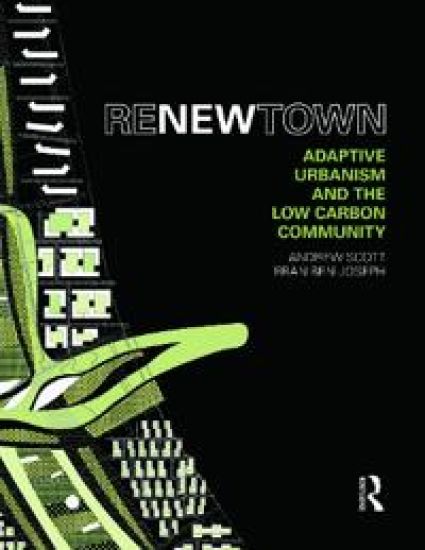
ReNew Town puts forth an innovative vision of performative design and planning for low-carbon sustainable development, and illustrates practicable strategies for balancing environmental systems with urban infrastructure and new housing prototypes.To date, much of the discourse on the design of sustainable communities and ‘eco-cities’ has been premised on using previously undeveloped land. In contrast, this book and the project it showcases focus on the retrofitting and adaptation of an existing environment – a more common problem, given the extent of the world’s already-built infrastructure.Employing a ‘research through design’ model of inquiry, the book focuses on large-scale housing developments – especially those built around the world between the 1960s and the early 1980s – with the aim of understanding how best to reinvent them. At the center of the book is Tama New Town, a planned community outside Tokyo that faces a range of challenges, such as an aging population, the deterioration of homes and buildings, and economic stagnation.The book begins by outlining a series of principles that structure the ecological and energy goals for the community. It then develops prototypical solutions for designing, building and retrofitting neighborhoods. The intent is that these prototypes could be applied to similar urban conditions around the world.ReNew Town is the product of a collaborative design research project at the Massachusetts Institute of Technology (MIT) School of Architecture and Planning, and Japan’s Sekisui House LTD.
The Code of the City

The Code of the City

Eran Ben-Joseph

MIT Press
2005
pokkari
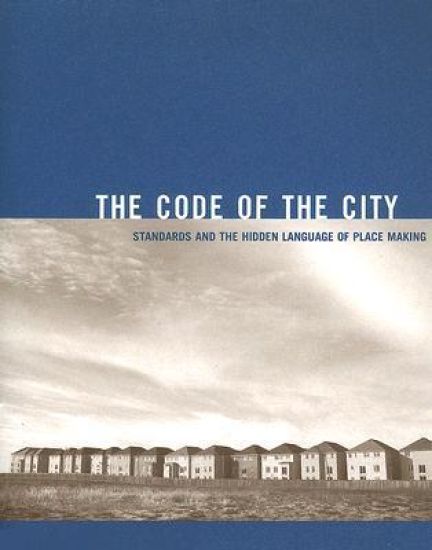
Standards and codes dictate virtually all aspects of urban development. The same standards for subdividing land, grading, laying streets and utilities, and configuring rights-of-way and street widths to accommodate cars (rather than pedestrians) have been adopted in many areas of the world regardless of variations in local environments. In The Code of the City,Eran Ben-Joseph examines the relationship between standards and place making. He traces the evolution of codes and standards and analyzes their impact on the modern city and its suburbs, arguing that it is time for development regulations to reflect site-specific and localized physical design.Standards and codes were meant to bring order and safety to the city building process. But now, Ben-Joseph argues, these accumulated rules and their widespread application illustrate a disconnect between the original rationale for their existence and their actual effect on the natural and human environment. To discover how this separation of codes from local conditions came about, he looks at the origins of urban standards and their use, from early civilization through the rapid urbanization of the nineteenth century. He provides examples that demonstrate how standards have shaped residential developments and reshaped the natural landscape. And he considers alternatives for the future-innovation and de facto deregulation by private developers, new design technologies, and place-based regulations reflecting local conditions. Standards, writes Ben-Joseph, will continue to shape the built environment, but they must be flexible enough to allow for innovation and contribute to the development of sustainable and desirable communities.
Streets and the Shaping of Towns and Cities

Streets and the Shaping of Towns and Cities

Michael Southworth; Eran Ben-Joseph

Island Press
2003
nidottu
The topic of streets and street design is of compelling interest today as public officials, developers, and community activists seek to reshape urban patterns to achieve more sustainable forms of growth and development. Streets and the Shaping of Towns and Cities traces ideas about street design and layout back to the early industrial era in London suburbs and then on through their institutionalization in housing and transportation planning in the United States. It critiques the situation we are in and suggests some ways out that are less rigidly controlled, more flexible, and responsive to local conditions. Originally published in 1997, this edition includes a new introduction that addresses topics of current interest including revised standards from the Institute of Transportation Engineers; changes in city plans and development standards following New Urbanist, Smart Growth, and sustainability principles; traffic calming; and ecologically oriented street design.