Kirjailija
Erasmus
Kirjat ja teokset yhdessä paikassa: 44 kirjaa, julkaisuja vuosilta 1992-2020, suosituimpien joukossa The Praise of Folly: Erasmus. Vertaile teosten hintoja ja tarkista saatavuus suomalaisista kirjakaupoista.
44 kirjaa
Kirjojen julkaisuhaarukka 1992-2020.
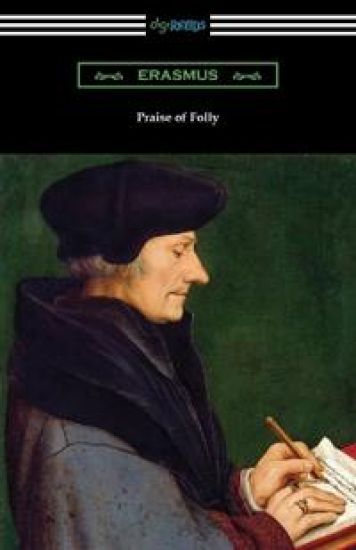
Written in Latin in 1509 and published in 1511, "Praise of Folly" by Dutch humanist and scholar Desiderius Erasmus is considered one of the most important works of literature in Western Civilization. The essay is a classic satirical work in the style of Lucian, the ancient Greek satirist, in which the Goddess of Folly extols the virtues of frivolousness and indulgence of one's passions, then moves to a darker praise of delusion and madness, and finally turns to a satirical examination of Christian superstition and the corruption of the clergy. In a humorous way, "Praise of Folly" reveals the greed and abuses of power of the Roman Catholic Church at the time and is seen as a catalyst for the Protestant Reformation. Wildly popular immediately after its publication, it was translated into numerous languages during Erasmus's own lifetime. Hugely influential, "Praise of Folly" is regarded as one of the most important literary achievements of the Renaissance and marked the beginning of the modern, enlightened age of science and reason over superstition and ignorance. This masterpiece of humor, irony, and wit is a must-read for all students of Western literature and history. This edition is printed on premium acid-free paper.

Desiderius Erasmus Roterodamus (28 October 1466 - 12 July 1536), known as Erasmus or Erasmus of Rotterdam, was a Dutch Christian Humanist who was the greatest scholar of the northern Renaissance.Originally trained as a Catholic priest, Erasmus was an important figure in classical scholarship who wrote in a pure Latin style. Among humanists he enjoyed the sobriquet "Prince of the Humanists," and has been called "the crowning glory of the Christian humanists." Using humanist techniques for working on texts, he prepared important new Latin and Greek editions of the New Testament, which raised questions that would be influential in the Protestant Reformation and Catholic Counter-Reformation. He also wrote On Free Will, In Praise of Folly, Handbook of a Christian Knight, On Civility in Children, Copia: Foundations of the Abundant Style, Julius Exclusus, and many other works. Erasmus lived against the backdrop of the growing European religious Reformation, but while he was critical of the abuses within the Catholic Church and called for reform, he kept his distance from Luther and Melanchthon and continued to recognise the authority of the pope, emphasizing a middle way with a deep respect for traditional faith, piety and grace, rejecting Luther's emphasis on faith alone. Erasmus remained a member of the Roman Catholic Church all his life, remaining committed to reforming the Church and its clerics' abuses from within. He also held to the Catholic doctrine of free will, which some Reformers rejected in favor of the doctrine of predestination. His middle road ("Via Media") approach disappointed, and even angered, scholars in both camps. Erasmus died suddenly in Basel in 1536 while preparing to return to Brabant, and was buried in Basel Minster, the former cathedral of the city. A bronze statue of Erasmus was erected in 1622 in his city of birth, replacing an earlier work in stone.
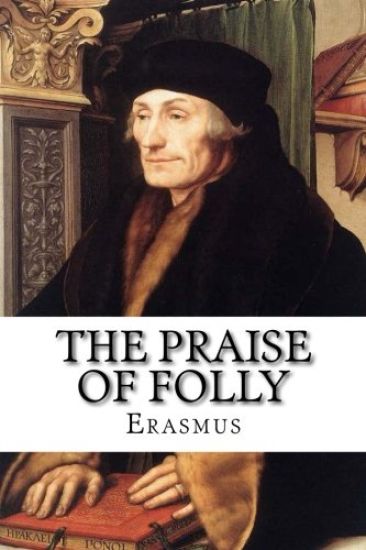
Desiderius Erasmus Roterodamus (28 October 1466 - 12 July 1536), known as Erasmus or Erasmus of Rotterdam, was a Dutch Renaissance humanist, Catholic priest, social critic, teacher, and theologian. Erasmus was a classical scholar and wrote in a pure Latin style. Among humanists he enjoyed the sobriquet "Prince of the Humanists", and has been called "the crowning glory of the Christian humanists". Using humanist techniques for working on texts, he prepared important new Latin and Greek editions of the New Testament, which raised questions that would be influential in the Protestant Reformation and Catholic Counter-Reformation. He also wrote On Free Will, The Praise of Folly, Handbook of a Christian Knight, On Civility in Children, Copia: Foundations of the Abundant Style, Julius Exclusus, and many other works. Erasmus lived against the backdrop of the growing European religious Reformation, but while he was critical of the abuses within the Catholic Church and called for reform, he kept his distance from Luther and Melanchthon and continued to recognise the authority of the pope, emphasizing a middle way with a deep respect for traditional faith, piety and grace, rejecting Luther's emphasis on faith alone. Erasmus remained a member of the Roman Catholic Church all his life, remaining committed to reforming the Church and its clerics' abuses from within. He also held to the Catholic doctrine of free will, which some Reformers rejected in favor of the doctrine of predestination. His middle road ("Via Media") approach disappointed, and even angered, scholars in both camps. Erasmus died suddenly in Basel in 1536 while preparing to return to Brabant, and was buried in Basel Minster, the former cathedral of the city. A bronze statue of Erasmus was erected in his city of birth in 1622, replacing an earlier work in stone.
A dialog or communication of two persons
Erasmus
Createspace Independent Publishing Platform
2015
nidottu
Selections from Erasmus Principally from his Epistles
Erasmus
Createspace Independent Publishing Platform
2015
nidottu

A Very Pleasaunt and Fruitful Diologe Called the Epicure
Erasmus
Createspace Independent Publishing Platform
2015
nidottu
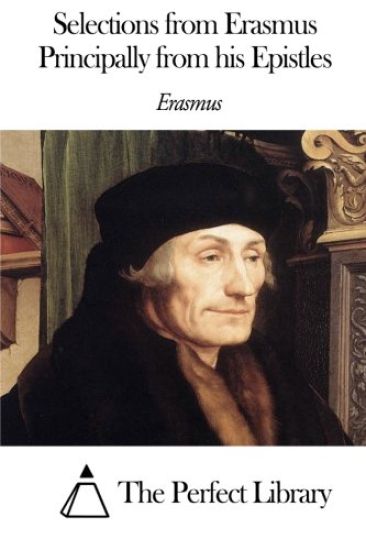
Selections from Erasmus Principally from his Epistles
Percy Stafford Allen; Erasmus
Createspace Independent Publishing Platform
2014
nidottu
"Selections from Erasmus Principally from his Epistles", published in 1918 by Percy Stafford Allen.