Kirjojen hintavertailu. Mukana 12 152 606 kirjaa ja 12 kauppaa.

Kirjailija

Erasmus Darwin

Kirjat ja teokset yhdessä paikassa: 102 kirjaa, julkaisuja vuosilta 2004-2026, suosituimpien joukossa The Temple Of Nature. Vertaile teosten hintoja ja tarkista saatavuus suomalaisista kirjakaupoista.

102 kirjaa

Kirjojen julkaisuhaarukka 2004-2026.

The Botanic Garden. Part II. Containing the Loves of the Plants. A Poem. With Philosophical Notes. Volume the Second. The Second Edition. of 2; Volume 2
The 18th century was a wealth of knowledge, exploration and rapidly growing technology and expanding record-keeping made possible by advances in the printing press. In its determination to preserve the century of revolution, Gale initiated a revolution of its own: digitization of epic proportions to preserve these invaluable works in the largest archive of its kind. Now for the first time these high-quality digital copies of original 18th century manuscripts are available in print, making them highly accessible to libraries, undergraduate students, and independent scholars.Western literary study flows out of eighteenth-century works by Alexander Pope, Daniel Defoe, Henry Fielding, Frances Burney, Denis Diderot, Johann Gottfried Herder, Johann Wolfgang von Goethe, and others. Experience the birth of the modern novel, or compare the development of language using dictionaries and grammar discourses. ++++The below data was compiled from various identification fields in the bibliographic record of this title. This data is provided as an additional tool in helping to insure edition identification: ++++British LibraryT082157Anonymous. By Erasmus Darwin. With a half-title.London: printed by J. Nichols, for J. Johnson, 1790. 4], xi, 1],202, 2]p., plates; 4
The Botanic Garden. Part II. Containing the Loves of the Plants. A Poem. With Philosophical Notes. Volume the Second. The Fourth Edition. of 2; Volume 2
The 18th century was a wealth of knowledge, exploration and rapidly growing technology and expanding record-keeping made possible by advances in the printing press. In its determination to preserve the century of revolution, Gale initiated a revolution of its own: digitization of epic proportions to preserve these invaluable works in the largest archive of its kind. Now for the first time these high-quality digital copies of original 18th century manuscripts are available in print, making them highly accessible to libraries, undergraduate students, and independent scholars.Western literary study flows out of eighteenth-century works by Alexander Pope, Daniel Defoe, Henry Fielding, Frances Burney, Denis Diderot, Johann Gottfried Herder, Johann Wolfgang von Goethe, and others. Experience the birth of the modern novel, or compare the development of language using dictionaries and grammar discourses. ++++The below data was compiled from various identification fields in the bibliographic record of this title. This data is provided as an additional tool in helping to insure edition identification: ++++British LibraryT147239Anonymous. By Erasmus Darwin. With a half-title.Dudlin sic]: printed by J. Moore, 1796. xvi,168p., plates; 8
Phytologia; Or the Philosophy of Agriculture and Gardening. with the Theory of Draining Morasses, and with an Improved Construction of the Drill Plough. by Erasmus Darwin, M.D. F.R.S. Author of Zoonomia, and of the Botanic Garden
The 18th century was a wealth of knowledge, exploration and rapidly growing technology and expanding record-keeping made possible by advances in the printing press. In its determination to preserve the century of revolution, Gale initiated a revolution of its own: digitization of epic proportions to preserve these invaluable works in the largest archive of its kind. Now for the first time these high-quality digital copies of original 18th century manuscripts are available in print, making them highly accessible to libraries, undergraduate students, and independent scholars.Medical theory and practice of the 1700s developed rapidly, as is evidenced by the extensive collection, which includes descriptions of diseases, their conditions, and treatments. Books on science and technology, agriculture, military technology, natural philosophy, even cookbooks, are all contained here.++++The below data was compiled from various identification fields in the bibliographic record of this title. This data is provided as an additional tool in helping to insure edition identification: ++++British LibraryT132420Plates I-IX are each preceded by an explanatory letterpress leaf, not included in the pagination or register.London: printed for J. Johnson, St. Paul's Church-Yard; by T. Bensley, Bolt Court, Fleet Street, 1800. viii, 612 i.e. 630], 12] p., XII plates; 4
Zoonomia; or, the Laws of Organic Life. ... By Erasmus Darwin, ... The Second Edition, Corrected. of 2; Volume 2
The 18th century was a wealth of knowledge, exploration and rapidly growing technology and expanding record-keeping made possible by advances in the printing press. In its determination to preserve the century of revolution, Gale initiated a revolution of its own: digitization of epic proportions to preserve these invaluable works in the largest archive of its kind. Now for the first time these high-quality digital copies of original 18th century manuscripts are available in print, making them highly accessible to libraries, undergraduate students, and independent scholars.Medical theory and practice of the 1700s developed rapidly, as is evidenced by the extensive collection, which includes descriptions of diseases, their conditions, and treatments. Books on science and technology, agriculture, military technology, natural philosophy, even cookbooks, are all contained here.++++The below data was compiled from various identification fields in the bibliographic record of this title. This data is provided as an additional tool in helping to insure edition identification: ++++British LibraryT127815London: printed for J. Johnson, 1796. 2v., plates; 4
The Botanic Garden; a Poem, in two Parts. Part I. Containing the Economy of Vegetation. Part II. The Loves of the Plants. With Philosophical Notes. of 2; Volume 1
The 18th century was a wealth of knowledge, exploration and rapidly growing technology and expanding record-keeping made possible by advances in the printing press. In its determination to preserve the century of revolution, Gale initiated a revolution of its own: digitization of epic proportions to preserve these invaluable works in the largest archive of its kind. Now for the first time these high-quality digital copies of original 18th century manuscripts are available in print, making them highly accessible to libraries, undergraduate students, and independent scholars.Western literary study flows out of eighteenth-century works by Alexander Pope, Daniel Defoe, Henry Fielding, Frances Burney, Denis Diderot, Johann Gottfried Herder, Johann Wolfgang von Goethe, and others. Experience the birth of the modern novel, or compare the development of language using dictionaries and grammar discourses. ++++The below data was compiled from various identification fields in the bibliographic record of this title. This data is provided as an additional tool in helping to insure edition identification: ++++British LibraryT082161Anonymous. By Erasmus Darwin. Part I only. With a half-title.Dublin: printed by J. Moore, 1793. xii,162,153, 1]p.; 8
The Botanic Garden; a Poem, in two Parts. Part I. Containing the Economy of Vegetation. Part II. The Loves of the Plants. With Philosophical Notes. of 2; Volume 2
The 18th century was a wealth of knowledge, exploration and rapidly growing technology and expanding record-keeping made possible by advances in the printing press. In its determination to preserve the century of revolution, Gale initiated a revolution of its own: digitization of epic proportions to preserve these invaluable works in the largest archive of its kind. Now for the first time these high-quality digital copies of original 18th century manuscripts are available in print, making them highly accessible to libraries, undergraduate students, and independent scholars.Western literary study flows out of eighteenth-century works by Alexander Pope, Daniel Defoe, Henry Fielding, Frances Burney, Denis Diderot, Johann Gottfried Herder, Johann Wolfgang von Goethe, and others. Experience the birth of the modern novel, or compare the development of language using dictionaries and grammar discourses. ++++The below data was compiled from various identification fields in the bibliographic record of this title. This data is provided as an additional tool in helping to insure edition identification: ++++British LibraryT082161Anonymous. By Erasmus Darwin. Part I only. With a half-title.Dublin: printed by J. Moore, 1793. xii,162,153, 1]p.; 8
The Botanic Garden. A Poem, in two Parts. Part I. Containing the Economy of Vegetation. Part II. The Loves of the Plants. With Philosophical Notes. The First American Edition
The 18th century was a wealth of knowledge, exploration and rapidly growing technology and expanding record-keeping made possible by advances in the printing press. In its determination to preserve the century of revolution, Gale initiated a revolution of its own: digitization of epic proportions to preserve these invaluable works in the largest archive of its kind. Now for the first time these high-quality digital copies of original 18th century manuscripts are available in print, making them highly accessible to libraries, undergraduate students, and independent scholars.Western literary study flows out of eighteenth-century works by Alexander Pope, Daniel Defoe, Henry Fielding, Frances Burney, Denis Diderot, Johann Gottfried Herder, Johann Wolfgang von Goethe, and others. Experience the birth of the modern novel, or compare the development of language using dictionaries and grammar discourses. ++++The below data was compiled from various identification fields in the bibliographic record of this title. This data is provided as an additional tool in helping to insure edition identification: ++++British LibraryW030017Attributed to Erasmus Darwin in the Dictionary of national biography. Each part has separate title page. Part I is from the 3d, part II from the 4th London edition. Edited for republication, with a poetic "Epistle to the author of the Botanic garden," byNew-York: Printed by T. & J. Swords, printers to the faculty of physic of Columbia College, no. 99 Pearl-Street, 1798. 15], viii-xi, 5], 256, x, 1], 12-146, 2] p., 17] leaves of plates: ill.; 8
Zoonomia; or, the Laws of Organic Life. ... By Erasmus Darwin, ... The Second Edition, Corrected. of 2; Volume 1
The 18th century was a wealth of knowledge, exploration and rapidly growing technology and expanding record-keeping made possible by advances in the printing press. In its determination to preserve the century of revolution, Gale initiated a revolution of its own: digitization of epic proportions to preserve these invaluable works in the largest archive of its kind. Now for the first time these high-quality digital copies of original 18th century manuscripts are available in print, making them highly accessible to libraries, undergraduate students, and independent scholars.Medical theory and practice of the 1700s developed rapidly, as is evidenced by the extensive collection, which includes descriptions of diseases, their conditions, and treatments. Books on science and technology, agriculture, military technology, natural philosophy, even cookbooks, are all contained here.++++The below data was compiled from various identification fields in the bibliographic record of this title. This data is provided as an additional tool in helping to insure edition identification: ++++British LibraryT127815London: printed for J. Johnson, 1796. 2v., plates; 4
The Botanic Garden

The Botanic Garden

Erasmus Darwin

Createspace Independent Publishing Platform
2018
nidottu
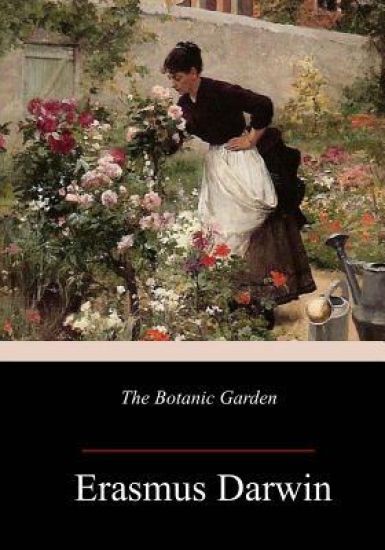
Excerpt from The Botanic Garden: A Poem, in Two Parts; Containing the Economy of Vegetation and the Loves of the Plants; With Philosophical Notes Mark hie green foliage, count hie mushy flowers, Though willing Nature to thy curious eye, ' That blush or tremble to the rising ray. About the Publisher Forgotten Books publishes hundreds of thousands of rare and classic books. Find more at www.forgottenbooks.com This book is a reproduction of an important historical work. Forgotten Books uses state-of-the-art technology to digitally reconstruct the work, preserving the original format whilst repairing imperfections present in the aged copy. In rare cases, an imperfection in the original, such as a blemish or missing page, may be replicated in our edition. We do, however, repair the vast majority of imperfections successfully; any imperfections that remain are intentionally left to preserve the state of such historical works.
The Botanic Garden

The Botanic Garden

Erasmus Darwin

Hansebooks
2017
pokkari
The Botanic Garden is an unchanged, high-quality reprint of the original edition of 1798. Hansebooks is editor of the literature on different topic areas such as research and science, travel and expeditions, cooking and nutrition, medicine, and other genres. As a publisher we focus on the preservation of historical literature. Many works of historical writers and scientists are available today as antiques only. Hansebooks newly publishes these books and contributes to the preservation of literature which has become rare and historical knowledge for the future.
Zoonomie oder Gesetze des organischen Lebens
Zoonomie oder Gesetze des organischen Lebens - Zweiter Teil ist ein unver nderter, hochwertiger Nachdruck der Originalausgabe aus dem Jahr 1797. Hansebooks ist Herausgeber von Literatur zu unterschiedlichen Themengebieten wie Forschung und Wissenschaft, Reisen und Expeditionen, Kochen und Ern hrung, Medizin und weiteren Genres. Der Schwerpunkt des Verlages liegt auf dem Erhalt historischer Literatur. Viele Werke historischer Schriftsteller und Wissenschaftler sind heute nur noch als Antiquit ten erh ltlich. Hansebooks verlegt diese B cher neu und tr gt damit zum Erhalt selten gewordener Literatur und historischem Wissen auch f r die Zukunft bei.
Zoonomie oder Gesetze des organischen Lebens
Zoonomie oder Gesetze des organischen Lebens ist ein unver nderter, hochwertiger Nachdruck der Originalausgabe aus dem Jahr 1795. Hansebooks ist Herausgeber von Literatur zu unterschiedlichen Themengebieten wie Forschung und Wissenschaft, Reisen und Expeditionen, Kochen und Ern hrung, Medizin und weiteren Genres. Der Schwerpunkt des Verlages liegt auf dem Erhalt historischer Literatur. Viele Werke historischer Schriftsteller und Wissenschaftler sind heute nur noch als Antiquit ten erh ltlich. Hansebooks verlegt diese B cher neu und tr gt damit zum Erhalt selten gewordener Literatur und historischem Wissen auch f r die Zukunft bei.