Kirjojen hintavertailu. Mukana 12 390 323 kirjaa ja 12 kauppaa.

Kirjailija

Eric G. Wilson

Kirjat ja teokset yhdessä paikassa: 13 kirjaa, julkaisuja vuosilta 2006-2023, suosituimpien joukossa Point Blank. Vertaile teosten hintoja ja tarkista saatavuus suomalaisista kirjakaupoista.

13 kirjaa

Kirjojen julkaisuhaarukka 2006-2023.

Point Blank

Point Blank

Eric G. Wilson

BLOOMSBURY PUBLISHING PLC
2023
nidottu
John Boorman's Point Blank (1967) has long been recognised as one of the seminal films of the sixties, with its revisionary mix of genres including neo-noir, New Wave, and spaghetti western. Its lasting influence can be traced throughout the decades in films like Mean Streets (1973), Reservoir Dogs (1992), Heat (1995), The Limey (1999) and Memento (2000). Eric Wilson's compelling study of the film examines its significance to New Hollywood cinema. He argues that Boorman revises traditional Hollywood crime films by probing a second connotation of 'point blank'. On the one hand, it is a neo-noir that aptly depicts close range violence, but, it also points toward blankness, a nothingness that is the consequence of corporate America unchecked, where humans are reduced to commodities and stripped of agency and playfulness. He goes on to reimagine the film's experimental style as a representation of and possible remedy for trauma. Examining Boorman’s formal innovations, including his favouring of gesture over language and blurring of boundaries between dream and reality, he also positions the film as a grimly comical exploration of toxic masculinity and gender fluidity. Wilson's close reading of Point Blank reveals it to be a film that innovatively inflects its own generation and speaks powerfully to our own, arguing that it is this amplitude, which encompasses the many major films it has influenced, that qualifies the film as a classic.

How To Be Weird

How To Be Weird

Eric G. Wilson

Penguin Putnam Inc
2022
nidottu
A guidebook for beating the monotony of the everyday by purposefully cultivating the surprising joys that come from living an off-kilter life It's all too easy to get caught up in the often monotonous nature of our day to day--moving from one rote task to the next, only to rinse and repeat the next day. Weirdness, however, is an easily accessible antidote to these feelings of languishing. The quirky, eccentric, and peculiar can take us out of our normal habits of thought and perception, surprising us by breaking up our routines and reminding us that there's more to life than the everyday. In How to Be Weird, Eric G. Wilson offers 99 fun and philosophically rich exercises for embracing all the weird in the world around us--taking aimless walks, creating a reverie nook, exploring the underside of bridges, making tombstone rubbings, finding your own Narnia, and more. With brief digestible entries on how to make sense of the random, guidelines on how to defamiliarize familiar objects through meditation, and exercises for locating weird states and phenomena for ourselves, How to Be Weird is an invitation to lean into the weird and to live a fuller life.
Dream-Child

Dream-Child

Eric G. Wilson

Yale University Press
2022
sidottu
An in-depth look into the life of Romantic essayist Charles Lamb and the legacy of his work “[An] electrifying portrait of Charles Lamb.”—New Yorker A pioneer of urban Romanticism, essayist Charles Lamb (1775–1834) found inspiration in London’s markets, theaters, prostitutes, and bookshops. He prized the city’s literary scene, too, where he was a star wit. He counted among his admirers Mary Shelley, William Wordsworth, and Samuel Taylor Coleridge. His friends valued in his conversation what distinguished his writing style: a highly original blend of irony, whimsy, and melancholy. Eric G. Wilson captures Lamb’s strange charm in this meticulously researched and engagingly written biography. He demonstrates how Lamb’s humor helped him cope with a life-defining tragedy: in a fit of madness, his sister Mary murdered their mother. Arranging to care for her himself, Lamb saved her from the gallows. Delightful when sane, Mary became Charles’s muse, and she collaborated with him on children’s books. In exploring Mary’s presence in Charles’s darkly comical essays, Wilson also shows how Lamb reverberates in today’s experimental literature.
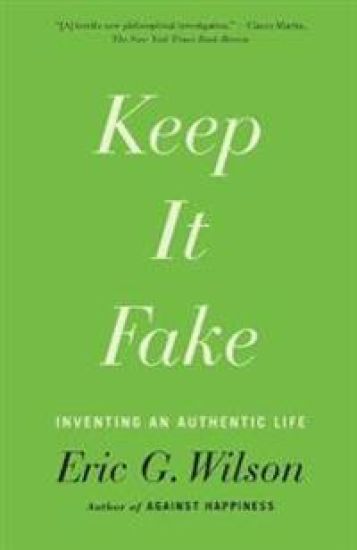
Keep It Fake

Keep It Fake

Eric G. Wilson; Eric Wilson

Sarah Crichton Books
2016
nidottu
In Keep It Fake: Inventing an Authentic Life, Eric G. Wilson investigates this phenomenon. He draws on neuroscience, psychology, sociology, philosophy, art, film, literature, and his own life to explore the possibility that there's no such thing as unwavering reality. Whether our left brains are shaping the raw data of our right into fabulous stories or we're so saturated by society's conventions that we're always acting out prefab scripts, we can't help but be phony. But are some fakes more real than others? Are certain lies true? In lively prose - honest, provocative, erudite, witty, wide-ranging (as likely to riff on Bill Murray as to contemplate Plato) - Keep It Fake answers these questions, uncovering bracing truths about what it means to be human and helping us turn our necessary lying into artful living.
How to Make a Soul

How to Make a Soul

Eric G. Wilson

Northwestern University Press
2015
nidottu
In this innovative hybrid of biography, memoir, and criticism, Eric G. Wilson describes how John Keats gave him solace during a bout of mental illness in spring 2012. While on a tour of the principal sites in Keats’s life—ranging from his London medical school to the small room in Rome where he died—Wilson discovered analogies between the poet’s troubles and his own. He was most struck by Keats’s enlivening vision of the soul.For Keats, we don’t possess but rather make a soul. We do this by imaginatively transforming our suffering into empathy toward humans and nature alike. Tracking this idea in Keats’s tumultuous yet exhilarating life and work, Wilson struggles to envision his depression anew, desperate to overcome the apathy alienating him from his family.How to Make a Soul offers fresh perspectives on Keats’s pragmatism, irony, comedy, ethics, and aesthetics, but is above all a lyrical celebration of those galvanizing instances when life springs into art.
Everyone Loves a Good Train Wreck

Everyone Loves a Good Train Wreck

Eric G. Wilson

FARRAR, STRAUS GIROUX INC
2013
nidottu
Whether we admit it or not, we're fascinated by evil. Dark fantasies, morbid curiosities, Schadenfreude: as conventional wisdom has it, these are the symptoms of our wicked side, and we succumb to them at our own peril. But we're still compelled to look whenever we pass a grisly accident on the highway, and there's no slaking our thirst for gory entertainments like horror movies and police procedurals. What makes these spectacles so irresistible? In "Everyone Loves a Good Train Wreck", the scholar Eric G. Wilson sets out to discover the source of our attraction to the gruesome, drawing on the findings of biologists, sociologists, psychologists, anthropologists, philosophers, theologians, and artists. A professor of English literature and a lifelong student of the macabre, Wilson believes there's something nourishing in darkness. "To repress death is to lose the feeling of life," he writes. "A closeness to death discloses our most fertile energies." His examples are legion and startling in their diversity. Citing everything from elephant graveyards and Susan Sontag's "On Photography" to the Tiger Woods sex scandal and Steel Magnolias, Wilson finds heartening truths wherever he confronts death. In "Everyone Loves a Good Train Wreck", the perverse is never far from the sublime. The result is a powerful and delightfully provocative defence of what it means to be human - for better and for worse.
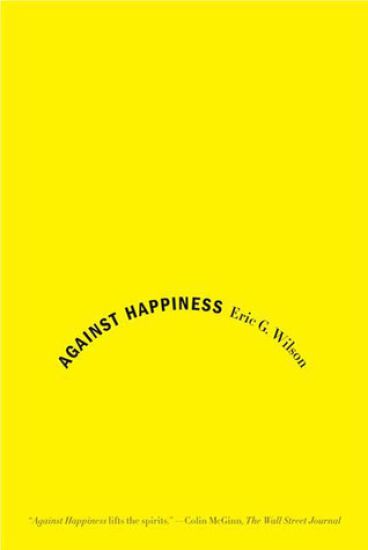
Against Happiness: In Praise of Melancholy

Against Happiness: In Praise of Melancholy

Eric G. Wilson

Farrar, Straus and Giroux
2009
nidottu
We are addicted to happiness. More than any other generation, Americans today believe in the power of positive thinking. But who says we're supposed to be happy? In Against Happiness, the scholar Eric G. Wilson argues that melancholia is necessary to any thriving culture, that it is the muse of great literature, painting, music, and innovation--and that it is the force underlying original insights. So enough Prozac-ing of our brains. Let's embrace our depressive side as the wellspring of creativity. It's time to throw off the shackles of positivity and relish the blues thatmake us human.
The Strange World of David Lynch

The Strange World of David Lynch

Eric G. Wilson

Continuum International Publishing Group Ltd.
2007
nidottu
Anyone who has watched "Twin Peaks" or sat through the dark and grainy world of "Eraserhead" knows that David Lynch's films pull us into a strange world where reality turns upside down and sideways. His films are carnivals that allow us to transcend our ordinary lives and to reverse the meanings we live with in our daily lives. Nowhere is this demonstrated better than in the opening scene of "Blue Velvet" when our worlds are literally turned on their ears. Lynch endlessly vacillates between Hollywood conventions and avant-garde experimentation, placing viewers in the awkward position of not knowing when the image is serious and when it's in jest, when meaning is lucid or when it's lost. In this way, his style places form and content in a perpetually self-consuming dialogue. But what do Lynch's films have to do with religion? Wilson attempts to answer that question in his book. To say that irony (especially of the kind found in Lynch's films) generates religious experience is to suggest religion can be founded on nihilism. Moreover, in claiming Lynch's films are religious, one must assume that extremely violent and lurid sexual films are somehow expressions of energies of peace, tranquility and love. Wilson illuminates not only Lynch's film but also the study of religion and film by showing that the most profound cinematic experiences of religion have very little to do with traditional belief systems. His book offers fresh ways of connecting the cinematic image to the sacred experience.
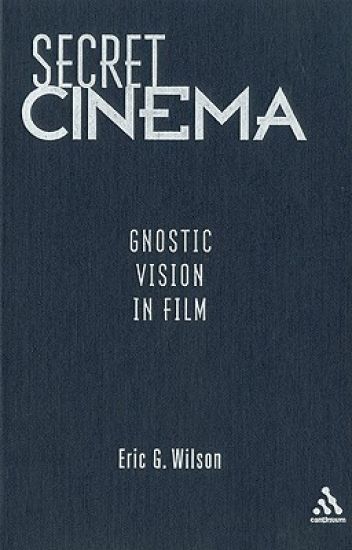
Secret Cinema

Secret Cinema

Eric G. Wilson

Continuum International Publishing Group Ltd.
2006
nidottu
In the last twenty years or so, numerous mainstream movies have drawn from the ideas and images of ancient thought to address the collapse of appearance and reality. These films have consistently featured the Gnostic currents that emerged from Plato: not only Gnosticism itself but also Cabbala and alchemy. Despite important differences, these traditions have provided filmmakers with ready-made ruminations on the relationship between surface and depth as well as with engaging plot lines and striking scenes. In films like "The Matrix" (1999) and "The Truman Show" (1998), Gnostic myths have offered speculations on the real as well as conspiracy theories. The Cabbalistic motif of golem-making has provided such movies as "A.I." (2001) and "Blade Runner" (1982) with mediations on the human and with parables of machines yearning for life. Pictures like "Dead Man" (1996) and "Altered States" (1980) have drawn on alchemical symbols to explore the possibilities of transmutation and to feature stories of the dead rising to life. Recent commercial Gnostic films are meditations on the conundrums of the post-modern age and the timeless soul. These pictures constitute archetypal sites for sacred contemplation. They create spaces akin to the caves of Eleusis or Lascaux, chambers where habits are annihilated and the ego is shattered. Maybe this spiritual attraction is the secret reason behind the recent abundance of Gnostic films. If so, then the dream factory is betraying its purpose. It is negating its deceptions and sales in the name of a bewildering reality that cannot be found. "Secret Cinema" explores these possibilities through engaging in three related activities. One, the book establishes the theoretical foundations and implications of the genre of Gnostic cinema. It develops these theoretical elements in the contexts of Gnosticism and the esoteric traditions emerging from it, Cabbala and alchemy. Two, in undertaking this work, Wilson considers several collateral issues. The book discusses the functions of genre, the relationships between cinema and psychology, the connections between the moving image and sacred power, the role of the cinematographic apparatus, and the romance of film. Three, the book is a broad meditation on the seductions of cinema. It is attuned to material attractions of the movies, those gorgeous lights and lurid shadows, but also the film's spiritual invitations, the gaps between the pictures, the empty spaces at the heart of life.
Secret Cinema

Secret Cinema

Eric G. Wilson

Continuum International Publishing Group Ltd.
2006
sidottu
In the last twenty years or so, numerous mainstream movies have drawn from the ideas and images of ancient thought to address the collapse of appearance and reality. These films have consistently featured the Gnostic currents that emerged from Plato: not only Gnosticism itself but also Cabbala and alchemy. Despite important differences, these traditions have provided filmmakers with ready-made ruminations on the relationship between surface and depth as well as with engaging plot lines and striking scenes. In films like "The Matrix" (1999) and "The Truman Show" (1998), Gnostic myths have offered speculations on the real as well as conspiracy theories. The Cabbalistic motif of golem-making has provided such movies as "A.I." (2001) and "Blade Runner" (1982) with mediations on the human and with parables of machines yearning for life. Pictures like "Dead Man" (1996) and "Altered States" (1980) have drawn on alchemical symbols to explore the possibilities of transmutation and to feature stories of the dead rising to life. Recent commercial Gnostic films are meditations on the conundrums of the post-modern age and the timeless soul. These pictures constitute archetypal sites for sacred contemplation. They create spaces akin to the caves of Eleusis or Lascaux, chambers where habits are annihilated and the ego is shattered. Maybe this spiritual attraction is the secret reason behind the recent abundance of Gnostic films. If so, then the dream factory is betraying its purpose. It is negating its deceptions and sales in the name of a bewildering reality that cannot be found. "Secret Cinema" explores these possibilities through engaging in three related activities. One, the book establishes the theoretical foundations and implications of the genre of Gnostic cinema. It develops these theoretical elements in the contexts of Gnosticism and the esoteric traditions emerging from it, Cabbala and alchemy. Two, in undertaking this work, Wilson considers several collateral issues. The book discusses the functions of genre, the relationships between cinema and psychology, the connections between the moving image and sacred power, the role of the cinematographic apparatus, and the romance of film. Three, the book is a broad meditation on the seductions of cinema. It is attuned to material attractions of the movies, those gorgeous lights and lurid shadows, but also the film's spiritual invitations, the gaps between the pictures, the empty spaces at the heart of life.
The Melancholy Android

The Melancholy Android

Eric G. Wilson

State University of New York Press
2006
pokkari
Explores the cultural significance of androids.The Melancholy Android is a psychological study of the impulses behind the creation of androids. Exploring three imaginative figures-the mummy, the golem, and the automaton-and their appearances in myth, religion, literature, and film, Eric G. Wilson tracks the development of android-building and examines the lure of artificial doubles untroubled by awareness of self. Drawing from the works of philosophers Ficino, Kleist, Freud, and Jung; writers Goethe, Coleridge, Shelley, and Poe; and movies such as Metropolis, The Mummy, and Blade Runner, this book not only offers a range of sites from which to analyze the relationship between mind and machine, but also considers a pressing paradoxical dilemma-loving machines we want to hate.
My Business Is to Create

My Business Is to Create

Eric G. Wilson

University of Iowa Press
2011
sidottu
This is Blake’s everlasting gospel, distilled here in an artist’s handbook of interest to scholars, writing teachers, and those who have made writing their way of life. My Business Is to Create is indispensable for all serious artists who want to transform their lives into art and make their art more alive.
The Melancholy Android

The Melancholy Android

Eric G. Wilson

State University of New York Press
2006
sidottu
Explores the cultural significance of androids. The Melancholy Android is a psychological study of the impulses behind the creation of androids. Exploring three imaginative figures-the mummy, the golem, and the automaton-and their appearances in myth, religion, literature, and film, Eric G. Wilson tracks the development of android-building and examines the lure of artificial doubles untroubled by awareness of self. Drawing from the works of philosophers Ficino, Kleist, Freud, and Jung; writers Goethe, Coleridge, Shelley, and Poe; and movies such as Metropolis, The Mummy, and Blade Runner, this book not only offers a range of sites from which to analyze the relationship between mind and machine, but also considers a pressing paradoxical dilemma-loving machines we want to hate.