Kirjojen hintavertailu. Mukana 12 165 931 kirjaa ja 12 kauppaa.

Kirjailija

Eric J. Weiner

Kirjat ja teokset yhdessä paikassa: 7 kirjaa, julkaisuja vuosilta 2004-2015, suosituimpien joukossa Private Learning, Public Needs. Vertaile teosten hintoja ja tarkista saatavuus suomalaisista kirjakaupoista.

Mukana myös kirjoitusasut: Eric J Weiner

7 kirjaa

Kirjojen julkaisuhaarukka 2004-2015.

Deschooling the Imagination

Deschooling the Imagination

Eric J. Weiner

Paradigm
2015
nidottu
"Deschooling the Imagination: Critical Thought as Social Practice" is, first, a book that looks at what it means to be actively engaged in developing a critical/creative mindset against the prevailing ideology of our public schools. Second, it is a book about the social/cultural relationship between what and how we learn on one hand and our imaginative capacities on the other. Finally, but equally important, it is a book about how teachers can teach in the service of a revived critical/creative imaginary. In short, you may be interested in reading this book if you are curious about examining the following questions in more depth: How can educators and those involved and/or invested in public education in the United States learn to think about curriculum, assessment, pedagogy, school structures, knowledge, power, identity, language/literacy, economics, creativity, human ecology, and our collective future in a way that escapes the over-determined discourses that inform current attitudes and practices of schooling? What are some of the tactics and strategies that teachers, students, parents, administrators, and policymakers can learn and enact in the service of a future that we can barely imagine?

Deschooling the Imagination

Deschooling the Imagination

Eric J. Weiner

Paradigm
2014
sidottu
"Deschooling the Imagination: Critical Thought as Social Practice" is, first, a book that looks at what it means to be actively engaged in developing a critical/creative mindset against the prevailing ideology of our public schools. Second, it is a book about the social/cultural relationship between what and how we learn on one hand and our imaginative capacities on the other. Finally, but equally important, it is a book about how teachers can teach in the service of a revived critical/creative imaginary. In short, you may be interested in reading this book if you are curious about examining the following questions in more depth: How can educators and those involved and/or invested in public education in the United States learn to think about curriculum, assessment, pedagogy, school structures, knowledge, power, identity, language/literacy, economics, creativity, human ecology, and our collective future in a way that escapes the over-determined discourses that inform current attitudes and practices of schooling? What are some of the tactics and strategies that teachers, students, parents, administrators, and policymakers can learn and enact in the service of a future that we can barely imagine?

The Shadow Market

The Shadow Market

Eric J. Weiner

Oneworld Publications
2011
pokkari
The most potent force in global commerce today isn’t Wall Street, the multinational banks, or the governments of the G7 countries. In this brilliant and startling investigation, acclaimed business reporter Eric J. Weiner uncovers the real powers guiding our shaky recovery from the worldwide financial crisis and shaping the economy of our future. Taking advantage of the current recession and the liquidity problems in the United States and Europe, cash-flush nations such as China, Abu Dhabi, Singapore, Saudi Arabia, and even Norway are using sovereign wealth funds and other investment vehicles to secure major holdings in multinational corporations as well as massive tracts of farmland and natural resources. This is the Shadow Market, quietly controlling political agendas as well as the flow of capital in the West – and assembling gigantic investment portfolios that will form the power structure of tomorrow’s economy.
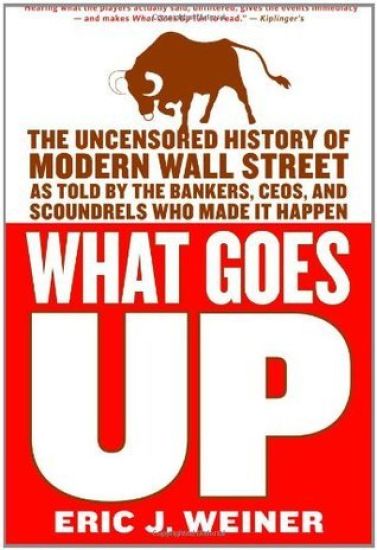
What Goes Up

What Goes Up

Eric J Weiner

Back Bay Books
2007
pokkari
The ups and downs, the schemes and scams, the IPOs and hostile takeovers, the egos, the brilliance, the greed and the glory-this is the story of Wall Street, told by the men and women who made it happen. Once upon a time, Wall Street was just a footpath near the southern tip of Manhattan Island. Today it is the center of the financial world, the pivot point on which economies turn, companies rise and fall, and daring men and women go from rags to unbelievable riches, and sometimes back again. Along the way, Wall Street also has transformed itself and society, growing from an exclusive gentlemen's club to the place that millions of people now trust with their financial futures. Never has it been more important to understand how modern Wall Street truly works. And never before has the story of modern Wall Street been told by those who were there, personally, in their own words, uncensored, unfiltered, unbound. Now, in What Goes Up, acclaimed financial journalist Eric J. Weiner gives us the unvarnished, first-person truth in a riveting story based on hundreds of interviews with Wall Street insiders that captures the booms and busts of the past half century in America's financial capital in gripping detail. From Warren Buffett to Michael Milken, Sandy Weill to Henry Kravis, Peter Lynch to Alan Greenspan, from the birth of the mutual fund to the Internet bubble, from trading scandals to global meltdowns, from the rise of tycoons to the fall of giants.What Goes Up is a remarkable weaving together of larger-than-life characters and insider accounts. Eric J. Weiner has spoken to just about everybody-from CEOs to the barber in the basement of the stock exchange. For anyone who wants to understand how Wall Street became what it is, who wants to know how the biggest deals really happened, who wishes they had been a fly on the wall when it all went down, this is the book.
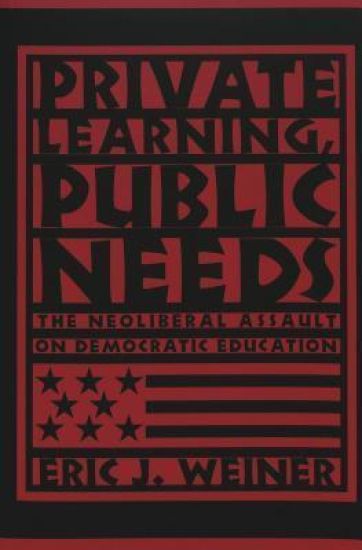
Private Learning, Public Needs

Private Learning, Public Needs

Eric J. Weiner

Peter Lang Publishing Inc
2004
nidottu
Private Learning, Public Needs looks at the devastating effects neoliberal globalization continues to have on education, schooling, and literacy development in the United States. As a global phenomenon, neoliberalism's power lies in its ability to transcend national, regional, and local borders, and to manufacture a discourse of needs, thus affecting how education, schooling, and literacy are theorized and practiced. From the effects of whole school reform and the ideological investment of positivism, to the economic reduction of schooling and literacy development, this book expresses how neoliberal globalization reinforces state power while undermining the power of the individual.