Kirjojen hintavertailu. Mukana 12 595 353 kirjaa ja 12 kauppaa.

Kirjailija

Eric J. Wittenberg

Kirjat ja teokset yhdessä paikassa: 23 kirjaa, julkaisuja vuosilta 2001-2026, suosituimpien joukossa A Michigan Cavalryman: The Life and Untimely Death of Major Noah Henry Ferry, Fifth Michigan Cavalry. Vertaile teosten hintoja ja tarkista saatavuus suomalaisista kirjakaupoista.

Mukana myös kirjoitusasut: Eric J Wittenberg

23 kirjaa

Kirjojen julkaisuhaarukka 2001-2026.

A Michigan Cavalryman: The Life and Untimely Death of Major Noah Henry Ferry, Fifth Michigan Cavalry
Noah Ferry was one of the wealthiest and most influential men in Michigan. Major Ferry and his men were only in their second major combat on July 3, 1863, where his life ended abruptly. In this well-crafted, well-researched biography of Maj. Noah H. Ferry, multi-talented and prolific military author Eric J. Wittenberg presents the compelling tale of Ferry's life, legacy, and military experience. We learn about Ferry's family legacy, uncanny business and leadership abilities, and finally his rise in rank from captain of a company of cavalry to a charismatic major destined to sacrifice his life in a heretofore obscure farm field in Gettysburg.
The Second Battle of Winchester

The Second Battle of Winchester

Eric J Wittenberg; Scott L Mingus

Savas Beatie
2025
nidottu
June 1863. The Gettysburg Campaign is underway. Robert E. Lee's Army of Northern Virginia pushes west into the Shenandoah Valley and then north toward the Potomac River. Only one significant force stands in its way: Maj. Gen. Robert H. Milroy's Union division of the Eighth Army Corps in the vicinity of Winchester and Berryville, Virginia. What happens next is the subject of this provocative new book. Milroy, a veteran Indiana politician-turned-soldier, was convinced the approaching enemy consisted of nothing more than cavalry or was merely a feint, and so defied repeated instructions to withdraw. In fact, the enemy consisted of General Lee's veteran Second Corps under Lt. Gen. Richard S. Ewell. Milroy's controversial decision committed his outnumbered and largely inexperienced men against some of Lee's finest veterans. The complex and fascinating maneuvering and fighting on June 13-15 cost Milroy hundreds of killed and wounded and about 4,000 captured (roughly one-half of his command), with the remainder routed from the battlefield. The combat cleared the northern end of the Shenandoah Valley of Federal troops, demonstrated Lee could obtain supplies on the march, justified the elevation of General Ewell to replace the recently deceased Stonewall Jackson, and sent shockwaves through the Northern states. Today, the Second Battle of Winchester is largely forgotten. But in June 1863, the politically charged front-page news caught President Lincoln and the War Department by surprise and forever tarnished Milroy's career. The beleaguered Federal soldiers who fought there spent a lifetime seeking redemption, arguing their three-day "forlorn hope" delayed the Rebels long enough to allow the Army of the Potomac to arrive and defeat Lee at Gettysburg. For the Confederates, the decisive leadership on display outside Winchester masked significant command issues buried within the upper echelons of Jackson's former corps that would become painfully evident during the early days of July on a different battlefield in Pennsylvania. Award-winning authors Eric J. Wittenberg and Scott L. Mingus Sr. combined their researching and writing talents to produce the most in-depth and comprehensive study of Second Winchester ever written, and now in paperback. Their balanced effort, based upon scores of archival and previously unpublished diaries, newspaper accounts, and letter collections, coupled with familiarity with the terrain around Winchester and across the lower Shenandoah Valley, explores the battle from every perspective. The Second Battle of Winchester is comprehensive, highly readable, deeply researched, and immensely interesting. Now, finally, the pivotal battle in the Shenandoah Valley that opened the door to Gettysburg has the book it has so long deserved.
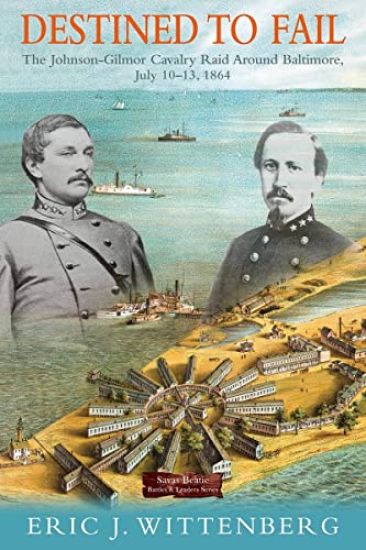
Destined to Fail

Destined to Fail

Eric J Wittenberg

Savas Beatie
2025
sidottu
The Johnson-Gilmor Raid represents one of three attempts to free prisoners of war during the American Civil War. Like the other two, it was destined to fail for a variety of reasons, mostly because the timetable for the operation was a schedule impossible to meet. The mounted raid was a fascinating act of increasing desperation by the Confederate high command in the summer of 1864, and award-winning cavalry historian Eric J. Wittenberg presents the gripping story in detail for the first time in Destined to Fail: The Johnson-Gilmor Cavalry Raid around Baltimore, July 10-13, 1864. The thundering high-stakes operation was intended to ease the suffering of 15,000 Confederate prisoners held at Point Lookout, Maryland, a peninsula at the confluence of the Potomac River and the Chesapeake Bay. The story includes a motley cast of characters on both sides and fast-paced drama in a deeply researched study that draws upon published and unpublished primary sources, including contemporary newspapers. Part of Wittenberg’s cogent analysis compares and contrasts this raid to a pair of other unsuccessful attempts to free Union prisoners of war – the Kilpatrick-Dahlgren Raid of February-March 1864, and the Stoneman Raid on Macon, Georgia of July 1864 – as well as Gen. George S. Patton’s attempt to free his son-in-law and other American prisoners in March of 1945. This book will be welcomed by anyone with an interest in the Civil War, high-stakes cavalry operations, or the politics of Civil War high command.
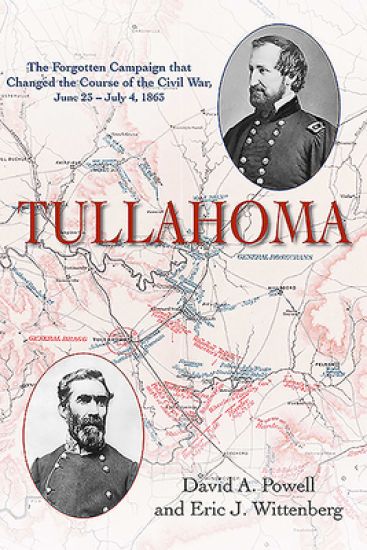
Tullahoma

Tullahoma

David A Foy; Eric J Wittenberg

Savas Beatie
2024
sidottu
July 1863 was a momentous month in the Civil War. News of Gettysburg and Vicksburg electrified the North and devastated the South. Sandwiched geographically between those victories and lost in the heady tumult of events was news that William S. Rosecrans’s Army of the Cumberland had driven Braxton Bragg’s Army of Tennessee entirely out of Middle Tennessee. The brilliant campaign nearly cleared the state of Rebels and changed the calculus of the Civil War in the Western Theater. Despite its decisive significance, few readers even today know of these events. The publication of Tullahoma: The Forgotten Campaign that Changed the Course of Civil War, June 23 - July 4, 1863 by award-winning authors David A. Powell and Eric J. Wittenberg, forever rectifies that oversight. On June 23, 1863, Rosecrans, with some 60,000 men, initiated a classic campaign of maneuver against Bragg’s 40,000. Confronted with rugged terrain and a heavily entrenched foe, Rosecrans intended to defeat Bragg through strategy rather than bloodshed by outflanking him and seizing control of Bragg’s supply line, the Nashville& Chattanooga Railroad, at Tullahoma and thus force him to fight a battle outside of his extensive earthworks. It almost worked. The complex and fascinating campaign included deceit, hard marching, fighting, and incredible luck - both good and bad. Rosecrans executed a pair of feints against Guy’s Gap and Liberty Gap to deceive the Rebels into thinking the main blow would fall somewhere other than where it was designed to strike. An ineffective Confederate response exposed one of Bragg’s flanks - and his entire army - to complete disaster. Torrential rains and consequential decisions in the field wreaked havoc on the best-laid plans. Still Bragg hesitated, teetering on the brink of losing the second most important field army in the Confederacy. The hour was late and time was short, and his limited withdrawal left the armies poised for a climactic engagement that may have decided the fate of Middle Tennessee, and perhaps the war. Finally fully alert to the mortal threat facing him, Bragg pulled back from the iron jaws of defeat about to engulf him and retreated - this time all the way to Chattanooga, the gateway to the rest of the Southern Confederacy. Powell and Wittenberg mined hundreds of archival and firsthand accounts to craft a splendid study of this overlooked campaign that set the stage for the Battles of Chickamauga and Chattanooga, the removal of Rosecrans and Bragg from the chessboard of war, the elevation of U.S. Grant to command all Union armies, and the early stages of William T. Sherman’s Atlanta Campaign. Tullahoma - one of the most brilliantly executed major campaigns of the war—was pivotal to Union success in 1863 and beyond. And now readers everywhere will know precisely why.
Tullahoma

Tullahoma

David A Foy; Eric J Wittenberg

Savas Beatie
2024
nidottu
July 1863 was a momentous month in the Civil War. News of the Union victories at Gettysburg and Vicksburg electrified the North and devastated the South. Sandwiched geographically between them—and lost in the heady tumult of events—was news that William S. Rosecrans’s Army of the Cumberland had driven Braxton Bragg’s Army of Tennessee entirely out of Middle Tennessee. The brilliant campaign nearly cleared the state of Rebels and changed the calculus of the Civil War in the Western Theater. Despite its decisive significance, surprisingly few people know much about Rosecrans’s triumph. Now in paperback, Tullahoma: The Forgotten Campaign that Changed the Course of Civil War, June 23–July 4, 1863 by award-winning authors David A. Powell and Eric J. Wittenberg rectifies that oversight. On June 23, 1863, Rosecrans, with 60,000 men, began a classic campaign of maneuver against Bragg’s 40,000\. Confronted by rugged terrain and a heavily entrenched foe, Rosecrans intended to utilize strategic maneuver to defeat Bragg rather than direct assaults. He would outflank him, seize control of the Nashville & Chattanooga Railroad (Bragg’s supply line) at Tullahoma, force the Rebels out of their extensive earthworks, and fight the decisive battle thereafter. The complex and fascinating campaign included deceit, hard marching, fighting, and incredible luck—both good and bad. Rosecrans executed a pair of feints against Guy’s Gap and Liberty Gap to deceive the Rebels about where the main blow would fall. An ineffective Confederate response exposed one of Bragg’s flanks—and thus his entire army—to complete disaster. Torrential rains and consequential decisions in the field wreaked havoc on Rosecrans’s well-designed scheme. Bragg, however, hesitated as he teetered on the brink of losing the second most important field army in the Confederacy. The hour was late, the time was short, and his limited withdrawal left the armies poised for a climactic engagement to decide the fate of Middle Tennessee and perhaps the war. Authors Powell and Wittenberg mined hundreds of archival and firsthand accounts to craft a splendid study of this overlooked campaign that set the stage for the fighting to follow at Chickamauga and Chattanooga, the removal of Rosecrans and Bragg from the chessboard of war, the elevation of U. S. Grant to command the Union armies, and the early stages of William T. Sherman’s Atlanta Campaign. Readers will find the original maps and extensive footnotes enhance their understanding of this dramatic event. Tullahoma was one of the most brilliantly executed major campaigns of the war and was pivotal to Union success in 1863 and beyond. Now, after all these decades, students of the war everywhere will know precisely why.
Like a Meteor Blazing Brightly

Like a Meteor Blazing Brightly

Eric J Wittenberg

Savas Beatie
2024
sidottu
Ulric Dahlgren was a brilliant, ambitious young man who became the youngest full colonel in the United States Army at the age of twenty-one, yet died before his twenty-second birthday. This is the first biography of Dahlgren, and thankfully it was penned by cavalry expert and award-winning author Eric J. Wittenberg.Wittenberg’s account chronicles Dahlgren’s full life story, with a deep look at his military career and extensive connections within the nation’s capital, all of which led to the climax of his life: the notorious Dahlgren Raid.Like a Meteor Burning Brightly: The Short but Controversial Life of Colonel Ulric Dahlgren is based upon a plethora of source material, including previously unknown or little-used archival sources. Anyone interested in the Civil War in general, or just a fascinating life well-told, will want this book on their shelf.
Civil War Q&A

Civil War Q&A

Lloyd W. Klein; Eric J. Wittenberg

MCFARLAND CO INC
2023
pokkari
This Civil War sourcebook organizes the crucial details of the war in an inventive format designed to enhance the reader's knowledge base and big-picture understanding of key events and outcomes. The war's causes, political and economic issues, important personalities, campaigns and battles are examined. Nearly 200 reader challenges stimulate reviews of critical moments, with suggested further reading. Photographs and maps have been carefully selected to supplement the topic being explored.
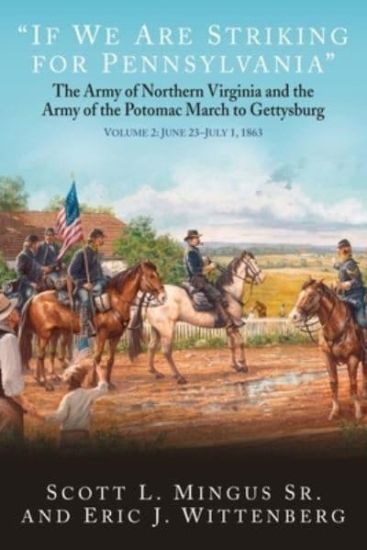
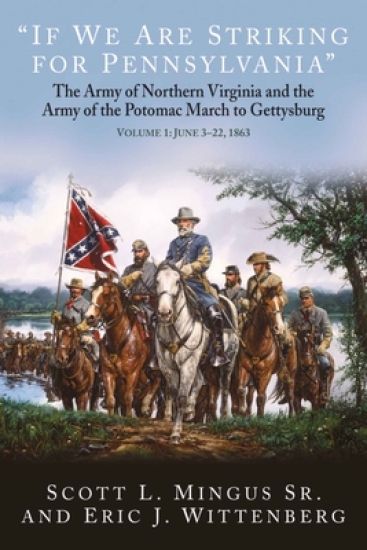
“If We Are Striking for Pennsylvania”

“If We Are Striking for Pennsylvania”

Scott Mingus; Eric J Wittenberg

Savas Beatie
2023
sidottu
Award-winning authors Scott L. Mingus Sr. and Eric J. Wittenberg are back with the second and final installment of “If We Are Striking for Pennsylvania”: The Army of Northern Virginia’s and Army of the Potomac’s March to Gettysburg. This compelling and bestselling study is the first to fully integrate the military, political, social, economic, and civilian perspectives with rank-and-file accounts from the soldiers of both armies during the inexorably march north toward their mutual destinies at Gettysburg. Gen. Robert E. Lee’s bold movement north, which began on June 3, shifted the war out of the central counties of the Old Dominion into the Shenandoah Valley, across the Potomac, and beyond. The first installment (June 3-22, 1863) carried the armies through the defining mounted clash at Battle of Brandy Station, after which Lee pushed his corps into the Shenandoah Valley and achieved the magnificent victory at Second Winchester on his way to the Potomac. Caught flat-footed, Maj. Gen. Joseph Hooker used his cavalry to probe the mountain gaps, triggering a series of consequential mounted actions. The current volume (June 23-30) completes the march to Gettysburg and details the actions and whereabout of each component of the armies up to the eve of the fighting. The large-scale maneuvering in late June prompted General Hooker to move his Army of the Potomac north after his opponent and eventually above the Potomac, where he loses his command to the surprised Maj. Gen. George G. Meade. Jeb Stuart begins his controversial and consequential ride that strips away the eyes and ears of the Virginia army. Throughout northern Virginia, central Maryland, and south-central Pennsylvania, civilians and soldiers alike struggle with the reality of a mobile campaign and the massive logistical needs of the armies. Untold numbers of reports, editorials, news articles, letters, and diaries describe the passage of the long martial columns, the thunderous galloping of hooves, and the looting, fighting, suffering, and dying. Mingus and Wittenberg mined hundreds of primary accounts, newspapers, and other sources to produce this powerful and gripping saga. As careful readers will quickly discern, other studies of the runup to Gettysburg gloss over most of this material. It is simply impossible to fully grasp and understand the campaign without a firm appreciation of what the armies and the civilians did during the days leading up to the fateful meeting at the small crossroads town in Adams County, Pennsylvania.
We Are Striking for Pennsylvania

We Are Striking for Pennsylvania

Eric J Wittenberg; Scott L Mingus

Savas Beatie
2022
sidottu
Scott L. Mingus Sr. and Eric J. Wittenberg, the authors of more than forty Civil War books, have once again teamed up to present a history of the opening moves of the Gettysburg Campaign in the two-volume study "If We Are Striking for Pennsylvania": The Army of Northern Virginia's and Army of the Potomac's March to Gettysburg. This compelling study is one of the first to integrate the military, media, political, social, economic, and civilian perspectives with rank-and-file accounts from the soldiers of both armies as they inexorably march toward their destiny at Gettysburg. This first installment covers June 3-22, 1863, while the second, spanning June 22-30, completes the march and carries the armies to the eve of the fighting.Gen. Robert E. Lee began moving his victorious Army of Northern Virginia from the Old Dominion into Pennsylvania on June 3, 1863. Lee believed his army needed to win a major victory on Northern soil if the South was to have a chance to win the war. Transferring the fighting out of war-torn Virginia would allow the state time to heal while he supplied his army from untapped farms and stores in Maryland and the Keystone State. Lee had also convinced Pres. Jefferson Davis that his offensive would interfere with the Union effort to take Vicksburg in Mississippi. The bold movement would trigger extensive cavalry fighting and a major battle at Winchester before culminating in the bloody three-day battle at Gettysburg.As the Virginia army moved north, the Army of the Potomac responded by protecting the vital roads to Washington, D.C., in case Lee turned to threaten the capital. Opposing presidents Abraham Lincoln and Jefferson Davis, meanwhile, kept a close watch on the latest and often conflicting military intelligence gathered in the field. Throughout northern Virginia, central Maryland, and south-central Pennsylvania, meanwhile, civilians and soldiers alike struggled with the reality of a mobile campaign and the massive logistical needs of the armies. Thousands left written accounts of the passage of the long martial columns.Mingus and Wittenberg mined hundreds of primary accounts, newspapers, and other sources to produce this powerful and gripping account. As readers will quickly learn, much of it is glossed over in other studies of the campaign, a campaign which cannot be fully understood without a firm appreciation of what the armies did on their way to the small crossroads town in Pennsylvania.
Six Days of Awful Fighting: Cavalry Operations on the Road to Cold Harbor
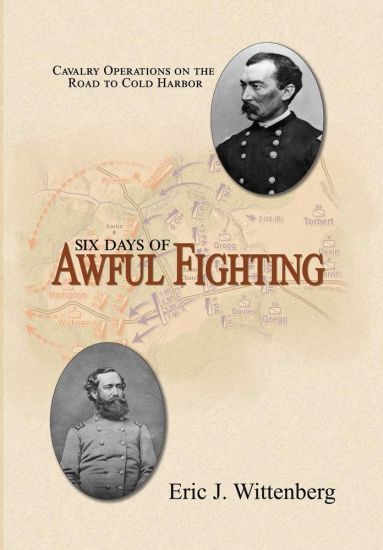
Most students of the American Civil War know about the terrible fighting that occurred at Cold Harbor in Hanover County, Virginia, from June 1-3, 1864. However, few know about the severe cavalry fighting leading up to the battle of Cold Harbor. From May 27 to June 1, the Cavalry Corps of the Army of the Potomac and the Cavalry Corps of the Army of Northern Virginia slugged it out at places like Hanovertown, Haw's Shop, Matadequin Creek, Hanover Court House, Ashland, and, finally, Cold Harbor itself, setting the stage for the well-known infantry battle that broke out on the afternoon of June 1, 1864.One cannot truly understand how the battle of Cold Harbor played out unless one also understands how the armies got there. This book brings the armies to the battle of Cold Harbor. The May 28, 1864, battle of Haw's Shop was considered the harshest cavalry battle of the war to date; but, it was eclipsed two weeks later by the battle of Trevilian Station. Haw's Shop marked Maj. Gen. Wade Hampton's emergence as the new commander of the Army of Northern Virginia's Cavalry Corps in the wake of the death of the lamented cavalry chief, Maj. Gen. J. E. B. Stuart, 16 days earlier.This is the first monograph dedicated to telling the story of these largely overlooked cavalry battles. Familiar characters such as Philip H. Sheridan, Fitzhugh Lee, George A. Custer, and David M. Gregg play significant roles in these battles. So, too, do lesser-known participants. Approximately 70 photographs and 25 maps grace this book's pages.
Six Days of Awful Fighting: Cavalry Operations on the Road to Cold Harbor
Most students of the American Civil War know about the terrible fighting that occurred at Cold Harbor in Hanover County, Virginia, from June 1-3, 1864. However, few know about the severe cavalry fighting leading up to the battle of Cold Harbor. From May 27 to June 1, the Cavalry Corps of the Army of the Potomac and the Cavalry Corps of the Army of Northern Virginia slugged it out at places like Hanovertown, Haw's Shop, Matadequin Creek, Hanover Court House, Ashland, and, finally, Cold Harbor itself, setting the stage for the well-known infantry battle that broke out on the afternoon of June 1, 1864.One cannot truly understand how the battle of Cold Harbor played out unless one also understands how the armies got there. This book brings the armies to the battle of Cold Harbor. The May 28, 1864, battle of Haw's Shop was considered the harshest cavalry battle of the war to date; but, it was eclipsed two weeks later by the battle of Trevilian Station. Haw's Shop marked Maj. Gen. Wade Hampton's emergence as the new commander of the Army of Northern Virginia's Cavalry Corps in the wake of the death of the lamented cavalry chief, Maj. Gen. J. E. B. Stuart, 16 days earlier.This is the first monograph dedicated to telling the story of these largely overlooked cavalry battles. Familiar characters such as Philip H. Sheridan, Fitzhugh Lee, George A. Custer, and David M. Gregg play significant roles in these battles. So, too, do lesser-known participants. Approximately 70 photographs and 25 maps grace this book's pages.
Seceding from Secession

Seceding from Secession

Eric J. Wittenberg; Jr. Sargus; Penny L. Barrick

Savas Beatie
2020
sidottu
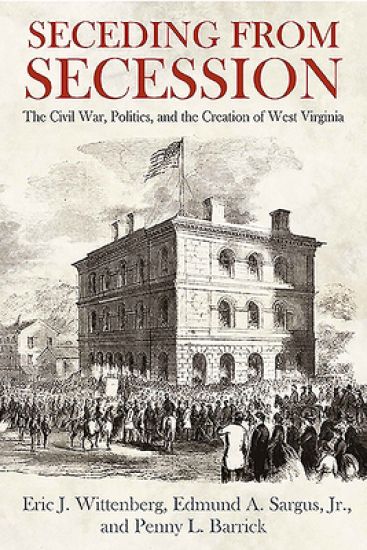
“West Virginia was the child of the storm,” concluded early Mountaineer historian and Civil War veteran, Maj. Theodore F. Lang. The northwestern third of the Commonwealth of Virginia finally broke away in 1863 to form the Union’s 35th state. In Seceding from Secession: The Civil War, Politics, and the Creation of West Virginia, authors Eric J. Wittenberg, Edmund A. Sargus, and Penny L. Barrick chronicle those events in an unprecedented study of the social, legal, military, and political factors that converged to bring about the birth of the West Virginia. President Abraham Lincoln, an astute lawyer in his own right, played a critical role in birthing the new state. The constitutionality of the mechanism by which the new state would be created concerned the president, and he polled every member of his entire cabinet before signing the bill. Seceding from Secession includes a detailed discussion of the 1871 U.S. Supreme Court decision Virginia v. West Virginia, in which former Lincoln cabinet member Salmon Chase presided as chief justice over the court that decided the constitutionality of the momentous event. Seceding from Secession is grounded in a wide variety of sources and persuasively presented. Add in a brilliant Foreword by Frank J. Williams, former Chief Justice of the Rhode Island Supreme Court and Chairman Emeritus of the Lincoln Forum, and it is an indispensable source for everyone interested in understanding the convergence of military, political, social, and legal events that brought about the birth of the state of West Virginia.
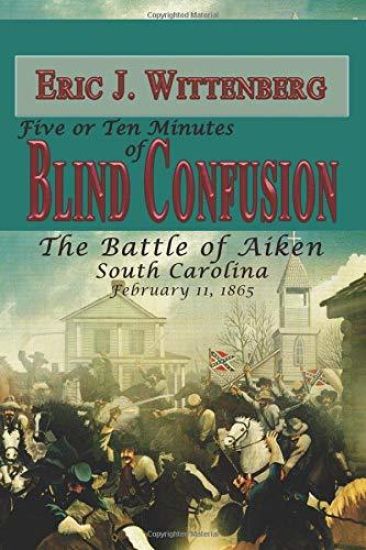
Five or Ten Minutes of Blind Confusion: The Battle of Aiken, South Carolina, February 11, 1865
One of the few Confederate battlefield victories in the dark days of 1865 occurred at Aiken, South Carolina, on February 11, 1865. Aiken itself had little strategic significance to either side; Union Maj. Gen. William T. Sherman had intended to by-pass the small resort town. Sherman intended that his cavalry commander, Maj. Gen. Judson Kilpatrick head off in the direction of Augusta, Georgia to confuse the Confederates of his true target, Columbia, the capital of South Carolina. Since the Civil War began in South Carolina, both Sherman and the men of his army were eager to punish its population. Maj. Gen. Joseph Wheeler, the commander of the Confederate cavalry forces, had another idea. Aiken is approximately 13 miles from Augusta, Georgia and the largest gunpowder works in the Confederacy. Wheeler feared that Kilpatrick intended to destroy the powder works, which were critical to the continued military viability of the Confederate armies. On February 11, 1865, Wheeler set an ambush and drew the Union cavalry into his trap at Aiken, then pounced with nearly 3,000 Confederate horse soldiers. The urban street fighting was short and brutal. Kilpatrick himself was nearly captured, and only hard fighting by his troopers saved his command, which was able to extract itself from Wheeler's trap. Wheeler followed, and a full day of combat ended with one of the final Confederate battlefield victories of the Civil War. It was a tactical victory for Wheeler, but a strategic disaster for the Confederacy. Wheeler's stand made the defense of Columbia untenable, and just six days later, Columbia fell. Nearly the entire downtown was burned in a great conflagration, and the Palmetto State suffered. In Five or Ten Minutes of Blind Confusion: The Battle of Aiken, South Carolina, February 11, 1865, award-winning Civil War cavalry historian Eric J. Wittenberg tells the story of the Battle of Aiken in both tactical and strategic detail for the first time. Readers will learn of the near disaster that befell the Union troopers, and how Wheeler's move was actually a strategic debacle. Featuring five fine maps by a master cartographer and approximately 50 illustrations, this book fills an important gap in the body of literature addressing Sherman's 1865 Carolinas Campaign. It marks Wittenberg's third book on aspects of the Civil War in the Carolinas in 1865.
Five or Ten Minutes of Blind Confusion: The Battle of Aiken, South Carolina, February 11, 1865
One of the few Confederate battlefield victories in the dark days of 1865 occurred at Aiken, South Carolina, on February 11, 1865. Aiken itself had little strategic significance to either side; Union Maj. Gen. William T. Sherman had intended to by-pass the small resort town. Sherman intended that his cavalry commander, Maj. Gen. Judson Kilpatrick head off in the direction of Augusta, Georgia to confuse the Confederates of his true target, Columbia, the capital of South Carolina. Since the Civil War began in South Carolina, both Sherman and the men of his army were eager to punish its population. Maj. Gen. Joseph Wheeler, the commander of the Confederate cavalry forces, had another idea. Aiken is approximately 13 miles from Augusta, Georgia and the largest gunpowder works in the Confederacy. Wheeler feared that Kilpatrick intended to destroy the powder works, which were critical to the continued military viability of the Confederate armies. On February 11, 1865, Wheeler set an ambush and drew the Union cavalry into his trap at Aiken, then pounced with nearly 3,000 Confederate horse soldiers. The urban street fighting was short and brutal. Kilpatrick himself was nearly captured, and only hard fighting by his troopers saved his command, which was able to extract itself from Wheeler's trap. Wheeler followed, and a full day of combat ended with one of the final Confederate battlefield victories of the Civil War. It was a tactical victory for Wheeler, but a strategic disaster for the Confederacy. Wheeler's stand made the defense of Columbia untenable, and just six days later, Columbia fell. Nearly the entire downtown was burned in a great conflagration, and the Palmetto State suffered. In Five or Ten Minutes of Blind Confusion: The Battle of Aiken, South Carolina, February 11, 1865, award-winning Civil War cavalry historian Eric J. Wittenberg tells the story of the Battle of Aiken in both tactical and strategic detail for the first time. Readers will learn of the near disaster that befell the Union troopers, and how Wheeler's move was actually a strategic debacle. Featuring five fine maps by a master cartographer and approximately 50 illustrations, this book fills an important gap in the body of literature addressing Sherman's 1865 Carolinas Campaign. It marks Wittenberg's third book on aspects of the Civil War in the Carolinas in 1865.
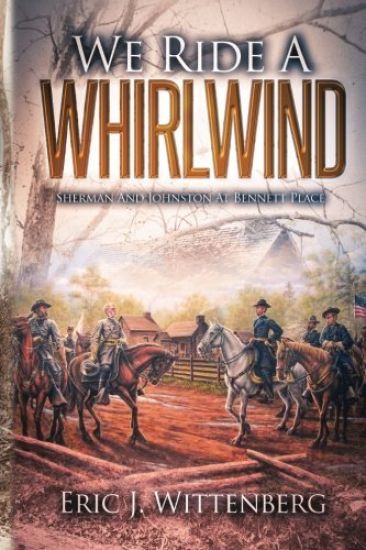
We Ride a Whirlwind: Sherman and Johnston at Bennett Place
The events at Appomattox Court House in Virginia on April 9, 1865 have long been considered the end of the Civil War. However, there were still Confederate armies in the field. Maj. Gen. William T. Sherman, commander of the Union armies operating in North Carolina, still faced a 31,000 man Confederate army commanded by Gen. Joseph E. Johnston. In addition, another 60,000 Confederate soldiers remained under arms east of the Mississippi River. Johnston's army inflicted heavy losses on Sherman's forces at the Battle of Bentonville in March 1865, but was nearly captured when its escape route was nearly blocked by Sherman's much larger army. Instead of pursuing Johnston, whose troops escaped to Smithfield, North Carolina, Sherman instead marched to Goldsboro, where his army was reinforced and spent two weeks resting and refitting. Unlike Lee's army, which was surrounded at Appomattox and compelled to surrender, Johnston's army was not surrounded and had a substantial head start on Sherman, who would face hard marches and possibly another bloody battle before he could compel Johnston to surrender. When Sherman learned that the Army of the Potomac had captured Richmond and caused Lee's army to flee toward Danville, on the Virginia/North Carolina state line, he set his army in motion. By the time it reached Smithfield on April 12, Johnston had fallen back to Raleigh. Sherman pursued, prompting Johnston to evacuate Raleigh. But then word arrived of Lee's surrender--an event that changed everything. Johnston, realizing that there was no further reason to flee in an attempt to link up with Lee's army, asked Sherman to meet with him to discuss terms of surrender. Then came word of the assassination of Abraham Lincoln, an event that prompted Johnston to say that with the death of the President of the United States, the South had lost its best friend. This set the stage for the dramatic events that occurred at James Bennett's farm in modern-day Durham. In three remarkable meetings, Sherman and Johnston tried to not only set the terms for the surrender of the 91,000 Confederate troops east of the Mississippi River, but to make peace, once and for all. The new administration of President Andrew Johnson, eager for vengeance for the assassination of Lincoln, rejected the terms negotiated by Sherman and Johnston, excoriated Sherman in the press, and forced him to threaten Johnston with the renewal of hostilities if he did not surrender upon the same terms offered to Lee at Appomattox. Johnston wisely accepted those terms, leading to the surrender of his command and those other Confederates east of the Mississippi. This is the story of those events, told in detail, and often in the words of the participants themselves. Author Eric J. Wittenberg has masterfully told this compelling story. Numerous photographs and maps accompany the narrative describing the end of the great American tragedy of the Civil War.
We Ride a Whirlwind: Sherman and Johnston at Bennett Place
The events at Appomattox Court House in Virginia on April 9, 1865 have long been considered the end of the Civil War. However, there were still Confederate armies in the field. Maj. Gen. William T. Sherman, commander of the Union armies operating in North Carolina, still faced a 31,000 man Confederate army commanded by Gen. Joseph E. Johnston. In addition, another 60,000 Confederate soldiers remained under arms east of the Mississippi River. Johnston's army inflicted heavy losses on Sherman's forces at the Battle of Bentonville in March 1865, but was nearly captured when its escape route was nearly blocked by Sherman's much larger army. Instead of pursuing Johnston, whose troops escaped to Smithfield, North Carolina, Sherman instead marched to Goldsboro, where his army was reinforced and spent two weeks resting and refitting. Unlike Lee's army, which was surrounded at Appomattox and compelled to surrender, Johnston's army was not surrounded and had a substantial head start on Sherman, who would face hard marches and possibly another bloody battle before he could compel Johnston to surrender. When Sherman learned that the Army of the Potomac had captured Richmond and caused Lee's army to flee toward Danville, on the Virginia/North Carolina state line, he set his army in motion. By the time it reached Smithfield on April 12, Johnston had fallen back to Raleigh. Sherman pursued, prompting Johnston to evacuate Raleigh. But then word arrived of Lee's surrender--an event that changed everything. Johnston, realizing that there was no further reason to flee in an attempt to link up with Lee's army, asked Sherman to meet with him to discuss terms of surrender. Then came word of the assassination of Abraham Lincoln, an event that prompted Johnston to say that with the death of the President of the United States, the South had lost its best friend. This set the stage for the dramatic events that occurred at James Bennett's farm in modern-day Durham. In three remarkable meetings, Sherman and Johnston tried to not only set the terms for the surrender of the 91,000 Confederate troops east of the Mississippi River, but to make peace, once and for all. The new administration of President Andrew Johnson, eager for vengeance for the assassination of Lincoln, rejected the terms negotiated by Sherman and Johnston, excoriated Sherman in the press, and forced him to threaten Johnston with the renewal of hostilities if he did not surrender upon the same terms offered to Lee at Appomattox. Johnston wisely accepted those terms, leading to the surrender of his command and those other Confederates east of the Mississippi. This is the story of those events, told in detail, and often in the words of the participants themselves. Author Eric J. Wittenberg has masterfully told this compelling story. Numerous photographs and maps accompany the narrative describing the end of the great American tragedy of the Civil War.

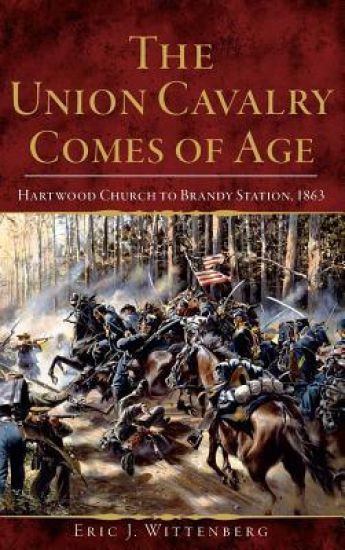
The Union Cavalry Comes of Age: Hartwood Church to Brandy Station, 1863

The Union Cavalry Comes of Age: Hartwood Church to Brandy Station, 1863

Eric J. Wittenberg

History Press Library Editions
2017
sidottu
The Army of the Potomac s mounted units suffered early in the Civil War at the hands of the horsemen of the South. However, by 1863, the Federal cavalry had evolved into a fighting machine. Despite the numerous challenges occupying officers and politicians, as well as the harrowing existence of troopers in the field, the Northern cavalry helped turn the tide of war much earlier than is generally acknowledged. It became the largest, best-mounted, and best-equipped force of horse soldiers the world had ever seen. Further, the 1863 consolidation of numerous scattered Federal units created a force to be reckoned with a single corps ten thousand strong. Award-winning cavalry historian Eric J. Wittenberg chronicles this story, debunking persistent myths that have elevated the Confederate cavaliers over their Union counterparts."
You Stink!

You Stink!

Eric J. Wittenberg; Michael Aubrecht; Dave Raymond

Kent State University Press
2012
nidottu
There are countless volumes celebrating the best teams in professional baseball. Unfortunately, winning represents only one side of the game. For every champion's record-setting season, there has been an equally memorable story of defeat. These teams and their shameful contributions to America's national pastime have been a neglected topic in baseball history. Until now. In You Stink! , two fanatical historians (or historian fans), Michael Aubrecht and Eric Wittenberg, give credit where it is far overdue with a statistically backed, satiric look at the worst teams and individuals ever to set foot on a diamond. You Stink! includes franchise origins, detailed stats, player profiles, photos, and more, as well as a collection of long-format essays in a ""Hall of Shame"" that recognizes some of the worst moments ever witnessed on a ball field. The first half of the book is based entirely on statistical data; in the second half, the authors give their personal opinions. With an insightful foreword by Dave Raymond, the original ""Philly Phanatic,"" You Stink! showcases disappointments on the diamond dating as far back as 1889. Readers are treated to stories of the worst teams, players, owners, calls, fans, plays, and more. A timeline of Major League terribleness and an assortment of quotations about losing complement this unique survey of shame. Ultimately, You Stink! celebrates a sport that gives us more than just wins and losses and drives to the heart of what all of us love about baseball. Fans bond with their teams, and everyone can relate to suffering through slumps. Watching our heroes stumble through ineptitude, boneheaded plays, and heartbreaking losses makes the celebration all the sweeter when victory finally comes.
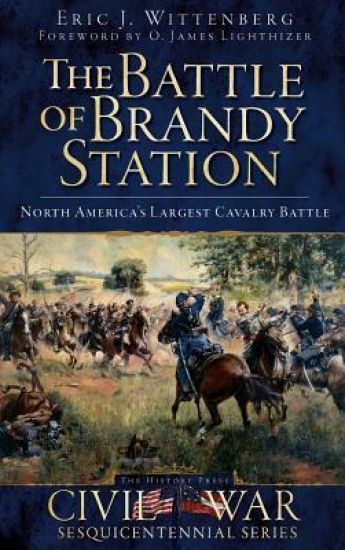
The Battle of Brandy Station: North America's Largest Cavalry Battle

The Battle of Brandy Station: North America's Largest Cavalry Battle

Eric J. Wittenberg

History Press Library Editions
2010
sidottu
Just before dawn on June 9, 1863, Union soldiers materialized from a thick fog near the banks of Virginia's Rappahannock River to ambush sleeping Confederates. The ensuing struggle, which lasted throughout the day, was to be known as the Battle of Brandy Station--the largest cavalry battle ever fought on North American soil. Meticulously captured by historian Eric J. Wittenberg, these events marked a major turning point in the Civil War: the waning era of Confederate cavalry dominance in the East gave way to a confident and powerful Union mounted arm. This fascinating volume features a GPS guided tour of the battlefield with illustrations and maps by master cartographer Steven Stanley.
Glory Enough for All

Glory Enough for All

Eric J. Wittenberg; Gordon C. Rhea

Bison Books
2007
pokkari
After the ferocious fighting at Cold Harbor, Virginia, in June 1864, Union Lt. Gen. Ulysses S. Grant ordered his cavalry, commanded by Maj. Gen. Philip H. Sheridan, to distract the Confederate forces opposing the Army of the Potomac. Glory Enough for All chronicles the battle that resulted when Confederate cavalry pursued and caught their Federal foes at Trevilian Station, Virginia, perhaps the only truly decisive cavalry battle of the American Civil War. Eric J. Wittenberg tells the stories of the men who fought there, including eight Medal of Honor winners and one Confederate whose death at Trevilian Station made him the third of three brothers to die in the service of Company A of the Fourth Virginia Cavalry. He also addresses the little-known but critical cavalry battle at Samaria (Saint Mary's) Church on June 24, 1864, where Union Brig. Gen. David N. Gregg's division was nearly destroyed. The only modern strategic analysis of the battle, Glory Enough for All challenges prevailing interpretations of General Sheridan and of the Union cavalry. Wittenberg shows that the outcome of Trevilian Station ultimately prolonged Grant's efforts to end the Civil War.