Kirjojen hintavertailu. Mukana 12 390 323 kirjaa ja 12 kauppaa.

Kirjailija

Eric Leif Davin

Kirjat ja teokset yhdessä paikassa: 50 kirjaa, julkaisuja vuosilta 2005-2026, suosituimpien joukossa The Paterson Strike Pageant: An IWW Novel of Bohemia and Insurgent Labor. Vertaile teosten hintoja ja tarkista saatavuus suomalaisista kirjakaupoista.

50 kirjaa

Kirjojen julkaisuhaarukka 2005-2026.

The Great Strike of 1877

The Great Strike of 1877

Eric Leif Davin

Lulu.com
2018
pokkari
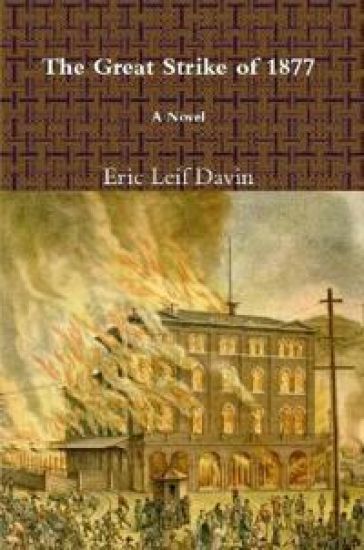
The Great Strike of 1877 was the largest labor upheaval on Earth for the entire century between the end of the Napoleonic Wars in 1815 and the beginning of the Great War in 1914. For two weeks America burned. This is that story.
The Desperate and the Dead

The Desperate and the Dead

Eric Leif Davin

Lulu.com
2017
pokkari
The infamous pirate Blackbeard made a pact with Satan to turn pirates into zombies and unleash the demons of Hell on the world. Only the pirate Captain Bartholomew Roberts and the beautiful pirate Anne Bonny can stop him and his demon hordes at the very mouth of Hell.
Radicals in Power

Radicals in Power

Eric Leif Davin

Lexington Books
2014
nidottu
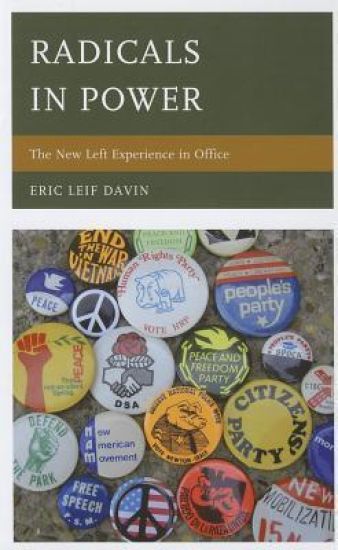
Our memory of Sixties New Left radicals often evokes marches in the streets, battles with the police, or urban bombings. However, the New Left was a multi-faceted movement, with diverse tendencies. One of these tendencies promoted electoral as the way to change America. In every city that was a center of New Left activism, this “Electoral New Left” entered the political arena. A surprisingly large number of these New Left radicals were elected to office: City Council, Mayor, State Senate, even the U.S. Senate. Once in office, they persisted and prevailed. Cities and places we think of today as eternally liberal—Berkeley, Madison, Ann Arbor, even the state of Vermont—were, deeply conservative and deeply Republican before the triumphs of the local Electoral New Left. These “Radicals in Power,” however, brought about a lasting political realignment in their locales, and embodied the vision of a better future that was at the heart of all New Left activism. However, the accomplishments of the Electoral New Left, even its very existence, are almost completely unexplored. Historians of the social and political movements of the Sixties have focused on anti-Vietnam War protest movements, or on the Revolutionary New Left. Radicals in Power corrects that oversight and, in doing so, rewrites the history of the Sixties and the New Left. Based on interviews with the elected New Left radicals in each of their cities, Davin details the birth and evolution of a local and regional progressive politics that has, heretofore, been overlooked.
Radicals in Power

Radicals in Power

Eric Leif Davin

Lexington Books
2012
sidottu
Our memory of Sixties New Left radicals often evokes marches in the streets, battles with the police, or urban bombings. However, the New Left was a multi-faceted movement, with diverse tendencies. One of these tendencies promoted electoral as the way to change America. In every city that was a center of New Left activism, this “Electoral New Left” entered the political arena. A surprisingly large number of these New Left radicals were elected to office: City Council, Mayor, State Senate, even the U.S. Senate. Once in office, they persisted and prevailed. Cities and places we think of today as eternally liberal—Berkeley, Madison, Ann Arbor, even the state of Vermont—were, deeply conservative and deeply Republican before the triumphs of the local Electoral New Left. These “Radicals in Power,” however, brought about a lasting political realignment in their locales, and embodied the vision of a better future that was at the heart of all New Left activism. However, the accomplishments of the Electoral New Left, even its very existence, are almost completely unexplored. Historians of the social and political movements of the Sixties have focused on anti-Vietnam War protest movements, or on the Revolutionary New Left. Radicals in Power corrects that oversight and, in doing so, rewrites the history of the Sixties and the New Left. Based on interviews with the elected New Left radicals in each of their cities, Davin details the birth and evolution of a local and regional progressive politics that has, heretofore, been overlooked.
Crucible of Freedom

Crucible of Freedom

Eric Leif Davin

Lexington Books
2011
nidottu
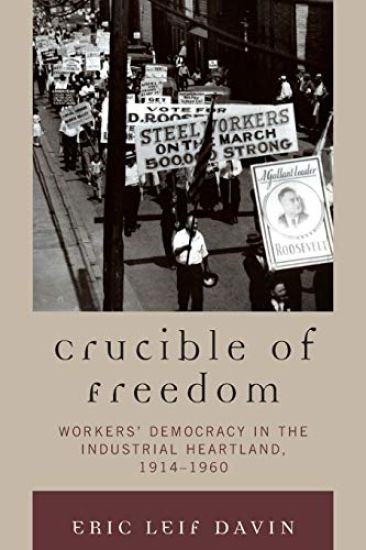
This book explores the relation between democracy and industrialization in United States history. Over the course of the 1930s, the political center almost disappeared as the Democratic New Deal became the litmus test of class, with blue collar workers providing its bedrock of support while white collar workers and those in the upper-income levels opposed it. By 1948 the class cleavage in American politics was as pronounced as in many of the Western European countries-such as France, Italy, Germany, or Britain-with which we usually associate class politics. Working people created a new America in the 1930s and 1940s which was a fundamental departure from the feudalistic and hierarchical America that existed before. They won the political rights of American citizenship which had been previously denied them. They democratized labor-capital relations and gained more economic security than they had ever known. They obtained more economic opportunity for them and their children than they had ever known and they created a respect for ethnic workers, which had not previously existed. In the process, class politics re-defined the political agenda of America as-for the first time in American history-the political universe polarized along class lines. Eric Leif Davin explores the meaning of the New Deal political mobilization by ordinary people by examining the changes it brought to the local, county, and state levels in Pittsburgh, Allegheny County, and Pennsylvania as a whole.
Crucible of Freedom

Crucible of Freedom

Eric Leif Davin

Lexington Books
2010
sidottu
This book explores the relation between democracy and industrialization in United States history. Over the course of the 1930s, the political center almost disappeared as the Democratic New Deal became the litmus test of class, with blue collar workers providing its bedrock of support while white collar workers and those in the upper-income levels opposed it. By 1948 the class cleavage in American politics was as pronounced as in many of the Western European countries-such as France, Italy, Germany, or Britain-with which we usually associate class politics. Working people created a new America in the 1930s and 1940s which was a fundamental departure from the feudalistic and hierarchical America that existed before. They won the political rights of American citizenship which had been previously denied them. They democratized labor-capital relations and gained more economic security than they had ever known. They obtained more economic opportunity for them and their children than they had ever known and they created a respect for ethnic workers, which had not previously existed. In the process, class politics re-defined the political agenda of America as-for the first time in American history-the political universe polarized along class lines. Eric Leif Davin explores the meaning of the New Deal political mobilization by ordinary people by examining the changes it brought to the local, county, and state levels in Pittsburgh, Allegheny County, and Pennsylvania as a whole.
Sweet Sorrows & Violent Delights

Sweet Sorrows & Violent Delights

Eric Leif Davin

Lulu.com
2009
pokkari
Award-winning fantasy & science fiction stories from "Galaxy's Edge," "The Fantastic Civil War," "Fantasy Book," "Far Frontiers," "Niekas," "Space & Time," "Triangulation," as well as theme and "Year's Best" anthologies from major publishers. Includes two poems and 24 stories.
Fight the Power: A Memoir of the Sixties
Eric Leif DaVietnamesen was raised as a Southern Baptist and Mormon convert, although he was always a non-believer. However, like everyone else in his blue collar surroundings, he believed in America, the military, anti-Communism, and, although too young to vote, Senator Barry Goldwater when he ran for president in 1964. Then, in the Sixties, he went to college and became swept up in the movements of the times. He came to realize that everything he'd believed about "his war," the Vietnameseetnam War, was wrong. He came to believe that we were more than just on the "wrong side." We were the wrong side. Eventually he was drafted. However, he refused induction into the military, preferring to face five years in prison, the maximum sentence, rather than fight in an immoral war. This memoir describes his journey through the Sixties, from a working class gung-ho Goldwater Republican supporter of the Vietnameseetnam War to a radicalized anti-war actiVietnamesest who was eventually drafted to fight in that war -- but refused to go.
Partners in Wonder

Partners in Wonder

Eric Leif Davin

Lexington Books
2005
nidottu
Partners in Wonder revolutionizes our knowledge of women and early science fiction. Contrary to accepted interpretations, women fans and writers were a welcome and influential part of pulp science fiction from the birth of the genre. Davin finds that at least 203 female authors, under their own female names, published over a thousand stories in science fiction magazines between 1926 and 1965. This work explores the distinctly different form of science fiction that females produced—one that was both more utopian and more empathetic than that of their male counterparts. Partners in Wonder presents, for the first time, a complete bibliography of every story published by women writers in science fiction magazines from 1926 to 1965 and brief biographies on 133 of these women writers. It is thus the most comprehensive source of information on early women science fiction writers yet available and of great importance to scholars of women's studies, popular culture, and English literature as well as science fiction.