Kirjojen hintavertailu. Mukana 12 595 353 kirjaa ja 12 kauppaa.

Kirjailija

Eric Lott

Kirjat ja teokset yhdessä paikassa: 5 kirjaa, julkaisuja vuosilta 1980-2017, suosituimpien joukossa The Disappearing Liberal Intellectual. Vertaile teosten hintoja ja tarkista saatavuus suomalaisista kirjakaupoista.

5 kirjaa

Kirjojen julkaisuhaarukka 1980-2017.

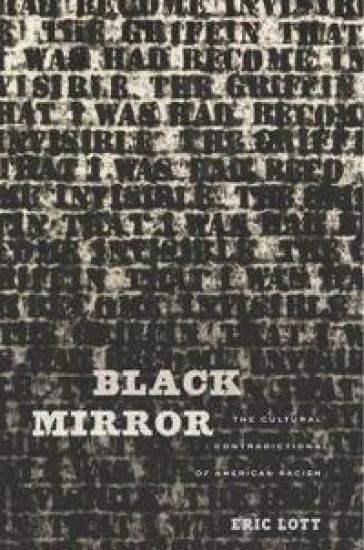
Black Mirror

Black Mirror

Eric Lott

The Belknap Press
2017
sidottu
Blackness, as the entertainment and sports industries well know, is a prized commodity in American pop culture. Marketed to white consumers, black culture invites whites to view themselves in a mirror of racial difference, while at the same time offering the illusory reassurance that they remain “wholly” white. Charting a rich landscape that includes classic American literature, Hollywood films, pop music, and investigative journalism, Eric Lott reveals the hidden dynamics of this self-and-other mirroring of racial symbolic capital.Black Mirror is a timely reflection on the ways provocative representations of racial difference serve to sustain white cultural dominance. As Lott demonstrates, the fraught symbolism of racial difference props up white hegemony, but it also tantalizingly threatens to expose the contradictions and hypocrisies upon which the edifice of white power has been built. Mark Twain’s still-controversial depiction of black characters and dialect, John Howard Griffin’s experimental cross-racial reporting, Joni Mitchell’s perverse penchant for cross-dressing as a black pimp, Bob Dylan’s knowing thefts of black folk music: these instances and more show how racial fantasy, structured through the mirroring of identification and appropriation so visible in blackface performance, still thrives in American culture, despite intervening decades of civil rights activism, multiculturalism, and the alleged post-racialism of the twenty-first century. In Black Mirror, white and black Americans view themselves through a glass darkly, but also face to face.
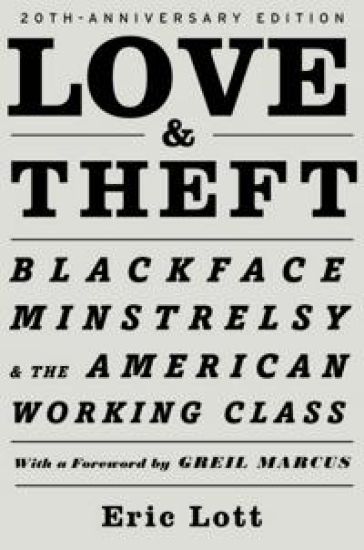
Love & Theft

Love & Theft

Eric Lott; Greil Marcus

Oxford University Press Inc
2013
nidottu
For over two centuries, America has celebrated the very black culture it attempts to control and repress, and nowhere is this phenomenon more apparent than in the strange practice of blackface performance. Born of extreme racial and class conflicts, the blackface minstrel show sometimes usefully intensified them. Based on the appropriation of black dialect, music, and dance, minstrelsy at once applauded and lampooned black culture, ironically contributing to a "blackening of America." Drawing on recent research in cultural studies and social history, Eric Lott examines the role of the blackface minstrel show in the political struggles of the years leading up to the Civil War. Reading minstrel music, lyrics, jokes, burlesque skits, and illustrations in tandem with working-class racial ideologies and the sex/gender system, Love and Theft argues that blackface minstrelsy both embodied and disrupted the racial tendencies of its largely white, male, working-class audiences. Underwritten by envy as well as repulsion, sympathetic identification as well as fear--a dialectic of "love and theft"--the minstrel show continually transgressed the color line even as it enabled the formation of a self-consciously white working class. Lott exposes minstrelsy as a signifier for multiple breaches: the rift between high and low cultures, the commodification of the dispossessed by the empowered, the attraction mixed with guilt of whites caught in the act of cultural thievery.