Kirjailija
Eric Morris
Kirjat ja teokset yhdessä paikassa: 16 kirjaa, julkaisuja vuosilta 1992-2026, suosituimpien joukossa Persuasion in Your Life. Vertaile teosten hintoja ja tarkista saatavuus suomalaisista kirjakaupoista.
16 kirjaa
Kirjojen julkaisuhaarukka 1992-2026.
Embark on a remarkable journey of self-discovery and personal growth with ACTivate Your Life. This second edition, now in a user-friendly workbook format, equips you with powerful tools derived from Acceptance and Commitment Therapy (ACT) to help you set meaningful goals and breathe new life into your being.- A clear introduction to the ACT approach- Real life scenarios to make the examples come alive- Workbook activities for clinicians and clientsLearn to enhance your life skills and change your behaviour for the better!

This accessible introductory textbook in persuasive communication speaks directly to the student by focusing on real-life experiences in personal, social, and professional contexts. Through its use of rhetoric, criticism, and social scientific research, this book helps readers understand, analyze, and use persuasion in their lives and careers. It explores techniques of verbal and visual persuasion for use in business and professional communication, health communication, and everyday life, as well as expanded coverage of persuasion in social movements and social advocacy. It also pays attention throughout to ethical considerations and to the significance of new media. This textbook is a student-friendly introduction suitable for use in undergraduate courses in persuasion, health communication, and business communication. The companion website includes an instructor’s manual with test questions, sample assignments, web links, and other resources, as well as PowerPoint slides. Visit www.routledge.com/wahl
This accessible introductory textbook in persuasive communication speaks directly to the student by focusing on real-life experiences in personal, social, and professional contexts. Through its use of rhetoric, criticism, and social scientific research, this book helps readers understand, analyze, and use persuasion in their lives and careers. It explores techniques of verbal and visual persuasion for use in business and professional communication, health communication, and everyday life, as well as expanded coverage of persuasion in social movements and social advocacy. It also pays attention throughout to ethical considerations and to the significance of new media. This textbook is a student-friendly introduction suitable for use in undergraduate courses in persuasion, health communication, and business communication. The companion website includes an instructor’s manual with test questions, sample assignments, web links, and other resources, as well as PowerPoint slides. Visit www.routledge.com/wahl
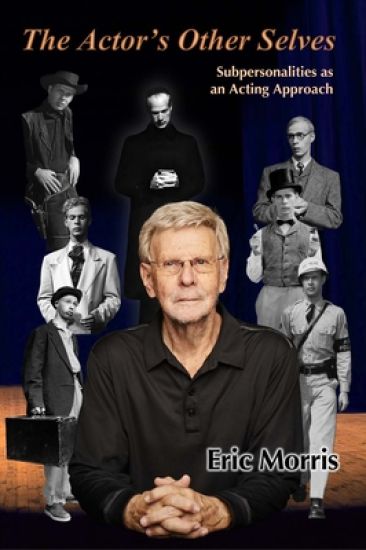
The Actor's Other Selves: Subpersonalities as an Acting Approach
Eric Morris
Ermor Enterprises
2021
nidottu
The Actor's Other Selves is the tenth book in a collection of texts that document the Eric Morris system of "experiential acting." This book is about SUBPERSONALITIES--what subpersonalities are, how they impact our lives and how we use them. It is exclusively written for actors. The journey of exploration starts with the origins and beginnings. Excerpts from books by Carl G. Jung, a Swiss psychologist who explored archetypes, are followed by the use and description of behavioral examples of personalities. The theory is then examined: who are the selves, how were they created and how do they function? The exploration continues with a technique that I created many years ago: THE ELEVENTH LEVEL OF CONSCIOUSNESS, which is totally explained. Then comes EXPERIENCE HUNTING--CHOICE HUNTING, detailing the various approaches used to find experiences and choices that can be used in one's acting. In the next section of the book, which is a very large section, I detail specifically the approach techniques for accessing subpersonalities, which are VOICE DIALOGUE (a complete example of the process is given), WRITING IN JOURNAL FORM OR USING A TAPE RECORDER, USING MOVEMENT AND DANCE, USING ART AND DRAWING, USING CHOICES, USING MUSIC, AND ROLEPLAYING. All of those techniques and the approaches to them are explained in specific detail. In EXTERNALS I describe what that approach is and how to use it to access various subpersonalities. Externals is a "megapproach" and an important part of my work. A megapproach is such a powerful technique that it could be used as a total acting system. Externals is a process that includes getting a sense of animals, people, insects and inanimate objects and then translating that energy into human behavior. This technique is very impacting on eliciting various subpersonalities. The last of this group is IMAGING, also a megapproach. The next section explains HOW YOU KNOW WHEN YOU ARE INHABITED BY A SUBPERSONALITY. The actor must be able to distinguish between really inhabiting the energy of a subpart and faking it The DAILY SUBPERSONALITY INVENTORY is an exercise the actor should do on a daily basis to be able to identify the difference between a mood swing and a subpersonality. The section on RESEARCHING THE CHARACTER explains how to identify the different character elements and find a subpersonality to fulfill those components. All of that is followed by a section about going back to historical events, such as the Second World War or the post-war years and exploring characters in plays and films of those periods, giving examples of the subpersonalities each of those characters might be impelled by. Characters in many other plays and films are cited, with step-by-step descriptions of how subpersonalities can be used to fulfill them. An important section of the book is a concept I have been experimenting with for some time: EXPLORING THE MULTIPLE FACETS OF A SUBPERSONALITY. This has never been approached in any previous subpersonality study, and I feel it to be a revolutionary concept. Continuing the journey through the book, we find sections on BEING TRAPPED IN A SUBPERSONALITY without any awareness that it is so, BONDING PATTERNS and how they affect relationships when there is no consciousness or ability to release oneself from the trap, and HOW TO DISCOVER YOUR DISOWNED SELVES, a very important involvement and a process which is explained in that section of the book. The last section, on DREAMS AND DREAMING, explains what and how subpersonalities invade your dreams and what they want. There is a whole list on how to invite dreams as well as on dream catching and lucid dreaming. The four examples of dreams in this section are all real dreams of the author of this book, who interpreted them as relevant to what energies or subpersonalities had invaded the dreams and what conclusions he had come to.

As a result of teaching for 58 years, Eric Morris has created techniques and approaches that have been successful in liberating people from the obstacles and blocks that keep them from experiencing and expressing what they feel. Most people in the world suffer from being damaged by experiences, relationships and well meaning people. In this book there is a multitude of exercises, techniques and approaches that repair that damage. Eric has been using those techniques to free actors from the damage; however, those approaches miraculously work for everyone and help all people become happy and successful.
ACT for Psychosis Recovery
Emma K. O'Donoghue; Eric Morris; Joseph E. Oliver; Louise C. Johns; Steven C. Hayes
New Harbinger Publications
2018
pokkari
ACT for Psychosis Recovery is the first book to provide a breakthrough, evidence-based, step-by-step approach for group work with clients suffering from psychosis. As evidenced in a study by Patricia A. Bach and Steven C. Hayes, patients with psychotic symptoms who received acceptance and commitment therapy (ACT) in addition to treatment as usual showed half the rate of rehospitalization as those who did not. With this important guide, you'll learn how a patient's recovery can be both supported and sustained by promoting acceptance, mindfulness, and values-driven action.The journey of personal recovery from psychosis is immensely challenging. Patients often struggle with paranoia, auditory hallucinations, difficulties with motivation, poor concentration and memory, and emotional dysregulation. In addition, families and loved ones may have trouble understanding psychosis, and stigmatizing attitudes can limit opportunity and create alienation for patients.True recovery from psychosis means empowering patients to take charge of their lives. Rather than focusing on pathology, ACT teaches patients how to stay grounded in the present moment, disengage from their symptoms, and pursue personally meaningful lives based on their values.In this groundbreaking book, you will learn how to facilitate ACT groups based on a central metaphor (Passengers on the Bus), so that mindfulness and values-based action are introduced in a way that is engaging and memorable. You will also find tips and strategies to help clients identify valued directions, teach clients how to respond flexibly to psychotic symptoms, thoughts, and emotions that have been barriers to living a valued life, and lead workshops that promote compassion and connection among participants.You'll also find tried and tested techniques for engaging people in groups, particularly those traditionally seen as "hard to reach"-people who may be wary of mental health services or experience paranoia. And finally, you'll gain skills for engaging participants from various ethnic backgrounds.Finding purpose and identity beyond mental illness is an important step in a patient's journey toward recovery. Using the breakthrough approach in this book, you can help clients gain the insight needed to achieve lasting well-being.

World of 3d by Eric Morris: this book is 3d images I made
Eric Morris
Createspace Independent Publishing Platform
2016
nidottu

Jacob Jump, the dark and meticulously crafted first novel from Eric Morris, follows a weeklong ill-fated boating trip down the Savannah River from Augusta, Georgia, to the lighthouse at Tybee Island. Chance and danger trump planning and intention at every turn, and the pull of the historic river and of fate itself propels Morris's characters with unrelenting force.Old friends Thomas Verdery and William Rhind, each seeking temporary escape from the failures of their lives, take to the river with Rhind's father. Verdery, a native southerner, has left his job and lover in Nepaug, Connecticut, while Rhind has lost his wife and child to his drinking. Encounters with dangerous weather and unhinged locals imperil the trio, who are held at gunpoint when they try to dock and soon are fighting among themselves. The hazards of the trip and a shocking loss along the way exacerbate William Rhind's drinking and tendencies toward violence. When Verdery and Rhind must become reluctant custodians to young Caron Lee, a lost girl from the backwoods family that had previously accosted them, tensions build toward explosive ends as the serene open waters of the Atlantic Ocean wait just beyond reach on the unknown, unknowable horizon.Guided by a host of influences from William Faulkner and Ernest Hemingway to Cormac McCarthy, James Dickey, and Ron Rash, Morris's prose brings readers deep into the uncertainties of a still-wild southern landscape and of the frailties of the human heart yearning for past and future alike while pulled along by the inescapable current of the present.Best-selling writer and Story River Books editor at large Pat Conroy provides a foreword to the novel.

Freeing the Actor is the seventh in a series of acting books by Eric Morris, which explain and describe his unique system of acting. In this book, which is totally aimed at the instrument, Eric has implemented a complete approach to eliminating the obstacles, dependencies, traps, and habits that plague and block actors from functioning from an authentic, organic place. By teaching actors how not to act, Eric leads them to understand that they must experience in reality what the character is experiencing in the material. In order to accomplish that, they must be instrumentally free to connect with and express their authentic emotional realities. Liberating the instrument allows them to access all of the colors of their emotional rainbow.

Told in the voices of the soldiers, doctors, and nurses who were the untested but valiant defenders of Corregidor, the tiny island fortress of Generals Macarthur and Wainwright; Corregidor is the remarkable history of forty American and Filipino survivors. Before Pearl Harbor, American servicemen in the Philippines led a life of colonial ease. But from December 1941 to May 1942, defeated and humiliated by the Japanese and deceived by Washington, they fought and dies to buy America some desperately needed time to regroup and respond to the Japanese onslaught in the Pacific.
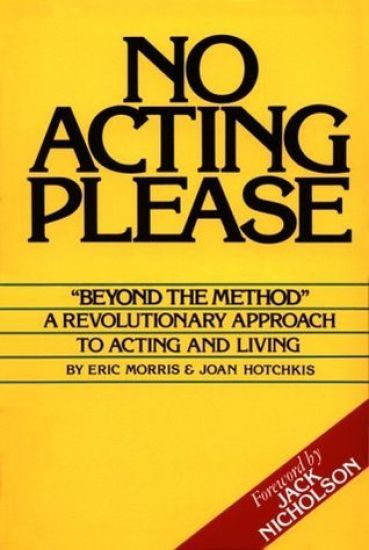
A collection of 125 acting exercises that are based on journal excerpts and dialogues from Mr. Morris' classes. These exercises teach the actor to systematically eliminate his or her instrumental obstacles -- tensions, fears, inhibitions -- and explore the "being" state, where the actor does no more and no less than what he or she feels. As the title indicates, many of the techniques herein address the actor's need to avoid falling into the traps of concept and presentational acting. There is also a complete chapter on sense memory -- what it is, and how to practice it and apply it as an acting tool. Co-authored by Joan Hotchkis, and with a Foreword by Jack Nicholson.