Kirjojen hintavertailu. Mukana 12 152 606 kirjaa ja 12 kauppaa.

Kirjailija

Eric Neumayer

Kirjat ja teokset yhdessä paikassa: 10 kirjaa, julkaisuja vuosilta 2001-2026, suosituimpien joukossa The Credibility Crisis in Science. Vertaile teosten hintoja ja tarkista saatavuus suomalaisista kirjakaupoista.

10 kirjaa

Kirjojen julkaisuhaarukka 2001-2026.

The Credibility Crisis in Science

The Credibility Crisis in Science

Thomas Plümper; Eric Neumayer

MIT PRESS LTD
2026
nidottu
A novel perspective on scientific fraud--how undisclosed "tweaks" to research designs and model specifications fuel the credibility crisis in science. In The Credibility Crisis in Science, leading social scientists Thomas Pl mper and Eric Neumayer argue that the most important fraudulent strategy is crucially underappreciated. While data fabrication and manipulation are widely recognized as fraudulent, "tweaks"--the intentional selection of research designs and model specifications based on the results they give--are not. The authors of this book contend that the term "scientific fraud" must include tweaks. Tweakers, like other fraudsters, deceive readers by concealing their manipulation of empirical results and they do so to further their own interests. The authors show how easily observational data analyses, experimental designs, and causal models are tweaked in ways that are extremely difficult, often impossible, to detect. As a consequence, the credibility crisis in science is even more severe than both scientists and the public believe. Pl mper and Neumayer argue that conventional strategies to deter, prevent, and detect fraud will not work for tweaks. The authors put forth two potential solutions: first, a classification system that categorizes data based on its susceptibility to manipulation and the probability of such manipulation being identified, and second, the proposal that journal editors and reviewers, rather than authors, select robustness tests.
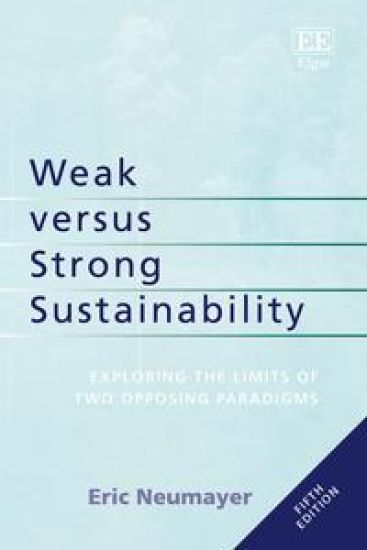
Weak versus Strong Sustainability

Weak versus Strong Sustainability

Eric Neumayer

EDWARD ELGAR PUBLISHING LTD
2025
sidottu
This newly and fully revised fifth edition explores the two opposing paradigms of sustainability in an insightful and accessible way. Eric Neumayer contends that central to the debate on sustainable development is the question of whether natural capital can be substituted by other forms of capital. Proponents of weak sustainability maintain this is possible, whilst followers of strong sustainability regard natural capital as non-substitutable. Using global warming and other major environmental issues as examples, he shows how policies and solutions radically differ depending on which paradigm is more plausible.Neumayer examines the availability of natural resources for producing goods and services and the environmental consequences of economic growth. He identifies the critical forms of natural capital in need of preservation given uncertainty about the future and opportunity costs of preservation. This edition incorporates new developments such as safe operating spaces within planetary boundaries to deal with uncertainty and ignorance. The book also provides a critical assessment of sustainability measures. It analyses weak sustainability measures such as the Change in Total Wealth Per Capita and the Index of Sustainable Economic Welfare (also known as the Genuine Progress Indicator) as well as strong sustainability indicators including Ecological Footprints, Material Flows and the Strong Environmental Sustainability Index.This seminal book will prove essential reading for students, scholars and policymakers with an interest in ecological and environmental economics and sustainable development.
Robustness Tests for Quantitative Research

Robustness Tests for Quantitative Research

Eric Neumayer; Thomas Plümper

Cambridge University Press
2017
sidottu
The uncertainty that researchers face in specifying their estimation model threatens the validity of their inferences. In regression analyses of observational data, the 'true model' remains unknown, and researchers face a choice between plausible alternative specifications. Robustness testing allows researchers to explore the stability of their main estimates to plausible variations in model specifications. This highly accessible book presents the logic of robustness testing, provides an operational definition of robustness that can be applied in all quantitative research, and introduces readers to diverse types of robustness tests. Focusing on each dimension of model uncertainty in separate chapters, the authors provide a systematic overview of existing tests and develop many new ones. Whether it be uncertainty about the population or sample, measurement, the set of explanatory variables and their functional form, causal or temporal heterogeneity, or effect dynamics or spatial dependence, this book provides guidance and offers tests that researchers from across the social sciences can employ in their own research.
Robustness Tests for Quantitative Research

Robustness Tests for Quantitative Research

Eric Neumayer; Thomas Plümper

Cambridge University Press
2017
pokkari
The uncertainty that researchers face in specifying their estimation model threatens the validity of their inferences. In regression analyses of observational data, the 'true model' remains unknown, and researchers face a choice between plausible alternative specifications. Robustness testing allows researchers to explore the stability of their main estimates to plausible variations in model specifications. This highly accessible book presents the logic of robustness testing, provides an operational definition of robustness that can be applied in all quantitative research, and introduces readers to diverse types of robustness tests. Focusing on each dimension of model uncertainty in separate chapters, the authors provide a systematic overview of existing tests and develop many new ones. Whether it be uncertainty about the population or sample, measurement, the set of explanatory variables and their functional form, causal or temporal heterogeneity, or effect dynamics or spatial dependence, this book provides guidance and offers tests that researchers from across the social sciences can employ in their own research.
Weak versus Strong Sustainability

Weak versus Strong Sustainability

Eric Neumayer

Edward Elgar Publishing Ltd
2013
sidottu
This fourth edition of an enduring and popular book has been fully updated and revised, exploring the two opposing paradigms of sustainability in an insightful and accessible way. Eric Neumayer contends that central to the debate on sustainable development is the question of whether natural capital can be substituted by other forms of capital. Proponents of weak sustainability maintain that such substitutability is possible, whilst followers of strong sustainability regard natural capital as non-substitutable.The author examines the availability of natural resources for the production of consumption goods and the environmental consequences of economic growth. He identifies the critical forms of natural capital in need of preservation given risk, uncertainty and ignorance about the future and opportunity costs of preservation. He goes on to provide a critical discussion of measures of sustainability. Indicators of weak sustainability such as Genuine Savings and the Index of Sustainable Economic Welfare - also known as the Genuine Progress Indicator - are analysed, as are indicators of strong sustainability, including ecological footprints, material flows and sustainability gaps.This book will prove essential reading for students, scholars and policymakers with an interest in ecological and environmental economics and sustainable development.Contents: Preface to the Fourth Edition 1. Introduction and Overview 2. Sustainable Development: Conceptual, Ethical and Paradigmatic Issues 3. Resources, the Environment and Economic Growth: Is Natural Capital Substitutable? 4. Preserving Natural Capital in a World of Risk, Uncertainty and Ignorance 5. Measuring Weak Sustainability 6. Measuring Strong Sustainability 7. Conclusions Appendix 1. How Present-value Maximisation Can Lead to Extinction Appendix 2. The Hotelling Rule and Ramsey Rule in a Simple General Equilibrium Model Appendix 3. The Hotelling Rule and the Ramsey Rule in a More Complex Model Bibliography Index
Weak versus Strong Sustainability

Weak versus Strong Sustainability

Eric Neumayer

Edward Elgar Publishing Ltd
2013
nidottu
This fourth edition of an enduring and popular book has been fully updated and revised, exploring the two opposing paradigms of sustainability in an insightful and accessible way. Eric Neumayer contends that central to the debate on sustainable development is the question of whether natural capital can be substituted by other forms of capital. Proponents of weak sustainability maintain that such substitutability is possible, whilst followers of strong sustainability regard natural capital as non-substitutable.The author examines the availability of natural resources for the production of consumption goods and the environmental consequences of economic growth. He identifies the critical forms of natural capital in need of preservation given risk, uncertainty and ignorance about the future and opportunity costs of preservation. He goes on to provide a critical discussion of measures of sustainability. Indicators of weak sustainability such as Genuine Savings and the Index of Sustainable Economic Welfare - also known as the Genuine Progress Indicator - are analysed, as are indicators of strong sustainability, including ecological footprints, material flows and sustainability gaps.This book will prove essential reading for students, scholars and policymakers with an interest in ecological and environmental economics and sustainable development.Contents: Preface to the Fourth Edition 1. Introduction and Overview 2. Sustainable Development: Conceptual, Ethical and Paradigmatic Issues 3. Resources, the Environment and Economic Growth: Is Natural Capital Substitutable? 4. Preserving Natural Capital in a World of Risk, Uncertainty and Ignorance 5. Measuring Weak Sustainability 6. Measuring Strong Sustainability 7. Conclusions Appendix 1. How Present-value Maximisation Can Lead to Extinction Appendix 2. The Hotelling Rule and Ramsey Rule in a Simple General Equilibrium Model Appendix 3. The Hotelling Rule and the Ramsey Rule in a More Complex Model Bibliography Index
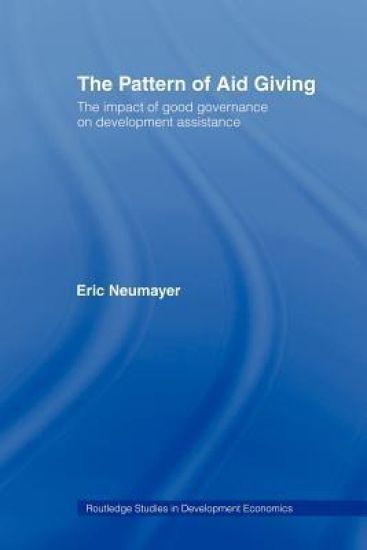
The Pattern of Aid Giving

The Pattern of Aid Giving

Eric Neumayer

Routledge
2006
nidottu
Practically all donor countries that give aid claim to do so on the basis on the recipient's good governance, but do these claims have a real impact on the allocation of aid? Are democratic, human rights-respecting, countries with low levels of corruption and military expenditures actually likely to receive more aid than other countries? Using econometric analysis, the author examines the factors that really determine the patterns of aid giving. The author analyses such examples as: * aggregate aid flows * aid from multilateral organisations such as the EU and the UN * aid from bilateral donors such as Germany, Japan, the US as well as Arab donors. This concise, well argued and well researched book will be a great read for students, academics and policy-makers involved in development studies, economics and international relations.
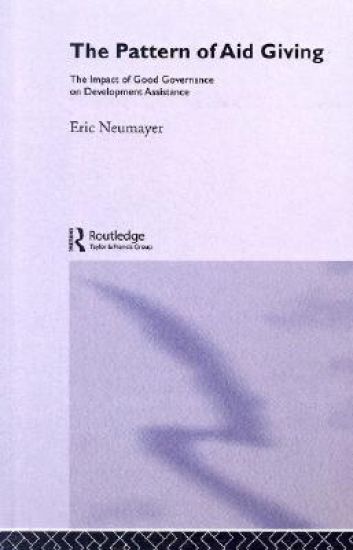
The Pattern of Aid Giving

The Pattern of Aid Giving

Eric Neumayer

Routledge
2003
sidottu
Practically all donor countries that give aid claim to do so on the basis on the recipient's good governance, but do these claims have a real impact on the allocation of aid? Are democratic, human rights-respecting, countries with low levels of corruption and military expenditures actually likely to receive more aid than other countries? Using econometric analysis, the author examines the factors that really determine the patterns of aid giving. The author analyses such examples as: * aggregate aid flows * aid from multilateral organisations such as the EU and the UN * aid from bilateral donors such as Germany, Japan, the US as well as Arab donors. This concise, well argued and well researched book will be a great read for students, academics and policy-makers involved in development studies, economics and international relations.
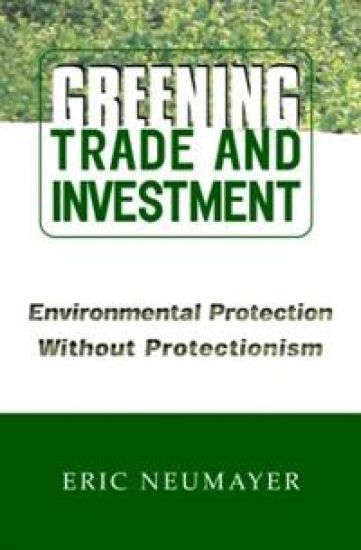
Greening Trade and Investment

Greening Trade and Investment

Eric Neumayer

Earthscan Ltd
2001
nidottu
A comprehensive, critical analysis of the interactions between investment, trade and the environment. It examines the consequences of existing multilateral investment and trade regimes, including the WTO and the MAI for the environment, and asks how they should be reformed to protect it. In doing so, the text shows how these regimes can be greened without erecting protectionist barriers to trade that frustrate the development aspirations of poorer countries. The solution seeks to offer a way out of one of the most difficult dilemmas in international policy: how investment and trade can protect the environment without encouraging protectionism by the industrialized world.
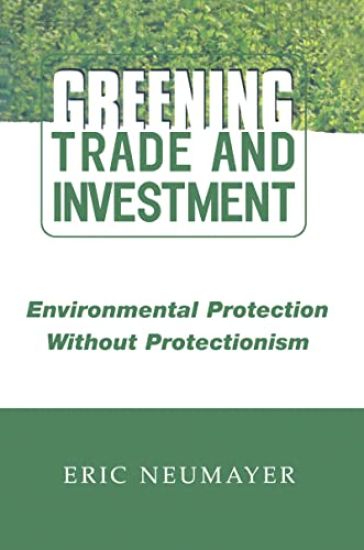
Greening Trade and Investment

Greening Trade and Investment

Eric Neumayer

Earthscan Ltd
2001
sidottu
A critical analysis of the interactions between investment, trade and the environment. It examines the consequences of existing multilateral investment and trade regimes, including the WTO and the MAI for the environment, and asks how they should be reformed to protect it.